
How Some Earthworms Help Break Down Fall Leaves and Cycle Nutrients Under Your Mulch
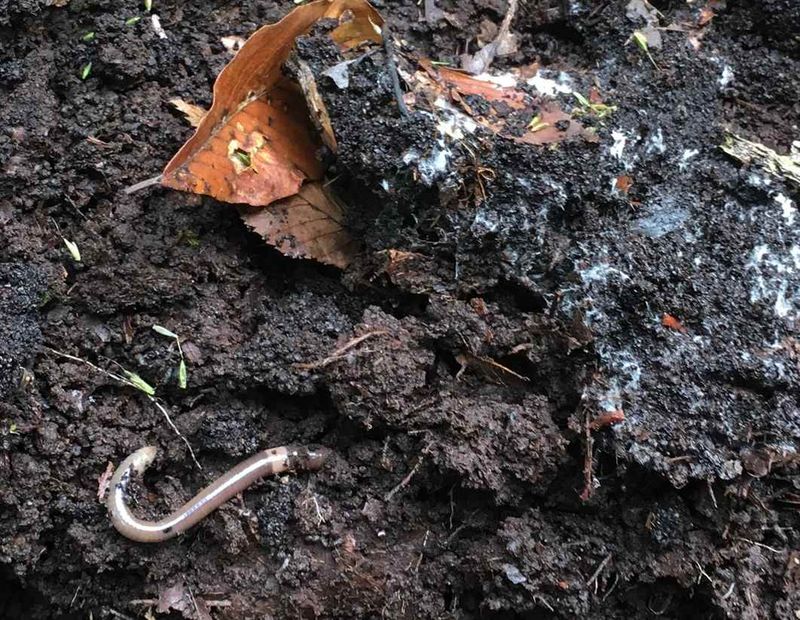
Lift a corner of your leaf mulch and you might find a pink, wriggling worm tucked underneath. That small creature may be part of a quiet soil process that moves leaf material downward and recycles nutrients.
Not every worm does the same job, and results vary from bed to bed. Here is what science says about what is happening under your leaves and how to work with it.
Earthworms play different roles in the leaf layer
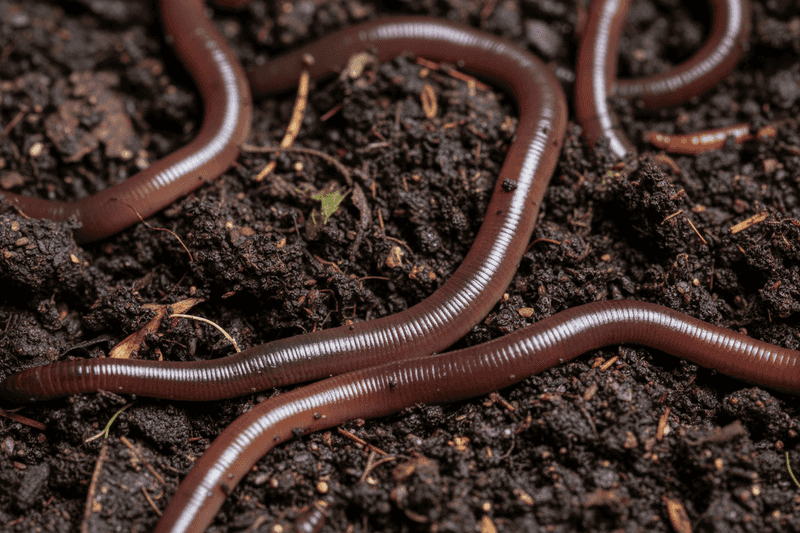
Peel back a layer of mulch and you may meet a few different kinds of worms, all doing different work. Soil scientists sort earthworms into groups based on where they live and feed.
Treating them as one crowd leads to some wrong guesses about what happens to your leaves.
Litter-dwelling worms stay in the surface residues, eating decaying plant material right in the mulch layer. Soil-dwelling worms spend their time in the soil itself, burrowing sideways and feeding on soil with organic matter mixed in.
Then there are the deep-burrowing nightcrawlers, which build more permanent vertical tunnels.
The famous picture of a worm dragging a leaf underground fits the deep burrowers best. According to USDA Natural Resources Conservation Service soil quality information, nightcrawlers carry plant residues into deeper soil, while litter dwellers live and feed in surface residues.
So the worm you spot wriggling beneath your mulch is not automatically a leaf mover.
That difference helps you read your own beds. A worm in the top layer of decaying leaves is probably working right where it lives.
A small pile of leaf bits at the mouth of a hole in the ground points toward a deeper burrower at work. Either way, these animals are part of a larger crew of decomposers, and each member plays a slightly different part.
Some nightcrawlers carry plant residues into burrows
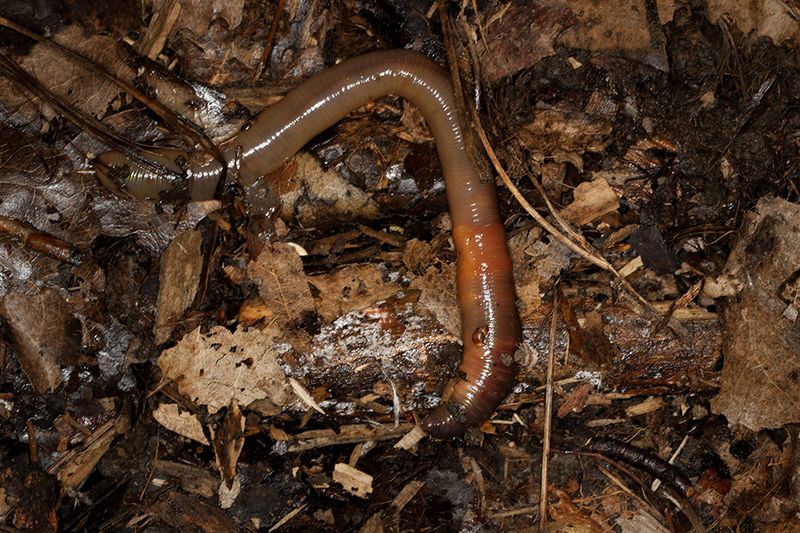
Picture a tunnel that starts at the soil surface and drops downward like a tiny elevator shaft. A nightcrawler may sit near the opening, grab a bit of leaf or other plant residue, and tug it in.
Down below, that material becomes part of the soil system, where it can be eaten, mixed, and broken down further.
This is the mechanism behind the catchy idea in the old title, and it is real for some deep-burrowing species. As the USDA soil quality sheet on earthworms describes, these worms carry plant residues into their burrows.
Leaves resting under your mulch are within reach of that behavior if nightcrawlers live in your yard.
Here is the part to keep realistic. Nobody can promise a worm will move leaves on a certain night, or at a certain speed, in your garden.
Some beds have lots of nightcrawlers, some have few, and some have none at all.
A practical clue is to look near mulched areas for small holes with bits of leaf or plant debris around the edge. If you see them, deep burrowers are likely active nearby.
If you do not, your leaves are still breaking down through other decomposers like fungi, bacteria, and litter-dwelling worms, just on their own schedule.
Casts support nutrient cycling but are not complete fertilizer
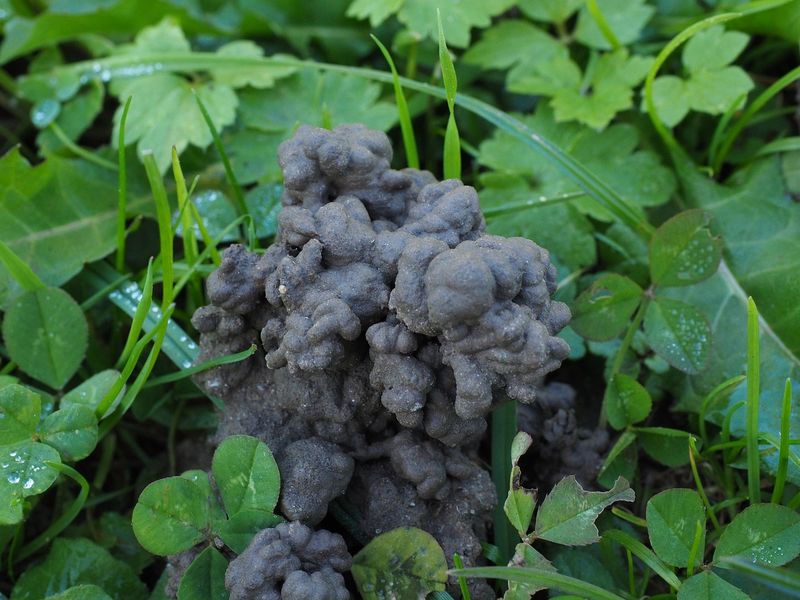
After a worm eats leaf material and soil, what comes out the other end is called a cast. Casts are digested material, and the USDA says they are enriched in nitrogen, phosphorus, potassium, calcium, and microorganisms compared with the surrounding soil.
That makes them sites of nutrient cycling, where nutrients locked in old leaves get moved into new forms.
It is tempting to call casts free fertilizer, but that goes too far. A cast is a nutrient-enriched bit of soil, not a balanced, complete fertilizer.
Nobody can say how much of it reaches the roots of your hydrangea or tomato plant.
Wider research adds context. A global meta-analysis of 69 studies found that, on average, earthworm presence was associated with twice as much plant-litter mass loss.
Effects varied by earthworm group, and soil-dwelling worms showed no apparent effect on litter loss in that analysis.
That average does not predict how fast leaves will vanish in your yard. Faster leaf loss also does not automatically mean better soil.
The same analysis found no significant overall effect on soil organic carbon across all observations. So casts and litter loss are signs of a working soil process, not proof that your plants are getting a full meal.
Conditions and leaf types change the process
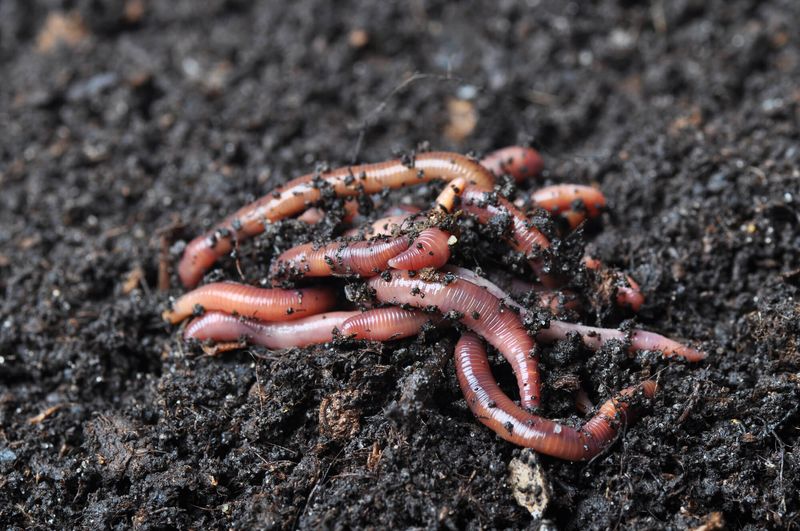
Two beds on the same street can behave very differently. Moisture, temperature, soil texture, food supply, season, and leaf type all shape how active worms are and how quickly leaves break down.
No single factor gives you a timeline for your garden.
Worms generally like it damp and not extreme. The USDA notes that activity is generally greatest in spring and autumn, and that mulch helps moderate soil conditions.
UNH Extension adds that worms are more common in moist, loamy soil than in quickly drying sandy soil with little organic matter.
Leaf type matters too. In a Forest Service-hosted study, the growth of the studied nightcrawler responded to leaf-litter type and soil type.
That is a finding about that worm in that study, not a rule for all worms or all leaves.
So how can you use this? Notice your own bed.
If your sandy soil dries out fast, expect fewer worms and slower change. If you have damp loam under a mulch of mixed leaves, you may see more activity in spring and fall.
Treat these as hints, not predictions.
Shredded leaves make a practical garden mulch
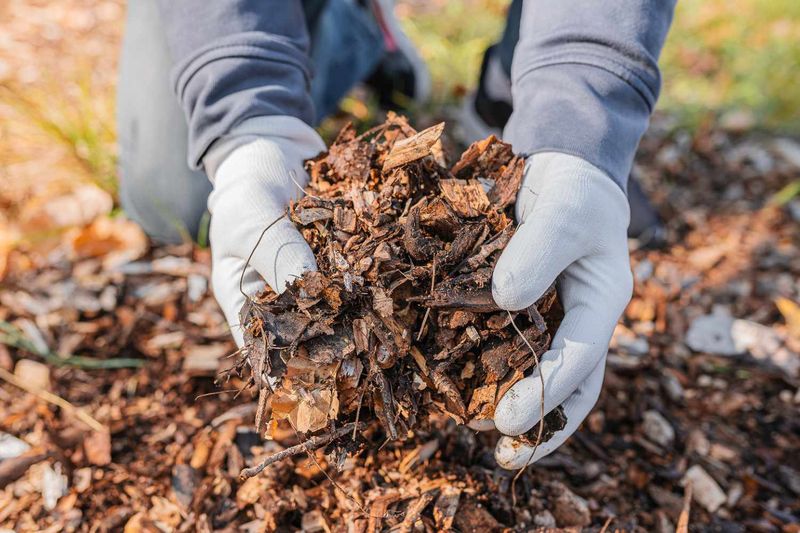
Whole leaves look harmless, but a thick pile can pack down into a soggy mat. Illinois Extension cautions that whole leaves can mat and impede water from reaching the soil.
That is why dumping unlimited leaves on a bed is not good blanket advice.
Shredding solves most of that. Run a mower over a pile or use a leaf shredder, and the pieces settle into a looser layer that lets water through.
Shredded leaves are also easier for worms and other decomposers to work with.
For depth, Penn State Extension recommends 2 to 4 inches of shredded leaves around trees, shrubs, or perennial beds. That is guidance for those settings, not a rule for every plant.
Adapt the layer to what you are growing. Keep mulch thinner near small or delicate plants, and avoid piling it against stems or trunks.
If a bed stays soggy or plants look stressed, pull the mulch back and check the soil. Mulch is a helpful tool, but it does not replace a soil test or other plant care.
Do not buy or move worms into a garden
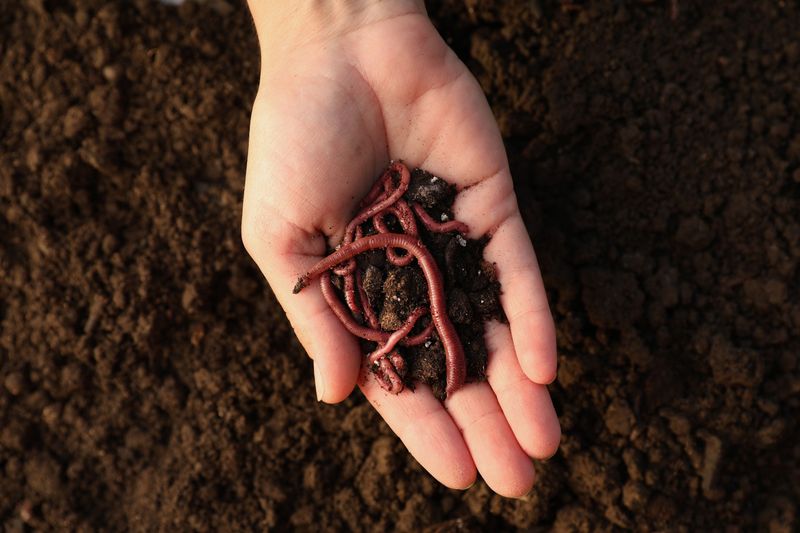
It can feel logical to buy a tub of worms and release them under your mulch. Skip it.
UNH Extension says worms may arrive on their own where conditions suit them, and that healthy garden soil can thrive without earthworms.
Purchased worms may not be the right kind for your soil, and they may not stay. If the bed is too dry, too sandy, or short on food, new arrivals are unlikely to settle in.
Building the conditions, such as steady moisture and a leaf mulch layer, does more than adding animals.
There is also a regional reason for caution. Some introduced earthworms can disrupt certain northern forest ecosystems by consuming leaf litter and changing soil conditions, especially where native earthworms were lost to glaciation.
Moving worms around can spread them into places where they cause trouble.
That forest concern does not mean worms harm every garden bed. In a typical backyard bed, worms that show up on their own are generally welcome.
The takeaway is simple: let them come, and never carry them into woods or natural areas.
Expect soil helpers, not overnight fertilizer
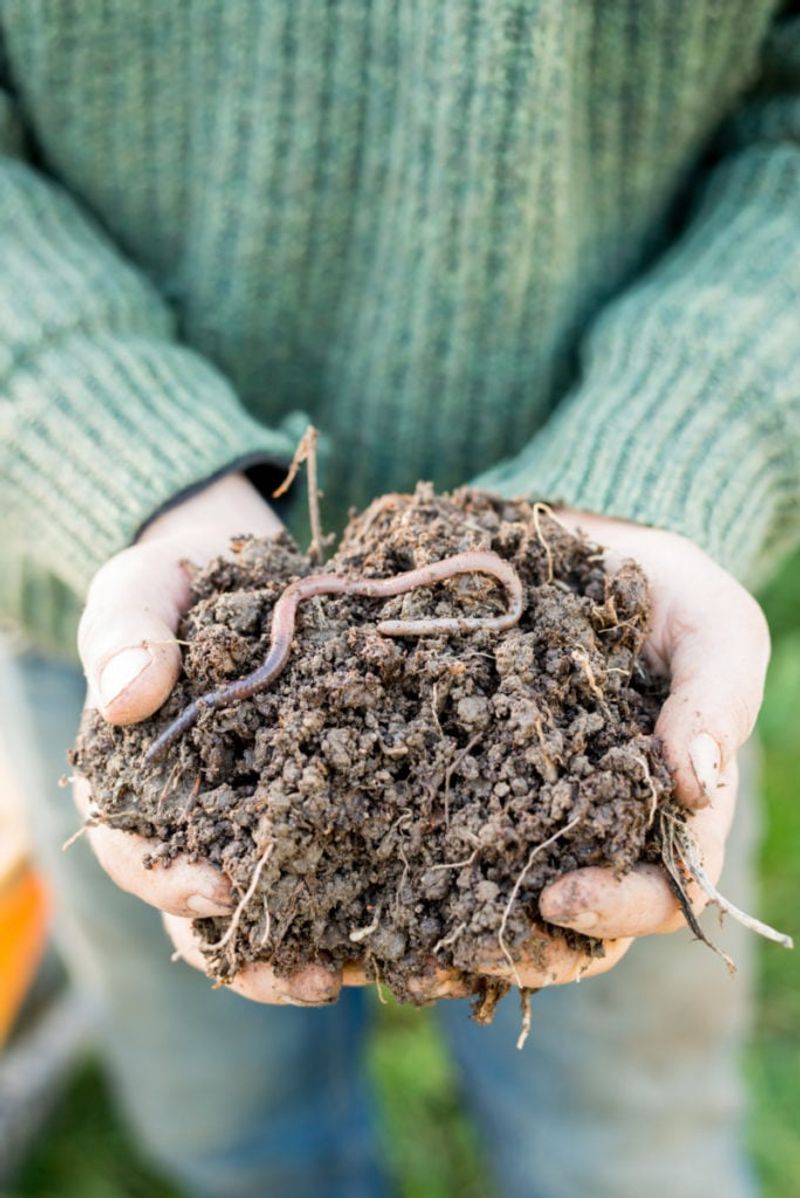
Under your mulch, some earthworms really do help turn leaves into part of the soil, and they help cycle nutrients along the way. The USDA describes their casts as nutrient-enriched, and broad research links worms to faster litter loss on average.
Their roles and activity vary, though, so there is no guaranteed nightly shift or complete fertilizer supply.
Think of them as slow, unseen helpers, not a fertilizer factory.