
Before You Cut Back Your Fading Hydrangeas This October, Check Which Type You Have
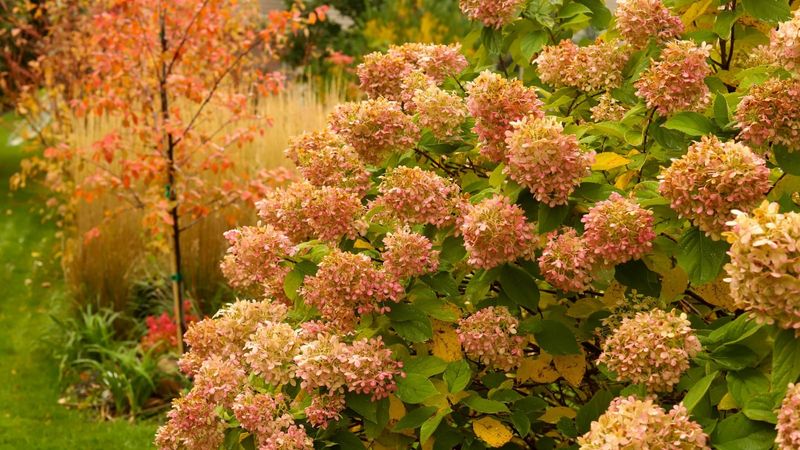
Your hydrangea blooms are turning papery and brown, and the urge to tidy up is strong. But a quick cleanup in October can snip off flower buds that some hydrangeas already formed.
The good news is that a fading shrub is usually fine, and a little detective work can keep you from making a costly cut.
Fading hydrangeas are not necessarily failing
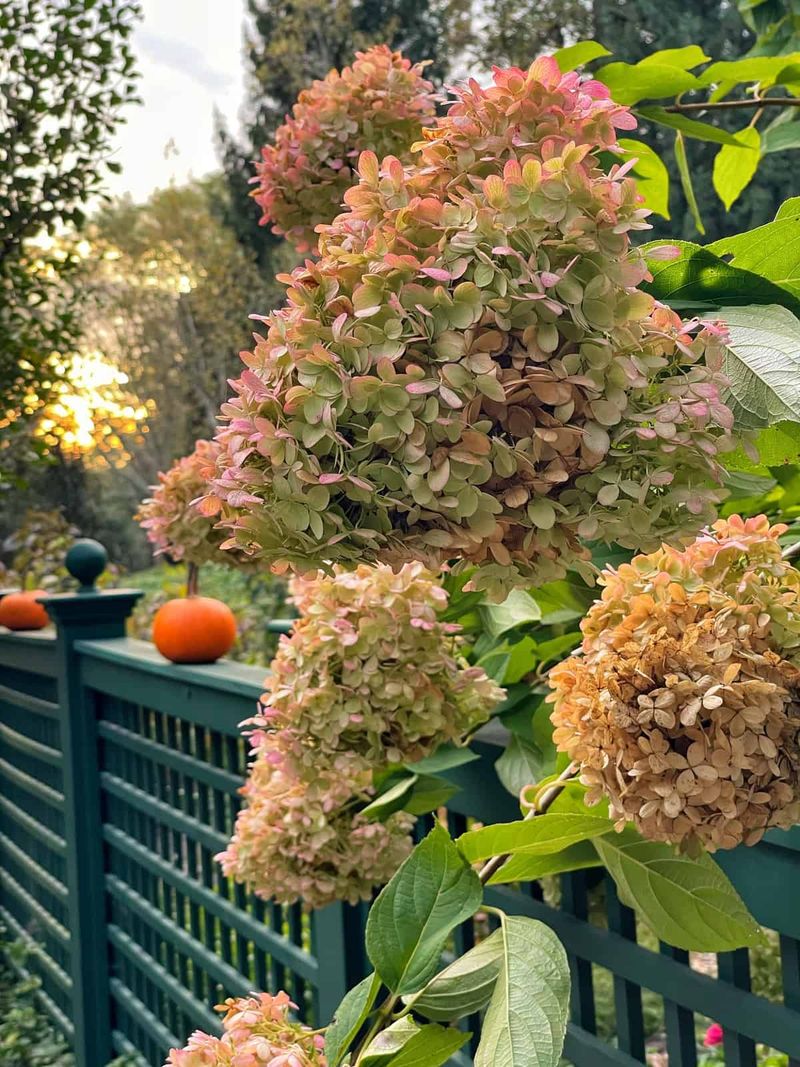
Papery, tan, or rusty-pink flower heads in October look sad, but they are a normal end to the season. Leaves that yellow, redden, or drop are also part of the seasonal cycle.
Neither one tells you the shrub is beyond saving.
The trouble starts when gardeners treat every hydrangea the same. Some types set their flower buds on stems that grew last season, while others bloom only on brand-new growth.
A single fall haircut that is harmless for one kind can remove next year’s buds on another, as University of Maryland Extension pruning guidance explains.
Even the experts do not all agree on exact timing. University of Minnesota Extension notes that timing depends on the type of hydrangea you grow.
That is why the first job this month is not cutting at all. It is figuring out what you have.
No fall routine can promise a big show next summer, since winter weather and the cultivar both play a part. What you can do is avoid unnecessary cuts and give the plant a calm, low-risk autumn.
Identify the hydrangea before you prune
Start with the plant tag, your receipt, or the cultivar name if you saved it. That is the most reliable clue you have.
If the tag is long gone, look at the leaves and flowers for hints.
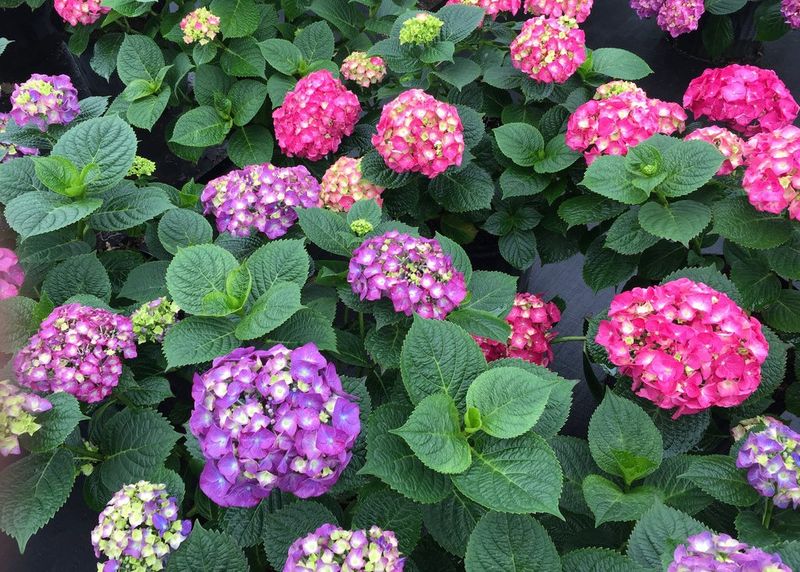
Oakleaf hydrangeas have large leaves shaped like oak leaves, with deep lobes. Panicle hydrangeas produce cone-shaped flower clusters that look like tapered plumes.
Bigleaf hydrangeas often have rounded mophead or flat lacecap flowers, according to University of Maryland Extension.
Here is the catch. Smooth hydrangeas can also have mophead or lacecap flowers, so a round bloom alone cannot separate a bigleaf from a smooth type.
A big white snowball could be either one, and the two are pruned on different schedules.
If you still cannot tell, do the easy thing and leave the stems alone. Waiting costs you nothing, while a wrong cut in October could remove buds that were already set.
Take a photo of the shrub in bloom next year and note the leaf shape so you will know for sure.
A neighbor’s garden or a local nursery can also help you put a name to the plant. Bring a leaf and a picture of the flower.
Leave old-wood hydrangea stems intact in October
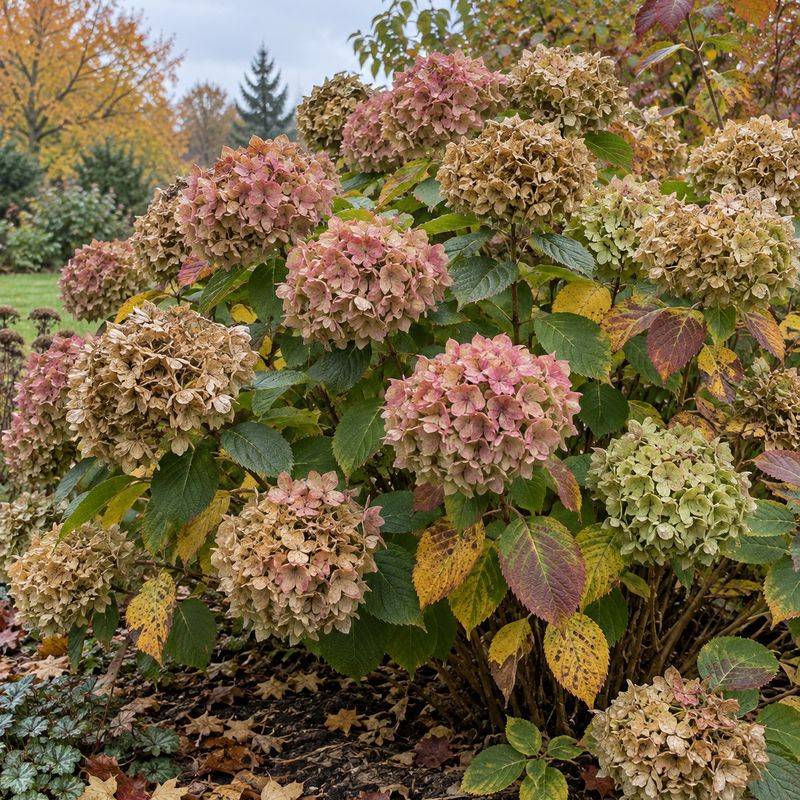
Bigleaf, mountain, and oakleaf hydrangeas generally form next season’s flower buds on growth from the prior season. That is called blooming on old wood.
By October, those buds may already be tucked along the stems.
So the plan for these types is simple: do not cut stems back this month. Their usual pruning window is right after flowering, not in fall, per University of Maryland Extension.
Pruning at the wrong time can remove next year’s buds, and oakleaf and mountain types can lose blooms that way too.
Picture a gardener who cuts a bigleaf down to tidy stubs in October. Come summer, the plant may leap into leafy green growth with few or no flowers, because the buds went into the compost pile.
Some bigleaf and mountain cultivars are remontant, meaning they can flower on both old and new wood. As Virginia Tech Extension describes, that can give a second chance at blooms.
Still, rebloom varies by cultivar and conditions, so it is not a safety net for fall cuts.
If a stem is clearly dead, broken, or crossing and rubbing, you can deal with that problem specifically. Otherwise, let the canes stand through winter.
Panicle and smooth hydrangeas can wait for spring
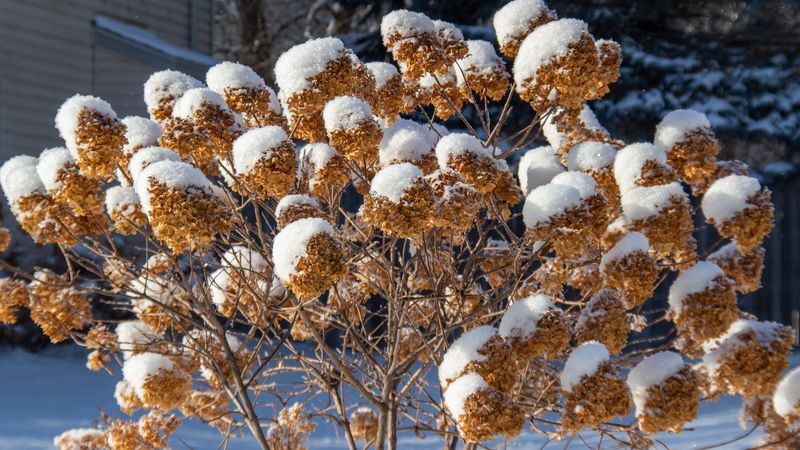
Panicle and smooth hydrangeas play by different rules. They bloom on new growth, which means they push up fresh stems in spring and flower on those.
Fall cutting is not needed to get next year’s flowers.
For routine pruning, late winter or early spring is generally the best time, according to University of Maryland Extension. That gives you time to see how the shrub came through winter and shape it before new growth takes off.
Some guidance does allow trimming panicles in fall. University of Minnesota Extension says it can be done, yet it also suggests leaving the dried flower heads for winter interest and pruning later.
Think of fall pruning here as optional, never required.
Dried heads look lovely with frost or a dusting of snow, and they give the garden some shape when everything else has gone dull. If the plant is simply too tall or floppy, you can plan a spring trim.
Remember that flower shape is not a perfect guide. If you are unsure whether you have a smooth or a bigleaf, treat it as the cautious option and skip the October cut.
Deadheading and leaf cleanup are different jobs
Removing spent flowers and cutting back stems are not the same task. Deadheading just means taking off a faded bloom, and it is optional.
The plant does not need it to stay healthy, and the safe timing depends on the type and your goal.
The risk is cutting too deep. Snipping far below the flower head can take off buds on an old-wood hydrangea.
When you do not know your type, leaving the faded heads is the conservative choice, and it keeps some winter interest too, as University of Maryland Extension notes.
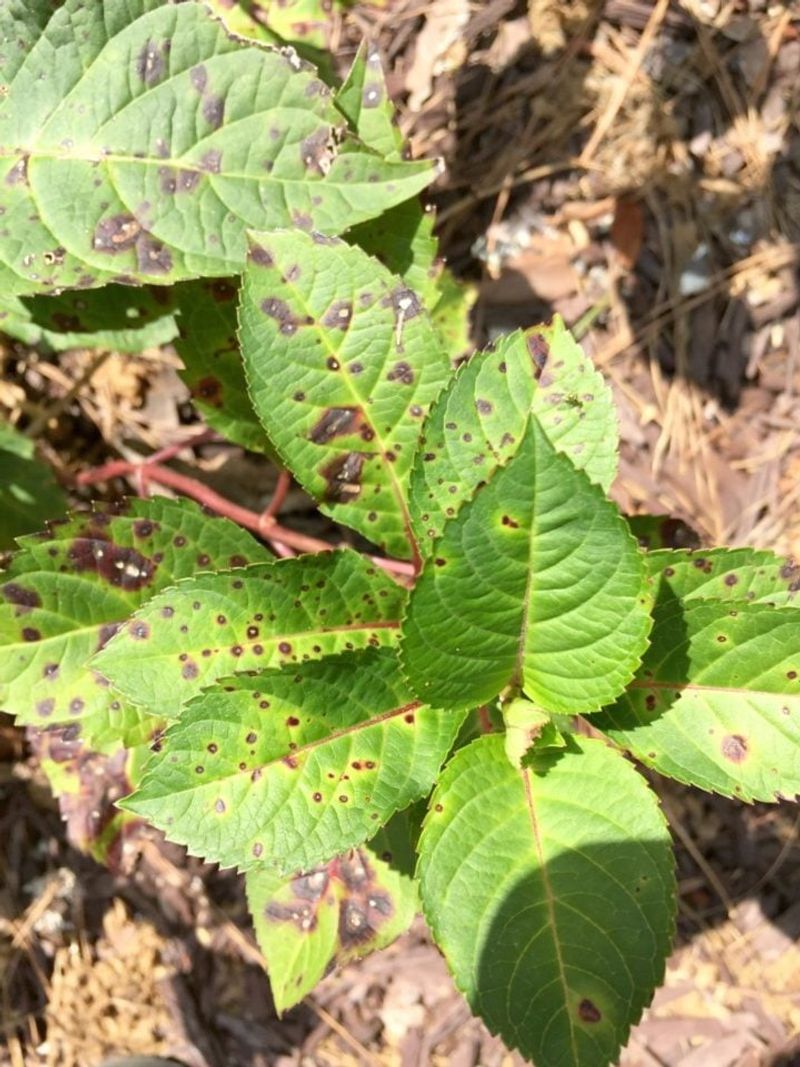
Leaf spots are a separate matter. If your hydrangea had brown or purple-edged spots this season, rake up the infected fallen leaves and throw them away rather than composting them.
This reduces infected debris, but it does not cure the problem or guarantee a clean season next year.
Spotted leaves do not mean the shrub is dying. University of Maryland Extension describes many fungal leaf spots as mostly cosmetic, and fungicides are not needed in most cases.
So grab a rake, not the pruners. Clean the ground, and leave the stems.
Keep fall care gentle and soil moisture balanced
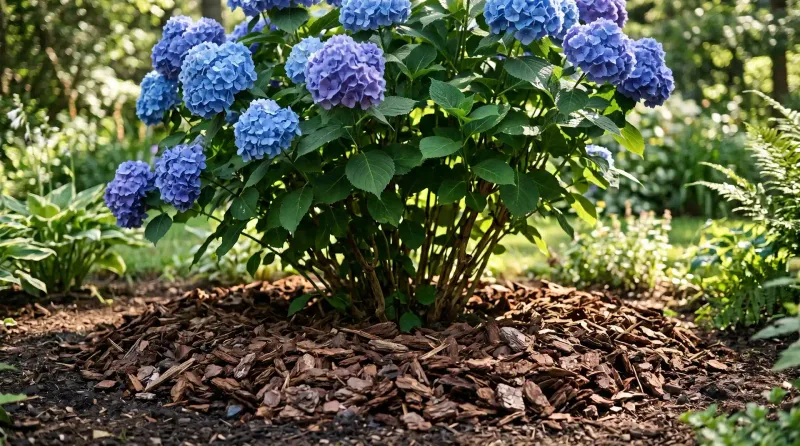
If you want to do something helpful in October, the best choices are quiet ones. Check the soil by poking a finger a few inches down near the shrub.
If it is dry, give it a slow, deep drink.
These are general woody-plant habits, not a hydrangea-specific bloom guarantee. Illinois Extension advises watering trees and shrubs during dry spells while the ground is not frozen.
It also warns against overdoing it, since waterlogged soil can harm roots.
A layer of mulch over the root zone can help hold moisture. Keep it a few inches back from the base of the plant so the stems stay dry.
Skip the fertilizer this time of year. Feeding in fall is not a shortcut to more flowers, and it can stimulate tender late-season growth that is vulnerable to cold.
Fall care like this keeps the plant steady going into winter. It cannot promise blooms, but it avoids stressing a shrub that is already winding down.
Bigleaf hydrangea buds may need climate-specific protection
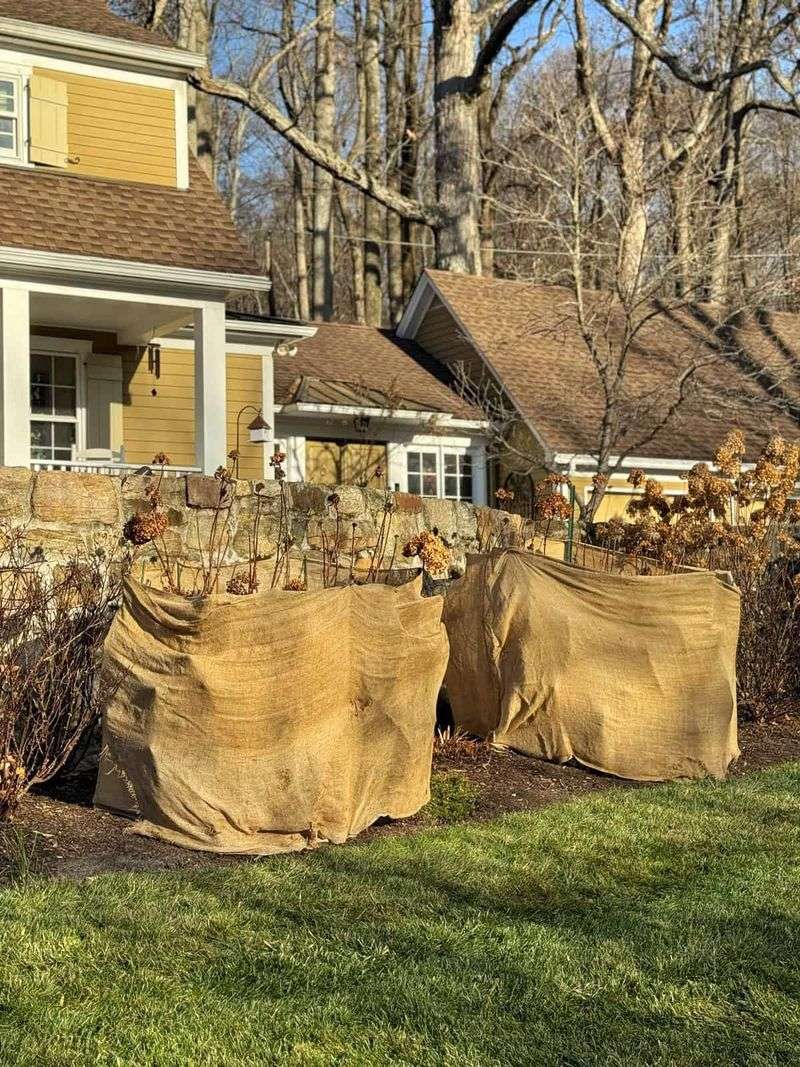
In colder parts of the country, the weak spot on a bigleaf hydrangea is often the flower buds, not the roots. The roots may survive winter just fine while the buds on last year’s stems are damaged by cold.
University of New Hampshire Cooperative Extension points out this bud vulnerability.
Some protection may help, but there is no single method that works everywhere. Results depend on the cultivar, how exposed your yard is, and the winter you get.
Wrapping or mulching cannot be counted on to ensure flowers.
Reblooming labels are not a guarantee either. Virginia Tech Extension notes that cultivar hardiness varies.
A related UNH Extension article on Endless Summer hydrangeas discusses winter protection for a popular reblooming type.
If you garden in a mild area, you may not need to do anything special. If you are in a cold spot, read the guidance for your cultivar and your local extension office before you build anything.
Choose restraint over an October reset
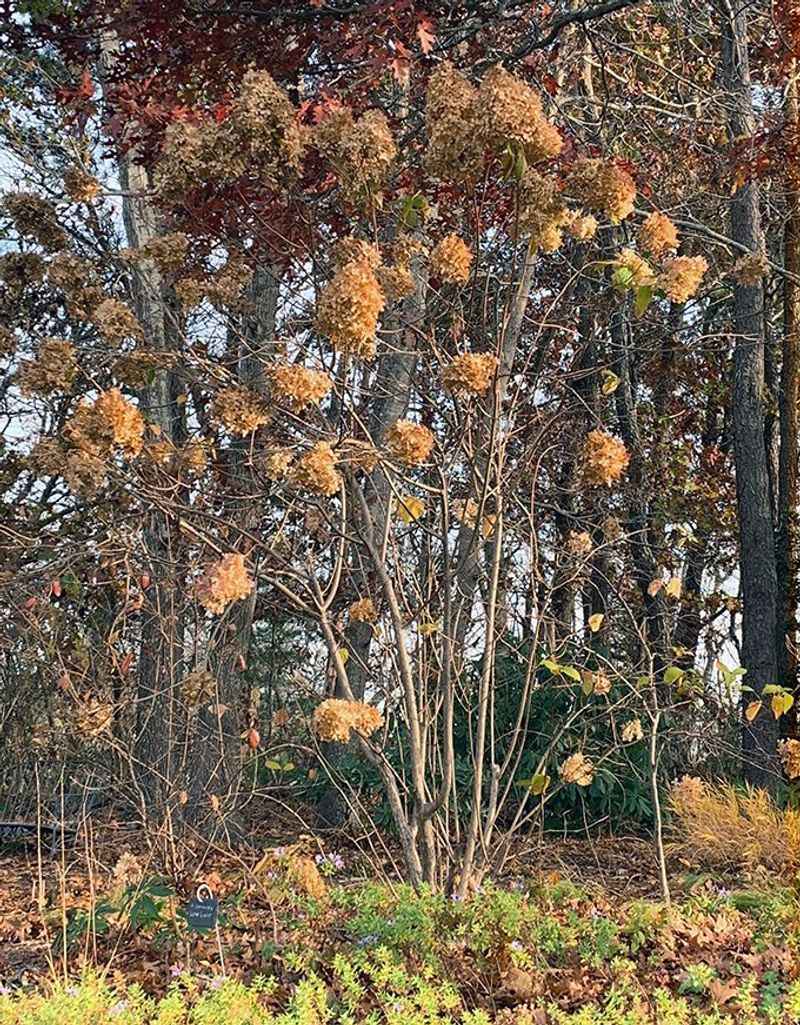
Your October checklist is short. Identify your hydrangea using the tag or cultivar name, skip hard pruning if the type is unknown, and pick modest care over a big cutback.
Rake any spotted leaves, water in dry spells, and hold off on fertilizer.
The goal is to avoid removing buds that may already be there, as University of Maryland Extension advises. It is not a promise of summer flowers.
Sometimes the best thing you can do for a hydrangea is put the pruners down and let winter do its slow work.