
If Your Lawn Is Full Of Bare Patches This Fall, Here Are 13 Fixes That Work Without Renting A Thing
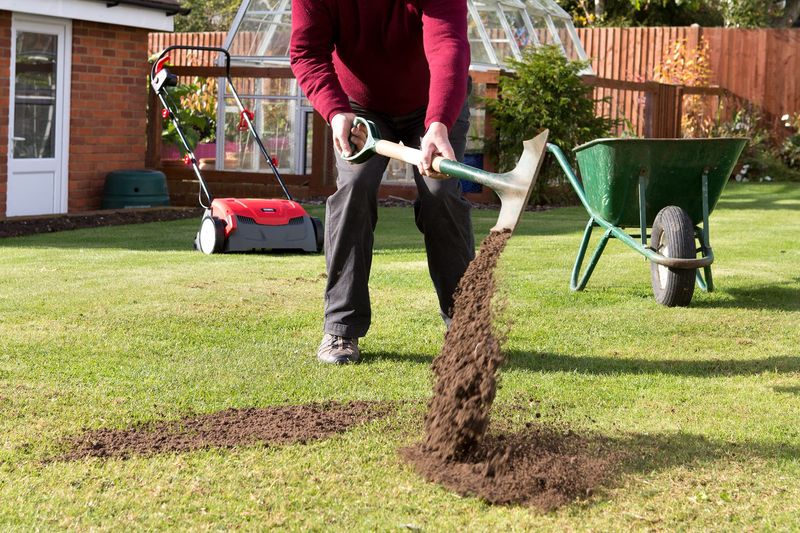
Those brown, empty spots in your yard did not show up overnight, and they will not leave on their own either. The good news is that fall is the best time of year to fix them, because the air is cooler and the soil is still warm.
You do not need a big machine, a truck rental, or a weekend of hard labor. With a rake, a hose, and a bag of seed, you can have green grass filling in before winter.
1. Figure Out Why the Patch Died
Seed thrown on a problem spot without a reason is just bird food. Before you buy anything, crouch down and take a good look at the bare area.
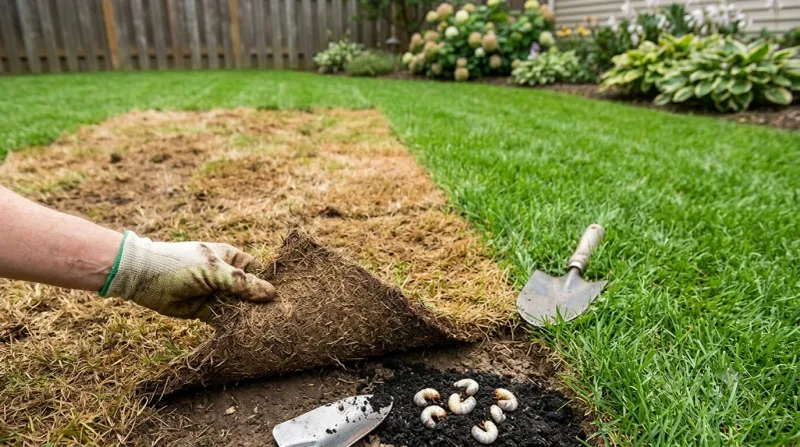
Tug on the dead grass at the edge. If it lifts like a loose rug, grubs may have eaten the roots.
If the dirt feels like concrete, compaction is the likely culprit, and a worn path from the gate to the porch points to foot traffic.
Other clues help too. Circular brown rings can mean fungus, while yellow spots with green edges often come from dog urine.
A patch under a thick maple might simply be too shady for your grass type.
Write down what you find. Fixing the cause first means your new grass has a real shot instead of dying in the same spot next summer.
2. Rake Away Dead Grass and Debris
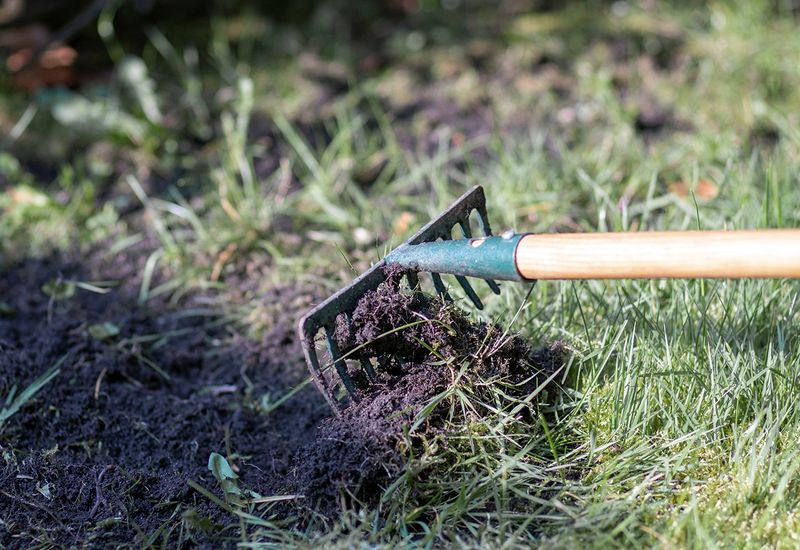
Picture tossing seed onto a pile of brown straw. Most of it never touches dirt, so it dries out or gets eaten.
Grab a stiff garden rake and scratch out every bit of dead grass, moss, old thatch, and fallen leaves from the patch. Rake firmly enough to see bare, crumbly soil underneath.
Bag the junk or toss it in your compost pile. A clean surface is the single cheapest step on this list, and it may make the biggest difference in how many seeds actually sprout.
3. Loosen Hard Soil With a Garden Fork
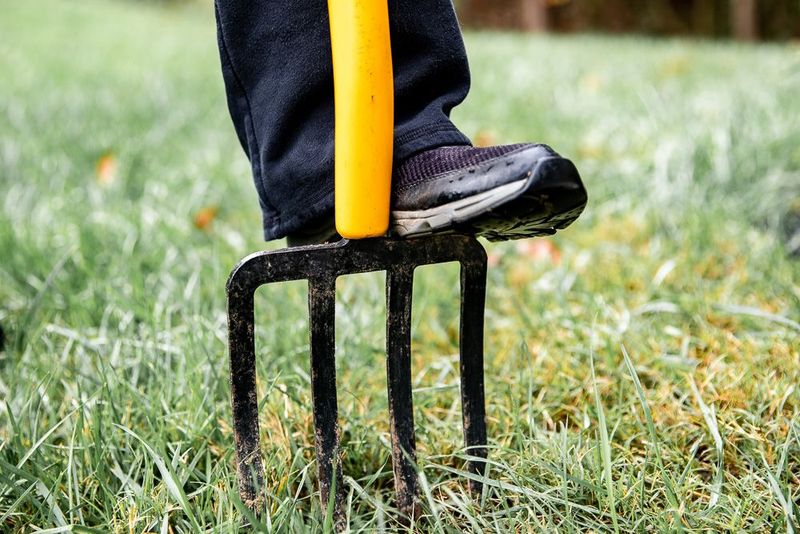
Rented core aerators get all the attention, but a plain garden fork does the same job on small patches. You probably already have one in the shed.
Push the tines straight down a few inches, then rock the handle back and forth. Move over about four inches and repeat until the whole spot has been worked.
On really tight soil, a hand cultivator can break up the top layer after the fork does its job.
Roots need air and water to travel down. Compacted ground blocks both, which is why grass keeps giving up in the same high-traffic spots.
Loosening even the top couple of inches can help seedlings dig in fast.
Skip this step when the soil is soaking wet. Working mud squishes it tighter instead of opening it up.
4. Spread a Thin Layer of Compost
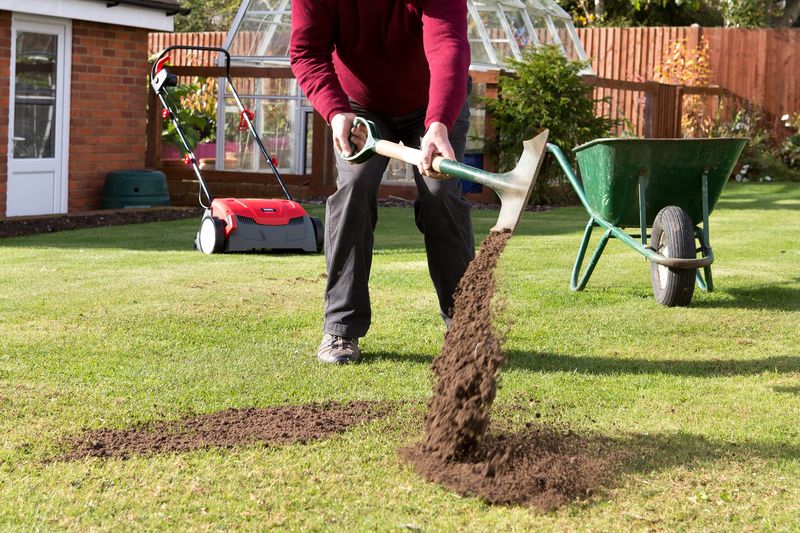
Tired dirt grows tired grass. A quarter inch of compost or bagged lawn soil gives the patch a fresh start without any heavy hauling.
Scoop it on with a shovel and smooth it with the back of your rake. You want a dusting, not a blanket, so the old soil should still peek through in places.
Compost holds moisture, feeds soil life, and helps sandy ground hang onto water. Clay soils get a little looser over time too.
One bag usually covers several small spots, so this fix costs just a few dollars.
5. Level Out Dips and Bumps
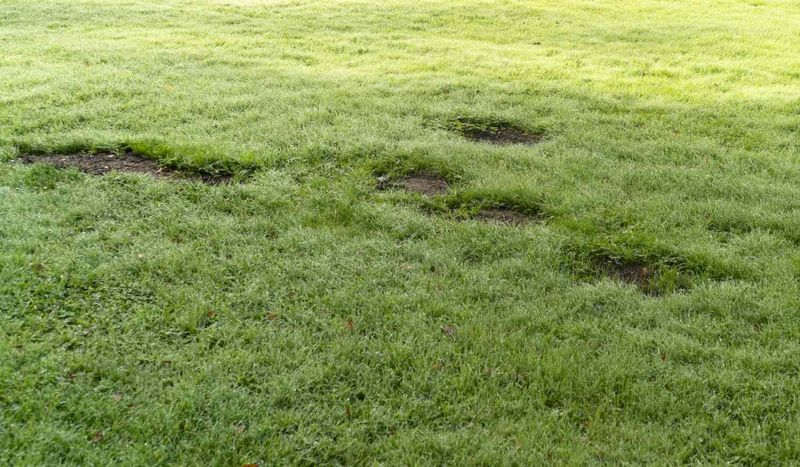
Ever notice puddles always sit in the same low corner of the yard? Water pools there, seed drowns or washes off, and the bare patch comes back every year.
Fill small dips with extra soil or compost and drag the back of a rake across until the patch sits even with the grass around it. High humps get the opposite treatment: scrape some soil away.
Leveling also saves you from scalping. A raised spot gets shaved down to dirt by the mower blade, which is a sneaky reason some patches never stay green.
6. Choose the Right Seed for Fall
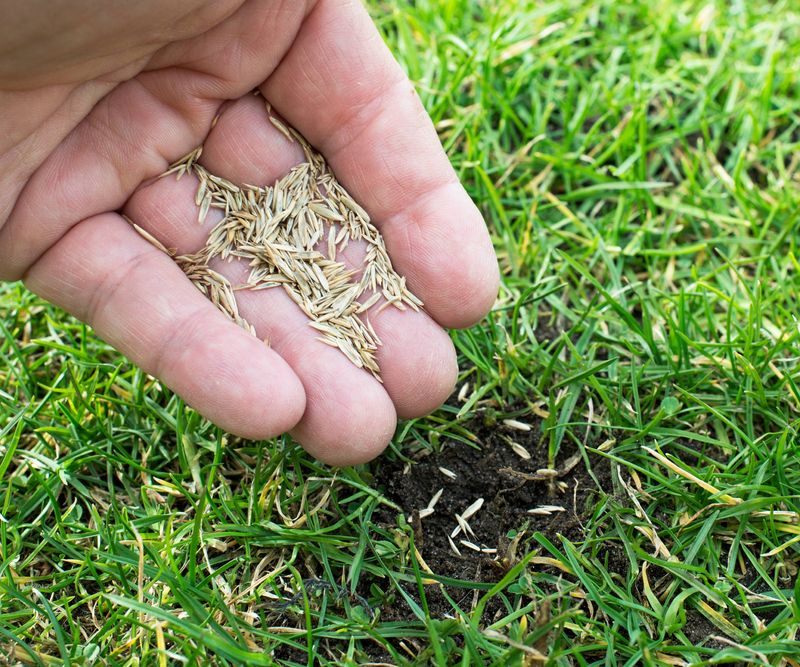
Grass seed is not one-size-fits-all, and grabbing whatever bag is on sale is a common mistake. In most of the US, fall is cool-season grass time.
Tall fescue handles heat, drought, and kids well. Kentucky bluegrass spreads to fill gaps and repairs itself, and perennial ryegrass sprouts fast, sometimes in a week.
Blends of these cover more situations at once.
Match the bag to your spot. Shady corners need a shade mix, and play areas want a tough, high-traffic blend.
Fun fact: Kentucky bluegrass is not actually native to Kentucky. It came from Europe, but the name stuck after it thrived in the state’s limestone soil.
If you live in the Deep South with Bermuda or zoysia lawns, wait until late spring, since those warm-season grasses go dormant in fall.
7. Hand-Spread Seed Evenly
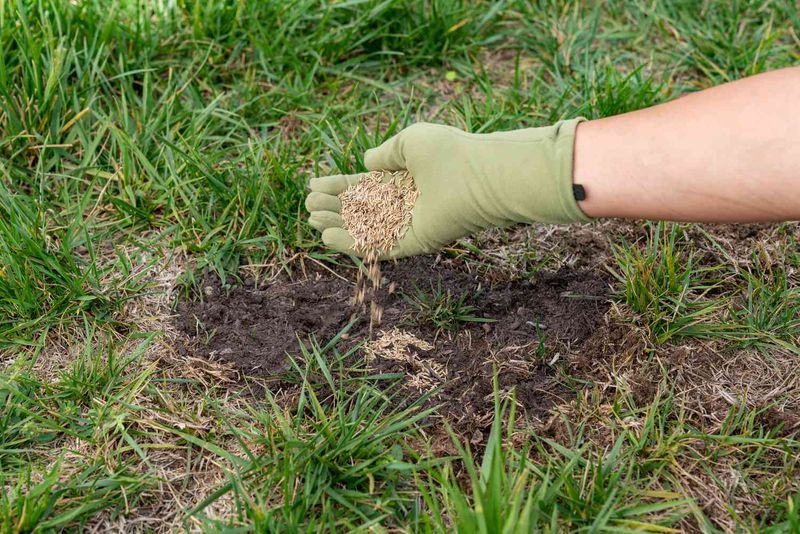
No spreader? No problem.
Your hand works just fine for patches smaller than a picnic blanket.
Pour seed into a cup and sprinkle it in two passes, once walking north to south and once east to west. That crisscross pattern keeps you from leaving thin stripes.
Aim for about 15 to 20 seeds per square inch. Piling on more feels generous, but crowded seedlings fight each other for water and many end up dying.
Spread seed a little past the edges into the existing grass. That helps the new patch blend in instead of looking like a bright green island.
8. Lightly Cover the Seed
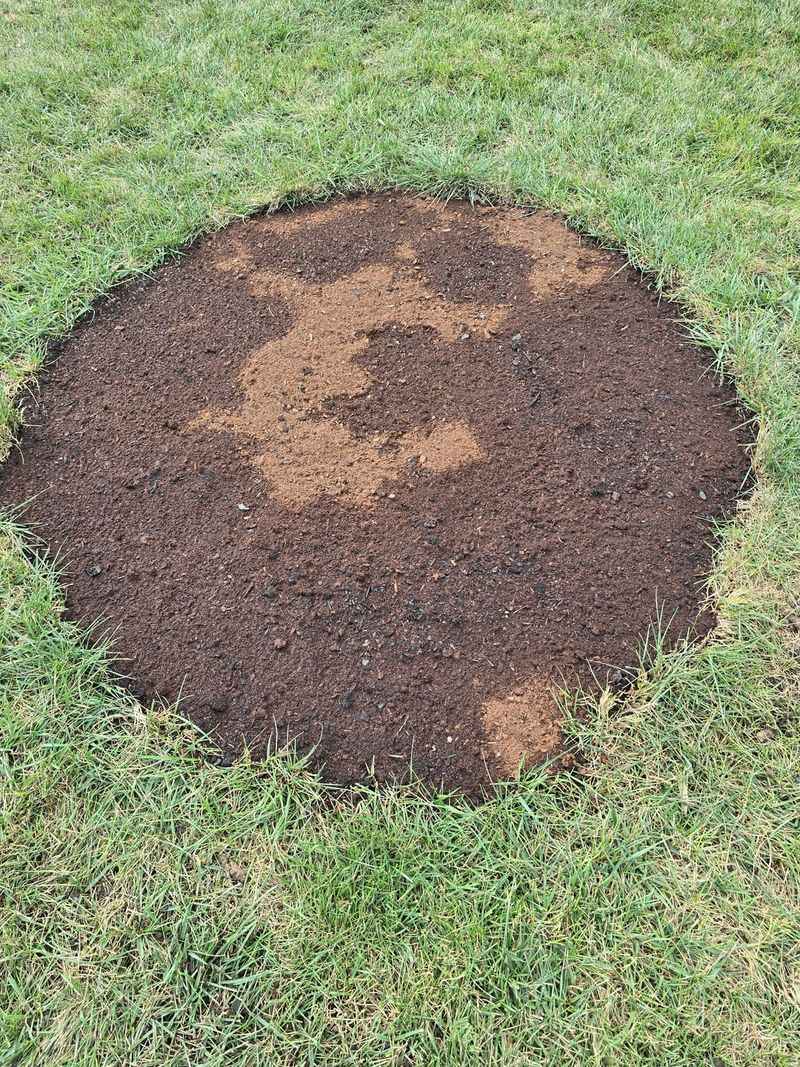
Hungry sparrows will spot uncovered seed within an hour. A light cover keeps them guessing and keeps the seed damp.
Gently rake the seed so it sits about an eighth of an inch deep, roughly the thickness of a coin. You can also sprinkle a thin layer of compost, topsoil, or peat moss over the top.
Go easy. Seed buried too deep runs out of energy before it reaches sunlight, so you should still see a few seeds peeking through when you finish.
9. Tamp It Down Gently
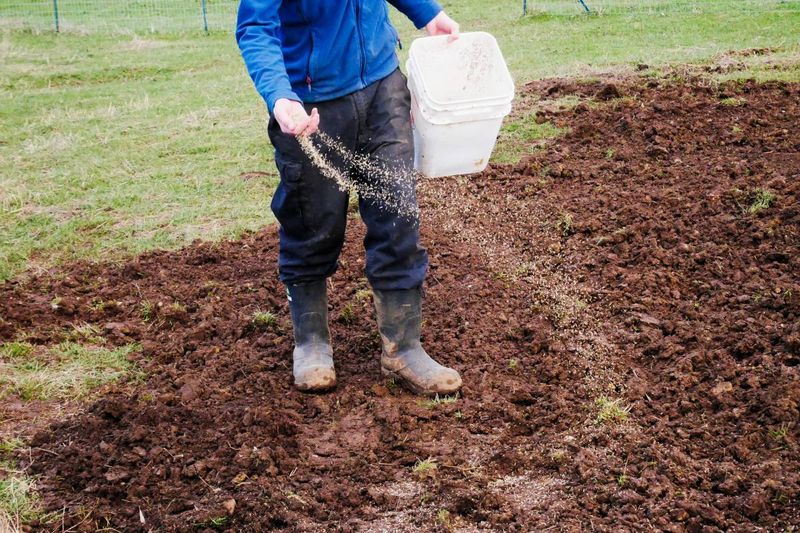
Here is the easiest step of all, and you can do it in your sneakers. Walk slowly across the seeded patch, or press it with the flat back of your rake.
Seeds need snug contact with soil to soak up moisture. Air pockets underneath leave them dry and stranded, even if you water often.
Firm, not flat, is the goal. You are giving the seeds a handshake, not stomping out a campfire.
10. Water Lightly and Often

More new grass dies from watering mistakes than from anything else. The trick is light and frequent, not deep and rare.
Right after seeding, mist the patch with a shower setting on your hose or a watering can. For the next two weeks, sprinkle two to four times a day so the top inch or so stays damp like a wrung-out sponge.
A hard blast washes seed into clumps or down the curb. Soggy, puddled soil can rot seed, so stop before water starts pooling.
Once the grass is about an inch tall, cut back to once a day, then shift to deeper soaks a few times a week. Morning watering is best, since leaves dry before cool nights and that may help reduce fungus.
11. Feed With a Starter Fertilizer
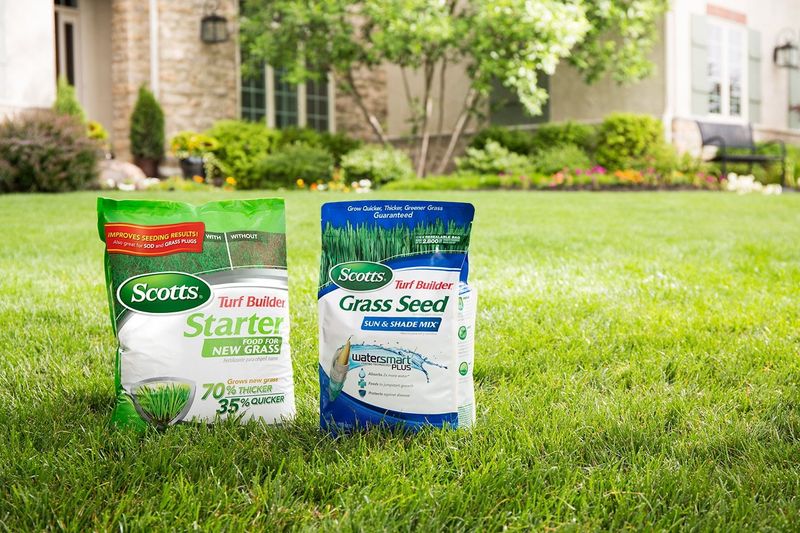
Baby grass is hungry for something different than an established lawn. Starter fertilizer is higher in phosphorus, which helps young roots grow.
Sprinkle it right after seeding at the rate on the bag. Some patch repair mixes already include seed, mulch, and fertilizer in one, so check before adding more.
Skip regular weed-and-feed products for now. Many contain weed killers that can stop grass seed from sprouting for weeks.
12. Keep Feet and Paws Off

Your dog has no idea you spent Saturday on that patch. Neither does the neighbor kid cutting across to grab a soccer ball.
Push in a few garden stakes and loop string around the area, or lay an old patio chair across it. Anything that says keep out works.
Young grass needs three to four weeks without traffic. Tender roots tear easily and one rough game of fetch can undo all your work.
If pets keep heading back, try a temporary path of stepping stones around the spot so everyone still has a route.
13. Mow Smart Before and After
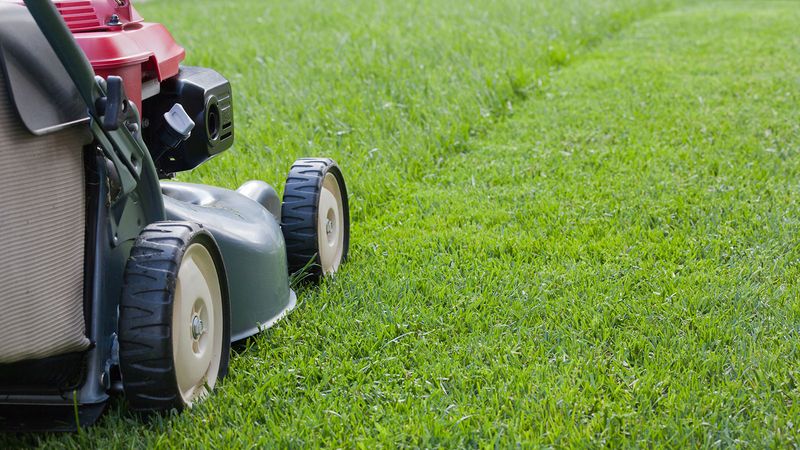
Timing the mower can make or break a patch repair. Right before you seed, cut the surrounding lawn a notch or two lower than usual so more light reaches the soil.
After seeding, park the mower. Wait until the new grass reaches its normal mowing height, usually around 3 to 4 inches for fescue and bluegrass.
Then raise the deck back up and use a sharp blade, so you snip rather than rip. Taller grass shades the soil, keeps it moist, and pushes roots deeper before winter.
Do that, and those bare spots that bugged you all summer should be just a memory by spring.