
Why Your Prayer Plant Folds Its Leaves Up Every Night
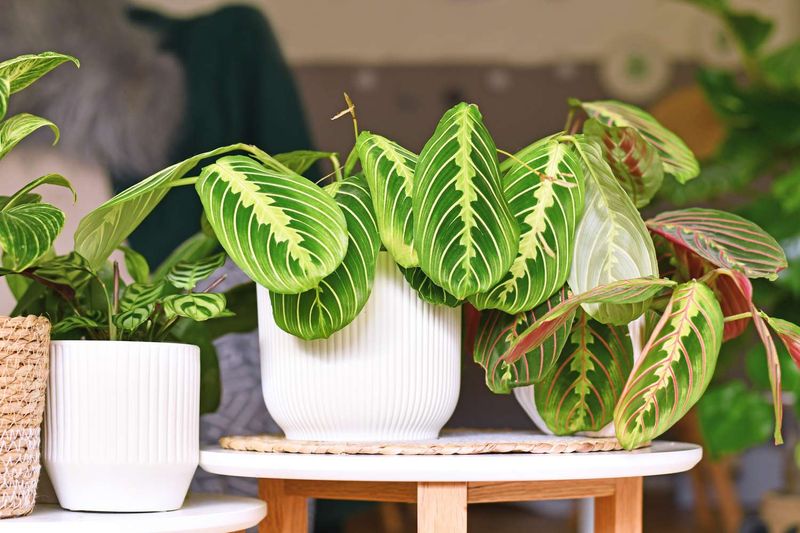
Walk past your prayer plant at bedtime and again in the morning, and you may notice its leaves have changed position. That nightly shift is normal, and it has a real explanation inside the plant.
Scientists have worked out a lot about how it happens, though they are still arguing about why. Here is what it means for the plant on your shelf.
A prayer plant’s nightly pose is a normal daily movement
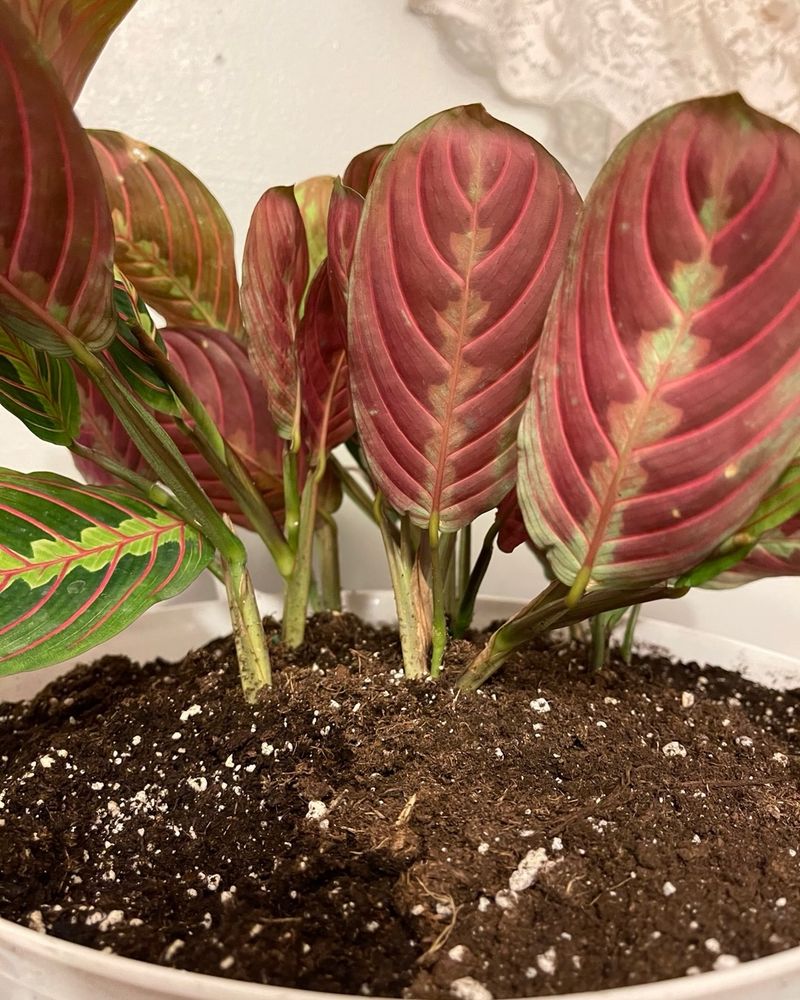
Maybe you have noticed it: the broad, painted leaves of your Maranta leuconeura lie fairly flat during the day, then lift and point upward as evening comes. NC State Extension describes this tropical houseplant as folding its leaves into a raised, prayer-like position at night.
Illinois Extension likewise describes the leaves folding in darkness.
Botanists call this nyctinasty, which simply means a leaf-position movement tied to the day and night cycle. It follows a roughly daily rhythm, not a stopwatch-perfect one.
Some mornings your plant may open a little earlier or later than the day before, and that is not a cause for worry.
Here is the reassuring part. Raising the leaves at night is ordinary behavior for this plant, so a plant that does it is not signaling distress on that basis alone.
If you see browning edges, curling that lasts all day, or limp stems, look at the plant’s conditions instead of the nightly pose.
One more detail matters for accuracy. The name prayer plant is used for more than one plant, and NC State lists Goeppertia insignis among others that share it.
Everything in this article about leaf behavior is tied to Maranta leuconeura, so if your plant is a different species, your own experience may vary a bit.
A pulvinus helps the leaf change position

Look at the base of a leaf stalk on plants that fold their leaves and you will find a small swollen region called a pulvinus. Think of it as a flexible joint where the leaf meets its stem.
Plants with these joints, such as Mimosa and Samanea, can move leaves without any muscles.
Calling it a hinge is a handy picture, but it leaves out most of the story. A hinge swings on a fixed pin, while a pulvinus changes shape because living cells on opposite sides of it swell and shrink.
That is why the movement is smooth and reversible, and why it is more than a simple mechanical bend.
Those cells are called motor cells. Research on Samanea saman, such as a study of potassium flux and rhythmic leaf movement, shows how the opposing sides of the pulvinus work in turn.
A review of aquaporins and plant leaf movements adds the water channels that help in this process.
A fair caution: what you can see in Maranta is the leaf rising and lowering. The cell-level details come largely from other plants, so do not assume every step has been measured in your prayer plant.
It is a good working model, not a finished map of Maranta.
Solute and water shifts change motor-cell turgor

Picture two balloons side by side, one on each side of the joint. Fill one a little and let some air out of the other, and the whole thing bends.
Motor cells behave in a similar way, except they are filled with water and dissolved substances instead of air.
In Samanea saman, researchers tracked potassium and other solutes moving in and out of motor cells on opposite sides of the pulvinus. Work on potassium flux and rhythmic movement linked those shifts to the leaf’s daily positions.
Where solutes pile up, water tends to follow.
That water movement changes turgor, the internal pressure that keeps a plant cell firm. Cells on one side swell as they gain water, cells on the other side shrink as they lose it, and the leaf bends toward the shrinking side.
Later in the cycle, the process reverses.
Water does not move through cell membranes on its own schedule. Research on aquaporins describes water channels in pulvinar motor cells that help water cross quickly.
They are one part of the system, working together with the solute shifts.
Remember where this evidence comes from. It is drawn largely from Samanea saman and other studied plants.
It is a strong explanation for how pulvinus-bearing leaves can move, but it is not proof that each molecular step has been confirmed in Maranta leuconeura.
Darkness experiments support rhythms, not a perfect clock

You might wonder whether your plant simply reacts when the lights go out. Experiments suggest it is more complicated.
In some plants, leaf movements keep going even in constant darkness, which points to an internal clock instead of a plain response to dim light.
The famous historical version of this test used a sensitive plant, probably Mimosa pudica, not a Maranta. A review of plant circadian rhythms covers this work and how such rhythms are studied.
So the result is solid for that plant, but it does not guarantee your Maranta behaves the same way in total darkness.
The word circadian means roughly daily. When plants are held in constant conditions, their rhythms run on their own, and the length of the cycle is close to 24 hours but not necessarily exactly 24.
Research on the Arabidopsis circadian system shows the same idea in a different plant, with natural light and dark cycles keeping the clock in step with the real day.
That is also why a claim that your plant keeps better time than a human clock does not hold up. Nobody has measured it that way.
A good takeaway is that your prayer plant likely follows a daily rhythm, and the details of how tightly it keeps time are still open questions.
Scientists have not settled why leaves fold
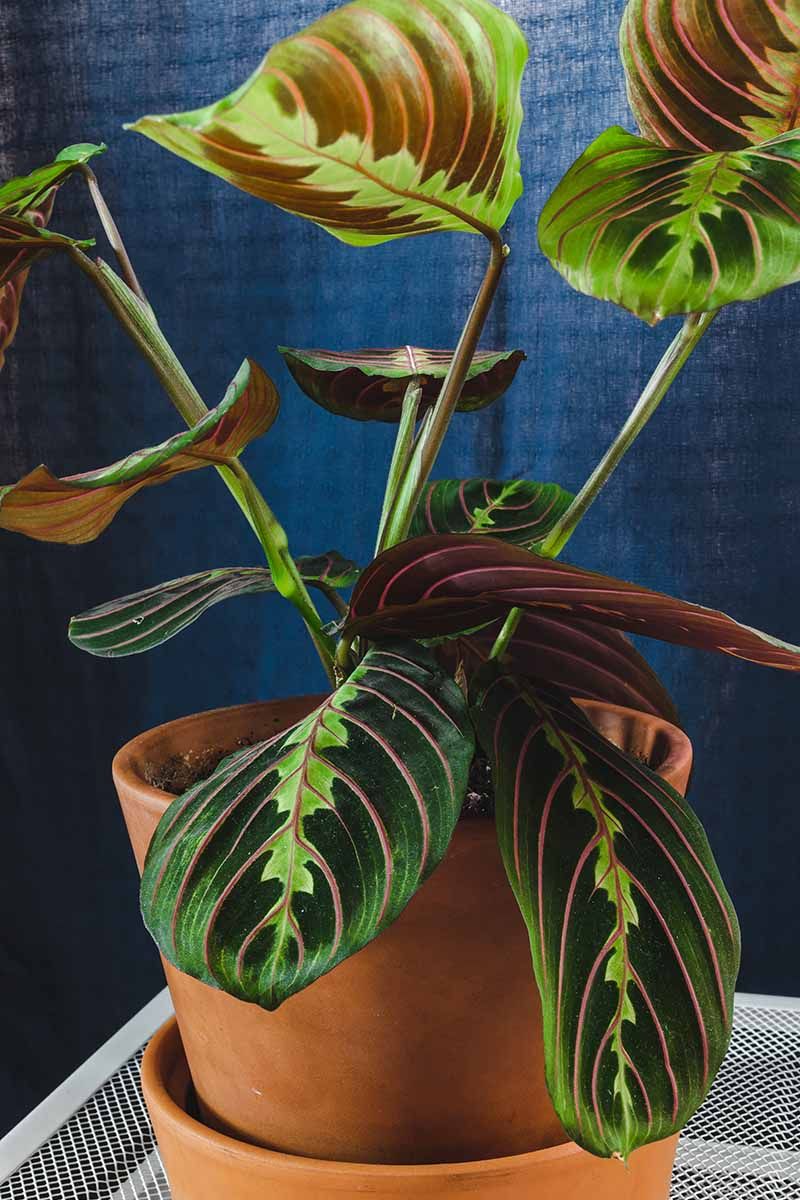
Knowing how a leaf moves is one question. Knowing why it evolved to move is another, and that second one is still open.
A review of the functions of foliar nyctinasty lays out several ideas without crowning a winner.
One idea involves temperature: folded leaves may lose less heat on a cool night. Another involves water on the leaf surface, since a tilted leaf might shed dew differently.
Others point to light sensing or to discouraging plant-eating insects.
All of these are hypotheses. A plant could gain a benefit from one of them, several, or none that has been clearly shown.
Different plants may even fold their leaves for different reasons.
For a home gardener, the useful point is that no one can say your Maranta folds up to save water or to keep pests away. Those stories sound neat, but they have not been settled.
You can enjoy the nightly show without needing a tidy explanation attached to it.
It also means the pose itself does not give you care instructions. The plant is doing something it has long done, for reasons scientists are still testing.
Keep Maranta soil moist, not waterlogged
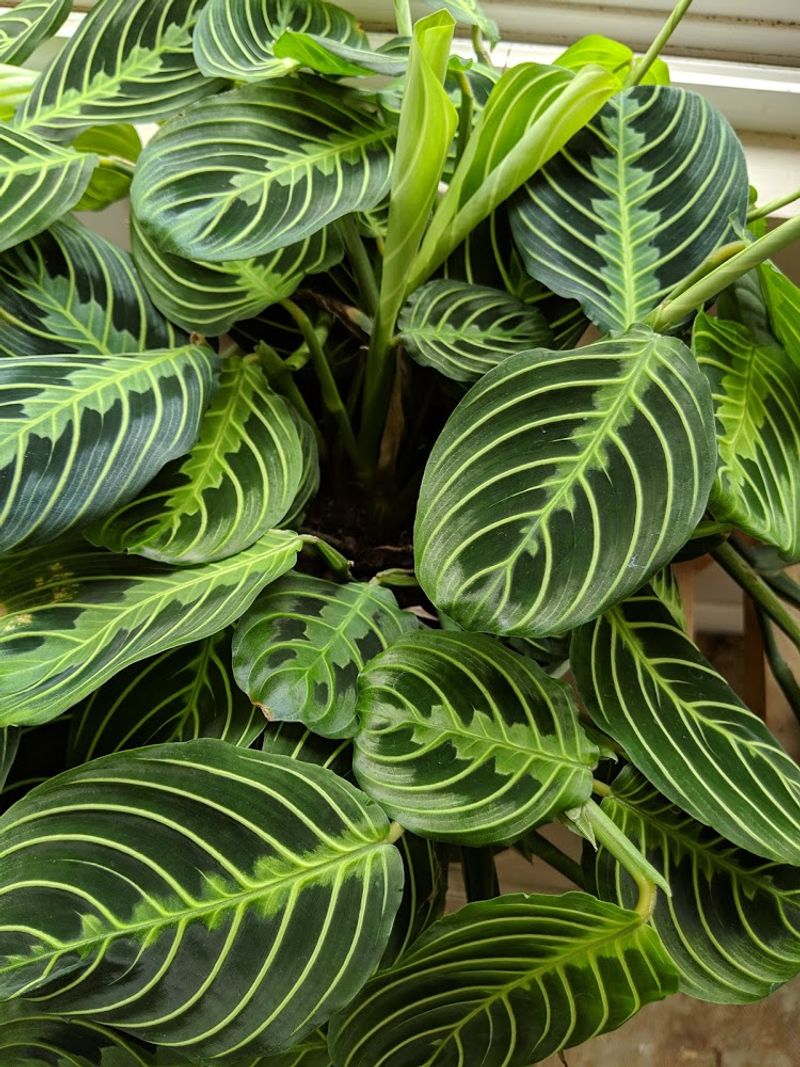
Since leaf position says nothing reliable about thirst, the soil is your best guide. Push a finger an inch or so into the mix before you water.
If it feels barely damp, water; if it is still clearly wet, wait.
During active growth, NC State Extension advises keeping a Maranta’s soil evenly moist, and University of Nevada, Reno Extension puts it as moist but never soggy. A rigid weekly schedule can miss that mark, because light, pot size, and season all change how fast the mix dries.
Expect to water less as growth slows in winter. Use a pot with drainage holes and a well-drained potting mix, and tip out any water that collects in the saucer.
Try to keep water from sitting on the crown, where the stems meet.
Why the fuss? University of Wisconsin-Madison Extension explains that poor drainage and constantly wet soil can contribute to root rot.
If leaves look limp while the soil is soggy, extra water will not help.
Your plant can fold its leaves every evening without any help from you. Let it do that, and let the soil, not the pose, tell you when to water.