
If Your Christmas Cactus Leaves Are Turning Red, Here’s What It’s Trying To Tell You Before Bloom Season
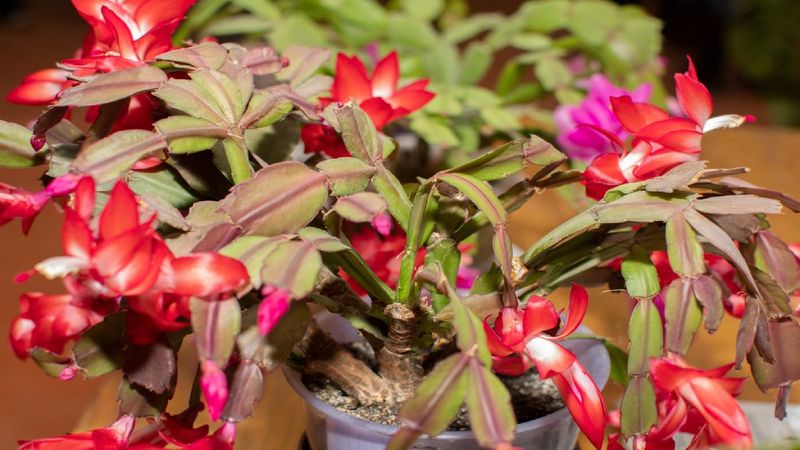
Red edges on your holiday cactus can look alarming, especially right before bloom season. The color is a clue, not a verdict.
A few quick checks can tell you what your plant is dealing with, and which common fixes you can skip. Here is how to read the signs without guessing.
Red segments are a clue, not a diagnosis
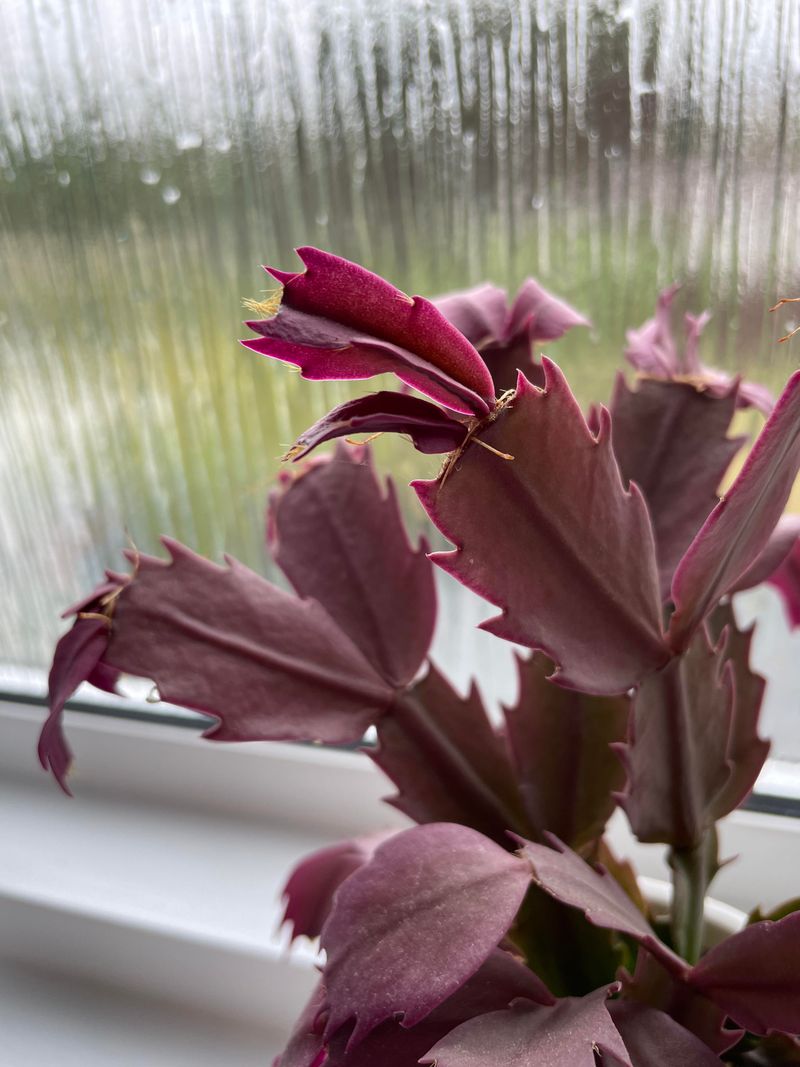
Those flat, jointed stems on your holiday cactus are often called leaves, though they are really stem segments. When they pick up a reddish or purplish tint, the plant is usually reacting to some kind of stress.
The color tells you something changed, but it does not tell you what.
According to UC Master Gardeners of Sacramento County, possible causes include too much sun and overwatering, and even a heavy bloom load can stress a plant. Because several different things can lead to the same color, no single fix works for every plant.
So start with two simple checks. Look at how much light reaches the plant, and feel how wet the growing medium is.
Those two facts will point you toward the right next step far better than the color will.
Here is the reassuring part. Red segments do not mean your plant is dying, and they are not a sign that buds will fail.
Flowering is tied chiefly to day length and temperature, as covered in Iowa State Extension guidance on blooming. A red-tinged plant can still set buds in the right conditions.
Think of this article as an inspection checklist rather than a cure. You fix what you actually find, and leave the rest alone.
Could strong light be stressing the stems?
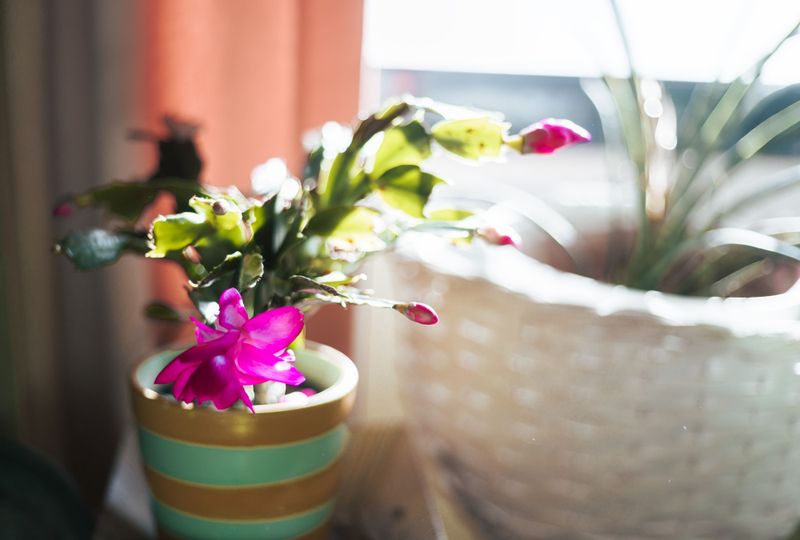
Walk over to where your plant sits and notice when the sun actually touches it. A spot that looks cozy in the morning may get hit by hot, direct rays in the afternoon.
Glass can magnify that heat, so a south or west window deserves a second look.
Holiday cacti generally do best in bright, indirect or filtered light, which is the kind you get a few feet back from a window or behind a sheer curtain. University of Minnesota Extension notes that intense light can damage the stems, and UC Master Gardeners list too much sun among the possible causes of red segments.
If strong direct sun does reach your plant, slide it to brighter shade. A dim corner is not the answer, since the plant still needs good daytime light.
Notice that this move only makes sense when your plant’s exposure matches the story. If it already sits in gentle, filtered light, moving it will not solve anything.
Light is one possible explanation, not a universal treatment.
Also, direct sun is not required for blooming. Bright and gentle beats hot and harsh.
Check the growing medium before you water
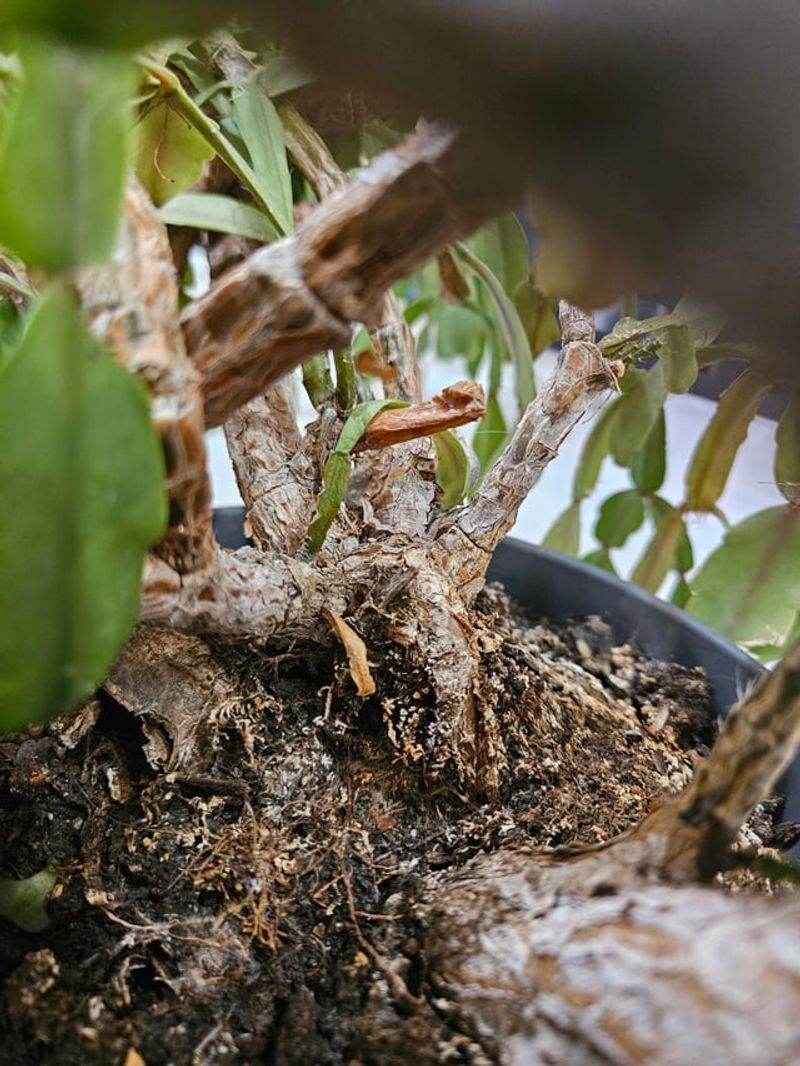
Reaching for the watering can feels like the natural response to a stressed plant. With red segments, though, that instinct can backfire.
Color alone does not show that your cactus is thirsty, and UC Master Gardeners also name overwatering as a possible cause.
Push a finger an inch or two into the mix. If it feels damp, hold off.
If it is dry, a drink may be reasonable.
Remember that holiday cacti are rainforest plants, not desert cacti. Illinois Extension suggests letting the medium dry between waterings, rather than keeping it constantly soggy.
Next, check drainage. Look for holes in the bottom of the pot, and empty any saucer so the pot is not standing in water.
A pot and mix that drain freely matter, according to University of Minnesota Extension.
One warning sign deserves attention. If the soil is wet and the plant looks wilted, roots may be in trouble.
Adding more water in that case could make things worse.
The goal is simple: let the medium dry a bit between waterings without leaving the pot sitting in water.
When is red more than ordinary discoloration?
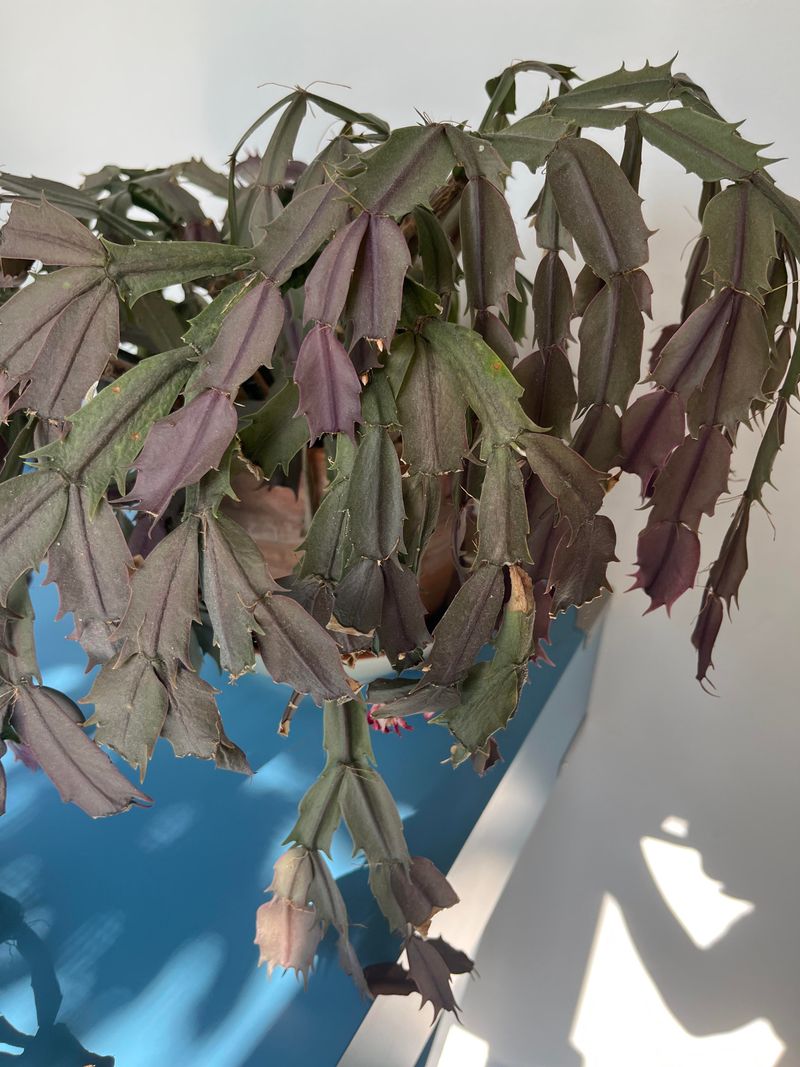
A reddish tint on otherwise firm, healthy stems is one thing. Certain other signs tell a different story, and they call for closer attention.
Watch for lesions that look wet, soft, or slimy, or that seem to spread from one segment to the next. Pay extra attention near the soil line.
Wilting or whole branches collapsing are also reasons to look beyond routine light and watering tweaks, as described by University of Minnesota Extension.
Firm stems with a color shift are usually a different situation from mushy, collapsing ones. You do not need to name the problem yourself, and guessing at a specific disease is not helpful.
If you see these signs, avoid piling on treatments or products. Instead, reach out to your local cooperative extension office or a trusted nursery for advice that fits your plant and your area.
Until then, hold off on extra water and keep the plant in steady, gentle light. A calm response beats a flurry of fixes.
Fall buds depend on darkness and temperature, not red color
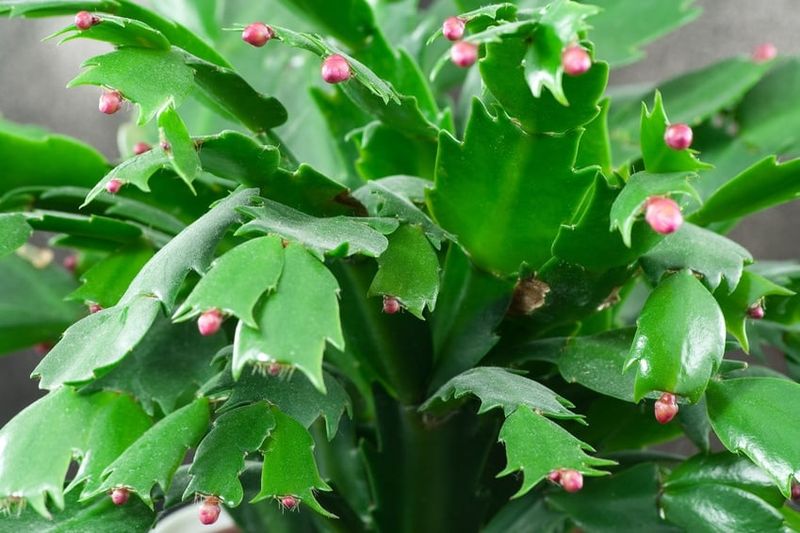
Many gardeners worry that red segments mean no flowers this winter. The sources reviewed do not link the two.
Bud formation depends chiefly on day length and temperature, according to Iowa State Extension.
For fall, Illinois Extension recommends at least 12 hours of continuous darkness for five to six weeks. It also suggests daytime temperatures around 65 to 70°F and nights around 55 to 65°F.
Continuous is the key word. A hallway light or lamp switching on in the middle of the night can interrupt the dark period, so choose a room where evenings stay dim.
Treat those numbers as a starting point. Iowa State notes that needs vary by cultivar, with many plants wanting 14 to 16 hours of darkness while some can bloom with 12.
Details are in Iowa State’s holiday cactus guide.
Also, many plants sold as Christmas cactus are really Thanksgiving cactus or hybrids. Thanksgiving cactus segments usually have pointed teeth, while true Christmas cactus segments have rounded or scalloped edges.
Bloom timing can differ, so no single calendar fits every plant.
Nothing here guarantees blooms. It simply gives your plant suitable conditions to try.
Once buds appear, keep conditions steady
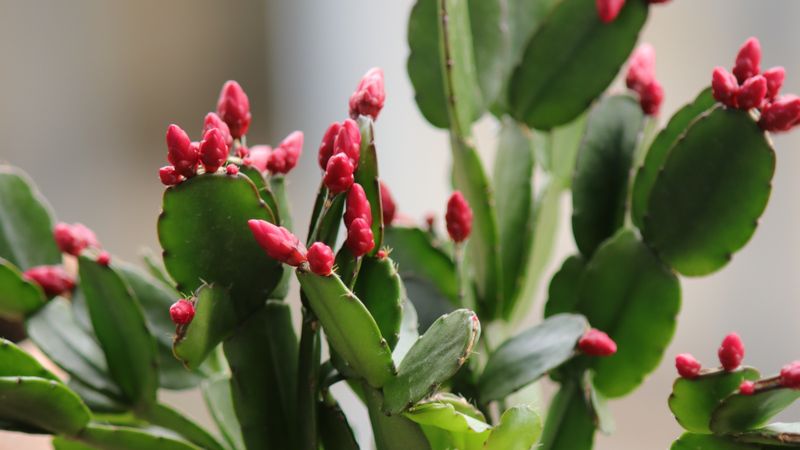
Tiny buds are a delicate stage. Plants at this point can drop them if something changes suddenly, which is a common heartbreak for holiday cactus owners.
According to Iowa State Extension, drafts, sudden temperature swings, too much or too little moisture, and moving the plant can all contribute to bud drop. University of Minnesota Extension offers similar cautions.
In practice, that means picking a spot and leaving the plant there. Keep it away from heating vents, exterior doors, and cold glass.
Skip the urge to rotate it for a better view.
Keep your watering routine even, using the same dry-between-waterings check from earlier. Avoid letting the medium swing from bone dry to soaked.
This is also a poor time for big projects. Holiday cacti generally like being a bit pot-bound, and repotting is best done in spring or early summer, as UC Master Gardeners and Iowa State both describe.
Pruning is not a default fix for red color either.
Once buds show, steady and boring is exactly what you want.
Let what you find guide the fix
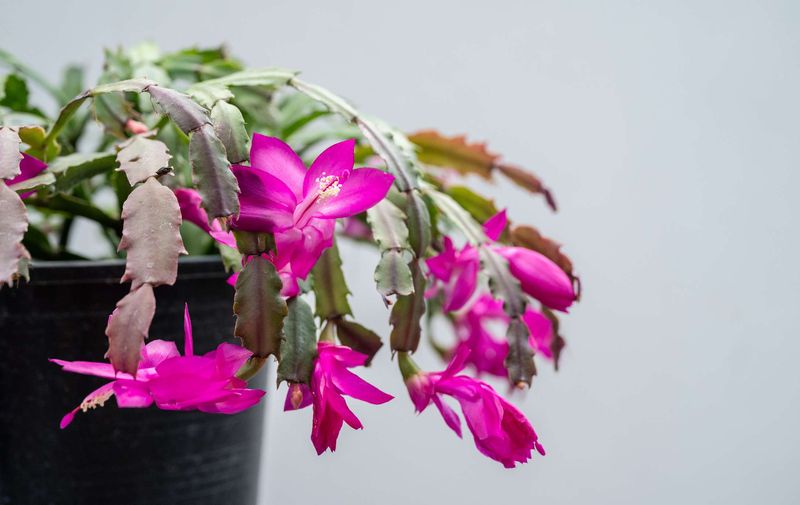
Run through the checks in order. First, look at the light and decide whether strong direct sun reaches the stems.
Second, test the growing medium and the drainage before any water goes in. Third, watch for wet, soft, or spreading spots, wilting, or collapsing branches.
Fix only what you actually find. As UC Master Gardeners describe it, red is a general stress signal, so there is no single cure and no promise of green stems.
Flowering is its own track, tied to the long nights and cool temperatures covered in Iowa State’s guide.
A little red is often just your cactus clearing its throat.