
The Rare Winter Hummingbirds That Visit North Carolina Yards After The Ruby-Throats Leave
Most North Carolina gardeners take their hummingbird feeders down once the Ruby-throats head south in fall. That habit might mean missing one of the coolest wildlife surprises your yard can offer.
Every winter, a handful of tough little hummingbirds from the western United States show up at NC feeders, and some stay until spring. Knowing who they are and how to help them turns your backyard into a winter refuge for birds that need it most.
1. Rufous Hummingbird
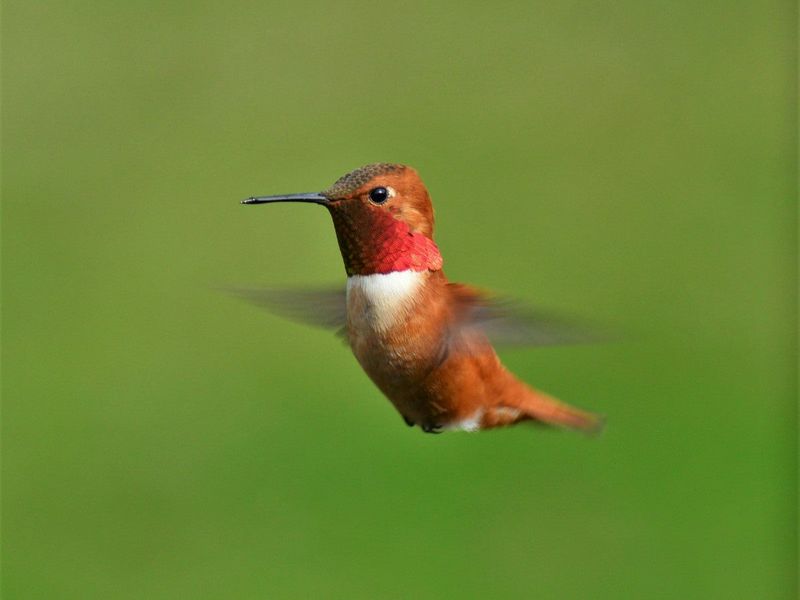
Picture a frosty December morning in Asheville or Greensboro, and a flash of copper zips past your kitchen window. That feisty bird is almost certainly a Rufous Hummingbird, the most regular winter visitor in the state.
Birders now treat it as an expected part of the NC winter rather than a fluke.
Rufous Hummingbirds breed as far north as Alaska, so a chilly Carolina night does not scare them much. Most arrive at feeders in November and December, and some linger until early or mid-April.
Adult males glow orange, while females and young birds look greener with rusty patches on the sides and tail.
Expect attitude. These birds are famous bullies at the feeder and will chase off anything with wings, so hanging a second feeder out of sight of the first can keep the peace.
If one claims your yard, keep the nectar fresh all winter, because a bird that finds a reliable meal often returns to the same yard year after year.
2. Calliope Hummingbird
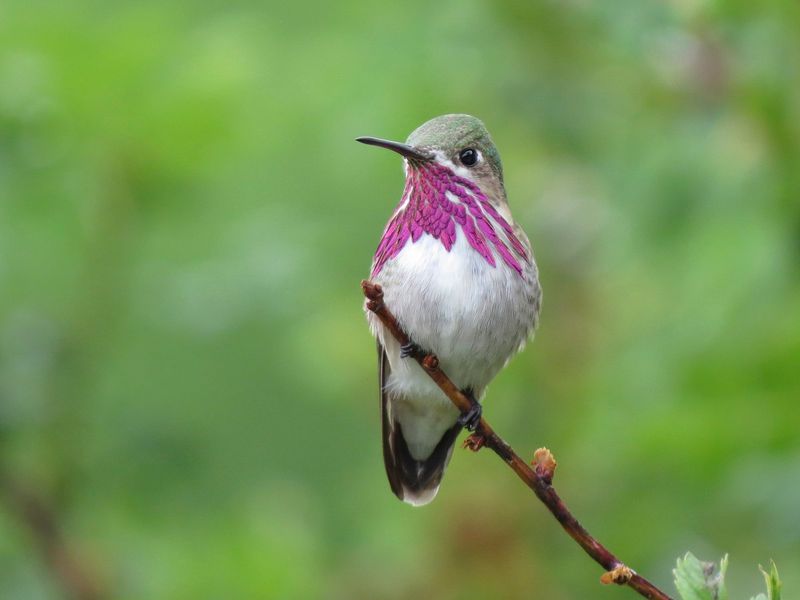
Weighing about as much as a ping-pong ball, the Calliope is the smallest bird breeding in the United States. Spotting one in January feels a little like finding a gemstone in your mulch.
Somehow, this mountain bird of the West sometimes ends its fall journey in the Carolina Piedmont.
Most NC sightings come from residential feeders around towns like Raleigh, Durham, and Charlotte. That detail matters, because it means ordinary homeowners, not just expert birders, are the ones finding them.
Males wear purple streaks on the throat, but winter birds are often plain females or youngsters with a short tail and stubby bill.
Fun fact: a Calliope’s tail barely reaches past its wingtips when perched, which is one clue banders use to tell it apart. If you suspect one, snap a photo and share it with a local bird club.
Licensed hummingbird banders track these visitors, and your report could add to what scientists know about their shifting winter range.
3. Black-chinned Hummingbird
Here is the tricky one. A winter female Black-chinned looks so much like a Ruby-throat that even seasoned birders squint twice.
The giveaway is often in the bill, which is slightly longer and droops a bit at the tip.
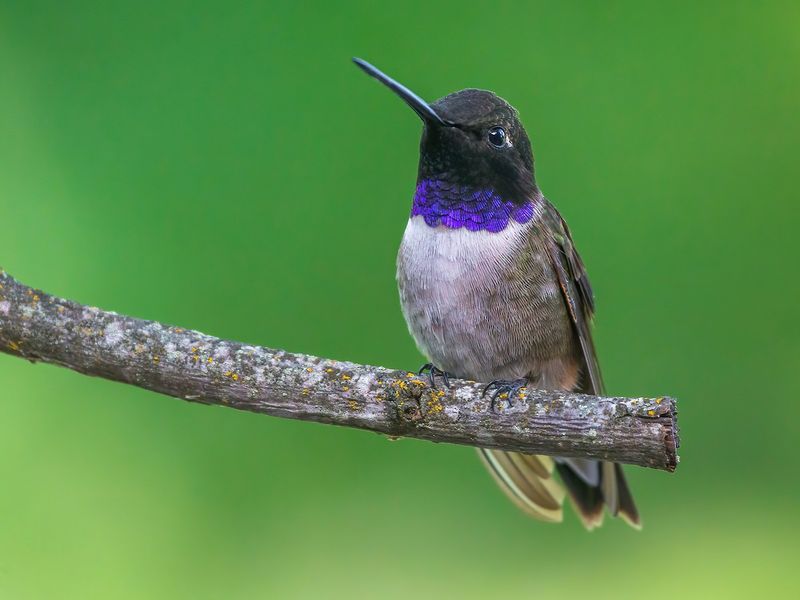
Black-chinned Hummingbirds normally nest across the dry Southwest, yet they show up in North Carolina often enough to count as regular winter visitors. Adult males are easier, with a velvet black chin and a thin strip of violet that only shines in good light.
Another quirk is the tail, which this species pumps almost nonstop while feeding.
So if you see a plain greenish hummingbird at your feeder in December, do not assume it is a late Ruby-throat. Watch for that constant tail pumping and take a few photos from different angles.
A careful look may reveal a western traveler hiding in plain sight.
4. Overwintering Ruby-throated Hummingbird
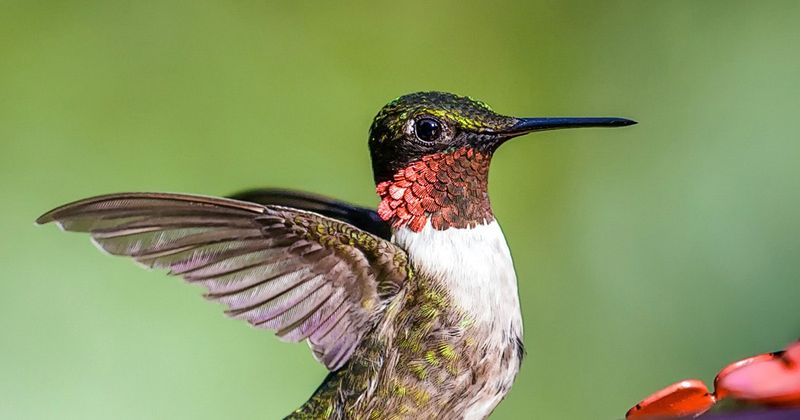
Not every Ruby-throat gets the memo to leave. Along the mild North Carolina coast, from the Outer Banks down to Wilmington, a small but stubborn group stays put through winter.
Ocracoke residents have reported them at feeders even in January.
Coastal winters stay warm enough for a few flowers and plenty of tiny insects, which gives these hardy birds a fighting chance. Your feeder can make the difference on a cold snap, when natural food disappears overnight.
For that reason, coastal homeowners have a special role in keeping at least one feeder clean and full all season.
Inland gardeners should know something too. A greenish hummingbird in the Piedmont after November is more likely a western visitor than a lingering Ruby-throat.
Either way, the advice is the same: leave the feeder up, and let the bird tell you who it is.
5. Accidental Western and Tropical Strays
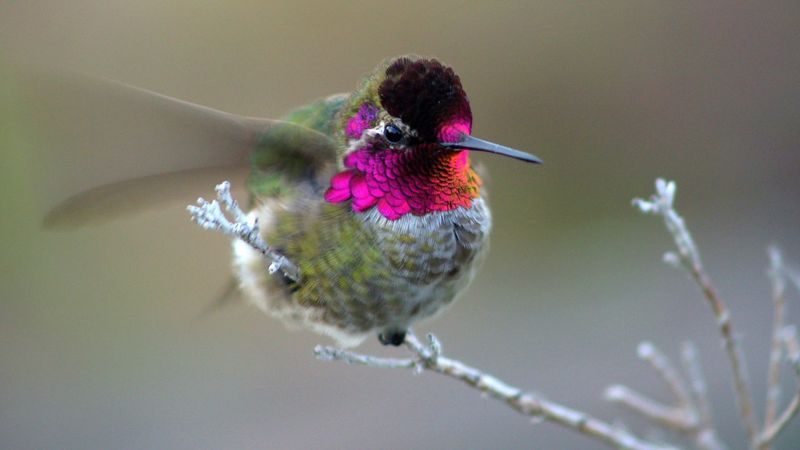
Some winter hummingbirds in North Carolina are true lottery tickets. Allen’s, Anna’s, Broad-billed, Broad-tailed, and Buff-bellied Hummingbirds have all been documented in the state.
Even tropical showstoppers like the Green-breasted Mango and Mexican Violetear have turned up.
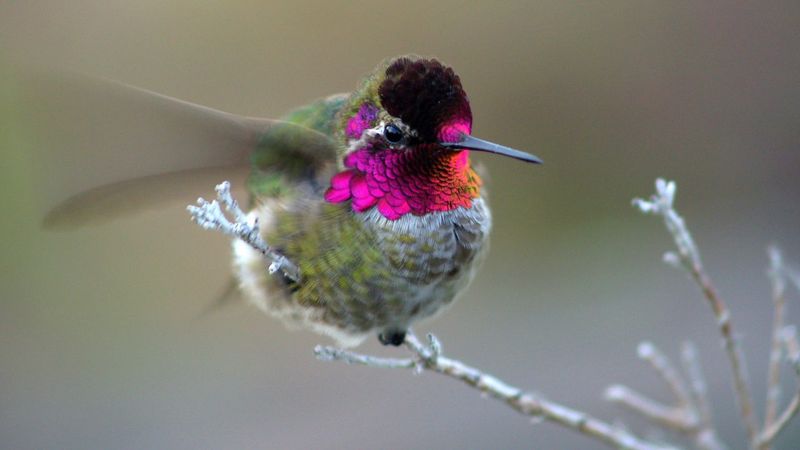
These records are rare enough to excite birders statewide, and nearly all began with a homeowner who noticed something odd at a feeder. An Anna’s male, with his rose-pink helmet, is hard to forget.
A Broad-billed shows a bright red bill and deep blue throat that look almost painted on.
Nobody can plan for these visitors, but you can be ready. Keep a camera near the window and jot down the date and weather when you see anything unusual.
If a mystery bird appears, contact the Carolina Bird Club or a local Audubon chapter so experts can confirm it.
6. Winter Feeder Care That Keeps Visitors Safe
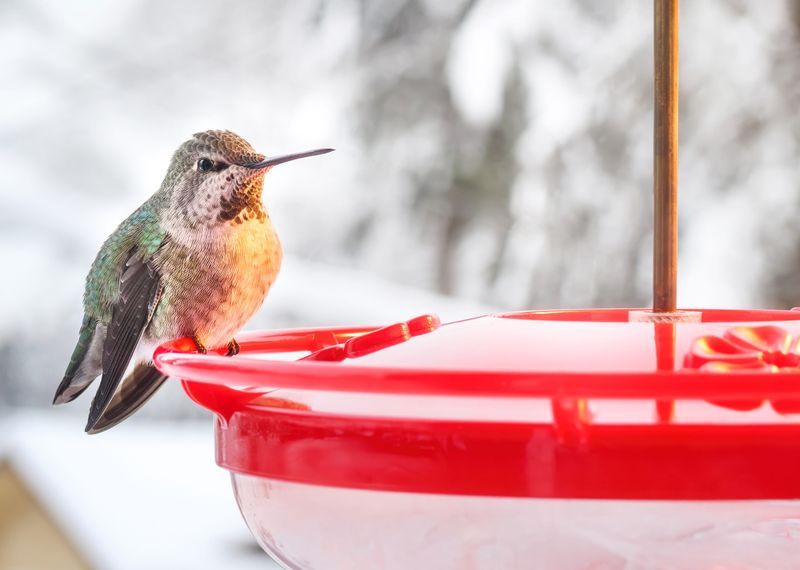
Good intentions can go wrong fast with a dirty feeder. Moldy or fermented nectar can sicken a bird that is already burning through energy just to stay warm.
A few simple habits keep your winter guests healthy.
Mix four parts water to one part plain white sugar, and skip red dye, honey, and artificial sweeteners. Change the nectar every three to five days, sooner on warm spells, and scrub the feeder weekly with hot water and a bottle brush.
A rinse with one part vinegar to four parts water works well as a disinfectant.
Freezing nights below 27 degrees can turn nectar into slush. Bring the feeder inside after dark and rehang it at first light, or warm it with an outdoor utility light or plumber’s heat tape.
Hang a couple of leak-proof feeders with perches spaced apart so a bossy Rufous cannot guard them all.
7. Native Plants and Habitat for Winter Hummingbirds
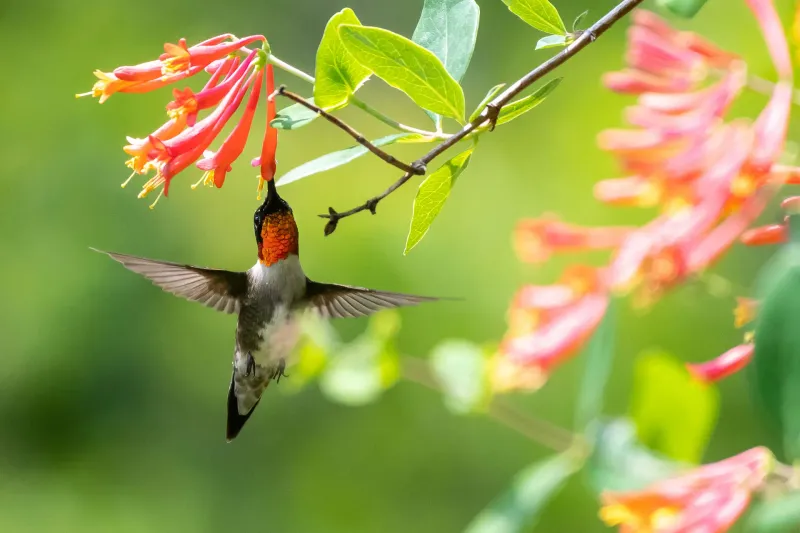
Feeders help, but a yard full of the right natives is the real winter safety net. Coral honeysuckle can start blooming in March, just when lingering Rufous Hummingbirds need fuel for the long trip west.
Carolina jessamine, crossvine, and red buckeye add more early nectar.
Here is a swap worth making this season. Pull out invasive Japanese honeysuckle, which smothers native shrubs, and plant coral honeysuckle in its place.
Add bee balm, cardinal flower, and native salvias for staggered blooms through the warmer months.
Hummingbirds also eat tiny insects and spiders for protein, so skipping pesticides may help keep that food on the menu. Leave some shrubs, small trees, and twiggy perches along your yard edges for cover.
Talk with neighbors too, because connected yards create corridors that matter far more than one lonely patch of habitat.