
Rosemary Has Oil-Bearing Leaf Glands, but Do They Stop Garden Pests?
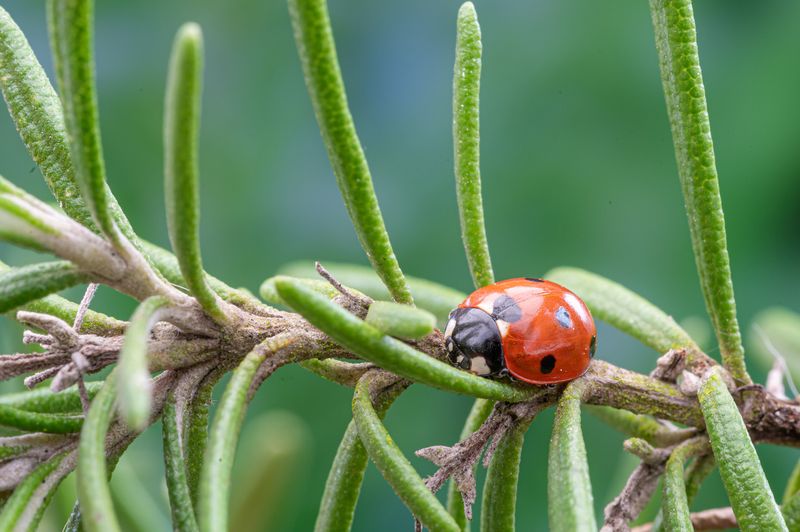
Brush past a rosemary bush and the scent hits you right away. That smell comes from oil stored in tiny structures on the leaves, and some online posts claim those structures burst when a pest bites.
The real story is more interesting, and it matters if you are hoping rosemary will protect the plants you already grow. Here is what researchers have actually found, and what to do when something starts chewing your garden.
Rosemary leaves carry oil-bearing glands
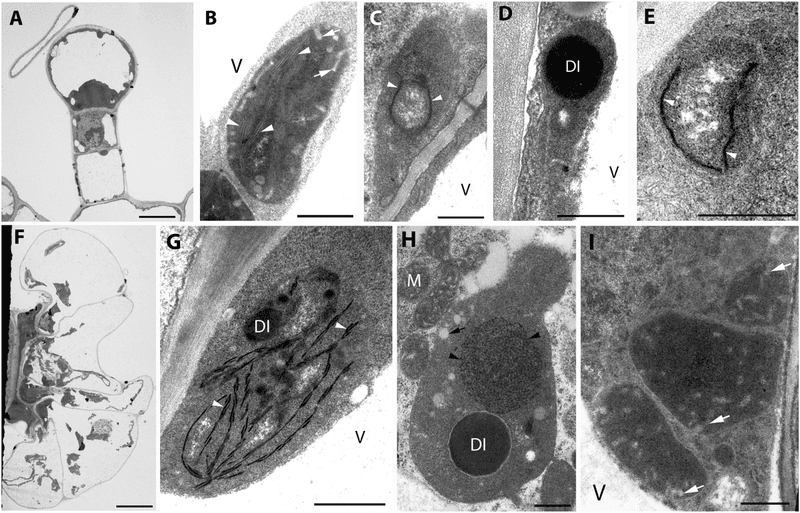
That piney scent drifting off your rosemary has a source you can actually study. Researchers who examined the leaves under a microscope found two kinds of glandular hairs, called peltate and capitate glands.
In an anatomical and chemical study of rosemary leaves, volatile compounds were found in these structures.
Think of the glands as tiny storage spots for aromatic oils. The peltate type has a space under its outer skin, called the cuticle, where the oil collects.
That is a real, documented feature of the plant.
Here is where gardeners should slow down. Not every leaf has the same number of glands, and not every gland holds the same amount of oil.
The mix of scent compounds shifts too. Research on rosemary leaf oil shows that composition changes with factors such as leaf age and growing conditions.
So a young shoot on a potted plant in a sunny window may smell and chemically differ from an older leaf on a shrub in your border. If you grow rosemary in a hot, dry bed, your plant may not match the one in a lab.
The anatomy is solid, but it only tells us the plant stores oil. It does not tell us what that oil does against the bugs in your yard.
A ruptured gland is not proof of a bite-triggered defense
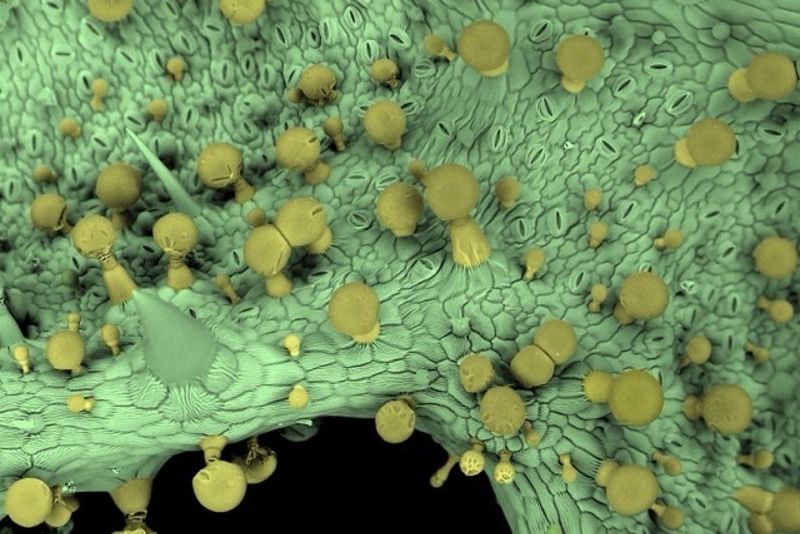
Yes, scientists have seen rosemary glands with a torn or ruptured cuticle. The same leaf anatomy study documented that.
This is the grain of truth behind the viral claim.
The leap comes next. Seeing a gland that has burst is not the same as showing that an insect bite sets it off.
Glands can split for other reasons, and the research does not show that a bite reliably triggers a burst or that the burst sends the insect away.
That is why the original headline overshoots. It says every leaf hides pouches and that a bite pops them.
The evidence only supports oil-bearing glands, some of which have been observed with ruptured cuticles.
Picture a smoke detector in a photo. You can see the device on the ceiling, but the photo does not prove it goes off when toast burns.
A pest-triggered defense would need tests that watch insects feed and measure what happens, and those tests are missing here.
For your garden, the takeaway is simple. Enjoy the science, but do not count on a built-in alarm system when aphids or caterpillars show up on your tomatoes.
One moth responded to rosemary volatiles in lab tests
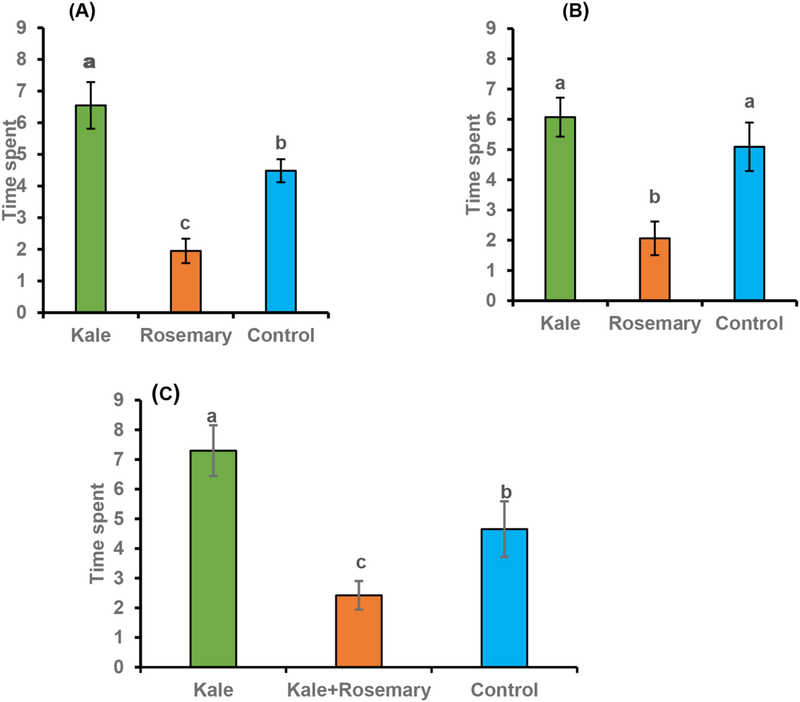
Moths are where the claim gets its best support, though it is narrow. A 2015 study tested how the tea geometrid moth, a tea plant pest named Ectropis obliqua, reacted to scents from rosemary.
The researchers measured both the moths’ antenna signals and their behavior.
The moths responded to several rosemary volatiles. Some individual compounds, and a mixture of them, repelled adult moths in the tests.
The scientists described this as a possible push cue, meaning a scent that nudges insects away. They saw it as a starting point for building a pest-management strategy, not a ready-made fix for home gardeners.
Now the limits. This was one species of moth, studied with isolated scents in controlled tests.
Nothing in it shows that moths in general avoid rosemary, or that a rosemary shrub by your back fence gives off enough scent to matter.
If your cabbage is being chewed by cabbage loopers or your corn has earworms, this study is not about those insects. Treat it as a clue for future research, not a promise for your beds.
A pepper-field result does not establish a general garden fix

Some real field data exists too. In an intercropping study, sweet peppers grown alongside rosemary had lower densities of aphids, thrips, and whiteflies.
That sounds promising, and it is worth knowing about.
Look closely at what was tested, though. The study did not look at moths at all.
It covered three small sap-feeding pests on one crop in one growing system.
The authors also noted that more work is needed to understand why the effect happened and whether it holds in other field systems. Many things could be at play, from scent to changes in how the crop was laid out.
Results like this can shift with the crop, the pest, the weather, and even the spacing of plants. A home bed of tomatoes and zinnias is a different setting from a pepper field.
Use the finding as a reason to be curious, not as a recipe. If you see aphids clustering on your peppers, you still need to check the plants, identify what is there, and respond to that pest directly.
Treat companion planting as an experiment, not pest control

Planting rosemary next to your beans or tomatoes is harmless, and it gives you a fresh herb for the kitchen. Just think of it as a trial, not a guarantee.
Some gardeners notice fewer pests, and others see no change.
Extension experts are cautious about this idea. University of New Hampshire Cooperative Extension says it does not generally recommend companion planting as an effective way to control pests.
If you want to experiment, make it a fair test. Keep a similar bed without rosemary, or note what you see week by week.
Otherwise a lucky season can look like proof.
The most useful habit is scouting. Check the undersides of leaves, new growth, and stems every few days.
Look for chewed edges, sticky residue, tiny eggs, or curled leaves.
Catching a problem early gives you far more options than hoping a neighbor plant will handle it. Rosemary can be one small part of a mixed garden, but your eyes are the main tool.
Rosemary essential oil is not the same as a living plant

A potted rosemary plant and a bottle of rosemary oil are very different things. The plant releases a faint, changing scent.
The oil is a concentrated product, and research on it should not be read as research on your shrub.
A pest-management profile of rosemary oil reports that pest control results with formulated oils vary. Some tests also reported plant injury.
The profile notes big gaps in what is known about how the oil behaves in the environment too.
That is why this article gives no homemade spray recipe. Mixing strong oil at home makes it hard to know the dose, and a leaf that is burned is a new problem on top of the old one.
If you decide to use a pesticide product, choose one made for your pest and your plant. Then follow the label for the rate, timing, and safety steps.
Keep in mind that sprays can also reach insects you want around, such as pollinators and predators. Targeted steps usually protect your garden better than a broad splash of anything.
For caterpillars, identify the pest and use targeted steps
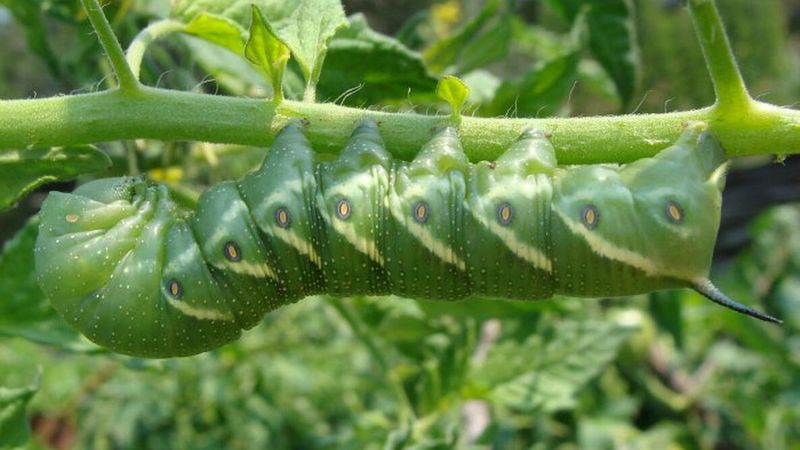
Holes in your leaves are a good reason to stop and look. Start by finding the culprit.
Check for the caterpillar itself, small eggs, ragged feeding holes, dark droppings, or leaves rolled and tied together.
Different caterpillars call for different responses, so a quick identification pays off. A hornworm on a tomato is a very different problem from a few small larvae on a shrub.
For light damage, the simplest steps are often enough. UC IPM guidance suggests handpicking caterpillars or pruning off infested leaves where that makes sense.
If treatment is truly needed, Btk is one option. It only works when caterpillars eat foliage that has been treated, and it is most effective on small larvae.
Large caterpillars are much harder to stop.
Be careful about where you use it. Do not treat plants meant to feed butterfly caterpillars, such as milkweed for monarchs or parsley for swallowtails.
As with any product, read and follow the label.
Let rosemary be a curiosity, not your only defense
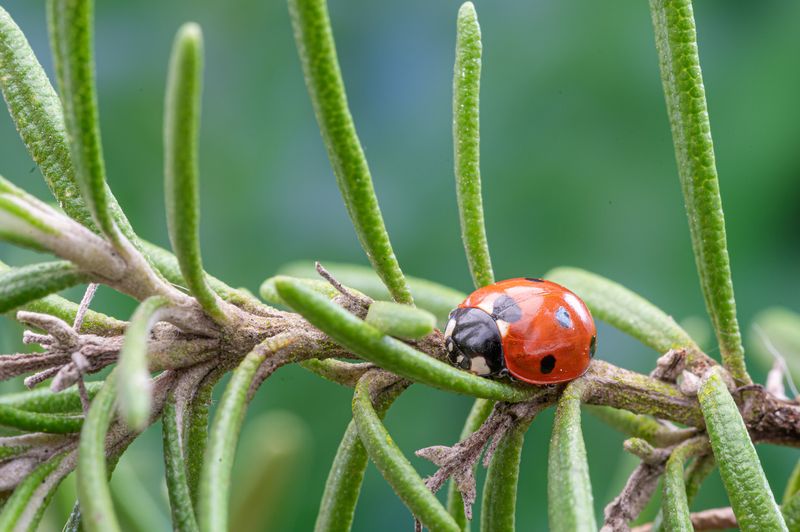
Rosemary does have oil-bearing glands, and researchers have seen some with ruptured cuticles. A universal bite-triggered system and dependable backyard pest control are not shown.
When leaves start to disappear, look closely, identify the pest, and follow targeted guidance.
Keep rosemary for roast potatoes and sunny borders. Your own careful looking is the better pest alarm.