
Yellow Leaves On Your Geraniums Can Offer Clues To The Likely Problem, Here’s How To Read Them
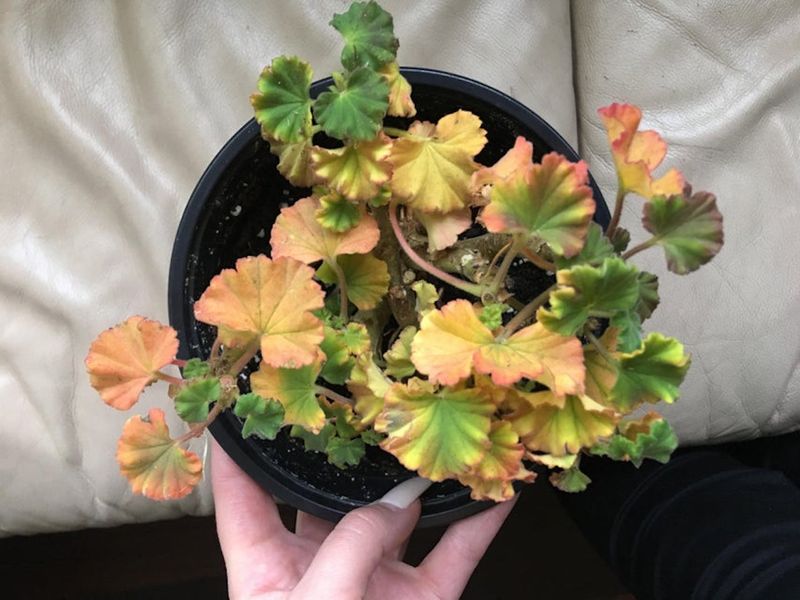
Spotting yellow leaves on a geranium you have been caring for can make your stomach drop. The good news is that yellowing is a clue, not a verdict, and a few quick checks can tell you a lot.
Where the yellow shows up and what it looks like can help narrow down what is going on. A calm look at your plant can save you from fixes it does not need.
Yellow leaves narrow the search, but they do not name the cause
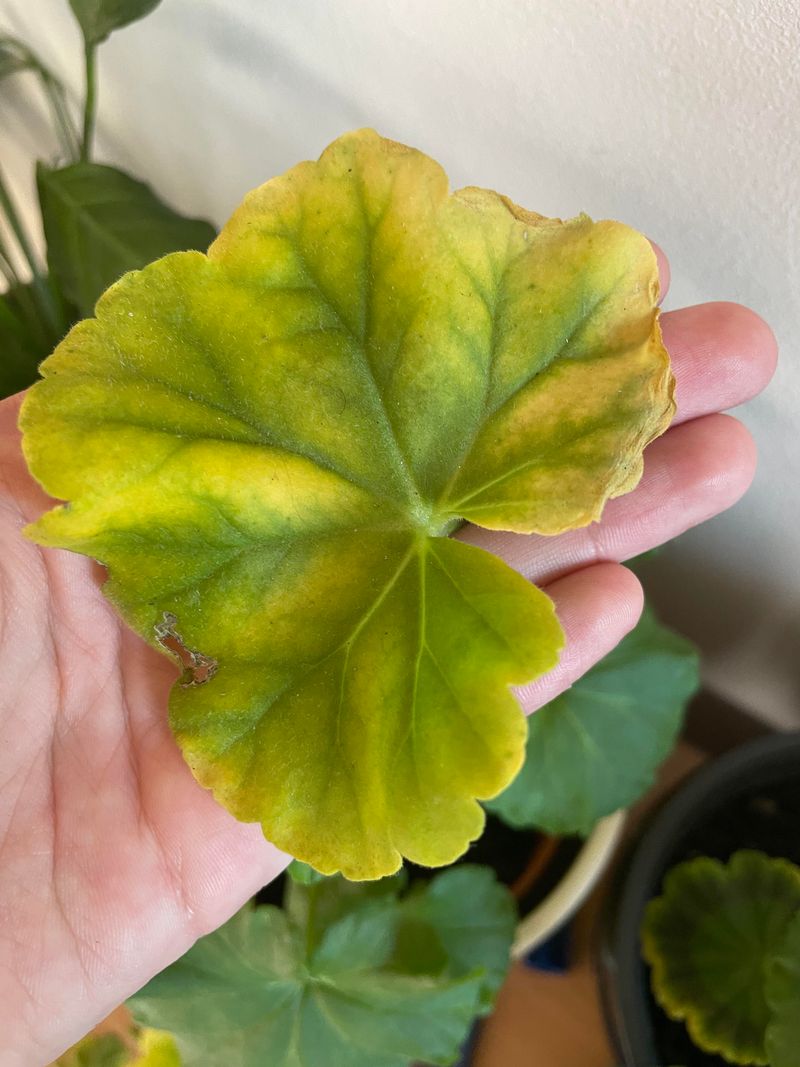
Think of yellowing as a clue that helps you narrow the search. Several different problems can turn geranium leaves yellow, including too little water, root trouble, nutrient or salt issues, and disease.
Which leaves are affected and what the yellow looks like can point you in a direction, but it cannot name the cause by itself.
Start by writing down what you see. Are the yellow leaves old ones near the base, or new ones at the tips?
Is the whole leaf pale, are the veins still green, or are there distinct spots? A few quick notes make the next steps much easier.
It also helps to know what kind of plant you have. Most people who say geranium mean the annual Pelargonium sold for beds, pots, and window boxes.
Hardy garden geraniums, the Geranium species, are different plants, so the advice here is aimed at Pelargoniums. A Clemson Extension fact sheet on annual geraniums covers that plant’s basic needs.
Before changing anything, check the growing conditions. Look at soil moisture, drainage, and the undersides of the leaves.
Diagnostic guides like the University of Minnesota Extension leaf spot guide show how many different problems can look alike at first glance.
Check soil moisture and drainage before changing your watering
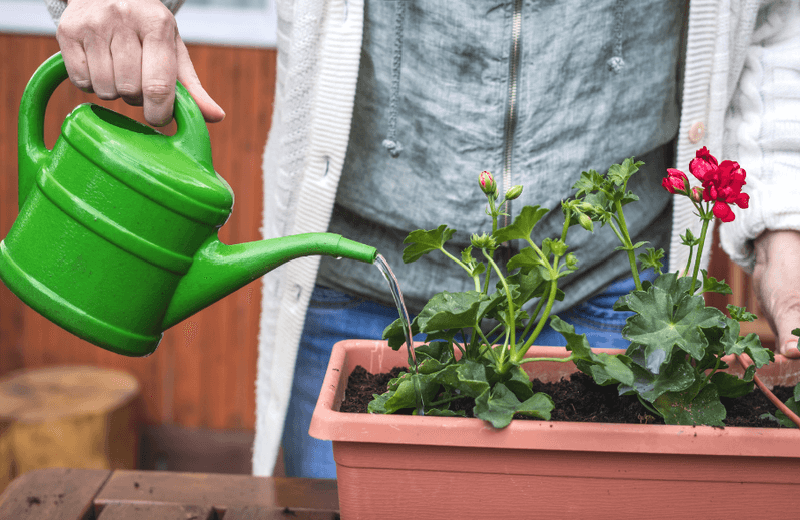
Soil tells you more than leaf color does. Push a finger about an inch or two into the pot before you reach for the watering can.
Then lift the pot or look underneath to make sure the drainage holes are open and water actually runs out.
Annual Pelargoniums generally do best when the soil dries a bit between waterings. Still, Clemson Extension notes that letting plants wilt can cause yellow leaves and leaf drop.
So a thirsty geranium and a soggy one can both show yellowing.
That is why a fixed schedule rarely works. A small pot on a hot deck in July may need water far more often than a large pot in cool spring weather.
Wind, sun, pot material, and soil mix all change how fast things dry out.
Here is a simple way to sort it out. If the soil is bone dry, the pot feels light, and leaves are limp, thirst is a strong suspect.
If the soil is wet days after watering, or the pot sits in a saucer of standing water, poor drainage is more likely.
If the soil is moist but the plant still looks poor, do not assume a watering problem. Soggy or damaged roots may be involved, and the roots are worth a gentle look.
Adjust one thing at a time and watch for a week or two, since changes show up slowly on new growth.
Older and newer leaves can offer different nutrient clues
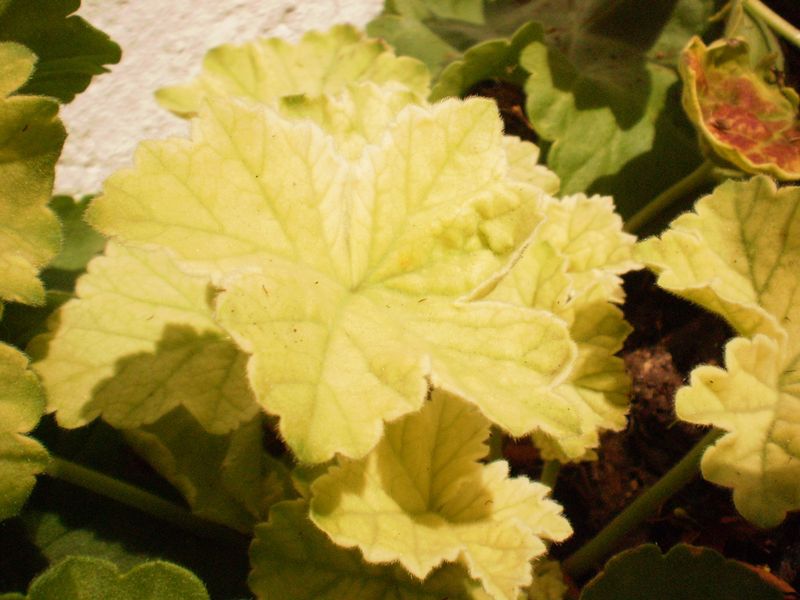
Leaf age can add a useful clue, especially when nutrients are in question. Lower, older leaves turning light green on a stunted plant are consistent with nitrogen deficiency, according to UMass Extension’s geranium nutrient photos.
The same source describes yellowing between the veins or along the edges of older leaves as a possible magnesium clue.
Newer leaves tell a different story. Yellow tissue between green veins on the newest growth fits iron deficiency.
But Iowa State Extension explains that this look does not prove the plant lacks iron.
High soil pH, wet roots, cold conditions, and root damage can all limit how well a plant takes up iron. In those cases the iron may be in the soil, but the plant cannot use it.
The pattern can look just like a shortage.
The same caution applies to older leaves. Pale lower leaves are only a hint of nitrogen trouble, and other root or growing problems can mimic it.
Plants also naturally shed a few of their oldest leaves.
Treat these patterns as a reason to look closer, not as proof. Check moisture, drainage, and root health first.
Hold off on adding products until you have a better sense of what is happening, since the wrong one can make matters worse.
Spots and bumps call for a look beneath the leaves
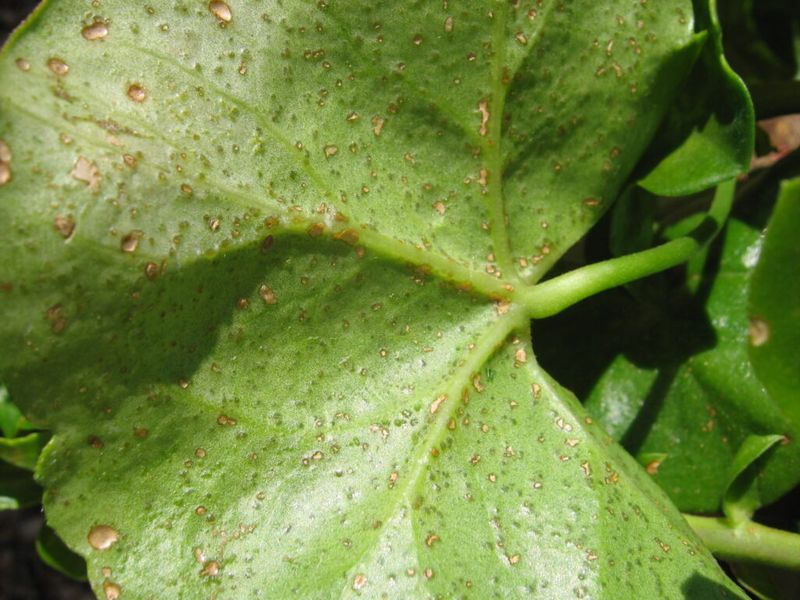
Spotty yellowing is not the same as an even fade, so flip a few leaves over. The underside often gives away what the top hides.
A magnifying glass or phone camera zoom works well here.
Rust is one possibility. It can show up as yellow spots on the upper surface with reddish-brown spore pustules underneath, as described in the University of Minnesota Extension diagnostic guide.
If you see those pustules, you have a strong clue worth pursuing.
Another look-alike is edema. This is a physical problem, not an infection, and it can cause blisters or corky bumps, often on older leaves.
Penn State Extension’s edema page has photos that help you compare.
Both can leave yellow or blotchy leaves, which is why the underside matters. Smooth, even yellowing without bumps points you back toward watering or nutrition checks.
Raised spots, pustules, or corky patches point you toward spots and bumps instead.
Keep your conclusions loose. Symptoms can overlap, and a leaf may have more than one thing going on.
Pick off badly affected leaves, keep foliage dry, and note whether new spots keep appearing. If you are unsure, take clear photos of both leaf sides to a local extension office.
Water-soaked lesions or dark stems raise a disease concern
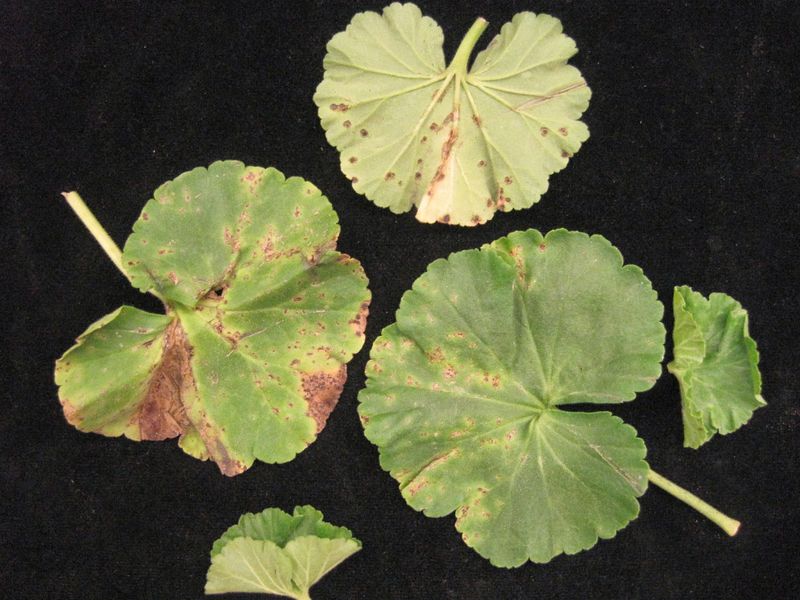
Some signs deserve more attention than plain yellowing. Water-soaked spots, V-shaped lesions on leaves, wilting, and darkened stems together raise concern for bacterial blight or another disease.
These are different from a pale leaf or two near the bottom of the plant.
The UMass Extension fact sheet on bacterial diseases of geranium describes these symptoms and why they matter. Spots on leaves can also come from other causes, so the University of Minnesota guide linked earlier is a helpful way to compare what you see.
If your plant matches this picture, take a few cautious steps. Avoid wetting the foliage when you water, and water at the soil level instead.
Move the plant away from your other geraniums while you sort out what is happening.
Photos and a call to your local extension office can help you get a reliable diagnosis. Disease symptoms can overlap with watering and growing problems, so a guess may send you down the wrong path.
Waiting for a clear answer is better than reaching for random sprays.
None of this means every yellow-leaved geranium is sick. Ordinary yellowing, even a lot of it, does not call for tossing the plant.
Save that decision for cases where the telltale lesions or stem changes show up.
Choose a low-risk next step instead of treating the color
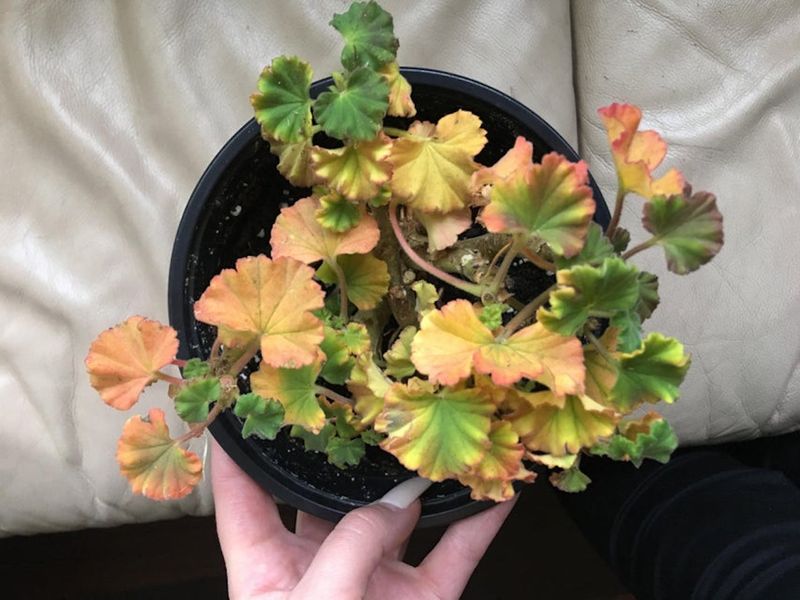
When the yellow shows up, run through a short routine. First, check the soil and make sure the pot drains.
Next, note which leaves are affected and what the pattern looks like. Then turn leaves over and look for spots, pustules, or bumps.
Resist the urge to feed the plant right away. Geraniums are sensitive to excess soluble salts, and UMass Extension’s soluble salt injury page shows how too much fertilizer can hurt roots.
A soil or potting mix test may be needed to confirm a salt or nutrient problem. The same goes for Epsom salts and iron products, which are not a safe fix for yellow leaves in general.
If you do fertilize, Iowa State Extension’s guide to growing annual geraniums is a sensible place to check basic care. Go lightly and follow the label.
If lesions, wilting, or dark stems appear, or the cause stays unclear, ask for a diagnosis. Removing a plant makes sense when infectious disease is suspected, as the UMass bacterial disease fact sheet describes.
Plain yellowing alone is not a reason to throw it out.
A geranium that is only telling you something usually forgives a patient gardener.