
Aloe Vera’s Flower Stalk: What It Does and Whether to Cut It
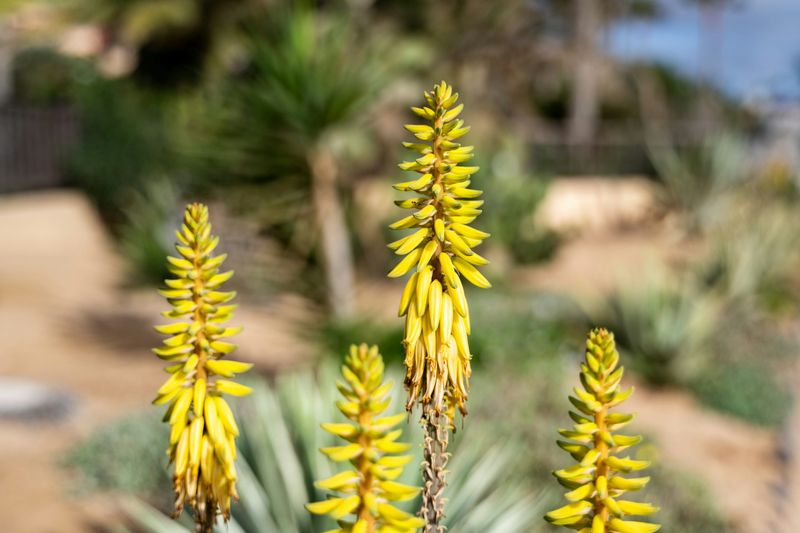
Your aloe plant might surprise you one day by sending up a tall, bare shoot from its center. Many gardeners wonder if it is a problem or something to chop off right away.
It is actually the part of the plant that carries its flowers, and it may offer a treat for visiting hummingbirds. Here is what the stalk does, what to do with it, and what to keep in mind around pets.
What the flower stalk carries
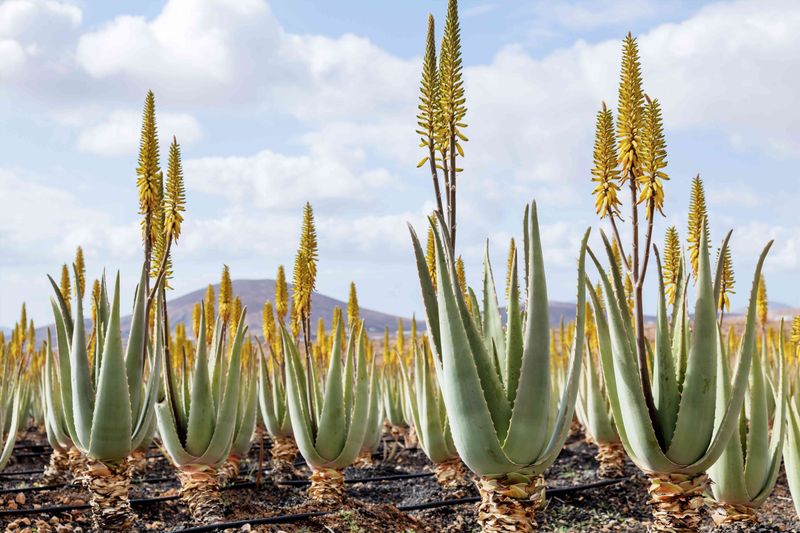
That tall shoot rising from the middle of your aloe is not a weed or a separate plant. It is the stalk that holds Aloe vera’s flowers, which grow in clusters along its length.
Think of it as the plant’s flower display, built on a long stem.
Flower color and size depend on where the plant grows. UF/IFAS Extension describes outdoor blooms in yellow or red.
Meanwhile, University of Arizona Cooperative Extension reports tubular pink-coral or yellow flowers on a stalk that can reach 2 to 3 feet in desert conditions.
Your own plant may look a bit different. A windowsill aloe, a potted patio plant, and an aloe in a warm garden bed all grow under different light, temperature, and space.
Stalk height and flower color can shift with those conditions, so treat those numbers as examples, not a promise.
It also helps to remember that the word aloe covers many species. Bloom habits you see on a neighbor’s plant or in a photo may belong to a different aloe entirely.
If your Aloe vera has a stalk with buds forming, that is a good moment to pause before reaching for the pruners. You may be looking at something worth watching for a few weeks.
What a bloom may—and may not—tell you
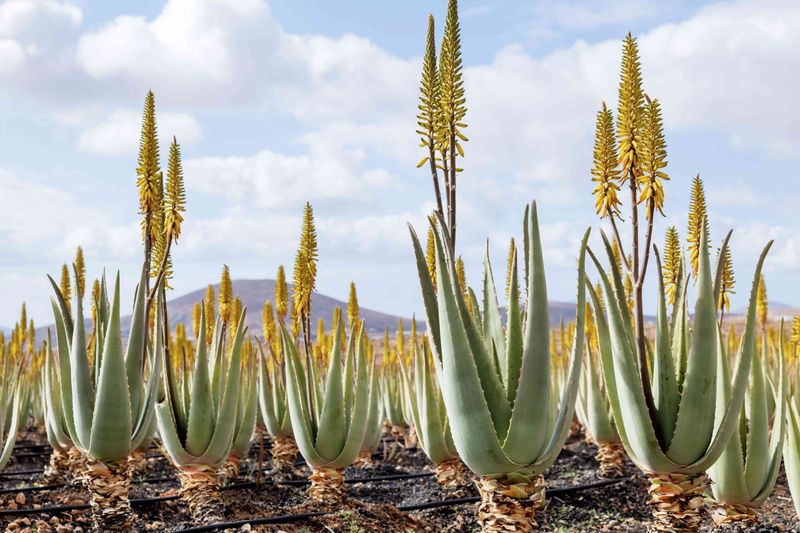
A flowering aloe often has a few years behind it. An extension answer says flowering is generally linked with established, mature plants that get good care.
The same answer mentions four years or longer, but that is a general observation, not a age rule your plant must meet.
A bloom is a nice sign, but it is not a health test. A plant can flower and still have a problem, and a plant with no flowers can be perfectly fine.
Judge your aloe by its leaves, firmness, color, and growth, not only by whether it blooms.
Timing varies too. According to UF/IFAS, outdoor Aloe vera may flower in late winter or spring, while indoor plants rarely bloom.
If yours stays flowerless on a windowsill, that is common and nothing to fix.
So if a stalk appears, you can relax. It is not a sign of trouble, and it is not a guarantee of perfect health either.
It is simply a feature of the plant that is worth understanding.
The flowers can offer hummingbirds nectar
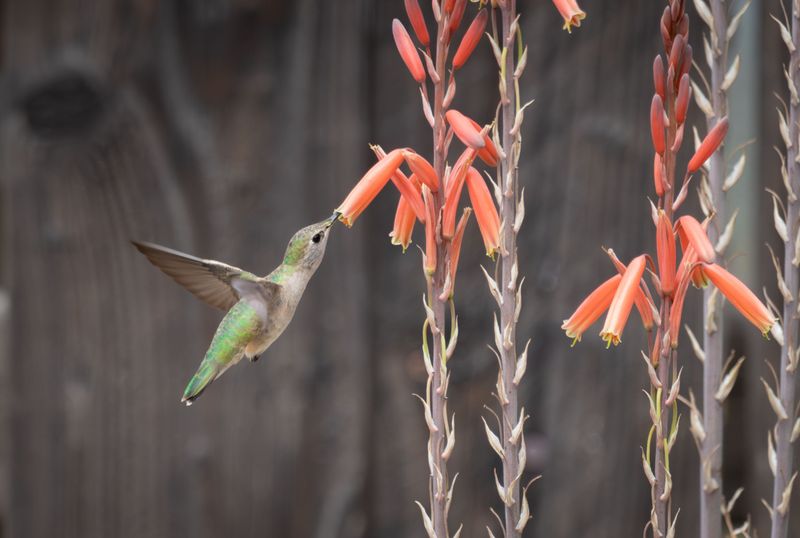
Here is the overlooked perk. A university extension source says Aloe vera flowers produce nectar that hummingbirds use.
For a plant most people grow only for its gel, that is a nice bonus.
Of course, a visit is possible, not guaranteed. Whether hummingbirds show up depends on where you live, what else is blooming nearby, and the season.
Some gardens will see regular visitors, and others may not see any.
Keep the claim tied to Aloe vera itself. Other aloe species and hybrids have their own pollinators and bloom habits, so what you read about a different aloe does not automatically apply to yours.
If you want to watch for birds, set the plant where you can see it from a window or a seat. Then check the stalk in the morning, when hummingbirds are often active.
The nectar is the benefit to enjoy here. The flowers are not a medicine or a food, and nothing about the nectar changes that.
Care that supports a chance to bloom
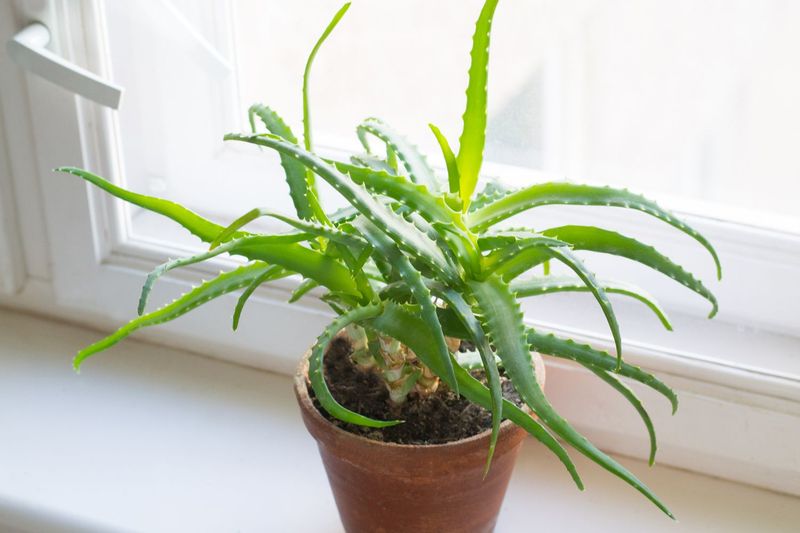
You cannot force an aloe to flower, but ordinary good care gives it a fair shot. The extension answer points to plenty of light, fast-draining soil, and avoiding overwatering.
Those are the same habits that keep the plant happy in general.
Light comes first. Outdoors, a bright spot suits it well.
Indoors, a sunny window is the best bet, though indoor plants rarely bloom no matter how well you tend them.
For watering, UF/IFAS advises watering when the top inch of soil is dry, and not leaving the plant standing in water. Stick a finger into the soil to check.
If the pot has a saucer, empty it after watering.
Use a gritty cactus mix in a pot with drainage holes, so extra water can escape. Soggy soil is a bigger risk to an aloe than a missed watering.
If no stalk appears, do not assume you did something wrong. Plenty of healthy aloes never bloom, especially indoors.
Good care is about a strong plant first, and flowers are a possible bonus.
When to leave or remove the stalk
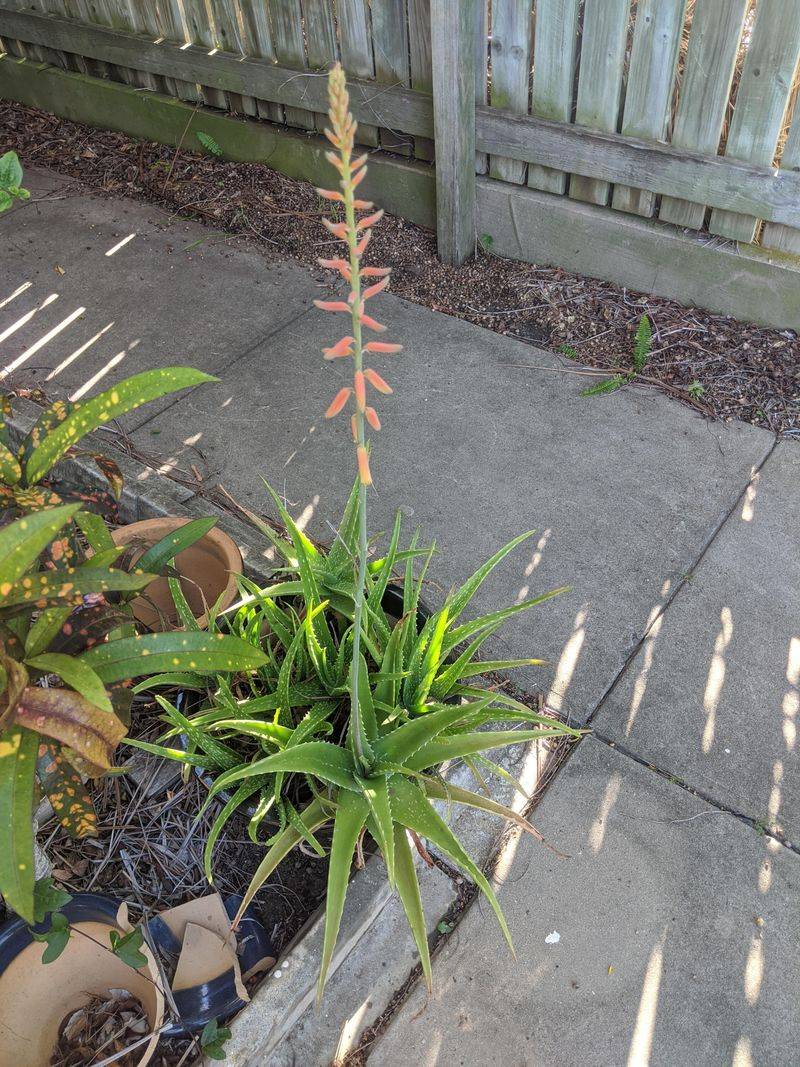
If your aloe is in bloom, leave the stalk in place. You get to enjoy the flowers, and any hummingbirds that come by get a chance at the nectar.
Once the blooms fade, you have a choice. You can leave the dry stalk or remove it for a tidier look.
The sources reviewed do not show that cutting the stalk makes the plant healthier, so it is a matter of looks and preference.
Skip the promises you may see elsewhere. Cutting it will not speed up leaf growth, and it is not shown to save meaningful energy or bring on another bloom.
If you decide to trim it, use clean, sharp pruners. Take care to avoid cutting into the rosette of leaves at the center.
There is no required cut height or timing, so just remove the spent stalk in a way that leaves the plant undamaged.
Some gardeners like the look of a dried stalk and keep it for a while. Others prefer a neat pot.
Both approaches are fine, and neither one is a rescue step.
Keep flower and pet safety claims precise
Pretty does not mean edible. The research does not establish a safe or standard culinary use for Aloe vera flowers, so do not eat them or add them to food.
Information on processed aloe products does not settle the question for flowers either. The NCCIH separates inner-leaf gel from latex and whole-leaf products and notes risks tied to oral aloe products, but that is not a flower safety review.
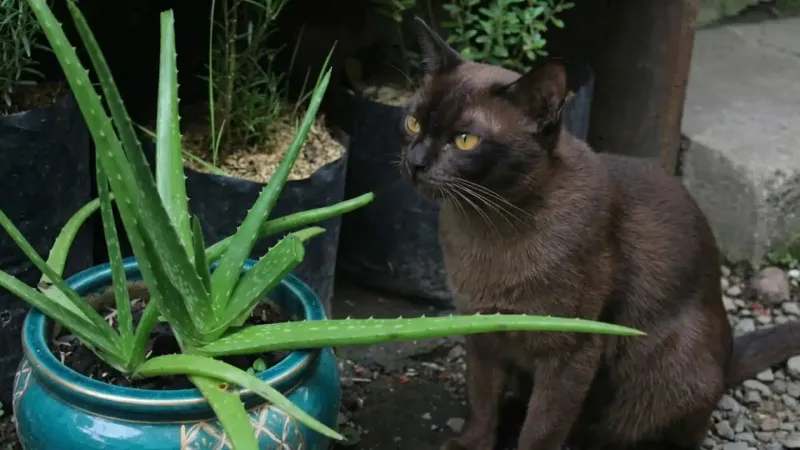
Pets need extra thought. The ASPCA lists Aloe vera as toxic to dogs, cats, and horses if ingested.
Possible signs include vomiting, lethargy, and diarrhea. That listing covers the plant, and it does not say the flowers were tested on their own.
If a dog or cat chews your aloe, keep the plant out of reach, and call your vet or a pet poison hotline if your pet eats some. A tall stalk can tempt curious animals, so place pots high or in rooms pets cannot enter.
Enjoy the bloom with your eyes and let the hummingbirds have the nectar.