
Why You Should Never Turn Your North Carolina Compost Pile This Fall If Box Turtles Are Nearby
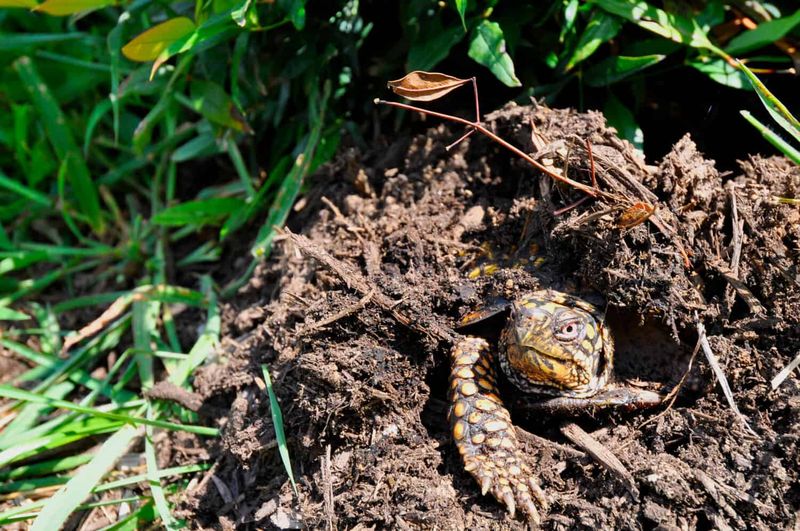
Fall cleanup in a North Carolina yard often ends with a fork in a pile of leaves. Eastern box turtles are looking for cover about the same time of year.
That does not mean every pile hides a turtle, but it is worth knowing where the real risks are. A few simple habits can keep your yard tidy and friendly to wildlife.
The concern is disturbing cover, not a proven compost habit
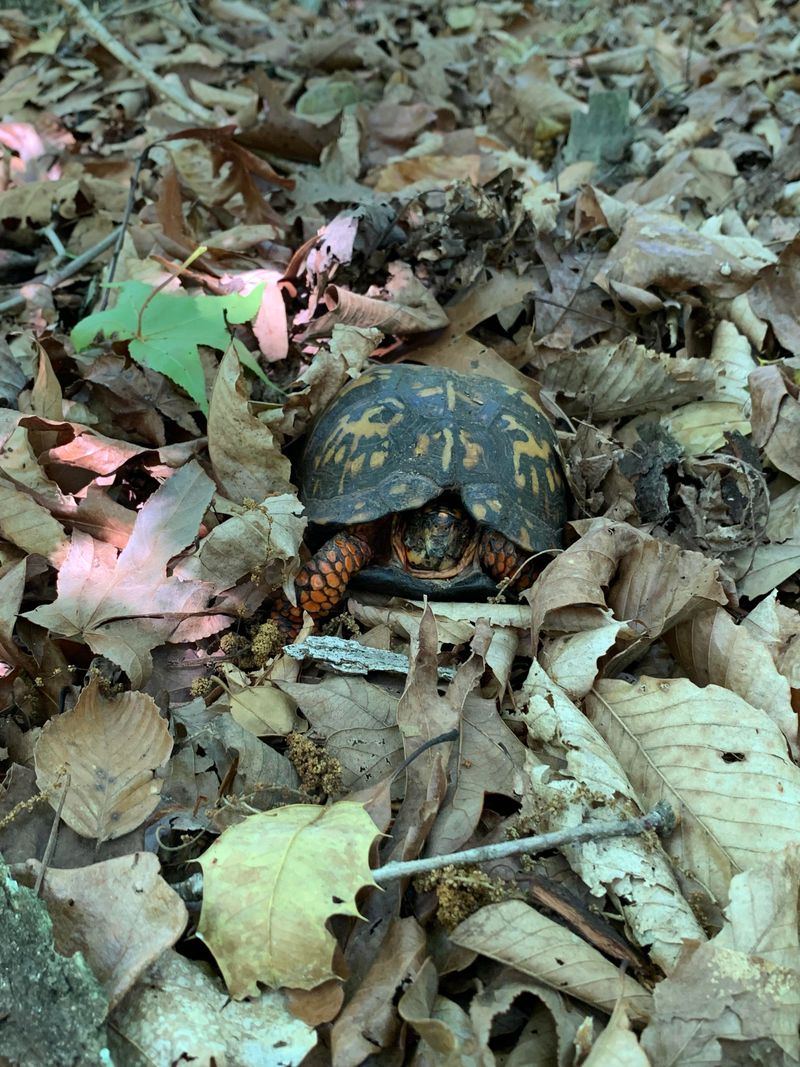
The title of this article says never, but that is stronger than the evidence allows. Nothing shows that backyard compost heaps are common or suitable winter homes for box turtles, and nothing shows that turning a pile in fall generally harms them.
The worry behind it still makes sense. A U.S.
Forest Service species review describes eastern box turtles sheltering in moist soil and leaf litter. A North Carolina study also found turtles overwintering close to the point where soil meets leaf litter.
So the real issue is disturbing cover where a turtle may be sheltering. That could be a thick layer of leaves along a wooded edge, a brush pile, or a loose heap of leaves.
A managed compost bin is a different thing, and the evidence does not say it works as turtle habitat.
In the sections ahead, you will see how to sort the habitat that is documented from the habitat that is only possible. You will also get practical ways to adjust your fall work, so you can stay careful without treating every pile as occupied.
Box turtles shelter in soil and leaf litter
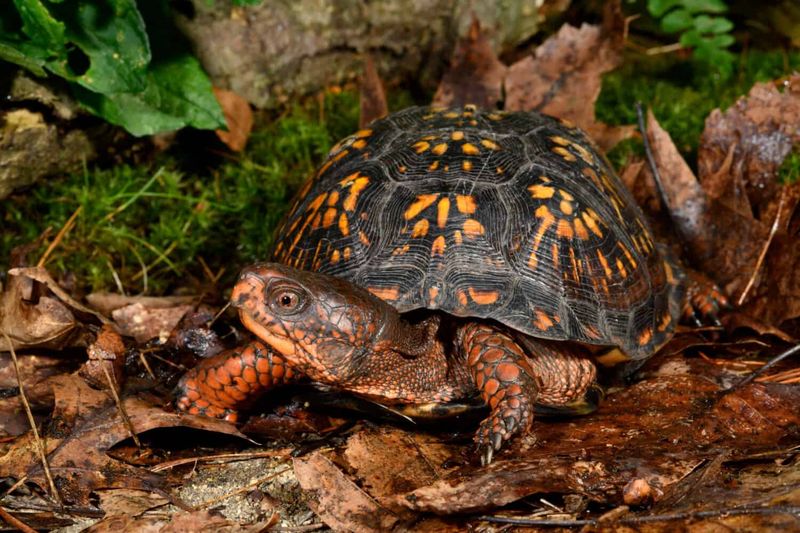
Picture the forest floor in November. Under the top layer of crunchy oak and hickory leaves, the material gets damp and soft, and that moisture matters to a box turtle.
The Forest Service review lists winter shelter in soft soil, natural depressions, hollows, deep litter, brush, and woody debris.
Some turtles come back to the same spot. The review notes that individuals may use the same refuge in successive years, so a quiet corner of your yard could matter to a turtle year after year.
Burial depth is not the same for every animal. An eastern box turtle status assessment describes overwintering under leaf litter, with burial depth varying among turtles.
In North Carolina, an eight-year radiotelemetry study followed turtles at two forest sites. It found them overwintering near the soil and litter interface, meaning right where the ground meets the leaves.
None of these sources describe a compost heap as one of the refuges studied. What they document is natural cover: soil, litter, depressions, and debris.
That is a useful picture of what to look for around your own property.
A leaf-litter refuge is not the same as a compost heap
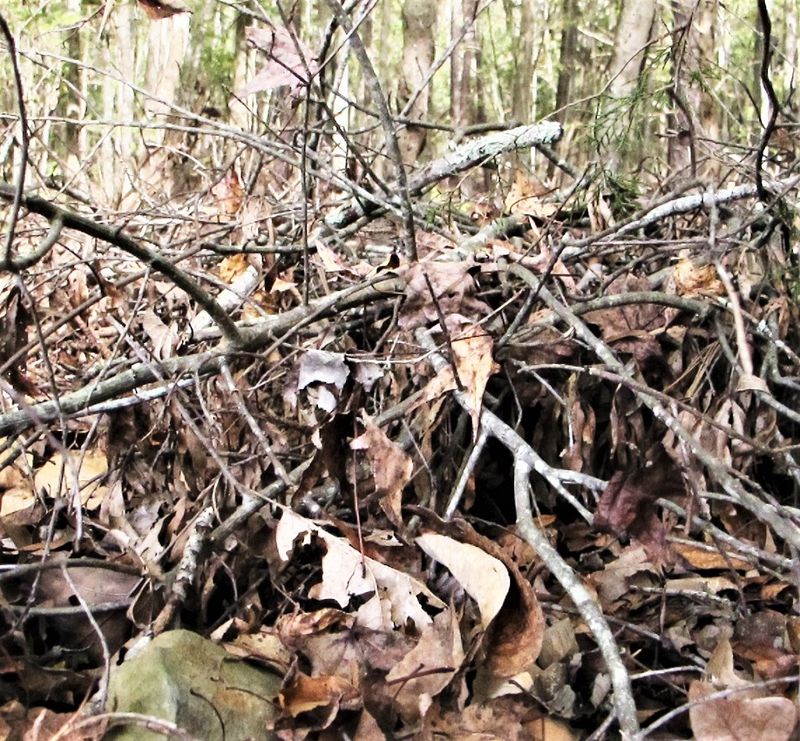
Three different things often get lumped together. Forest-floor leaf litter is a natural layer built up over years.
A loose leaf pile is a heap of raked leaves that you made. A managed compost pile is built and tended on purpose, often with kitchen scraps, moisture, and regular turning.
The research on turtle refuges focuses on the first kind. The Forest Service review and the status assessment describe natural litter and soil, not compost heaps.
The sources reviewed do not show that a compost heap is a typical or safe winter site for a box turtle.
That gap is a reason for care, not alarm. If a turtle has been seen near a leaf pile or a brushy corner, slow down there.
If your enclosed bin sits on open lawn far from any cover, the odds look different.
Think of it as matching your caution to the situation. A pile at the edge of woods deserves more attention than a bin by the patio.
When does a turtle settle in for winter?
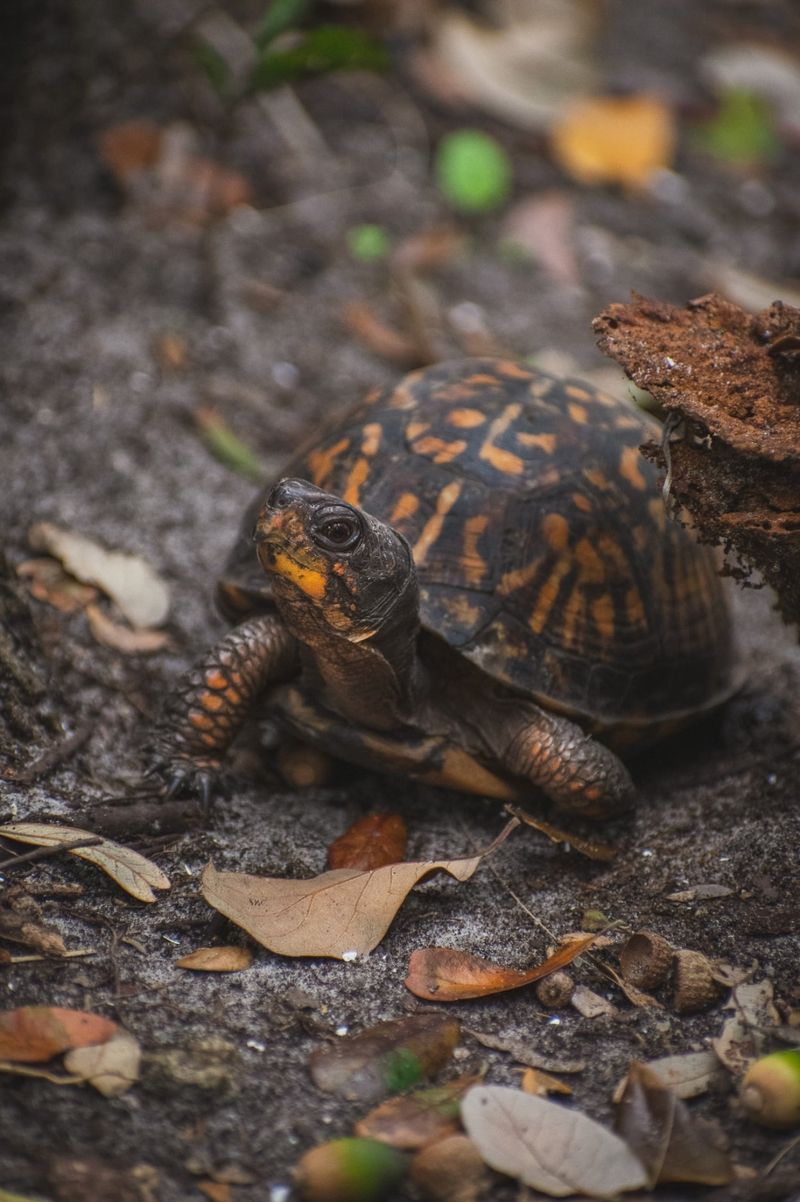
There is no single fall date when every box turtle goes underground. Weather, location, and the individual animal all play a part, so a warm November afternoon may still find a turtle out and about.
The North Carolina study used radiotelemetry, which tracks animals with small transmitters, for eight years at two forest sites. Turtles were shallowest in late winter and left their overwintering refuges in early spring.
Timing varied from one turtle to the next.
Those findings come from two forests. They are not a statewide calendar, and they cannot tell you what is happening in a yard in Raleigh, Asheville, or Wilmington.
The practical lesson is simple. Do not assume every turtle is already tucked in by a set date, and do not assume your pile is occupied either.
Pay attention to what you actually see, such as a turtle crossing the lawn or a shell near the brush.
Cold composting trades speed for less pile management
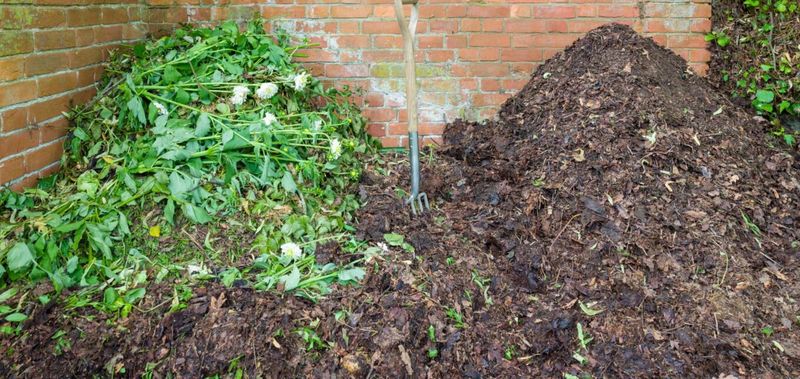
Cold composting means letting material break down without the hands-on work of a hot pile. NC State Extension says a leaf pile can decay without hot-compost management.
The tradeoff is time, since it may take about a year.
There is another catch. Cold piles will not reliably destroy weed seeds or pathogens, so skip diseased plants and seed-heavy weeds.
Cooler weather slows things down anyway. North Carolina DEQ notes that composting slows or pauses as temperatures drop and picks back up when it warms.
Cold composting is a practical option if you want less pile work in fall. It has not been tested as a turtle protocol, so treat it as a slower method, not a guarantee of safety for wildlife.
Leaving a pile alone also does not remove the need to look before you work around it later.
Check where the tool will land before you turn the pile
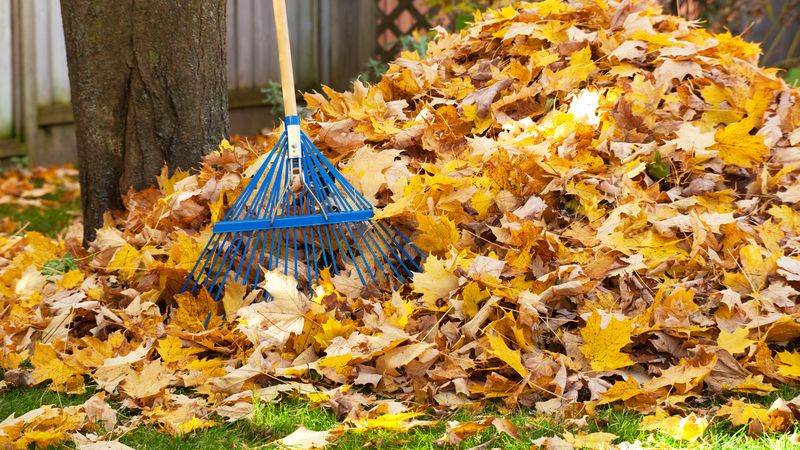
Before a fork goes into leaf litter or a pile, look at where the tines will land. Try the edges first and move slowly.
Avoid forceful stabbing or heavy digging in areas where a turtle may be present, like a brushy corner or the base of a shrub.
This is prudent general caution, not a tested turtle procedure. No source gives a proven method for turning piles around turtles, so use common sense and your own observations.
You also do not need to tear through cover to search for a turtle. Digging around could disturb the very habitat that the Forest Service review describes, such as soft soil, deep litter, and woody debris.
If you have seen a box turtle nearby recently, consider postponing work on the nearby pile. A rake used lightly on the surface is gentler than a fork driven deep.
If you find a box turtle, leave it where it is
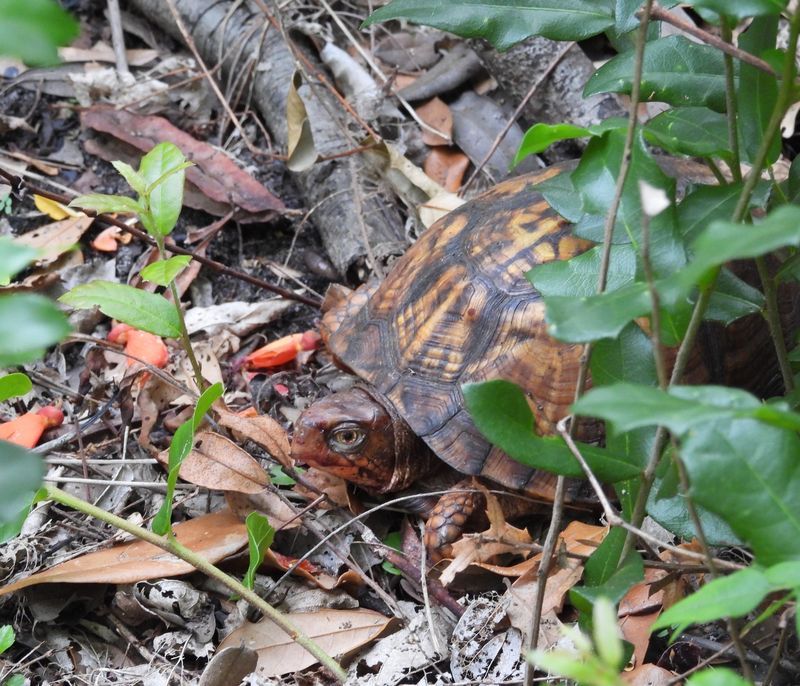
If a box turtle turns up, stop work and give it space. Do not dig around it, move it elsewhere, or pick it up to check whether it is hibernating.
Handling it to find out can do more harm than good.
NC Wildlife advises against relocating box turtles. Turtles often know their home area well, and moving one can disrupt that.
This is not the same as saying all handling is illegal. The agency says eastern box turtles cannot be hunted or trapped, and it discourages keeping them even where possession is not prohibited.
Follow its specific guidance and leave the turtle in place.
If the turtle looks injured, contact a licensed reptile rehabilitator, which is the route NC Wildlife points to. Then keep tools and pets away from that spot until things settle.
Choose a gentler fall routine for a wildlife-friendly yard
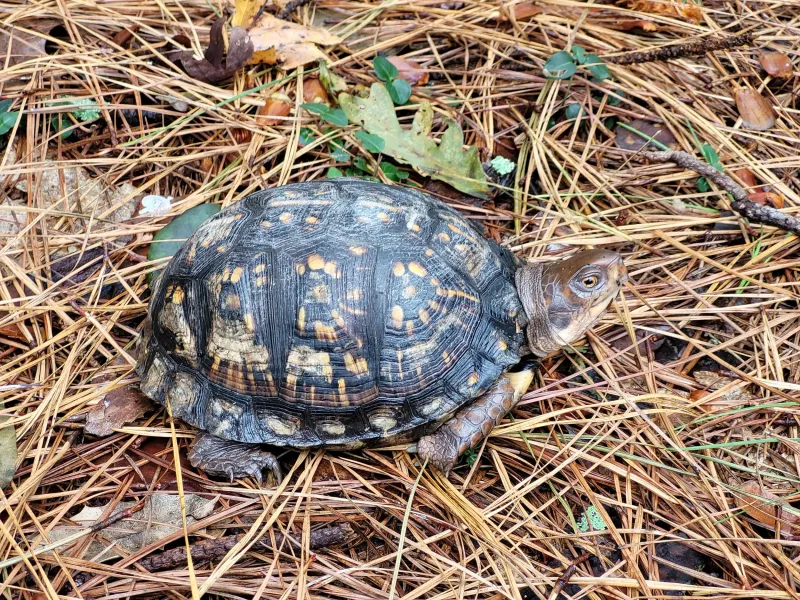
You do not have to treat every compost heap as a turtle den. Save your extra caution for piles and cover where a turtle may actually be, and go easy with the fork there.
If less pile work appeals to you, cold composting is a slower option with limits. If you do meet a turtle, follow NC Wildlife guidance and leave it where it is.
A good fall yard has room for both a clean garden bed and a quiet patch of leaves.