
New Jersey Tea: A Promising North Carolina Native Shrub for Sunny Mailbox Sites

A mailbox strip can be a tough place to grow anything. The sun beats down, the soil is often hard, and road salt and dry spells add more stress.
New Jersey tea is a North Carolina native shrub that may fit the right spot, and it feeds local butterflies and pollinators too. Here is how to tell whether your mailbox area can support it.
New Jersey tea is a promising statewide candidate
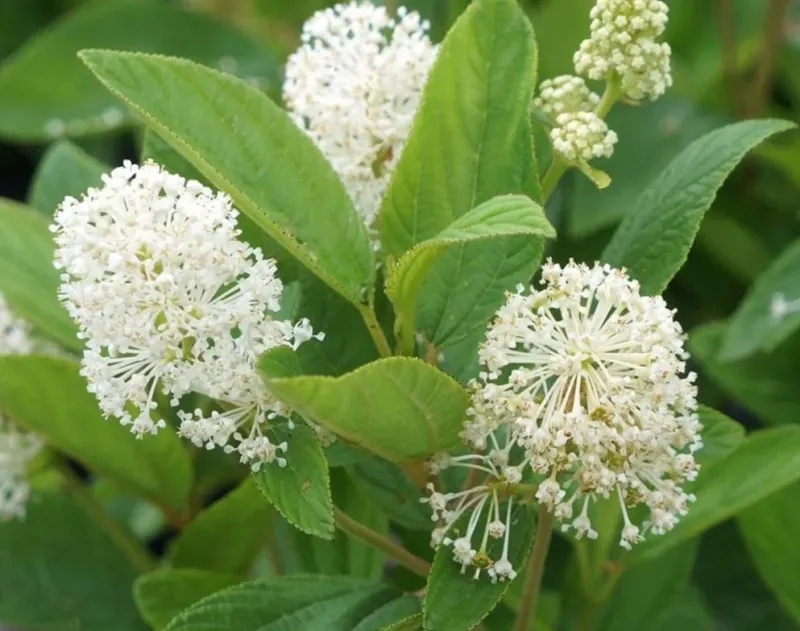
Morning light on a curbside shrub covered in fluffy white blooms is a pleasant sight, and New Jersey tea (Ceanothus americanus) can deliver it in the right place. It is a native, low-growing shrub, and it is a candidate worth a close look rather than a guaranteed fix for every mailbox strip.
According to the NC State Extension Plant Toolbox, New Jersey tea grows in all regions of North Carolina, from the mountains to the Piedmont to the Coastal Plain. The same profile says it tolerates drought once established and tolerates road salt.
In early summer it bears fragrant, creamy-white flowers.
It typically reaches about 3 feet tall and 5 feet wide. That is a manageable size for many yards, but the width alone will rule out some narrow strips, which we will get to shortly.
Here is the honest limit of what is known. Drought and salt tolerance are documented.
Success in severely compacted soil, against vehicle damage, or in reflected heat off pavement is not documented. The NC State profile does not report a curbside compaction trial.
Growing in all regions also does not mean every site in the state suits it.
So think of New Jersey tea as a strong option for a sunny, reasonably well-drained mailbox area, and then test your own spot against the checks in the sections ahead.
Check the soil and exposure before choosing a spot
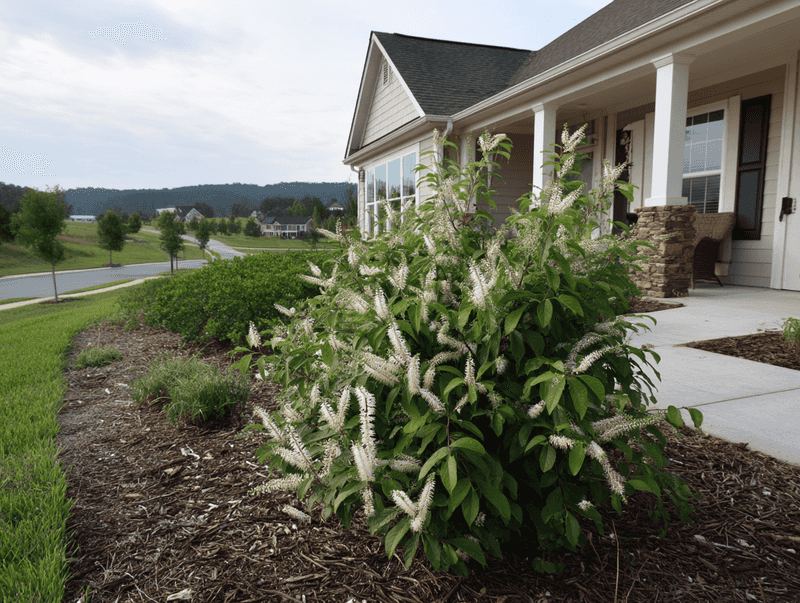
Before you buy anything, spend a weekend reading your mailbox strip. New Jersey tea grows in full sun to partial shade and prefers well-drained sandy loam or rocky soil, based on the NC State Extension profile.
NC State also notes a risk of root rot in wet soils.
A simple test helps. Dig a small hole, fill it with water, and see how long it takes to drain.
If water is still sitting there hours later, or the spot stays soggy after rain, that is a warning sign. Low spots where road runoff collects deserve extra suspicion.
Hot pavement and hard-packed ground are the other worry. Drought and salt tolerance are documented, but that does not prove the shrub can handle severe compaction, vehicle damage, reflected heat, or every curbside stress at once.
If a screwdriver will barely push into the soil, or tires regularly roll over the strip, consider another spot or a different plan.
Dwarf fothergilla is sometimes suggested as a substitute, but treat it with caution. NC State says it grows best in rich, moist soil and does better with afternoon shade, and a University of Florida profile says it suffers in extended drought, especially in full sun.
Its performance depends on the site.
Make room for the mature shrub and protect access
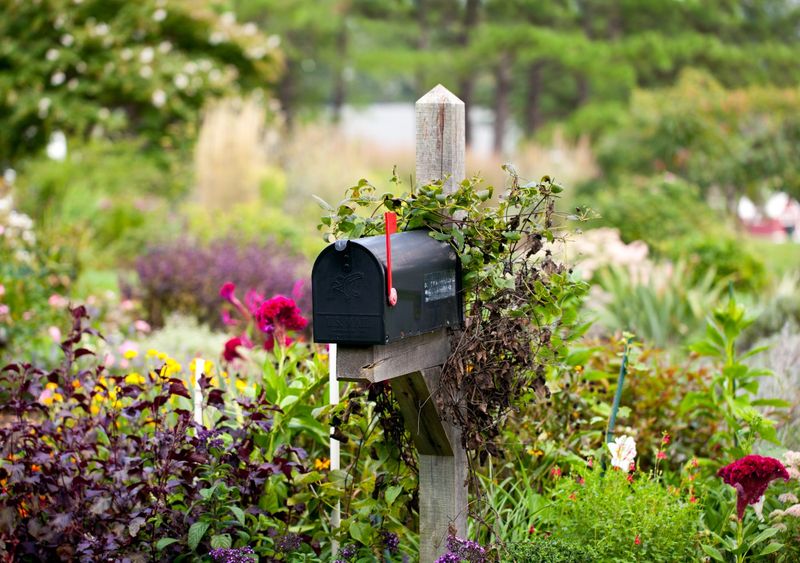
A 5-foot-wide shrub needs more elbow room than most people expect. Mature New Jersey tea reaches roughly 3 feet tall and 5 feet wide, according to NC State Extension.
Measure from the mailbox post and the road edge, then picture a circle that wide. If it spills onto the pavement or crowds the box, the strip is too narrow.
Access matters as much as looks. The USPS Domestic Mail Manual calls for a clear approach to the mailbox for delivery.
Keep the carrier’s path open, and make sure the plant will not block your driveway view, traffic sightlines, or any road signs.
Next, find out who controls the ground. Your mailbox may sit on the state highway right-of-way rather than on your own lot, and rules differ from place to place.
NCDOT guidance, in its planting guidelines, requires a written permit for planting in state highway right-of-way. No single setback applies to every property, so check with NCDOT or your city or county.
Finally, call 811 before any digging. Buried utilities can be shallow, and the free service from 811 Before You Dig gets lines marked before a shovel goes in.
Buy a nursery-grown plant and avoid moving established shrubs
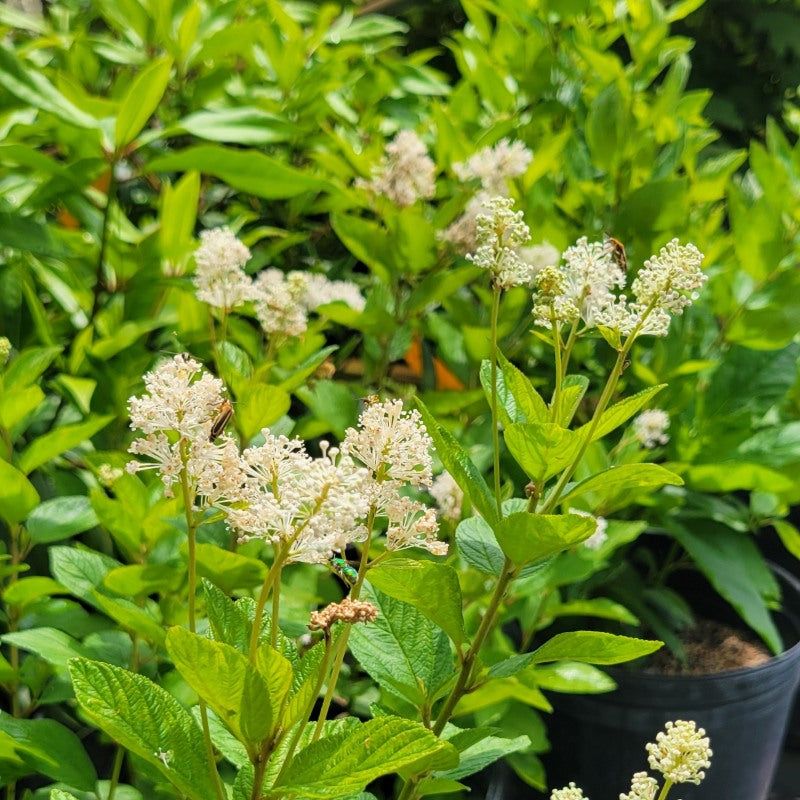
Digging a wild or established New Jersey tea out of the ground is a bad idea. The shrub has a deep root system and is hard to transplant, as the NC State Extension Plant Toolbox points out.
A plant yanked from a roadside or a neighbor’s border often loses much of that root and may sulk or die.
The better route is to buy a nursery-grown plant. Look for a local native plant nursery, a plant sale run by a garden club or Extension Master Gardener group, or a garden center that can order it by name.
Ask for Ceanothus americanus so you get the true native species.
Nursery stock also protects wild populations. Taking plants from natural areas hurts the very habitat that supports native butterflies and bees, and it can be illegal on land you do not own.
If you already have a New Jersey tea growing in your yard in a spot that is not working, think twice before relocating it. When possible, leave it in place and adjust around it.
Choose your mailbox location carefully the first time, because this is a shrub that prefers to stay put.
Water during establishment, even with a drought-tolerant shrub
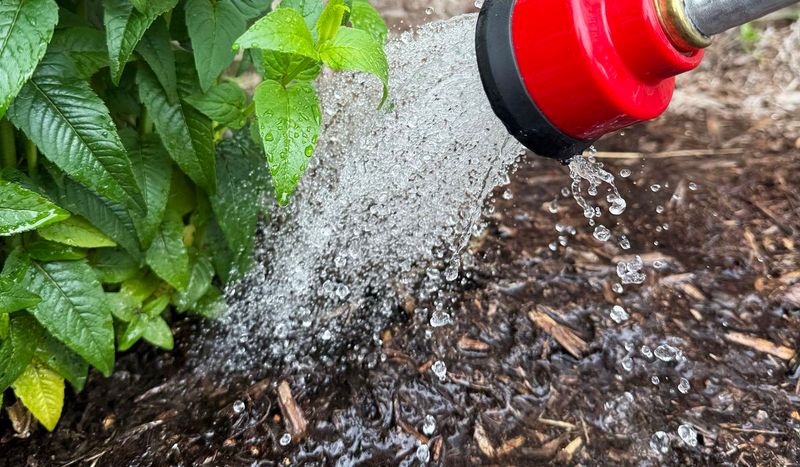
“Drought tolerant” has a catch: it applies once the plant is established. NC State Extension lists New Jersey tea as drought tolerant after establishment, which means a new planting still needs your attention, especially in a hot, exposed strip.
Start by watering thoroughly right after planting. Then check the soil, not the calendar.
Poke a finger a few inches down, and water when it feels dry.
For a schedule to start from, University of Maryland Extension recommends checking new shrubs daily for the first two weeks and at least weekly during the first two years. Water deeply as needed, and avoid waterlogged soil.
Deep, slow soaking beats frequent sprinkles.
A 2 to 3 inch layer of mulch can help reduce water loss. Keep it spread over the root zone but not piled against the stems.
Watch for clues. Wilting leaves in the morning, dry soil well below the surface, or leaf scorch during a July heat wave say the shrub needs a drink.
Constantly wet soil or yellowing leaves point the other way, and given the root-rot concerns, too much water can do more harm than too little.
Flowers and foliage offer documented wildlife value
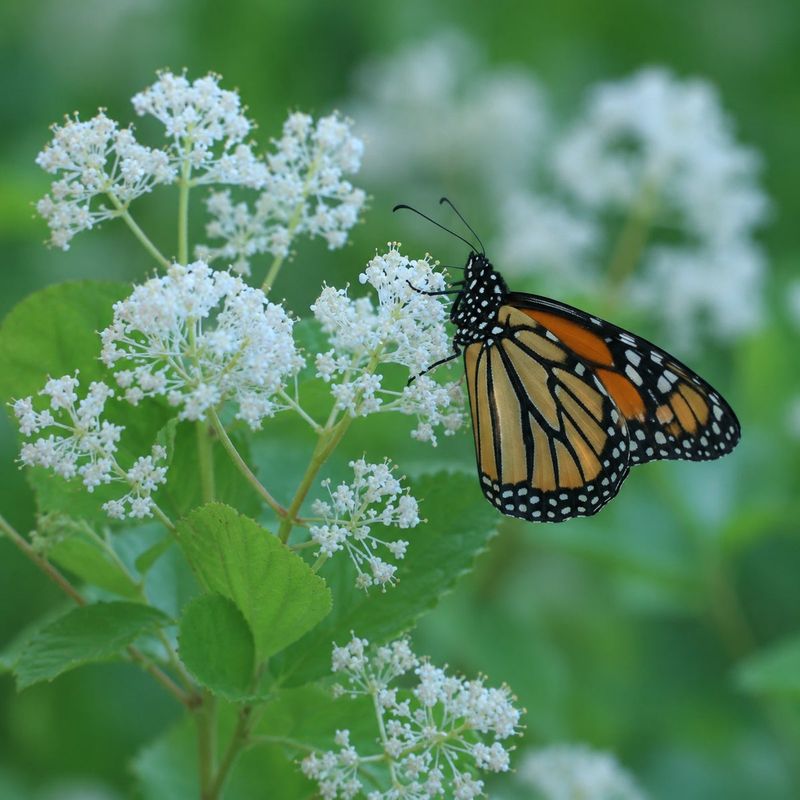
Come early summer, New Jersey tea puts on clusters of fragrant, creamy-white flowers that look like small puffs of foam against the green leaves. They are easy to photograph, and a good reason to site the plant where you will see it from the road or driveway.
The blooms are more than decoration. The NC State Extension profile says the shrub provides nectar for pollinators.
It also serves as a larval host for several butterflies, including the mottled duskywing and the spring and summer azures. That means caterpillars of those species can feed on its leaves.
If you grow it, a few chewed leaves may be a sign of success rather than a problem. Those caterpillars are tiny and usually do limited damage.
Holding off on pesticides near the plant helps keep them safe.
Keep expectations realistic. These are documented relationships, not a promise of particular visitors on a particular day.
What you gain is a native plant that offers food at the right life stages for butterflies and bees that already live in North Carolina.
Choose it only when the site matches its needs
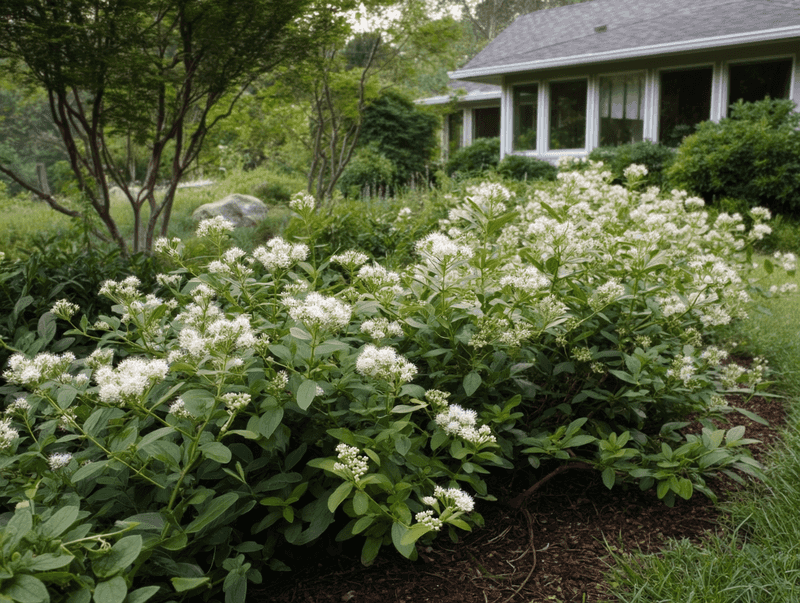
Here is a simple rule: plant New Jersey tea when the strip has room for a 5-foot spread, full sun or close to it, soil that drains well, and a way for you to water during the first two years. Confirm that you have called 811 and met USPS access needs, and if the spot is in state right-of-way, get the NCDOT permit.
It is a promising native option, but severely compacted or extreme sites remain unproven. A good shrub in the right place beats a tough shrub in the wrong one.