
Marigolds Near Tomatoes and Peppers: What Research Really Shows
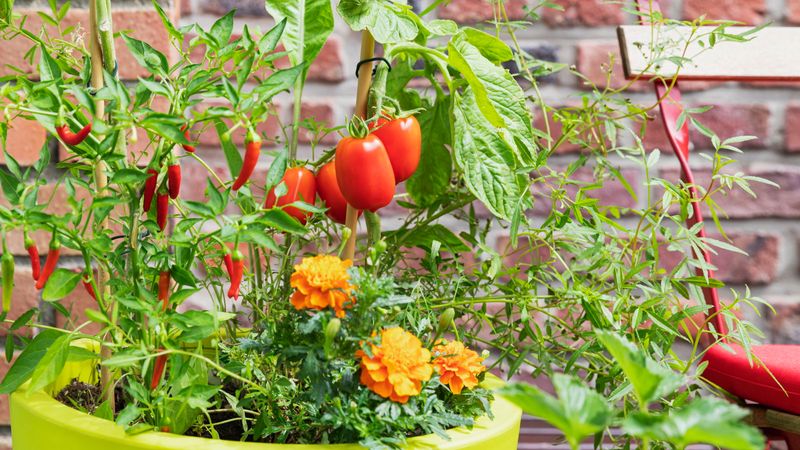
Marigolds show up in nearly every list of garden helpers, and plenty of gardeners wonder if they belong next to their tomatoes and peppers. The honest answer is more modest than the hype.
These cheerful, easy flowers can earn a spot when you have room, and a few studies found real benefits in very specific settings. Here is what the research says, so you can decide without worrying that you are missing a magic fix.
Marigolds are optional flowers, not a guaranteed crop shield
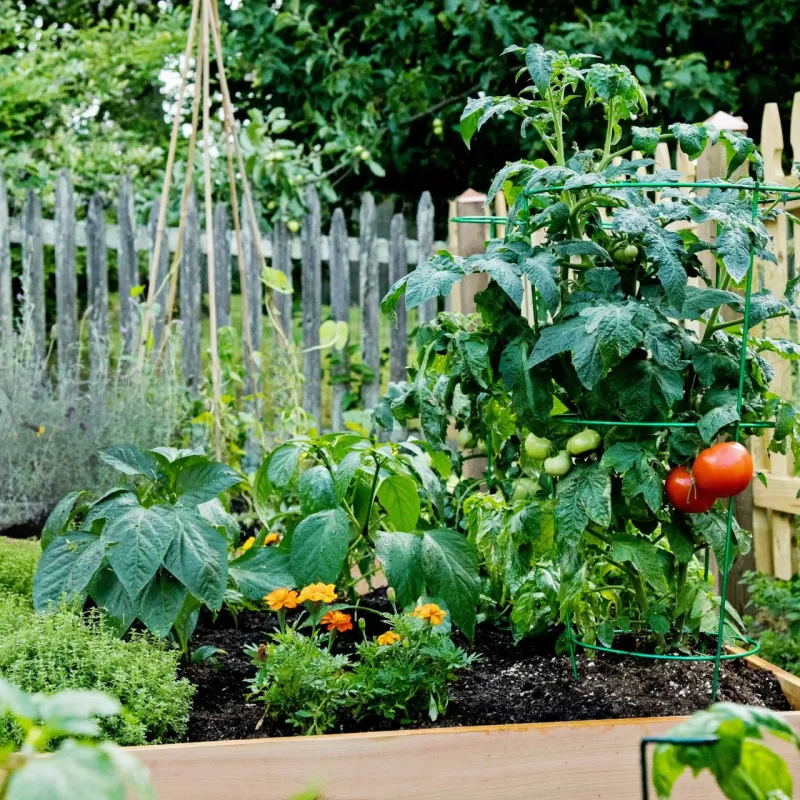
Plenty of garden lists promise that marigolds keep pests away from every vegetable. Real life is messier.
Minnesota Extension points out that many online companion-planting lists are not well supported by research, and that marigolds show little or contradictory results against flea beetles and no deterrent effect on Colorado potato beetles.
So think of marigolds as a pretty extra, not a required treatment. If you like the color and have space, they are a fine addition.
If you skip them, your tomatoes and peppers will not suffer for it.
A quick note on names helps here. The pest and nematode research in this article is about Tagetes, the group that includes French and African marigolds.
Iowa State Extension covers these garden marigolds, while Calendula officinalis, often called pot marigold, is a different plant. Findings about one should not be applied to the other.
The studies that do exist, including guidance from UF/IFAS on nematode management, depend on the species, the target pest, the timing, and the growing conditions. The next sections look at each claim one at a time instead of stacking up a long list of benefits.
Plant them only where vegetables have room
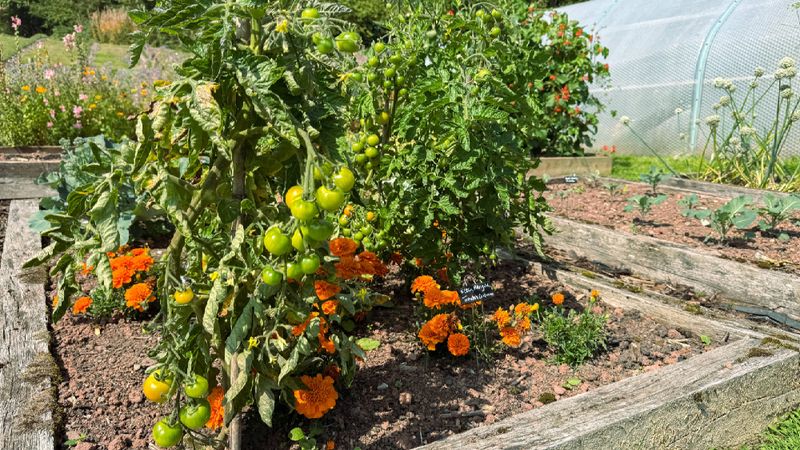
Marigolds are not fussy. They are commonly grown as warm-season annuals and do best in a sunny spot with well-drained soil, according to Illinois Extension.
That matches what tomatoes and peppers want, so the two can share a sunny bed without much trouble.
Size is where gardeners slip up. Marigold cultivars range from small edging types to tall plants, and Clemson Extension describes that variety in height and form.
Check the plant tag before you buy so a bushy marigold does not end up shading a pepper plant.
Extra plants also use water, nutrients, and space. University of Delaware Extension cautions that companion plants should not crowd out the vegetables.
If your tomatoes are staked and your peppers are close together, a better spot may be the end of the row, a container nearby, or the bed edge.
Treat this as simple spacing advice. Putting marigolds close to a crop does not protect it.
Leave air flow around the vegetables first, and add flowers only where there is room left over.
The whitefly finding applies to a specific tomato setup
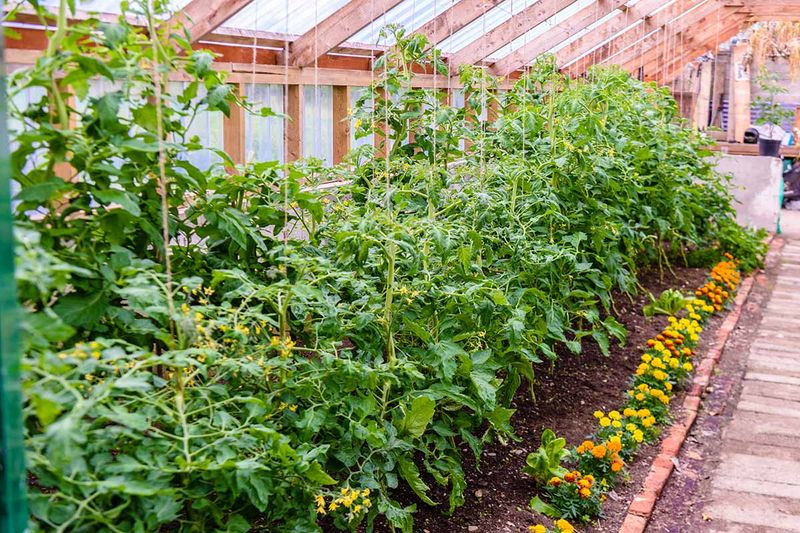
Here is one of the more interesting results. In a 2019 PLoS ONE study, researchers ran large greenhouse trials with French marigolds (Tagetes patula) and short-vine tomatoes.
The plants grew together from the start, and glasshouse whitefly populations grew more slowly than they did without marigolds.
Timing mattered a lot. When marigolds were added after a heavy whitefly infestation had already developed, the reductions were minimal.
In other words, this is a preventive finding, not a rescue for plants already covered in pests.
It also helps to look at the setup. This was a greenhouse, with one marigold species, one tomato type, and one pest.
A backyard has wind, rain, different insects, and different plant varieties.
That means you cannot count on the same result at home, and the study says nothing about peppers. If you spot whiteflies on your plants, keep checking the undersides of leaves and use your usual controls.
A marigold planted next to a struggling plant will not fix the problem.
Pest effects depend on the insect
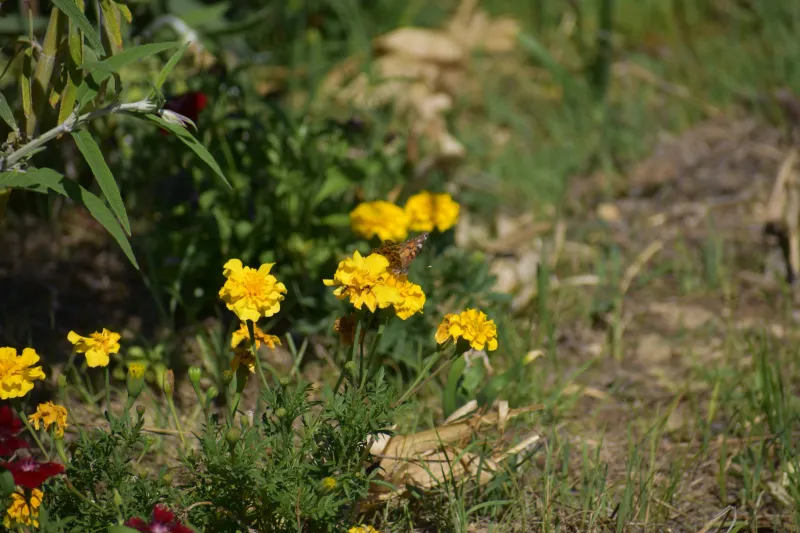
Marigolds do not work the same way on every bug. Minnesota Extension summarizes a few studies in which basil and marigolds reduced thrips on tomatoes, in field or greenhouse conditions.
That is a useful, pest-specific result.
It is not proof that marigolds repel garden pests across the board. The same extension source notes that research on other pests, like flea beetles and Colorado potato beetles, is thin or shows no effect.
A claim that marigolds repel pests means little unless it names the pest, the marigold, and the conditions.
Flowers can also attract helpful insects, which sounds like a sure win. It is not always.
University of Delaware Extension notes that marigolds can support thrips that feed minute pirate bugs, but natural enemies may not travel to the plants where you need them.
The practical move is to keep looking at your crops. Check leaves every few days, learn which insects are pests and which are helpers, and treat flowers as a bonus, not a replacement for watching your plants.
Nematode management may require a pre-plant crop
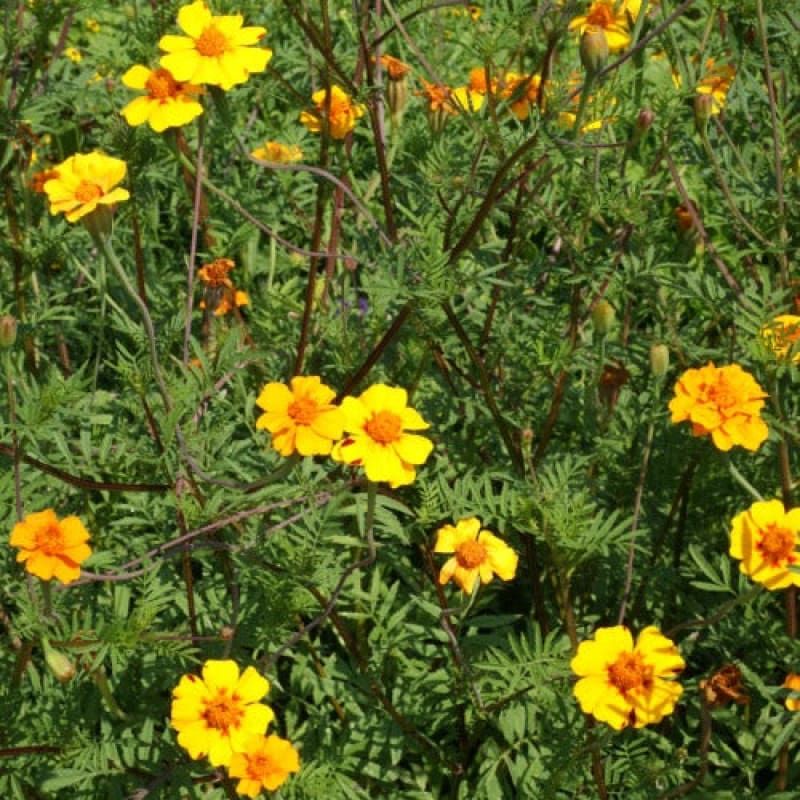
Root-knot nematodes are tiny soil worms that damage roots, and tomatoes and peppers can both be affected. Marigolds get a lot of credit here, but the advice is different from tucking a few flowers beside your plants.
UF/IFAS Extension describes marigolds as a possible pre-plant cover crop.
The approach is to grow them densely on the same site for at least two months before planting vegetables. Think of it as a season of soil preparation, not a border.
Interplanting marigolds with a susceptible crop generally does not appear effective.
Results also vary. Different marigold varieties and different nematode species give different outcomes, and severe infestations may not be controlled at all.
Weeds or susceptible crops can act as hosts and undermine the effort.
Before you give up a growing season, find out what you are dealing with. A soil test and local identification of the nematode through your county extension office can tell you whether marigolds make sense.
Marigolds do not eliminate nematodes, and they should not be expected to shield pepper or tomato roots just by growing nearby.
One early-blight study does not establish disease protection
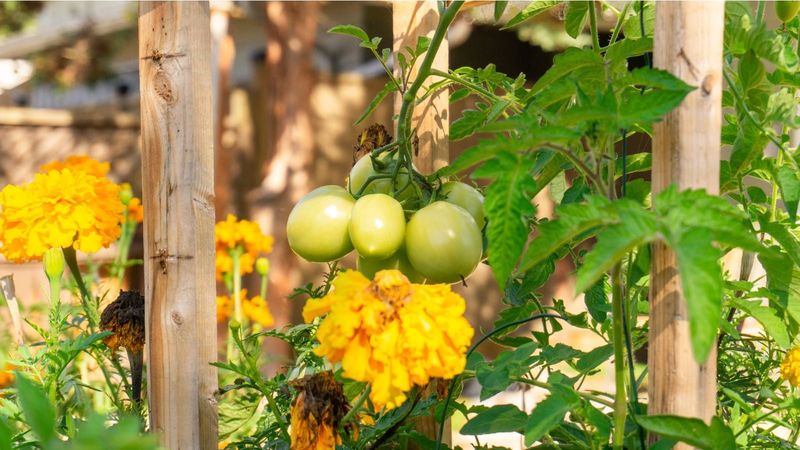
Early blight causes brown, ringed spots on tomato leaves and is a common headache. A field study from Mexico, published in Field Crops Research in 2003, reported less early-blight damage in tomatoes grown in an intercrop with African marigold.
That is a real result, but it is a narrow one. It came from one study, one tomato-and-African-marigold arrangement, and one set of field conditions.
The authors looked at how the marigolds might affect the disease through chemical effects and changes to the microclimate around the plants.
A research plot is carefully planned and measured. A backyard bed has its own weather, spacing, soil, and tomato varieties, so the same planting may not give the same outcome.
One study cannot show that marigold borders prevent tomato disease in general.
If early blight shows up in your garden, the usual steps still matter more. Remove affected lower leaves, water at the base, give plants airflow, and rotate where tomatoes grow.
Marigolds can sit nearby if you like them, but they are not a disease plan.
Deadheading can encourage more blooms
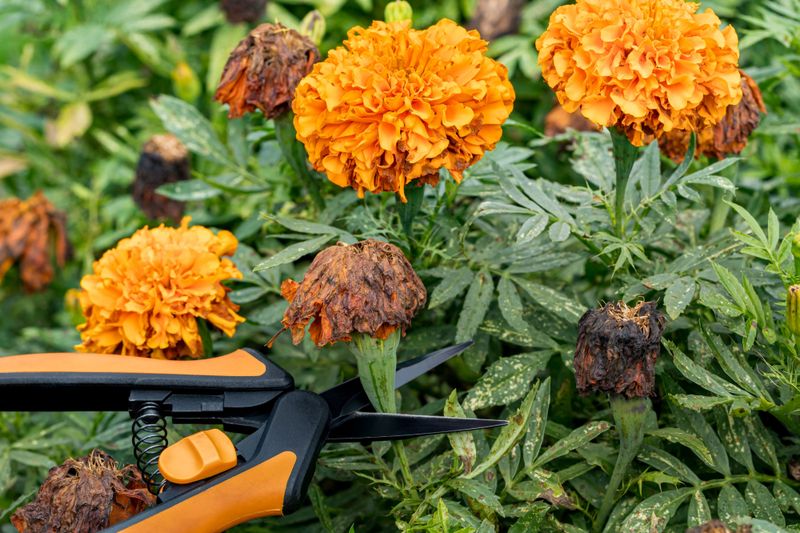
Here is the easy payoff. According to Minnesota Extension, removing spent blooms can encourage more flowers and keep rotting flower heads from marring the plant.
Pinch or snip the faded head just above a set of leaves.
It is entirely optional. Marigolds bloom without it, so skipping the chore will not doom the plant.
Rebloom also has limits, so do not expect nonstop flowers all season no matter what you do.
Deadheading fits nicely into a routine you already have. While you check tomatoes and peppers for pests or ripe fruit, take a minute to tidy the flowers nearby.
Marigolds are a worthwhile pick when you have a sunny corner and room to spare. They are cheerful, easygoing, and they ask very little of you.