
If You Find These Strange Egg Masses On Your North Carolina Trees This Fall, Here’s What To Do
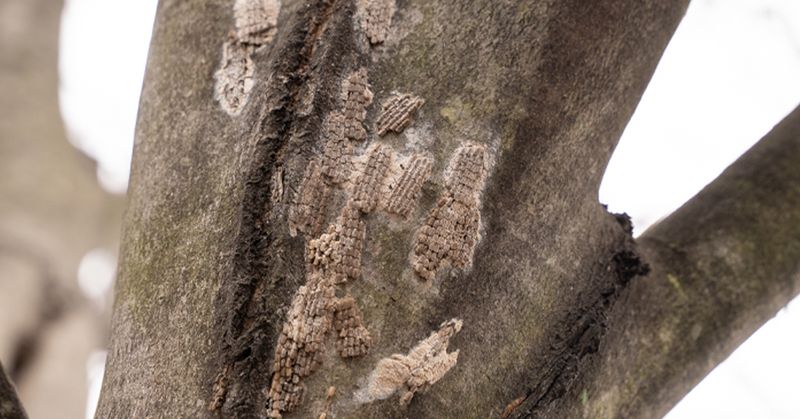
Gray patches that look like dried mud can show up on tree bark, patio chairs, and stacks of firewood. In North Carolina, some of them may be spotted lanternfly eggs, an invasive insect that feeds on many plants.
Most yards in the state will never see one, but knowing what to look for helps protect your trees and your neighbors. Here is how to spot them, report them, and handle them the right way.
What does a spotted lanternfly egg mass look like?
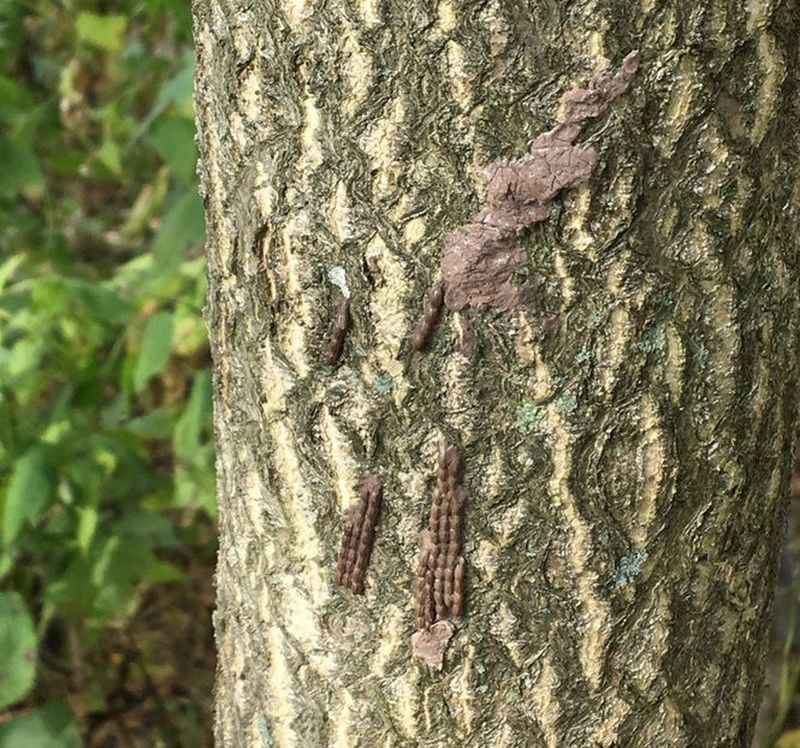
Picture a smear of old putty or dried mud stuck to a tree. That is how a typical spotted lanternfly egg mass looks.
It is grayish-brown and roughly 1 to 1.5 inches long, according to NC State Extension.
A fresh mass can look shiny or putty-like because the female covers her eggs with a waxy coating. As that coating dries, it turns dull and may crack.
Older masses that have already hatched can expose neat rows of seed-like eggs underneath.
Each mass commonly holds about 30 to 50 eggs, as noted by Penn State Extension. The eggs stay put through winter and hatch in spring.
Adults lay eggs in fall, and the timing shifts with region and weather. NC State Extension says masses are most likely to be seen in North Carolina from mid-October through spring.
That is a guide, not a hard cutoff, so an earlier search does not rule anything out, and a later one is still worthwhile.
Check more than tree trunks
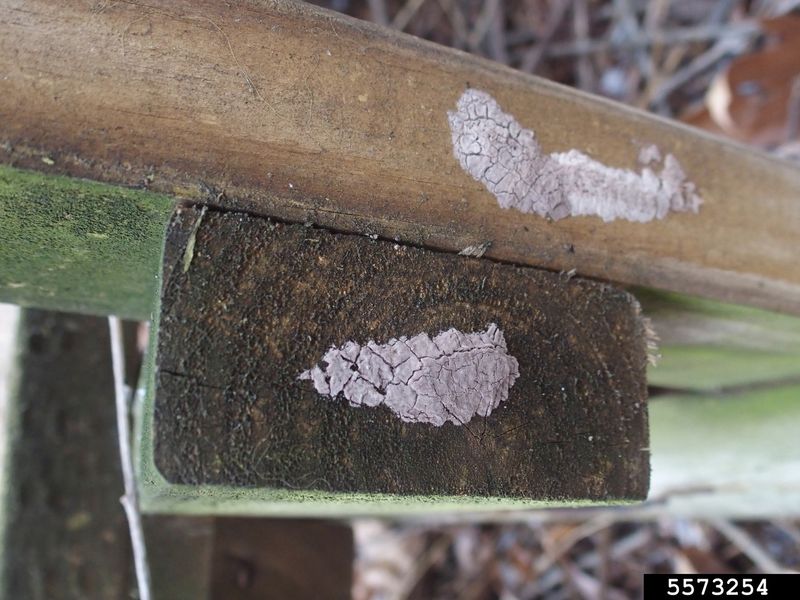
Female lanternflies are not picky about where they lay. Besides bark, masses can turn up on patio furniture, vehicles, firewood, and other hard outdoor surfaces, as described by NC State Extension.
A quick walk around your yard goes a long way. Run your eyes over the undersides of chairs and table frames, grill covers, and stacked pots.
Check wheel wells, bumpers, and trailer frames, then look at the sides of your woodpile and any stored equipment.
This matters because eggs can travel when people move infested items. USDA APHIS points to hitchhiking on vehicles and goods as a key way the insect reaches new places.
Take extra care when you are leaving an area with known populations. Before you load firewood, haul a trailer, or move outdoor furniture, give each item a once-over in good light.
Gentle sweeps with a flashlight help in shaded corners.
Most inspections will turn up nothing, and that is a fine result. The goal is simply to avoid giving eggs a free ride to a neighbor’s yard or a new county.
North Carolina’s risk is real but localized
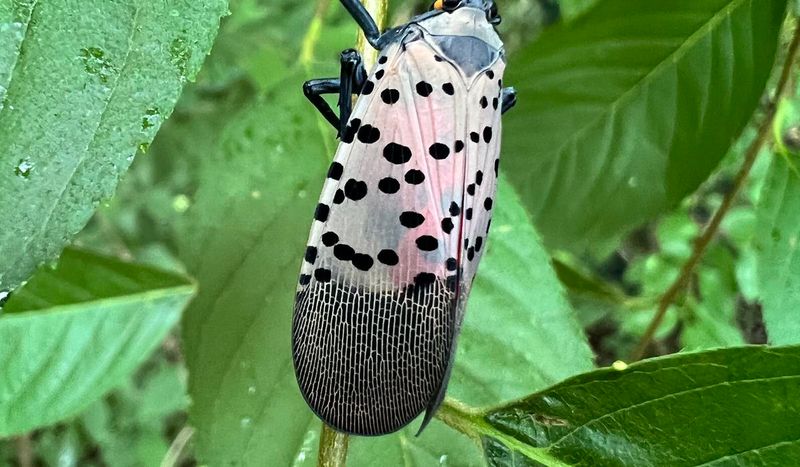
Spotted lanternflies are not everywhere in North Carolina. As of October 6, 2026, NCDA&CS announcements list established populations in seven counties: Forsyth, Guilford, Rockingham, Caldwell, Davidson, Rowan, and Caswell.
That list can change. Check the current maps and updates from NC State Extension before you decide what a find means for your area.
An established population means lanternflies are living and reproducing in a place. An isolated find is different.
In September 2026, the City of Raleigh reported a dead lanternfly, but that did not establish a Wake County population.
So a single sighting calls for a report, not alarm. Likewise, if you live far from the listed counties, an egg-mass-looking patch is more likely to be something else.
One local rule matters here. The NCDA&CS reporting page says residents of western Guilford County and eastern Forsyth County live in a generally infested area and should follow local management guidance instead of the standard reporting steps.
Confirm the find before you act
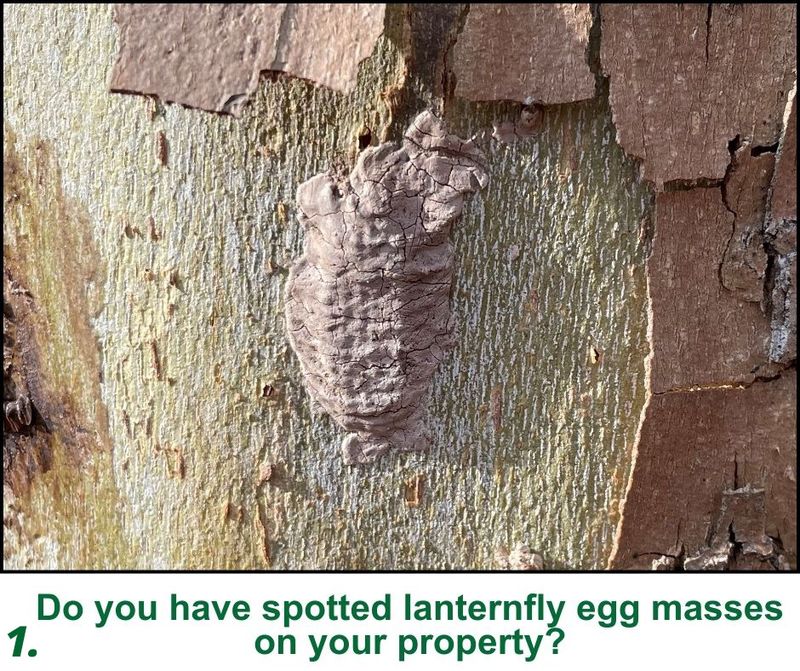
Plenty of insects leave egg masses on bark and hard surfaces, and some of them are helpful ones. University of Maryland Extension notes that beneficial insects also lay masses in these spots.
Looks alone are not enough reason to scrape.
Start with your phone. Take a clear photo of the mass, add a coin or ruler for scale, and snap a wider shot showing where it sits.
Note the location and the date.
Then submit the photo through the reporting tool on the NCDA&CS spotted lanternfly page, following its current instructions. NC State Extension also asks residents to report new infestations.
If you live in western Guilford County or eastern Forsyth County, the rules differ. That area is considered generally infested, so use the agency’s local management guidance rather than filing a report.
Leave an uncertain patch alone until you hear back. Waiting costs you nothing, and it protects any helpful insect eggs that may be sitting there.
Scrape only what you can safely reach
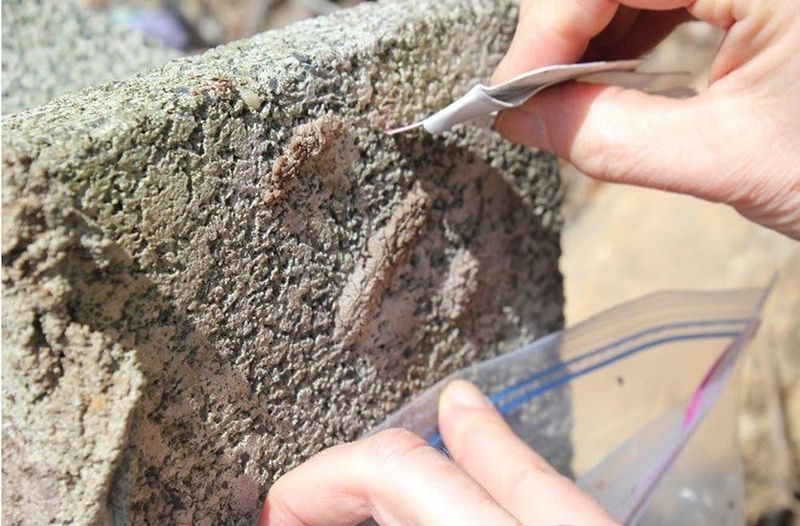
If you are confident about the identification and the mass sits within easy reach, you can remove it. Photograph it first, since NCDA&CS asks for a picture of suspected finds, as outlined on its reporting page.
Gather a plastic card, such as an old gift card, and a container with rubbing alcohol or hand sanitizer. A zip bag or a small jar with a lid works well.
Scrape the mass off the surface so the eggs fall straight into the container. Seal it tightly, then put it in the trash, a step backed by USDA APHIS guidance.
Never let scraped eggs drop to the ground or squash them in the grass. Penn State Extension warns that eggs left on the ground may still hatch.
High masses are not worth a risky climb. Skip the ladder and the long reach, and report what you cannot get to safely.
One mass is not a tree-saving treatment
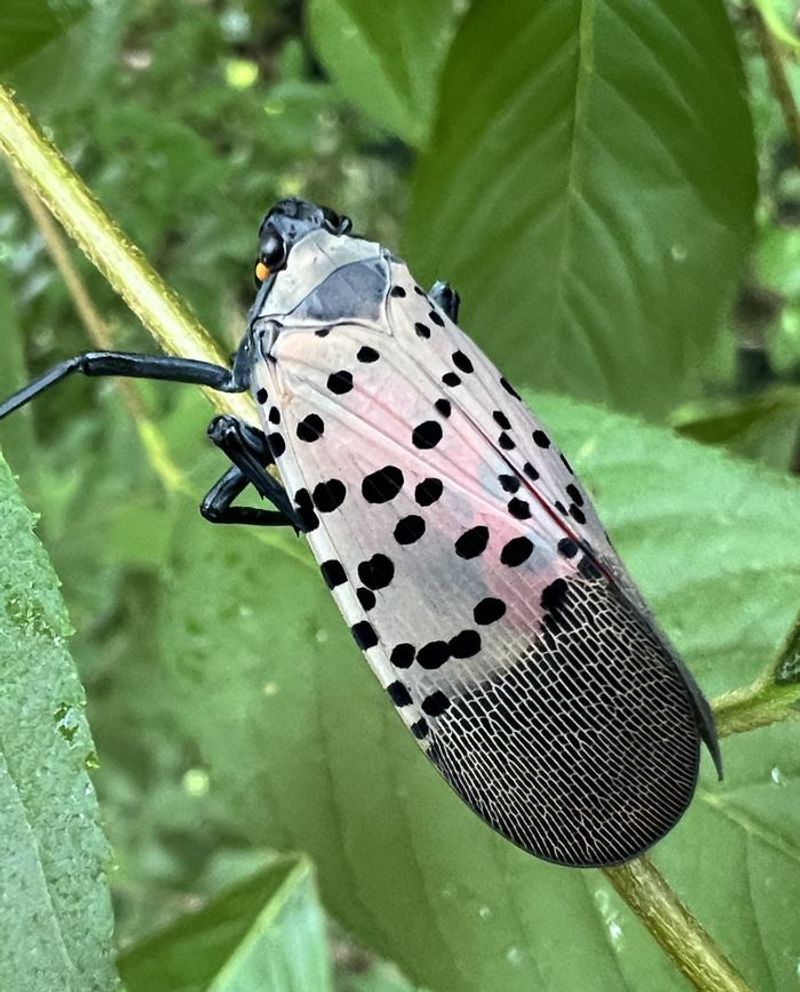
Finding an egg mass on a tree does not mean the tree is in trouble. Lanternflies harm plants by feeding, not by laying eggs.
NC State Extension notes that heavy feeding can also leave sticky honeydew and sooty mold behind.
The biggest concerns named by NCDA&CS involve grapes and other farm and landscape plants.
Scraping destroys only the eggs in the mass you remove. Many masses sit well above reach, and others hide on different surfaces.
A peer-reviewed study in Environmental Entomology backs up how hard they are to find, and Penn State Extension treats egg removal as a limited step, not a full plan.
Skip homemade sprays and kitchen-cabinet mixtures. University of Maryland Extension cautions that broad insecticide use and home remedies can harm bees, birds, pets, and other creatures you want in your yard.
If you want a bigger plan, call your local Extension office or a qualified professional. A confirmed, reported, safely removed mass is a good small act, and your yard’s wildlife stays safe while you do it.