
Is Your Christmas Cactus Really a Thanksgiving Cactus? Stem Edges Offer a Clue
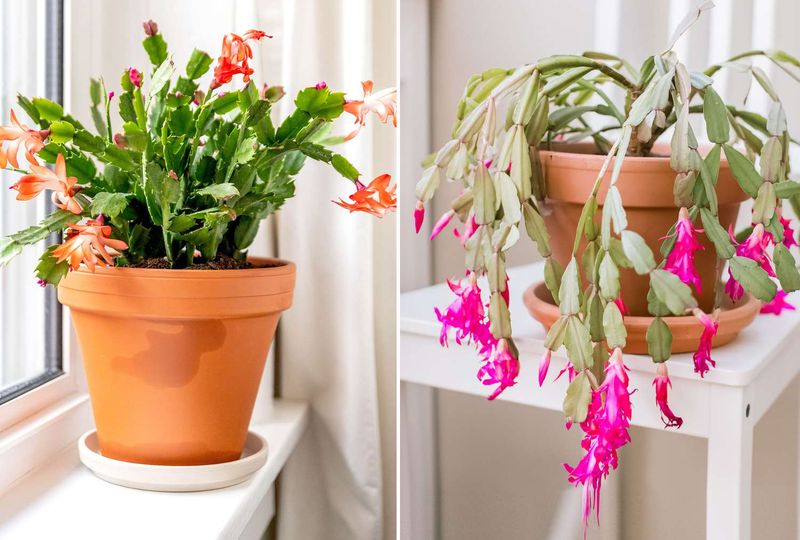
You bought a holiday cactus labeled Christmas cactus, but the label may not tell the whole story. Many of these plants in stores are actually Thanksgiving cacti or hybrids.
A quick look at the edges of the flat stem segments can give you a helpful clue. Then a little fall planning can help you encourage buds without stressing your plant.
Pointed teeth offer a quick visual clue
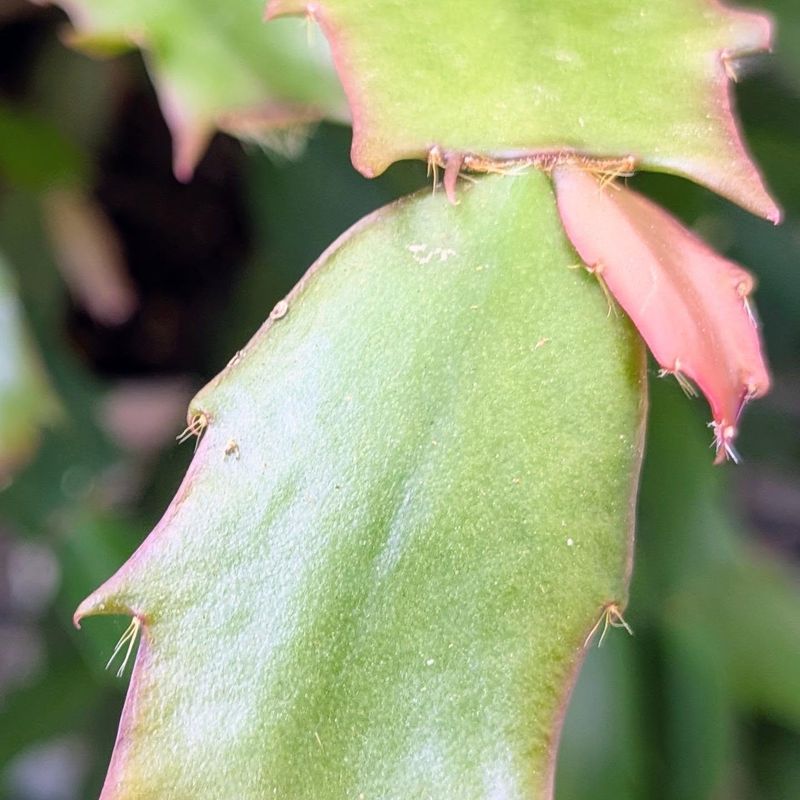
Grab your plant and look closely at the flat, leaf-like stem segments. You do not need flowers for this check, which makes it handy any time of year.
Pointed, claw-like teeth along the edges typically suggest a Thanksgiving cactus (Schlumberella truncata). Rounded, scalloped edges with no sharp points typically suggest a true Christmas cactus (S. x buckleyi).
Think of it as a strong hint rather than a final answer.
This clue matters because of how these plants are sold. Iowa State Extension notes that most plants sold as Christmas cactus are Thanksgiving cacti or hybrids, though not every one.
So if your plant has pointed teeth, you are far from alone, and it is nothing to worry about.
To get a good look, hold a few segments up to the light and run your eye along each side. Check several segments, not just one, because a single odd stem can mislead you.
Notice whether the edges look like small hooks, soft bumps, or something in between.
If the edges look sharp and clawed, a Thanksgiving cactus is a reasonable guess. If they look softly rounded, Christmas cactus is more likely.
NC State Extension also describes this same difference in stem shape. Either way, both plants enjoy similar care, so a mix-up will not harm them.
Use other clues without treating them as a verdict
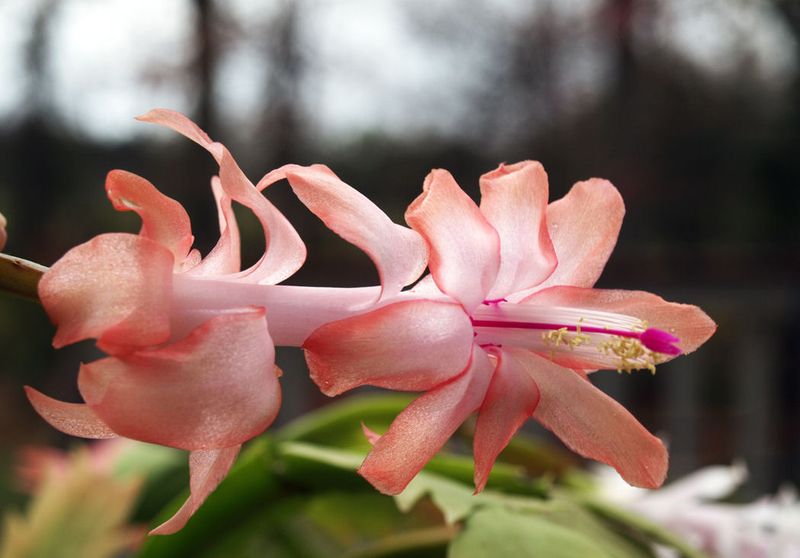
Sometimes the stem edges look a bit in between, and that is normal. Hybrids can resemble either type or fall somewhere between them, so edges cannot settle every case.
Iowa State Extension says some hybrids look like Thanksgiving cactus, some like Christmas cactus, and some are intermediate.
If your plant is in bloom, peek at the anthers, the small pollen-bearing tips inside the flower. They are usually yellow on a Thanksgiving cactus and purplish-brown on a Christmas cactus.
This is a second clue, not a verdict, and it works best when added to what the stems tell you.
Bloom date is a weaker clue than many people expect. Cultivars and growing conditions can shift when a plant flowers.
Commercial growers can also adjust light and temperature so plants are in bloom for holiday sales, as University of Illinois Extension explains. A plant that flowers in early December might not be a Christmas cactus at all.
A friendly way to weigh your clues: if the teeth are pointed and the anthers are yellow, Thanksgiving cactus is a solid bet. If the edges are rounded and the anthers are purplish-brown, lean toward Christmas cactus.
If the clues disagree, you likely have a hybrid, and that is fine.
You can still give it excellent care without a perfect label. The plant does not know what the tag says.
Long nights and cool evenings encourage buds
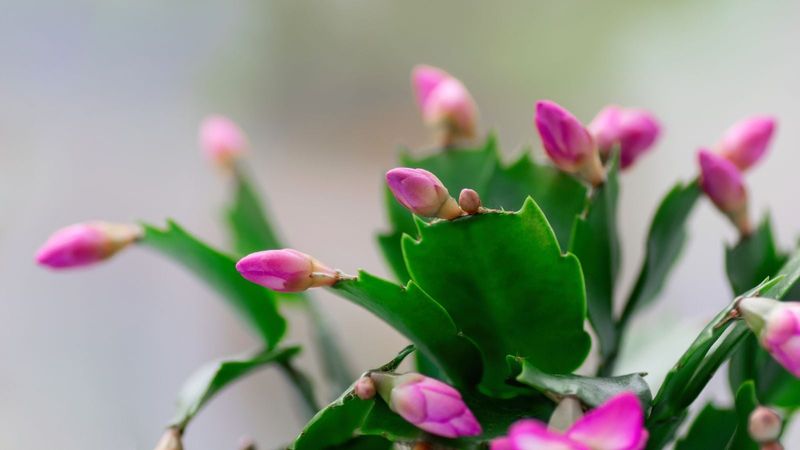
Holiday cacti set buds in response to the seasons. Short days, long uninterrupted nights, and cooler nights all encourage flower buds to form.
Your plant is basically waiting for fall signals.
A common recommendation is roughly 12 to 14 hours of darkness for several weeks. University of Maine Extension gives guidance along these lines, and some sources suggest longer dark periods, up to 14 to 16 hours.
Advice varies, so treat these numbers as a range rather than one magic recipe.
Temperature helps too. A cautious indoor target is about 55 to 65°F at night.
UConn Extension describes cool nights as a bud trigger, and University of Minnesota Extension notes that cool nights around 55°F can sometimes induce flowering even without short-day treatment. Others suggest combining cool nights with long darkness.
If you use a dark room, closet, or cover, keep the dark period consistent every night. A hallway light switched on at midnight can interrupt the process.
During the day, give the plant bright light so it stays healthy.
Think of this as setting the stage, not following a strict formula. Your plant, its cultivar, and your home all play a part, so results can differ from one windowsill to the next.
An October start cannot guarantee Thanksgiving flowers
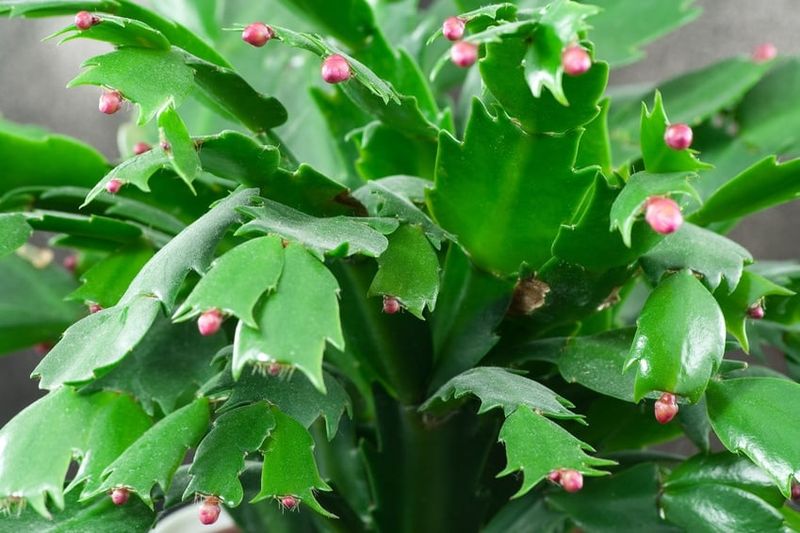
If you are reading this in October, you may wonder whether you are too late. Extension guidance generally starts the long-night, cool-night routine in September when the goal is Thanksgiving blooms.
That means October is not a dependable starting point for that particular deadline.
The reason is simple: buds need several weeks of the right conditions to form and open. Maine Extension, UConn Extension, and Minnesota Extension all describe a period of weeks, not days.
The sources do not support promising Thanksgiving-week flowers from an October start.
That does not mean you should skip it. Providing long nights and cool conditions in October may still encourage buds, and flowers may simply arrive later, perhaps closer to Christmas or after.
Some plants may also bloom on their own schedule.
Remember that the holiday names describe typical bloom windows, not guaranteed dates. Thanksgiving types often flower earlier under normal conditions, but cultivars and growing conditions can shift that.
So set a flexible goal. Aim for healthy buds and enjoy whenever the color shows up, rather than marking a specific week on the calendar.
Keep care steady as buds develop
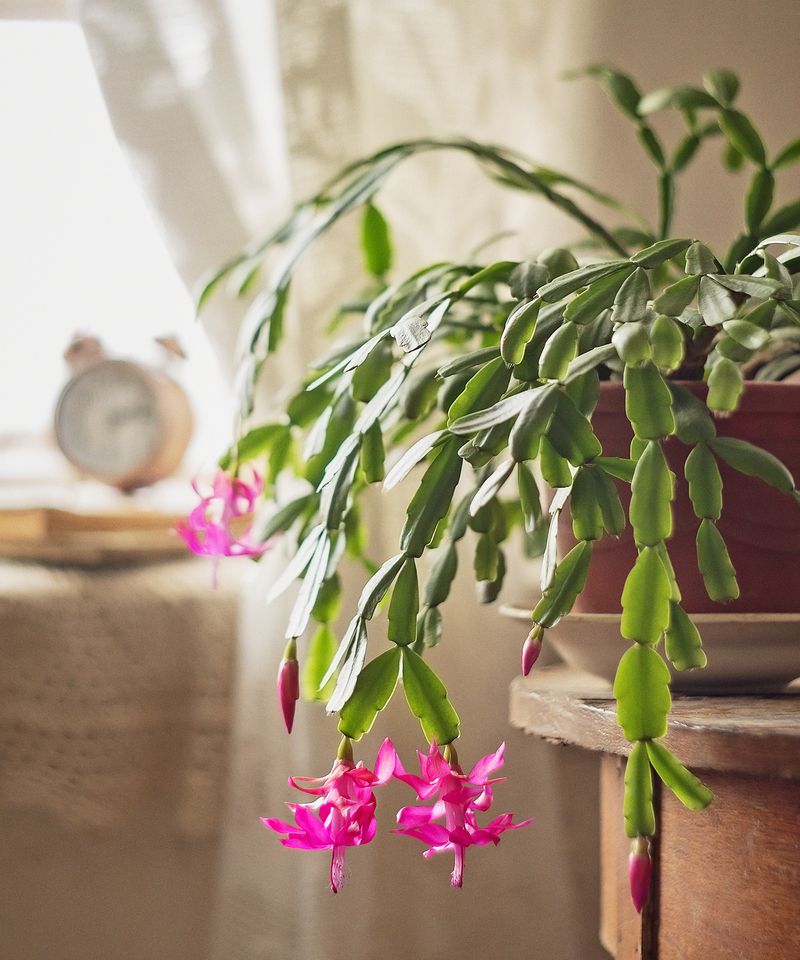
Once buds appear, the best move is consistency. Use a freely draining pot and potting mix so water does not sit around the roots.
Water steadily, avoiding both soggy soil and severe drying out.
Please do not withhold water to force blooms. The cited guidance instead warns against overwatering and excessive dryness, and steady moisture helps protect developing buds.
University of Missouri Extension offers practical holiday cactus care along these lines.
Bud drop is the main worry at this stage. Abrupt changes in light, location, temperature, drafts, or watering can contribute to it, though no single change always causes it.
Iowa State Extension and NC State Extension both mention these triggers. Once buds form, try not to turn the pot or move it around.
Cool nights are helpful, but cold exposure is not. If your plant spends summer outdoors, bring it inside before temperatures fall below 50°F, as Minnesota Extension advises.
UConn Extension also cautions against cold. Keep it away from cold windows, heating vents, and drafty doors.
If you need to adjust anything, make changes slowly. A calm, predictable spot is the safest place for a budding plant.
Use the clues, then set a realistic bloom goal
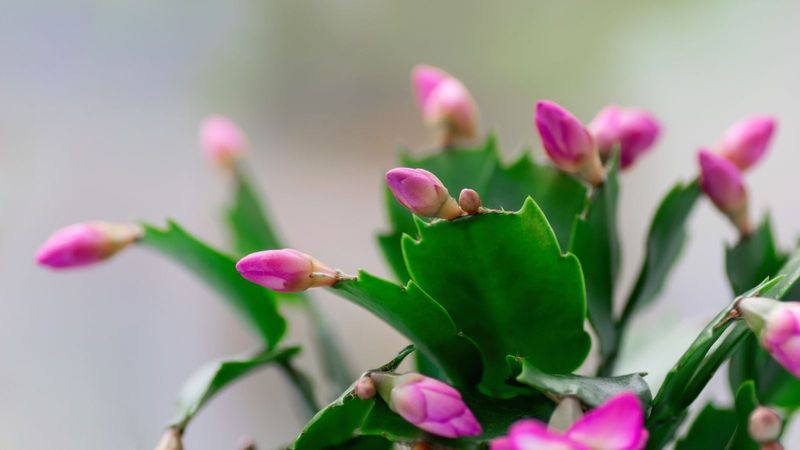
Two takeaways cover it. First, use stem edges and, when flowers appear, anther color to make a likely guess about your plant, while allowing that hybrids can blur the lines, as Iowa State Extension points out.
Second, match your bloom goal to the calendar. Giving long nights and cool conditions in October is still worthwhile, but Maine and Minnesota guidance does not promise Thanksgiving flowers from that start.
Your cactus will bloom when it is ready, and a late show is still a good one.