
That Vinca Groundcover Carpeting Your Shady Bed Has A Cousin That Helped Create Real Cancer Drugs
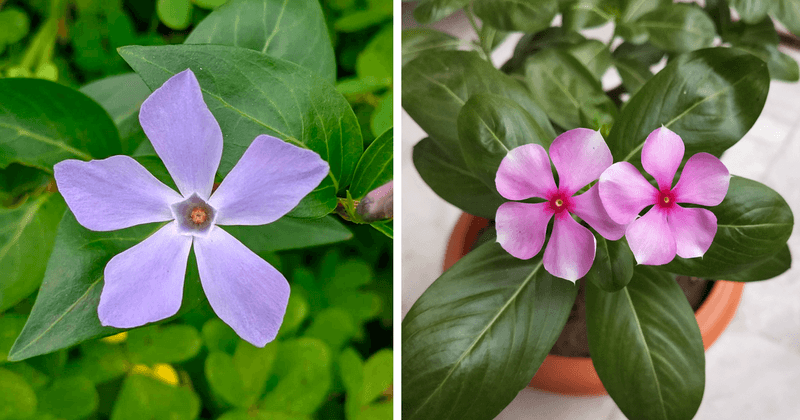
Look at the glossy green carpet under your trees and shrubs. That groundcover is probably common periwinkle, and it has a famous relative from Madagascar.
The two plants share a family, but they are not the same plant, and the difference matters. Here is how they connect, what each one contains, and how to treat the one in your yard.
A botanical cousin is not the same plant
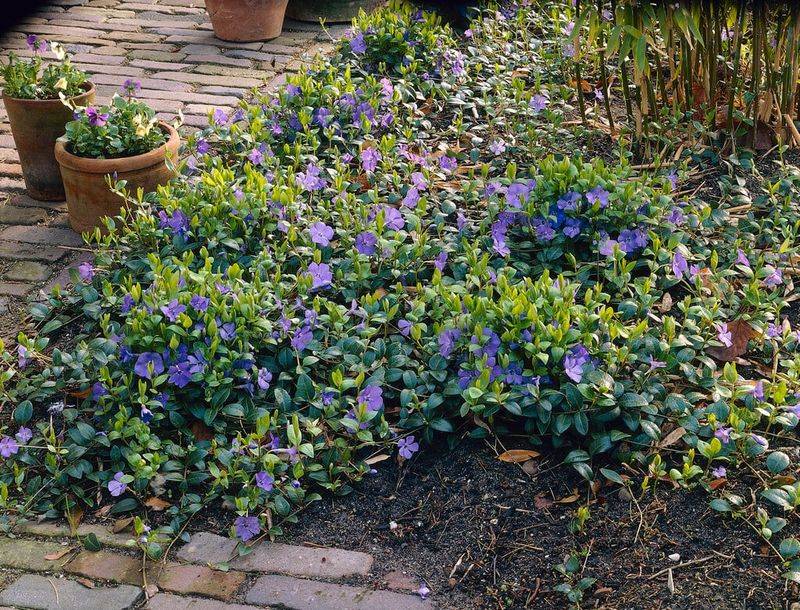
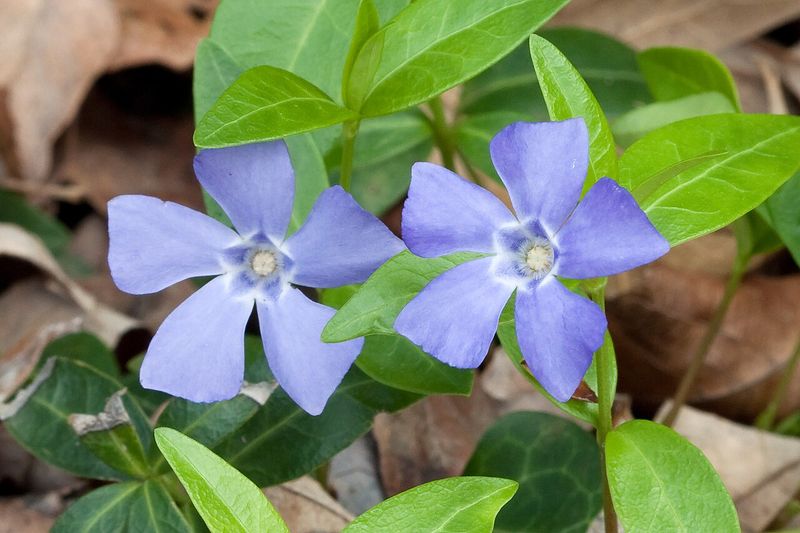
Picture the evergreen mat of shiny leaves and blue-violet spring flowers under your maple. In most U.S. yards, that plant is Vinca minor, called common or lesser periwinkle.
Kew’s Plants of the World Online places it in the dogbane family, Apocynaceae.
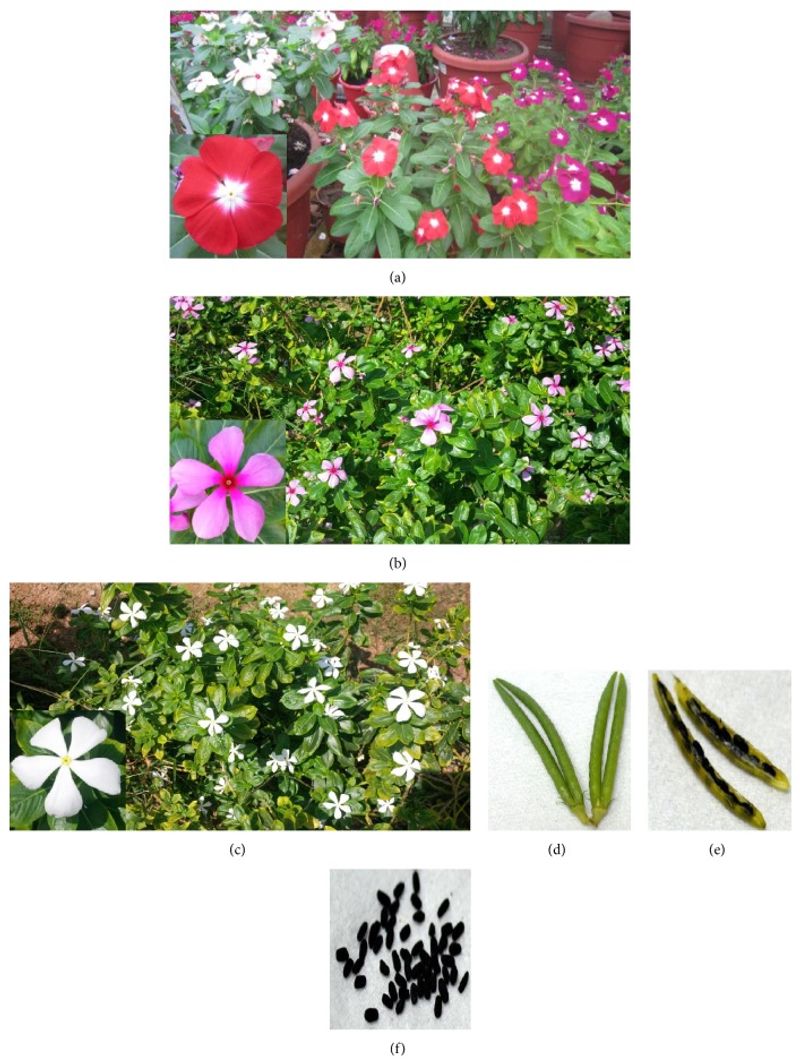
Its famous relative is Madagascar periwinkle, Catharanthus roseus, a tender plant with pink or white flowers that many gardeners grow as an annual. It sits in the same family, but Kew lists it under a different genus.
Think of them as cousins who live in different houses, not as one plant with two nicknames.
Naming adds to the mix-up. Catharanthus roseus was once called Vinca rosea, and that older name still turns up in books and websites.
It belongs to the Madagascar plant, not to the groundcover in your shady bed.
A quick check can settle which one you own. Common periwinkle trails along the ground, stays green through winter in many areas, and has blue-violet flowers.
Madagascar periwinkle grows upright and mounded, with flat, pinwheel-shaped blooms in pink or white. If your plant is carpeting the ground in shade, you almost certainly have Vinca minor.
Which periwinkle is associated with cancer drugs?
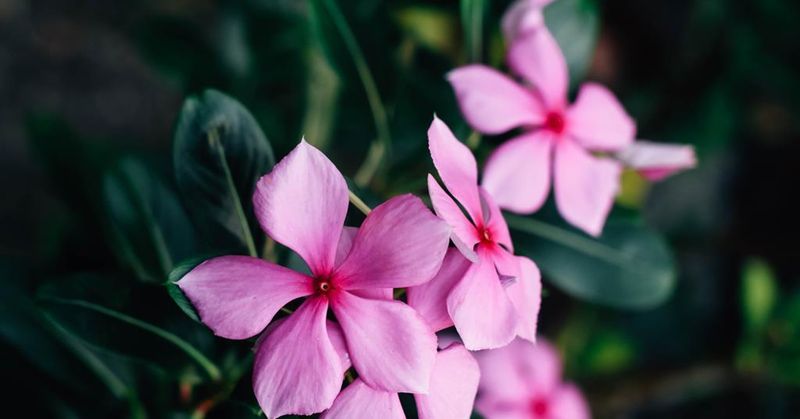
The plant tied to chemotherapy medicines is Madagascar periwinkle, Catharanthus roseus. The National Cancer Institute’s drug dictionary says that vinblastine sulfate is a substance isolated from this plant.
Its entry for vincristine sulfate uses the plant’s former name, Vinca rosea.
That old name is where the confusion starts. Kew’s record for Catharanthus roseus shows Vinca rosea as a synonym, meaning an earlier name for the same Madagascar plant.
It was never a name for the shady groundcover.
So the chain is simple. Vinblastine and vincristine come from Catharanthus roseus.
Vinca minor, the plant in your bed, is a different species in a different genus, and nothing in these references says it supplies either drug.
Notice also that these are carefully made medicines given under medical care. A plant sharing a family with a drug source does not carry that role along with it.
Your periwinkle is a handsome groundcover, and that is the job it does well.
Common periwinkle has its own alkaloid profile
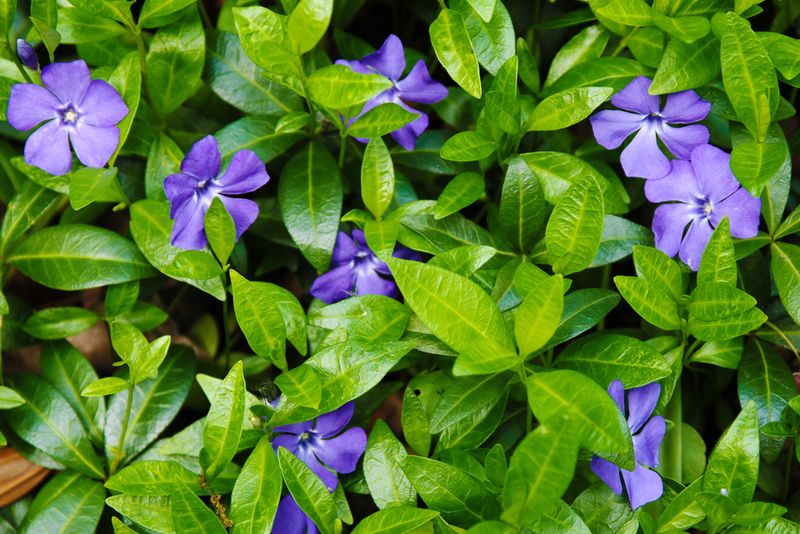
Vinca minor is not a chemical blank. Researchers have found indole alkaloids in its leaves, and one of them is vincamine.
A peer-reviewed study of Vinca minor leaves looked at that alkaloid pattern in detail.
Alkaloids are natural compounds that many plants make, often as part of their defenses. Some have strong effects on animals and people, which is one reason a plant full of them deserves respect rather than experiments.
Finding a compound in a plant tells you what the plant contains. It does not tell you that the plant is a safe or effective treatment for anything.
Turning a plant compound into a medicine takes purification, testing, and dosing that nobody can do by chewing a leaf or steeping a tea.
The study looked at leaf chemistry in a lab. It did not test garden use, and it did not show a benefit from growing the plant, touching it, or eating it.
For you, the takeaway is simple: your groundcover has its own interesting chemistry, and that is a reason to enjoy learning about it, not to sample it.
A lab finding is not a garden recipe
Here is a detail that shows how slippery plant chemistry can be. In the same research, scientists treated Vinca minor leaves with methyl jasmonate, a plant signaling compound.
That treatment extensively altered the pattern and composition of indole alkaloids in the leaves.
In plain terms, the plant’s chemical mix did not stay put. When the leaves were nudged in the lab, the lineup of compounds shifted a lot.
That is a good reason to avoid thinking of a leaf as a fixed ingredient list. What a plant contains can change with conditions, so no one can predict what is in the periwinkle outside your back door.
It also keeps the finding in its place. This was a controlled laboratory experiment on leaves.
It says nothing about ordinary garden soil, drug production, or treating people, and it should not be stretched to cover any of those.
If you see a claim that garden periwinkle holds a reliable, useful dose of anything, you can set it aside. The plant is a living thing that responds to its surroundings, not a measured product.
Vinpocetine is a derivative, not a natural ingredient
You may have seen vinpocetine sold as a memory or brain supplement and assumed it comes from periwinkle. It does not come straight from the plant.
FDA states that vinpocetine is synthetically produced and is not naturally present in Vinca minor.
The link is that vinpocetine is made from vincamine, the alkaloid found in the plant. Starting from a plant compound and chemically changing it makes a new substance.
It is a lab product, not a leaf ingredient.
FDA also says it has not evaluated the health uses marketed for vinpocetine. The agency describes its 2016 conclusions about the ingredient in dietary supplements as tentative, which is not the same as a ban.
One warning stands out. FDA advises pregnant women and women who could become pregnant not to take vinpocetine, because of possible risks including miscarriage and effects on fetal development.
Nothing here is a reason to try the supplement. If you are curious about any product like it, a clinician or pharmacist is the right person to ask first.
Keep Vinca minor in its garden context
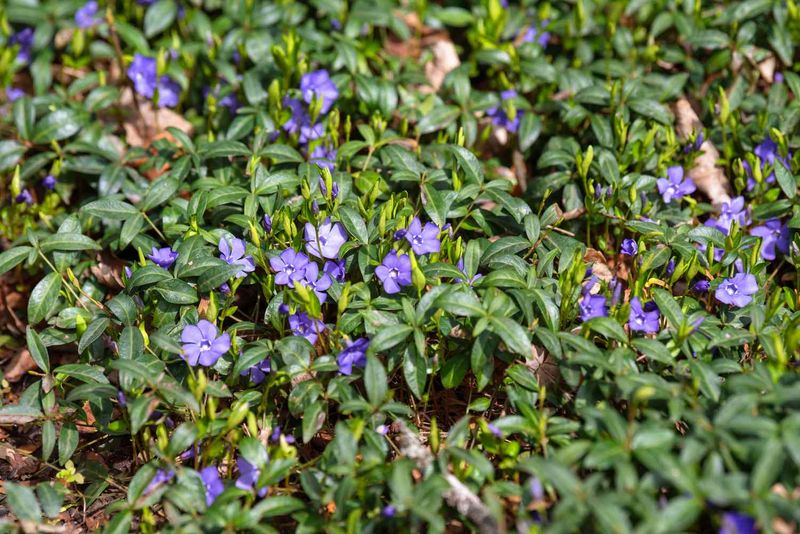
Back in the yard, Vinca minor earns its spot in tough places. Iowa State Extension lists it as a groundcover for partial to full shade, and it does not tolerate wet sites.
If yours looks thin or yellow in a soggy corner, drainage is the first thing to check.
The same toughness lets it travel. Stems root where they touch soil, so a bed edge can become a path into the lawn or the woods.
The U.S. Forest Service review of periwinkles documents established populations and possible effects on native seedlings in some settings, while noting places where measured effects were limited.
That means the impact depends on where you live and what grows nearby. It is not accurate to say the plant is a problem everywhere, or that it must be pulled out.
A practical plan is easy. Trim or edge the bed each season, and bag and dispose of clippings instead of tossing them over a fence or into a wooded area.
Before adding more, check your local extension office or state invasive-plant list for advice that fits your area.
Admire the connection, but don’t self-treat
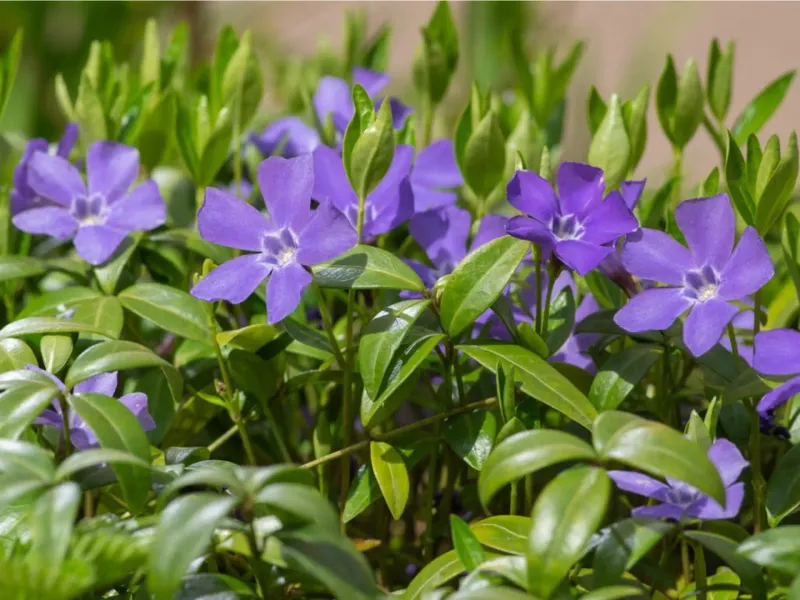
Sharing a family with a drug-source plant makes common periwinkle interesting, not medicinal. Please do not eat it, brew it, or prepare it as a remedy.
Poison Control’s periwinkle guidance advises correct plant identification and keeping plants and herbal products away from children and pets.
If you think someone has swallowed part of it, call Poison Control at 1-800-222-1222 or use webPOISONCONTROL. Have the plant name ready if you can.
Your shady carpet of green has a good story, and you can enjoy it fully with gloves on and your hands busy with edging shears, not a teacup.