
Spider Plant Roots and Microbes Removed Formaldehyde in Lab Experiments
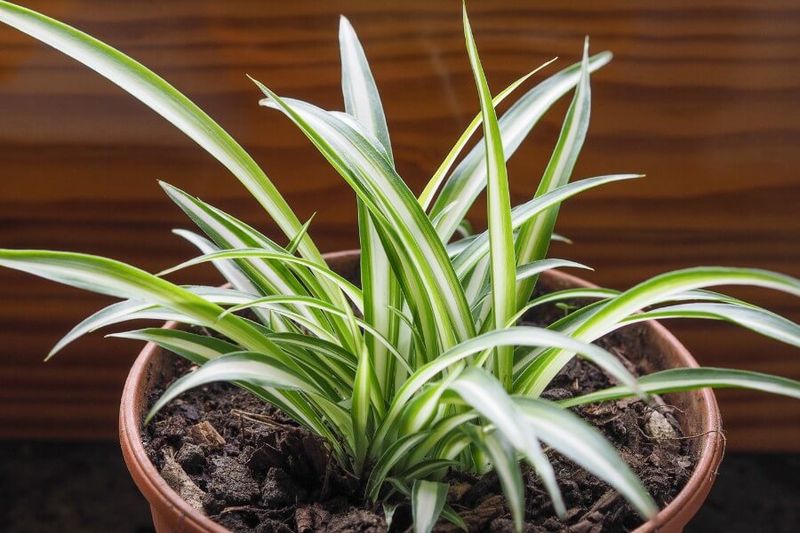
Your spider plant may have a secret life underground. In lab experiments, its roots and the tiny microbes around them helped remove one specific gas, formaldehyde.
That sounds like a big win for your shelf, but the story is more careful than the headlines. Here is what the studies found, what they did not, and what really helps indoor air.
Roots and microbes share the formaldehyde work
Picture the dirt in your spider plant pot as a busy neighborhood. Roots reach through it, and tiny microbes live along them.
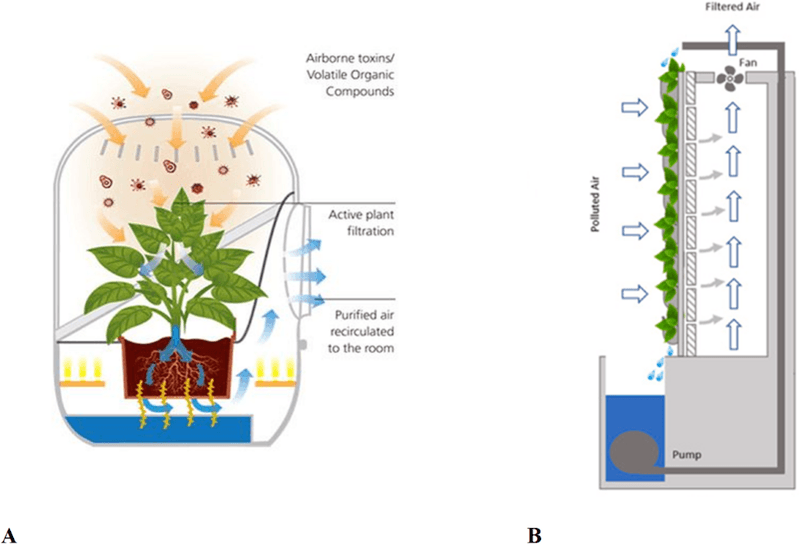
In a 2010 study of formaldehyde biofiltration, researchers reported that spider-plant roots took up formaldehyde. They also reported that substances leaking from the roots, called root exudates, helped microbes break formaldehyde down faster.
That is the surprise at the heart of this story. The plant did not seem to do the job alone.
Roots and root-zone microbes appeared to work as a team, with the plant feeding its microbial neighbors and the neighbors helping clear the gas.
Here is the catch. The main experiment used a packed biofilter, which is a container built to pass polluted air through plant material and growing medium so researchers can measure what disappears.
It was a lab setup designed for testing, not a spider plant sitting on a bookshelf in a living room.
So the finding is real, but it is narrow. It shows a possible mechanism for one pollutant under experimental conditions.
It does not show that a single houseplant at home is cleaning your air in any meaningful way, and the researchers did not test that.
Think of it as a clue about how plants and microbes can cooperate. It is a neat piece of biology, and it makes a familiar plant more interesting.
But a clue about how something works is different from proof that it works in your house.
The growing medium complicates a leaf-only explanation
Many people assume leaves do all the cleaning. An older experiment suggests it is not that simple.
A 1989 chamber study of spider plants saw formaldehyde levels drop, but the biggest drops came when the plants had their leaves removed.
That odd result points away from leaves as the only factor. The authors linked the reductions to the soil medium and to moisture storage, meaning the pot itself may have been absorbing or holding formaldehyde.
They did not support claims that leaves alone purify the air.
Here is a practical way to read this. If a pot of damp soil can pull formaldehyde out of chamber air, then the soil, water, roots, and microbes may all play a part.
Nobody should hand all the credit to the green leaves, and nobody should hand it all to microbes either.
There is a limit to what this tells us. The study points to contributions beyond the leaves, but it does not prove one universal mechanism for every plant, pot, or room.
Different soils, moisture levels, and setups could behave differently.
If you like checking your plant, try this instead of worrying about air: poke a finger an inch into the soil. If it still feels wet, wait.
Healthy spider plants prefer soil that dries a bit between drinks.
Potted plant-and-soil systems removed formaldehyde in chambers
A second line of evidence came in 2011. In a dynamic-chamber study of potted plant-soil systems, researchers tested how well whole potted plants removed formaldehyde.
A dynamic chamber is a sealed box where air flows through at a controlled rate, so scientists can track the gas going in and coming out.
The test covered formaldehyde and three plant species. Of those three, the spider-plant system performed best.
That is a fun result for spider plant fans, but the ranking only applies to the plants and conditions in that experiment.
Notice the wording: plant-and-soil system. The researchers measured the whole pot, not just the leaves.
That fits with the older chamber work, where soil and moisture seemed to matter, and with the idea that root-zone microbes could be helping.
Now think about your own room. A chamber has fixed air flow, a set amount of formaldehyde, and no open doors, cooking smells, or kids tracking in dirt.
Your living room has all of that and more.
So the experiment shows a spider-plant pot can remove formaldehyde under controlled conditions. It does not measure what one plant does in a lived-in room.
That gap is where many bold claims about houseplants fall apart.
Chamber results do not scale neatly to a home
Numbers help here. A 2020 review pulled together results from 12 chamber-study papers and converted them into clean-air-delivery rates, which describe how much clean air a plant effectively provides each hour.
The review by Cummings and Waring found a median of 0.023 cubic meters per hour per plant.
That is a tiny amount. To compare it with something familiar, the authors looked at the air exchange in typical buildings, where outdoor air leaks in and indoor air leaks out all day.
Ordinary air exchange beat the passive removal of potted plants.
The authors then estimated how many plants might be needed to match that typical air exchange. Their rough answer was about 10 to 1,000 plants per square meter of floor area.
That wide range is part of the message: this is a broad comparison built from chamber studies, not a prediction for any one house.
It is also not a shopping goal. Nobody should read that range and decide to fill a room with spider plants.
The point is to show how big the gap can be between a lab result and a real home.
A fair summary: the chamber findings are genuine, but they were gathered in small, controlled boxes. Once you add open windows, ventilation, and a whole room of air, one potted plant is a small player.
Formaldehyde findings do not establish broad toxin removal
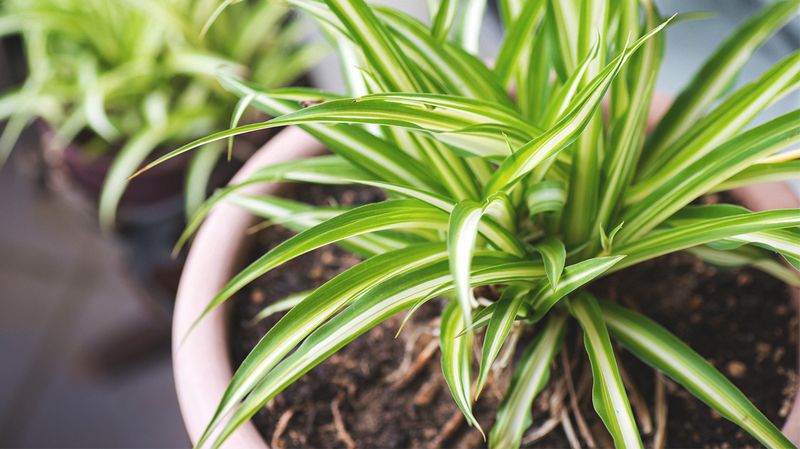
Words matter. The spider-plant studies in this story are about formaldehyde, one gas found in some building materials, furniture, and household products.
They are not about indoor toxins in general, and the headline version of this idea stretches the science too far.
Look at what the work actually covered. The 2010 biofilter experiment tested formaldehyde.
The 2011 chamber experiment also tested only formaldehyde, with three plant species. Neither one showed removal of a broad list of indoor pollutants, and neither measured whether people were healthier.
There is another difference worth keeping straight. Removing a pollutant in an experiment is not the same as lowering how much of it people breathe in at home.
Exposure depends on the room, the sources, the airflow, and many other things the labs did not copy.
The U.S. Environmental Protection Agency takes the same cautious view.
In its indoor air quality guidance, EPA says a reasonable number of houseplants has not been shown to remove significant quantities of pollutants in homes and offices.
So keep your spider plant for what it does well: it looks lovely and is forgiving. Just do not count on it as protection from anything in your air.
Improve indoor air without relying on houseplants
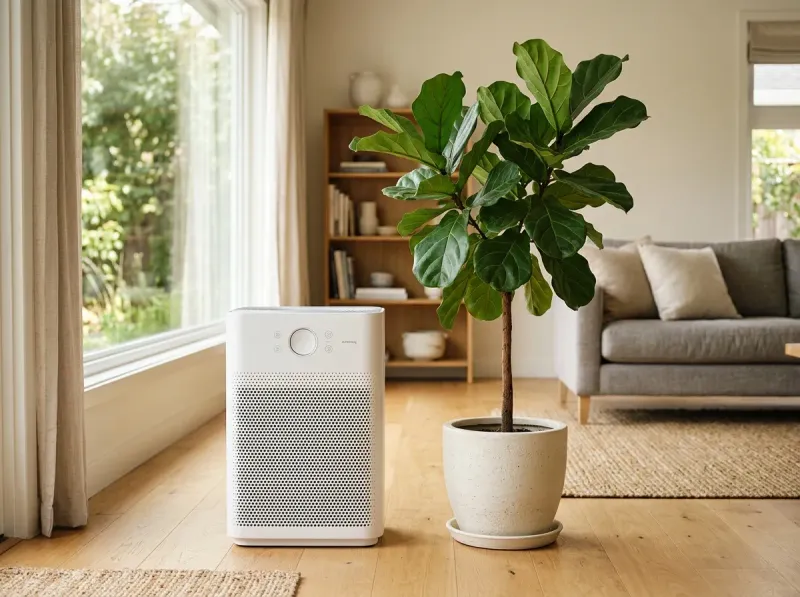
If you want cleaner air at home, the EPA has a simple order of attack. Start with the sources.
EPA’s guidance on improving indoor air quality says to remove or reduce what is putting pollutants into the air in the first place, such as certain products, smoking, or poorly vented appliances.
Next comes ventilation. When outdoor conditions allow, bring in fresh air by opening windows or running exhaust fans while cooking or cleaning.
After that, air cleaners or filtration can add a boost, but EPA treats them as a supplement, not a replacement for the first two steps.
Now a word of caution for plant lovers. Do not overwater your spider plant or keep its soil constantly wet because you hope to help microbes clean the air.
EPA warns that overly damp soil may promote microorganisms that affect allergic individuals.
A better habit is to water when the top inch of soil feels dry and make sure the pot drains. Yellow, mushy leaf bases and a musty smell are signs the plant is getting too much water.
The partnership found in the 2010 biofilter study is still a charming piece of science. Roots and microbes teaming up beneath a spider plant is a quiet marvel, even if it will not replace an open window.