
Lavender Cuttings in Fall: A Low-Cost Way to Make More Plants
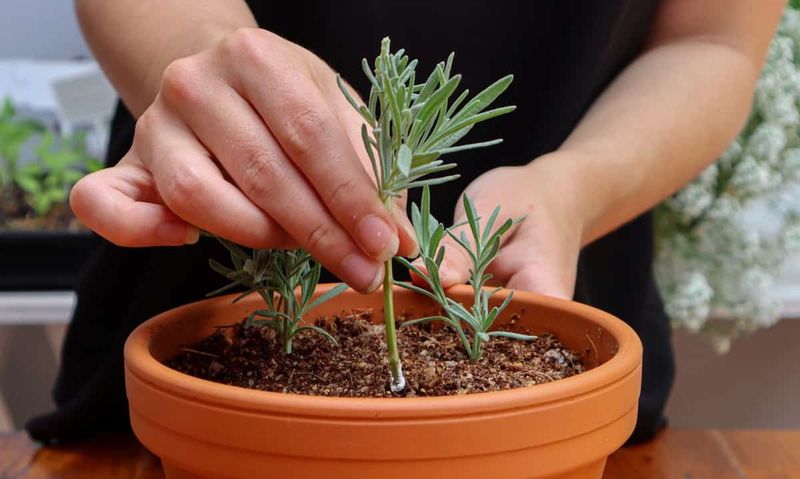
Your lavender plant may be able to give you more lavender plants, and the starter material comes right off the stems. Fall can be a good time to try it in some yards, but not in every one.
A few snips, a pot, and some patience are the main tools. Here is how to try it without hurting the plant you already love.
Fall Can Be a Cutting Window, Not a Deadline
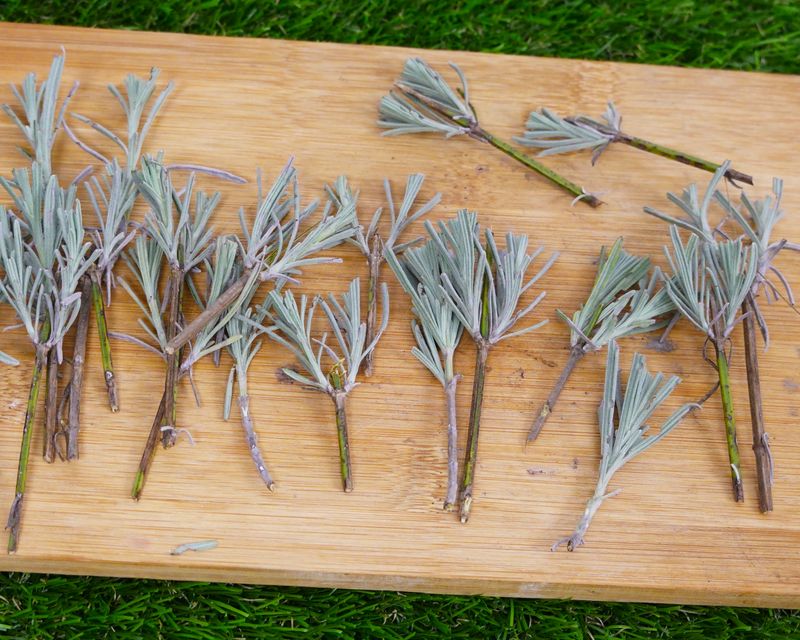
Timing is the first thing to sort out, and it is where a lot of advice gets too tidy. Late summer into autumn can suit semi-hardwood shoots, which are stems that have firmed up a little but are not fully woody.
University of California guidance on lavenders points to that kind of window for cuttings.
Still, October is not a deadline for every yard. A gardener in a mild coastal area and one in a cold northern state have very different calendars.
Frost may arrive in September in one place and December in another, so the date on the wall matters less than what your plant is doing.
Other sources lean earlier. Colorado State University Extension describes taking cuttings after flowering or in summer, which can work well if your plant has finished blooming and has fresh growth.
So think of fall as one possible window, not the only one.
The best clue is the shoot itself. Look for healthy new growth that has begun to firm up at the base but still bends a bit.
If every stem is hard and woody, or if it is soft and floppy, the timing may be off for this plant.
Cuttings are also not a promise of a whole row. Some will root and some will not, and propagation guidance from NC State Extension describes high success in a greenhouse setting, which is not the same as a kitchen windowsill.
Treat a few new plants as a good result, and anything beyond that as a bonus.
Choose Suitable Stems From a Healthy Plant
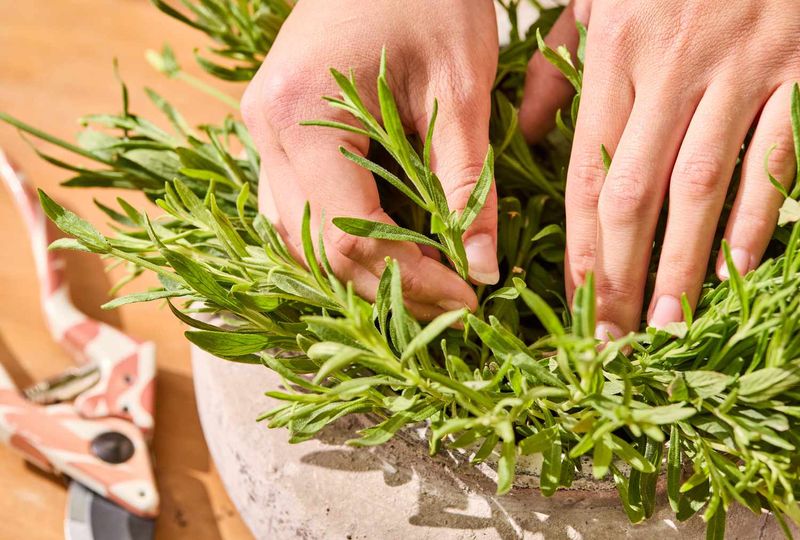
Picking the right stems does more for your success than any fancy supply. Start with a lavender plant that looks vigorous, with no yellowing, dieback, or soggy-looking crown.
A stressed plant makes weak cuttings and does not need the extra loss.
Next, look for shoots without flower buds. Non-flowering stems put their energy into growing roots and leaves instead of blooms.
Aim for growth that is firm enough to hold its shape but not rock-hard and brown like the old base of the plant.
Why bother with cuttings at all? Most named lavender varieties are clones, as NC State Extension explains, so a cutting carries the same traits as the parent.
Seed-grown plants can vary, and Iowa State University Extension notes they may not match the named variety you bought. If you love the scent and color of your plant, cuttings are the way to keep them.
Keep your count modest. Taking a handful of stems, spread around the plant, is plenty for a first try.
Say you take six and three root; that is three new plants for the cost of a few pots.
Do not think of this as a fall haircut. Illinois Extension advises against fall pruning, so snip only what you need and leave the rest of the plant’s growth to protect it through winter.
Prepare Cuttings Without Harming the Parent
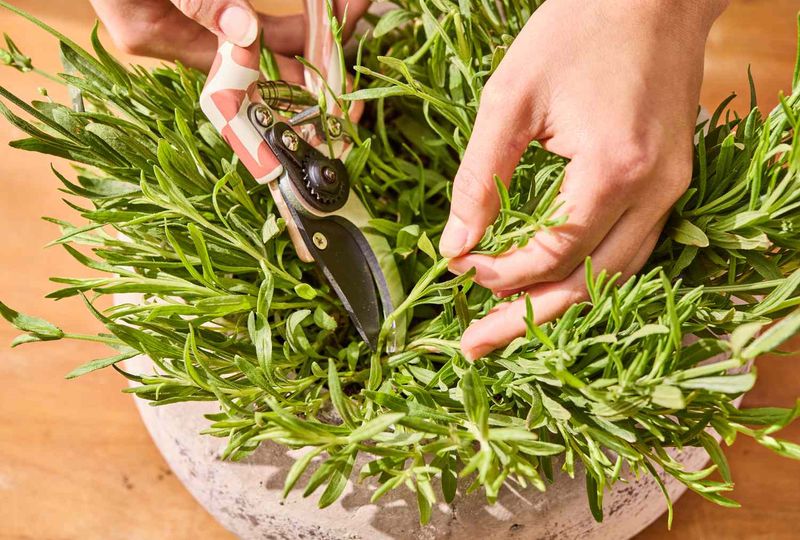
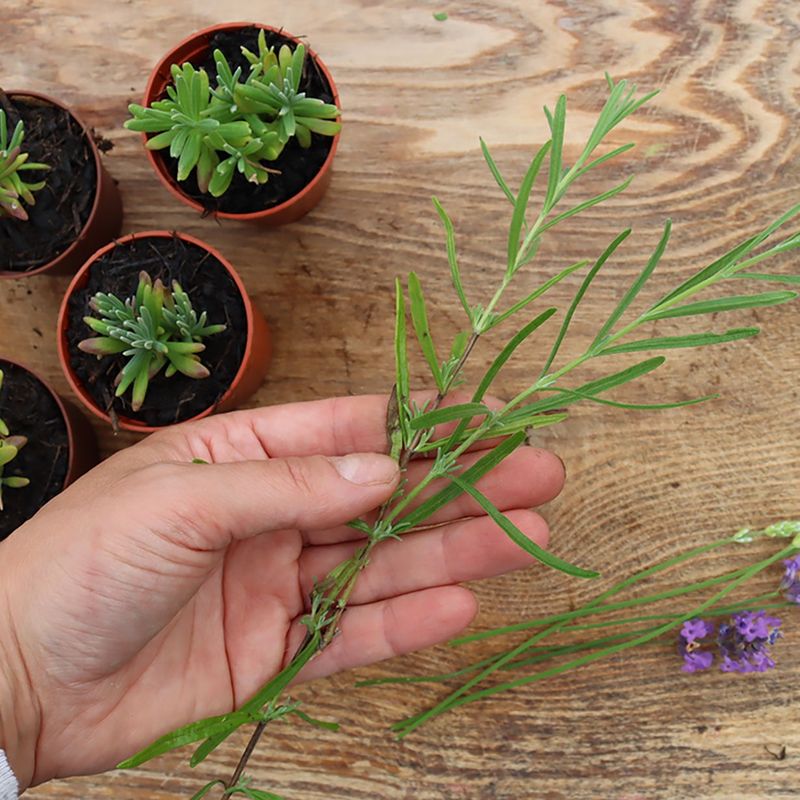
Once you have chosen a stem, make the cut where it will not hurt the plant. Take it from the green, flexible growth near the tips, a few inches long.
Use clean, sharp snips so the cut is neat and not crushed.
Here is a mistake worth dodging: do not cut down into the hard, woody base. Lavender does not readily regrow from old wood, and Iowa State University Extension cautions against cutting into it.
If you leave some green growth below each cut, the parent plant stays in good shape.
Back at the bench, strip the leaves from the lower portion of each cutting, the part that will sit in the rooting medium. Leaves left under the surface tend to rot and can spoil the whole pot.
Keep a few leaves at the top so the stem can still do its job.
If any flower buds are on the cutting, pinch them off. Work quickly, and keep the cuttings out of direct sun and wind while you prepare them, because small stems dry out fast.
A damp paper towel can hold them for a short time.
Some gardeners dip the cut end in rooting hormone, and some skip it. Colorado State University Extension says it is not necessary, so you can try a few cuttings both ways if you are curious.
Label each pot so you can compare later.
Give Cuttings a Protected Place to Root
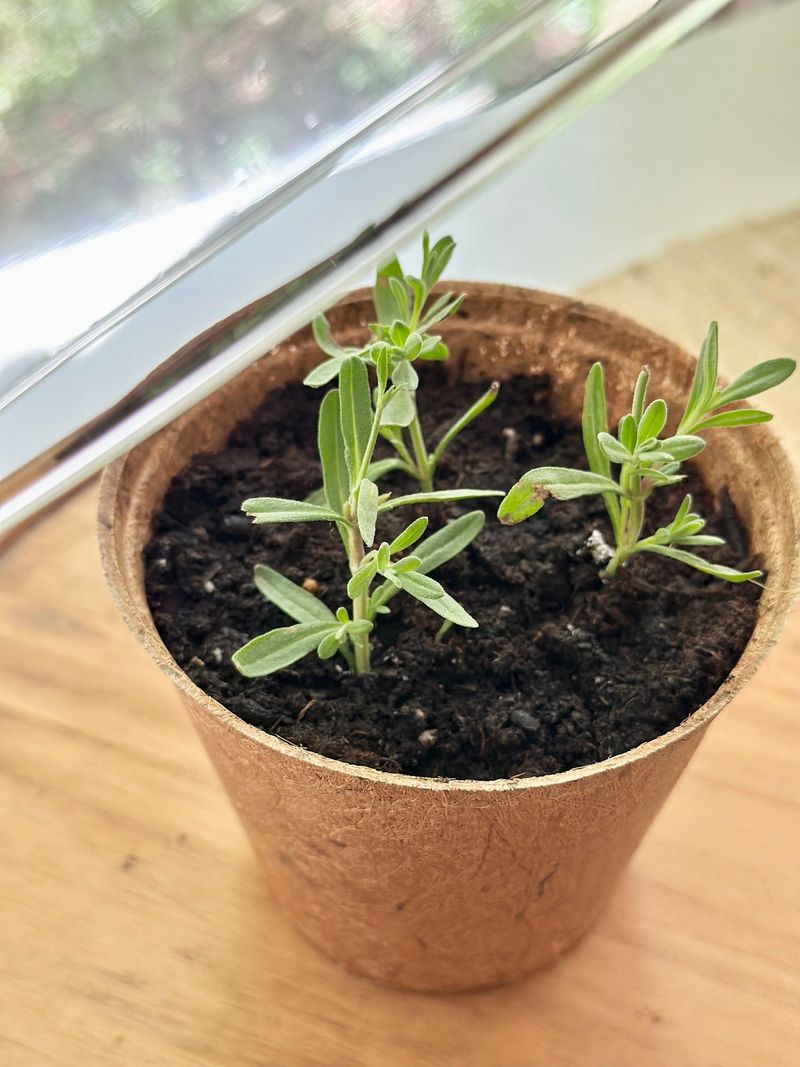
Rooting is the waiting stage, and a protected spot makes it easier. A bright windowsill, a sunroom, or a cold frame can all work.
The goal is to keep the cuttings away from hard frost and drying wind while roots form.
Start with a clean container and a well-drained rooting medium. Lavender hates soggy conditions, so choose something light, such as a mix with plenty of sand or perlite.
Keep it moist, not waterlogged, and let the surface dry slightly between waterings.
For numbers, Utah State University Extension gives about 70 degrees F as a rooting temperature and reports roots forming in roughly 30 to 40 days. That is guidance for the method it describes, not a promise for every setup.
A cool room or a dim window could take longer, or not work at all.
Extension sources also disagree on rooting hormone. Utah State recommends it in its method, while Colorado State says it is not needed.
Either way, good cleanliness and the right moisture level matter more than any product.
Check your cuttings every few days. Remove any that turn black or mushy so rot does not spread.
A gentle tug that meets resistance after several weeks is a good sign, but give it time before you decide a cutting has failed.
Let Rooted Cuttings Develop Before Planting Outside
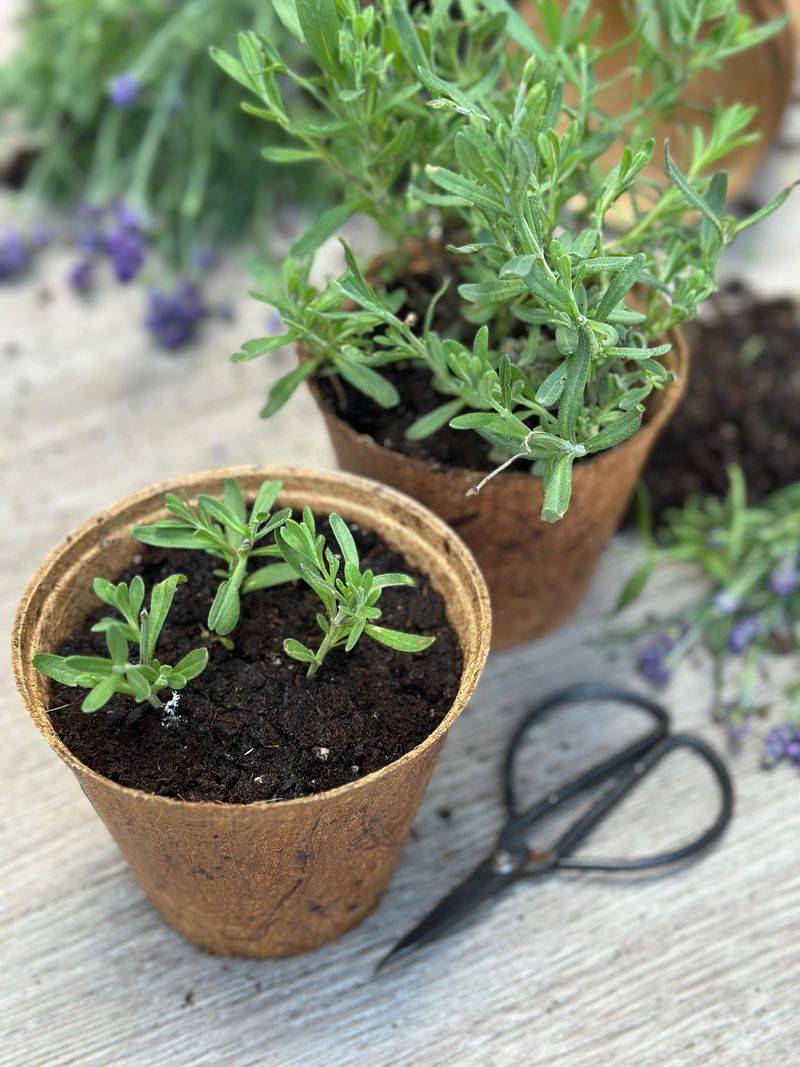
A cutting with a few roots is not yet a garden plant. Think of it as a baby that needs more time in a pot.
Once roots have formed, move each cutting into its own small container with a gritty, well-drained mix.
The pot stage is when the root system gets strong. Utah State University Extension recommends letting rooted cuttings build a vigorous root system and planting them after the last spring frost.
It also cautions that lavender grows slowly in fall and needs good roots to survive winter.
That advice fits Utah, and your climate may differ. In a mild area, you may be able to plant earlier, while a cold area may need a longer wait.
Use your own last frost date as the guide, not a calendar date from another state.
While you wait, keep the pots in bright light and water only when the top of the mix feels dry. Pull back on watering if the leaves yellow, since wet feet are a common lavender problem.
Before planting, give the plants a few days outdoors in a sheltered spot to adjust.
When the time comes, choose a sunny, well-drained site and space the plants with room to grow. A small lavender may look lonely at first, but it fills in over seasons, not weeks.
More Lavender Takes Time and Care
Cuttings are a practical way to get more lavender, but they work on their own schedule. Some will root, some will not, and a full row takes seasons to fill in.
Oregon State University Extension notes in its general fall-cutting advice that success is not guaranteed, so plan with a few extra stems.
The process is low-cost, not truly free. You may need pots, a gritty rooting mix, and a bright place to keep them, plus regular attention.
Iowa State University Extension is a good place to read about growing lavender where winters are cold.
One more step before you start: if your plant is a named cultivar, check its label or patent status. The USPTO explains that a plant patent can prevent others from asexually reproducing a patented plant.
A quick look at the tag can settle the question.
Start small, take notes, and let each batch teach you something. A single rooted cutting is its own small win, and the row comes one plant at a time.