
Your Hosta Bed Looks Flat On Its Own – 13 Shade Companions That Make Every Leaf Look Fuller
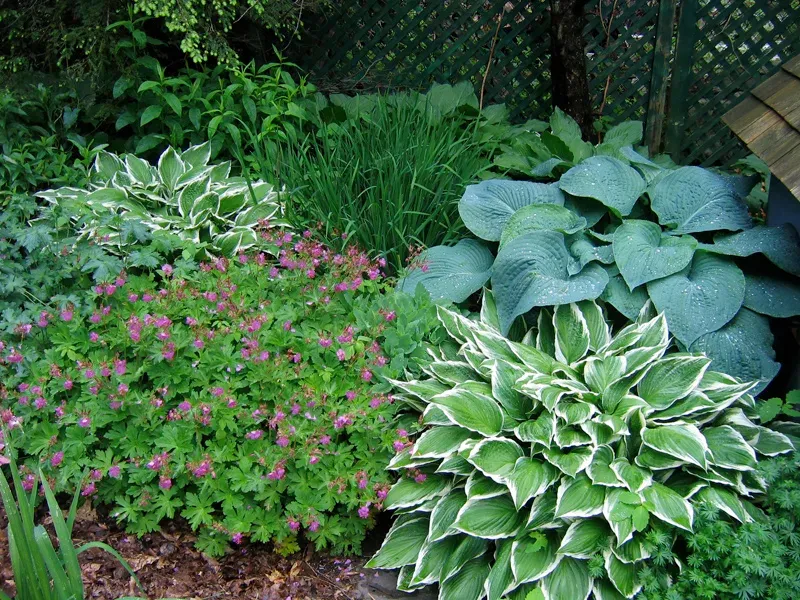
Hostas are tough, reliable, and loved in shady yards all over the country. But when a bed holds nothing except hostas, all those big round leaves start to blend into one flat green blob.
The fix is simple: tuck in a few shade plants with different shapes, colors, and heights so your hostas finally stand out. Here are 13 easy partners that can make your hosta bed look full, layered, and alive from spring to fall.
1. Astilbe
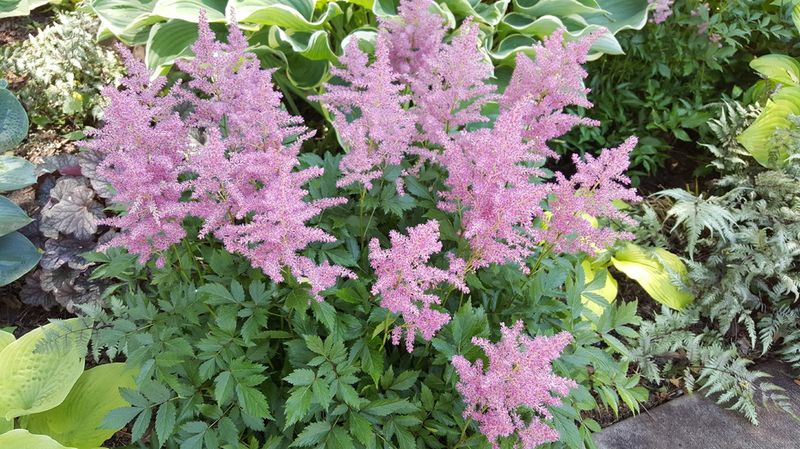
Picture a hosta bed in July with fluffy pink plumes floating above the leaves like cotton candy. Astilbe does exactly that, adding height right where hostas stay low and mounded.
Its lacy, fern-like foliage is the opposite of a smooth hosta leaf, so each plant makes the other look sharper. Plumes come in red, pink, purple, and white, so you can match almost any hosta color.
Astilbe likes the same damp, shady spot your hostas enjoy. The one thing it hates is drying out, so give it a deep drink during summer dry spells, and leave the faded plumes standing for winter interest.
2. Bleeding Heart
Hostas are slow risers. In early spring, your bed can look like bare dirt with a few pointy shoots poking up.
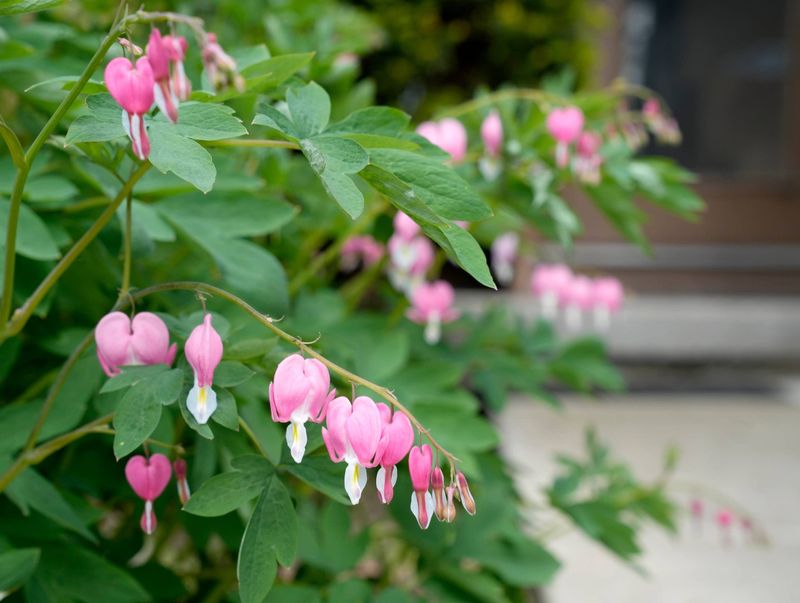
Bleeding heart steps in during that awkward gap. Its arching stems hang with little pink or white hearts that look almost too sweet to be real, and kids love them.
Here is the clever part: bleeding heart often fades and goes dormant by midsummer, right as hosta leaves spread wide to cover the empty space. Plant them side by side and the bed stays full all season with no bare patches.
Just know every part of the plant is toxic if eaten, so keep it away from curious pets.
3. Barrenwort (Epimedium)
Got a corner under a maple where nothing seems to grow? Epimedium is famous among gardeners as one of the few plants that shrugs off dry shade.
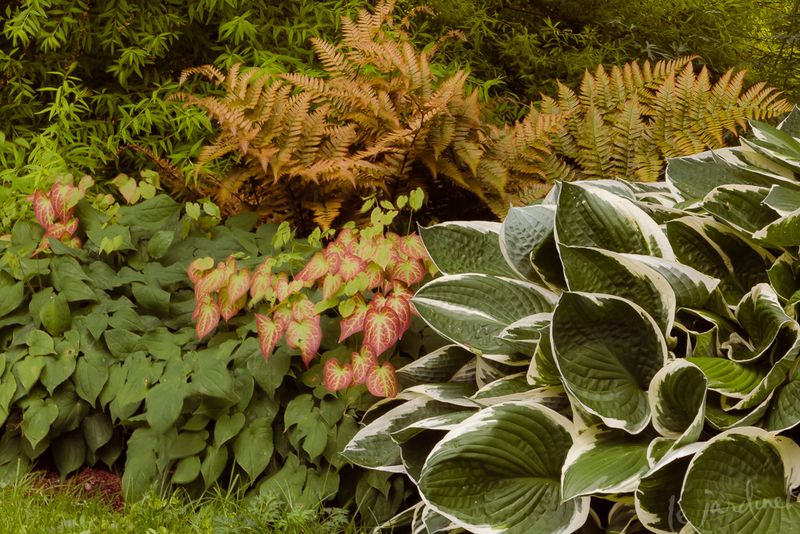
It forms a tidy carpet of heart-shaped leaves, often tinted bronze or red in spring. Tiny flowers that look like miniature columbines dangle above the foliage in April.
Tuck it along the front edge of your hostas to hide their bare stems and fill the ground layer. In milder parts of the country, the leaves may stay green through winter.
One handy tip: trim old leaves in late winter so the new flowers show off.
4. Brunnera
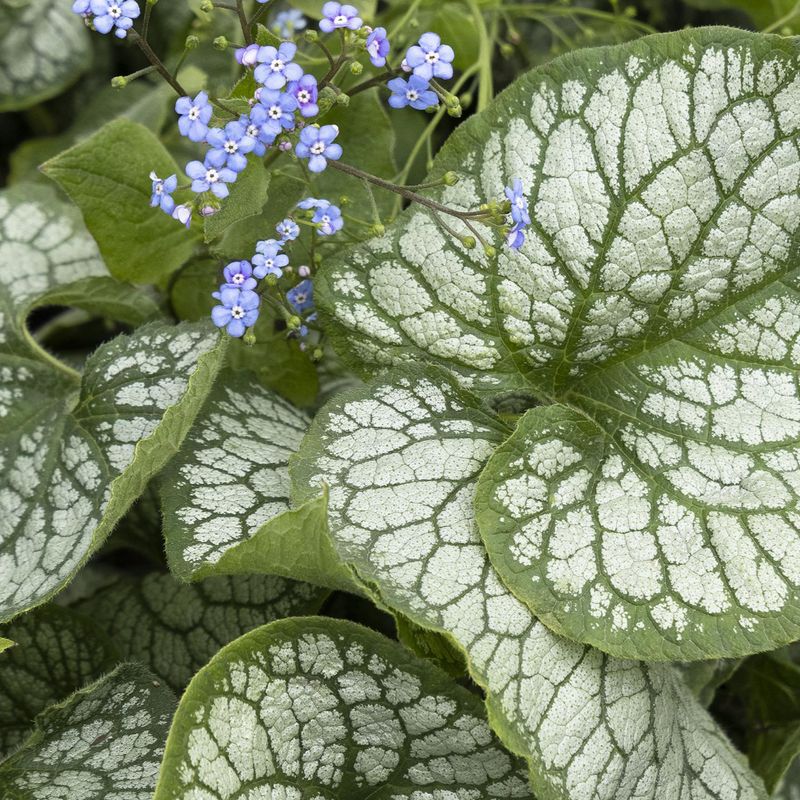
Silver leaves glow in shade the way a night light glows in a dark hallway. Brunnera varieties like ‘Jack Frost’ have heart-shaped leaves frosted with silver, and they brighten a dim hosta bed instantly.
In spring, sprays of baby blue flowers float above the foliage, much like forget-me-nots. After the blooms fade, the leaves keep the show going until frost.
Deer tend to leave brunnera alone, which is a nice bonus since they treat hostas like salad. Keep the soil evenly moist, because brunnera leaves can scorch and brown if they get too dry or too much afternoon sun.
5. Coral Bells (Heuchera)
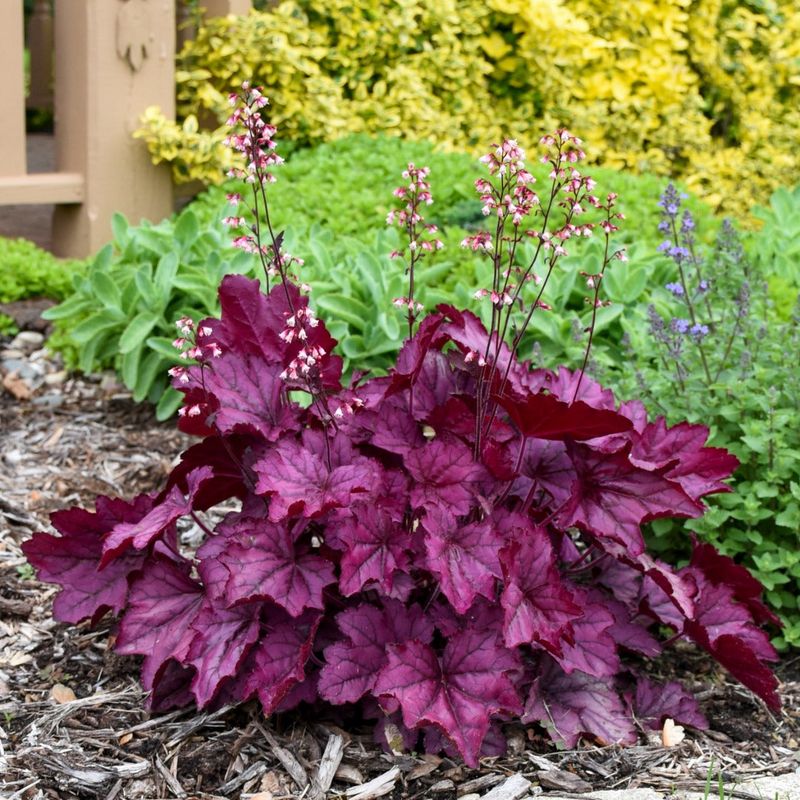
If your hosta bed is a sea of green, coral bells are the paint box. Their leaves come in deep purple, caramel, lime, peach, and nearly black.
A plum heuchera next to a gold hosta makes both colors pop. Their low mounds also work as a natural edge along the front of the bed.
Coral bells prefer soil that drains well, so avoid soggy low spots. If the crown starts pushing up out of the ground after a few years, dig it up and replant it deeper in spring.
Heucherella, a close cousin, offers similar colors with fancier leaf patterns.
6. Japanese Painted Fern
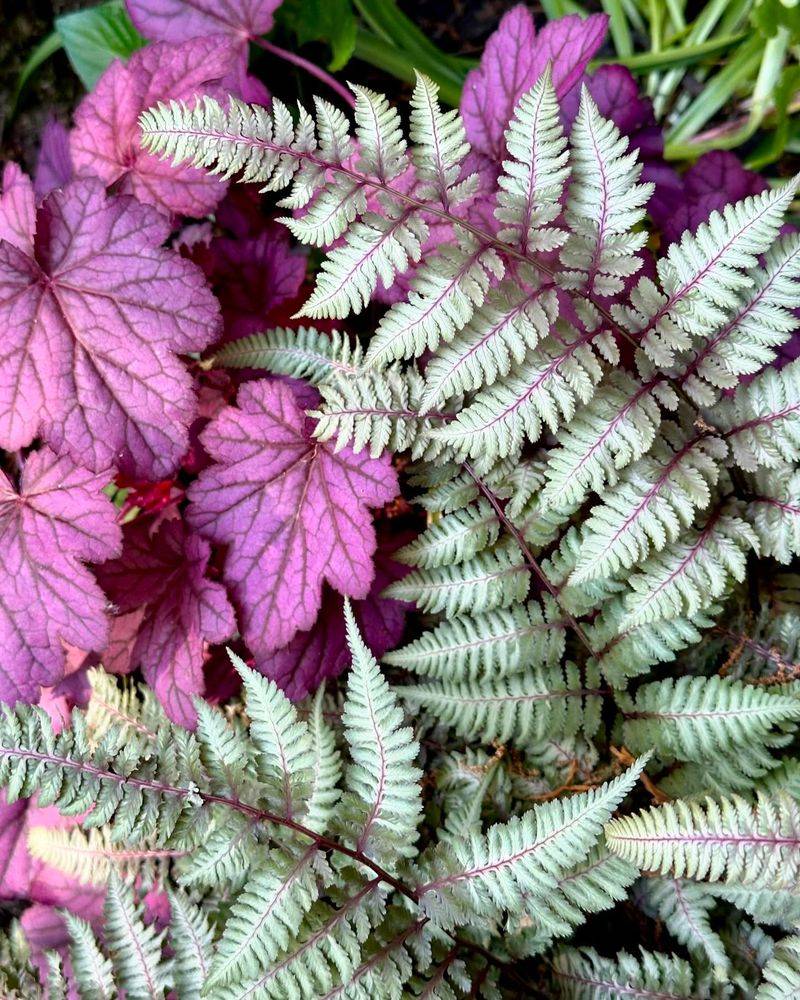
Ferns are as old as the dinosaurs, and they still make the best backup singers for hostas. Japanese painted fern stands out among them with silvery fronds brushed in burgundy along the stems.
Those finely cut fronds look feathery next to a broad hosta leaf, which instantly adds depth. Pair it with a blue hosta and the silver tones tie the whole planting together.
For taller drama in the back row, ostrich fern can reach three to five feet. It spreads, though, so give it room.
Both ferns love the same moist shade hostas want, making care a breeze.
7. Foamflower (Tiarella)
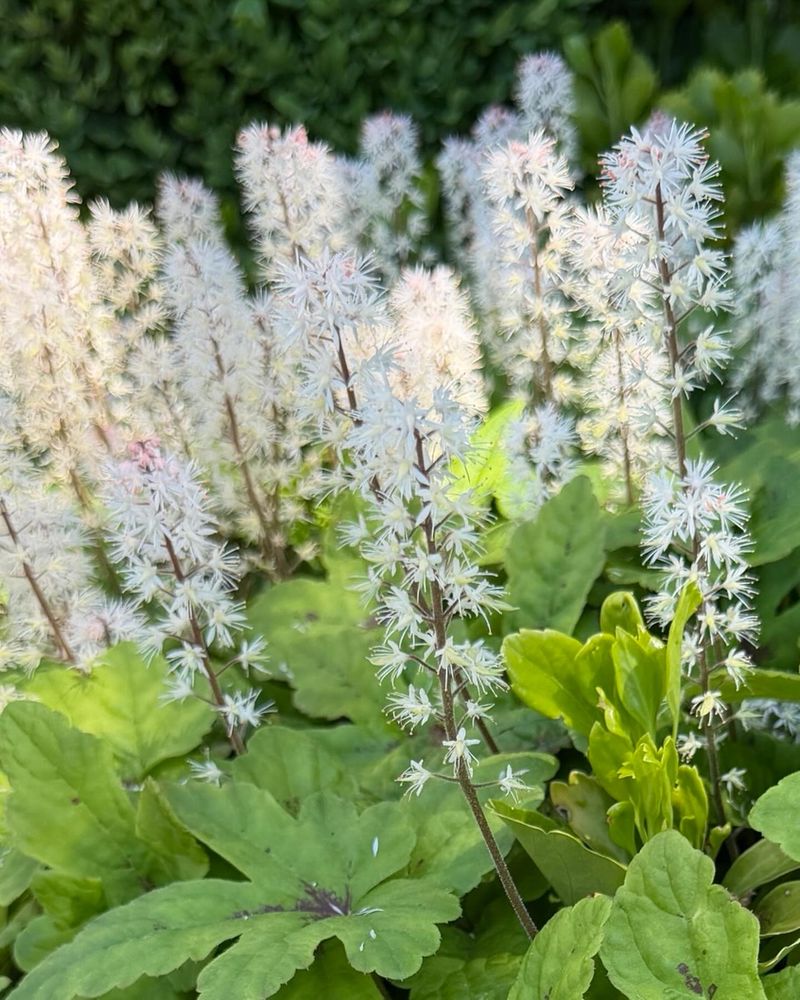
Native to eastern North American woods, foamflower feels right at home in a shady US backyard. In spring, it sends up frothy spikes of white or pale pink blooms that look like sea foam.
The leaves are often lobed and marked with dark veins, which adds detail when the flowers are done. Some types spread by runners and slowly knit into a soft groundcover.
Use it to fill those gaps between hosta clumps where weeds love to sneak in. Pollinators visit the flowers early in the season, when food is scarce.
8. Japanese Forest Grass
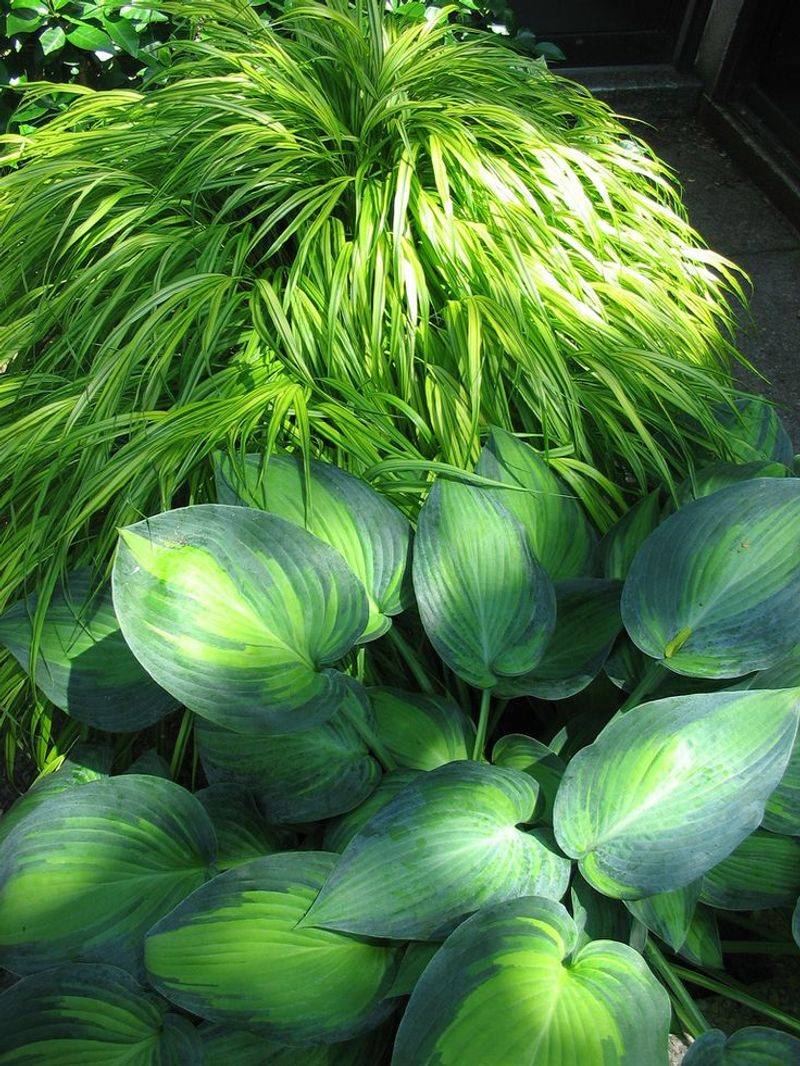
Most grasses want full sun. Japanese forest grass breaks the rule, happily growing in shade with arching blades that spill over like a waterfall.
That flowing movement is something hostas can never give you. When a breeze moves through, the whole bed suddenly feels alive.
Gold types such as ‘All Gold’ or ‘Aureola’ light up dark corners. Growth is slow at first, so be patient for a couple of seasons.
Plant it where it can drape over a path edge or stone wall for the best effect.
9. Lady’s Mantle
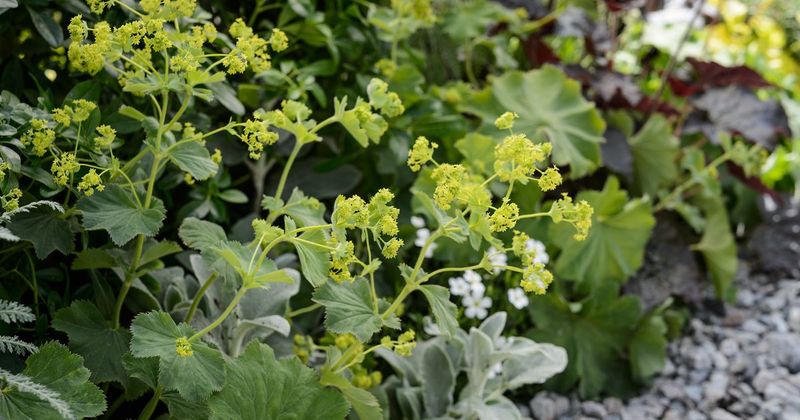
Walk out after a rain and you will see why gardeners adore lady’s mantle. Its velvety leaves catch water drops that sparkle like tiny diamonds.
The soft, scalloped foliage and frothy chartreuse flowers in early summer brighten up shades of green and blue. It looks especially sweet spilling onto a walkway in front of hostas.
Lady’s mantle handles partial shade well. It can reseed freely, so snip off the flowers once they fade if you don’t want babies everywhere.
10. Lungwort (Pulmonaria)
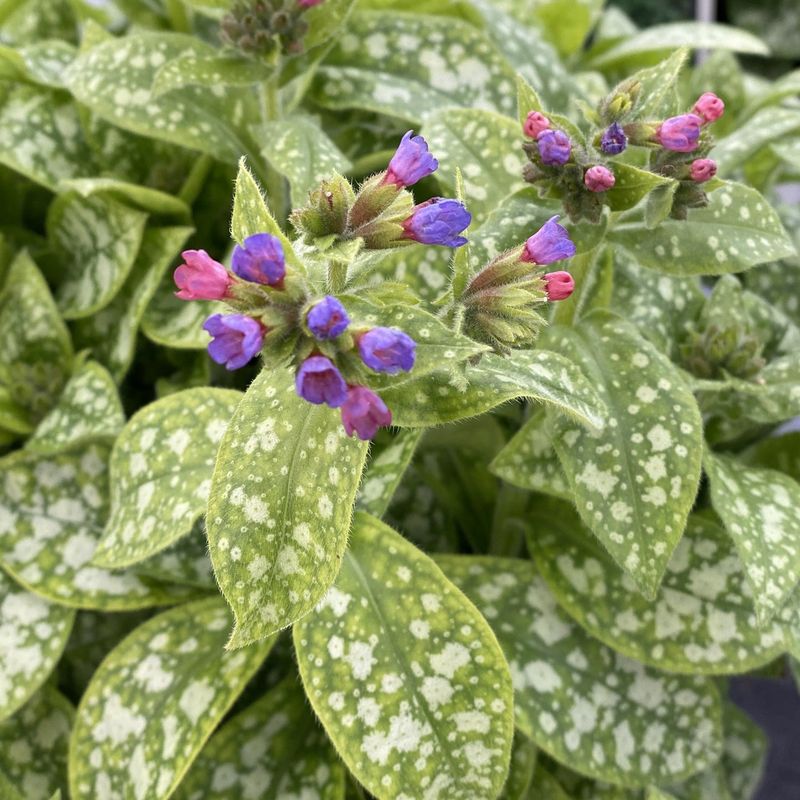
Lungwort got its odd name centuries ago because people thought its spotted leaves looked like lungs. Thankfully, it looks much prettier than it sounds.
It blooms very early, sometimes in March, with flowers that shift from pink to blue on the same stem. After that, silver-speckled leaves keep the bed interesting all summer.
Deer and rabbits usually pass it by. If the leaves get powdery mildew in late summer, cut them back and fresh ones may sprout.
11. Sedge (Carex)
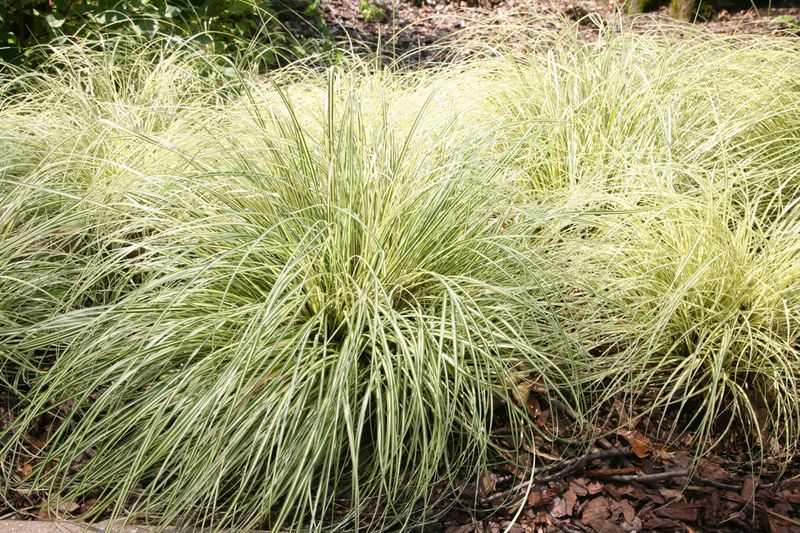
Sedges are the quiet heroes of shade gardening. They look like grass, but they are tougher in low light and come in fine, narrow blades that contrast nicely with wide hosta leaves.
Variegated choices like ‘Evergold’ add stripes of cream and gold. Many stay green well into winter, so your bed doesn’t vanish once the hostas die back.
Plant sedges in drifts of three or five for a full, natural look. Comb out the dead blades in early spring with your fingers.
12. Perennial Geranium
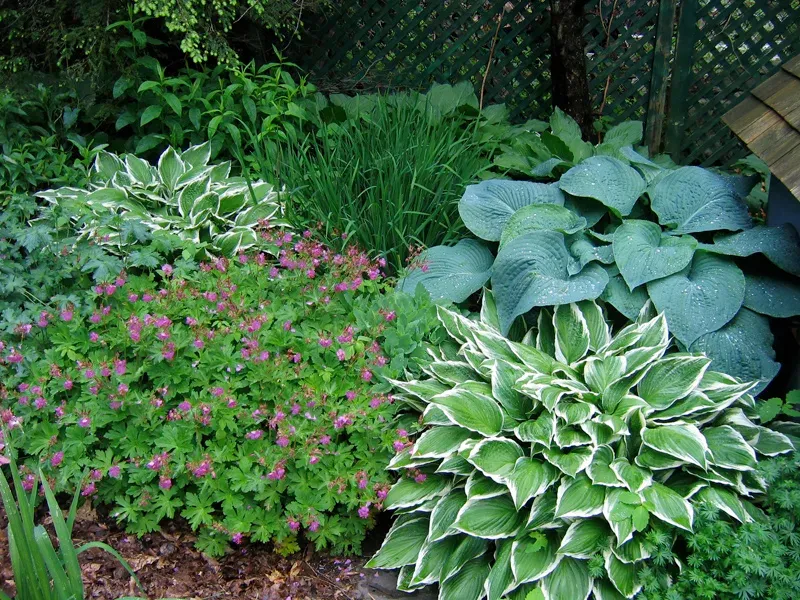
Love geraniums? The hardy perennial kind, often called cranesbill, is a different plant from the potted ones on your porch, and it handles part shade well.
Its loose, lacy mounds weave between hostas and fill gaps with purple, blue, pink, or white blooms. Some varieties like ‘Rozanne’ flower on and off from late spring into fall.
If plants look floppy and tired by midsummer, shear them back by about half. They usually bounce back with fresh leaves and a new round of flowers.
13. Bugleweed (Ajuga)
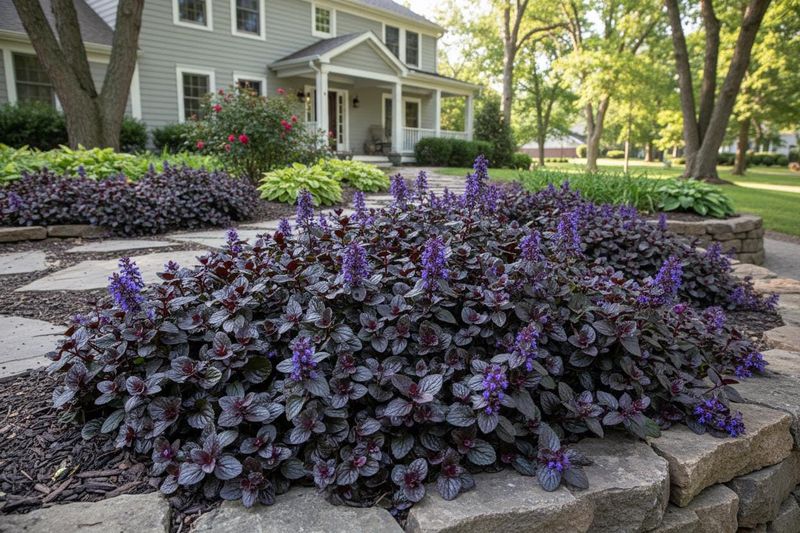
Bare soil around hostas is basically an invitation for weeds. Bugleweed slams that door by forming a thick mat of glossy leaves.
Leaves come in maroon, chocolate, and variegated shades, and violet-blue flower spikes appear in late spring. Dark ajuga under a bright hosta looks striking.
Just a warning: ajuga spreads quickly and may creep into your lawn. Edge the bed or pick a less aggressive variety like ‘Chocolate Chip’ to keep it in line.
Mix a few of these partners and your hosta bed will finally look as full as you hoped.