
What It Really Means When A Woodcock Shows Up In Your North Carolina Yard This Winter
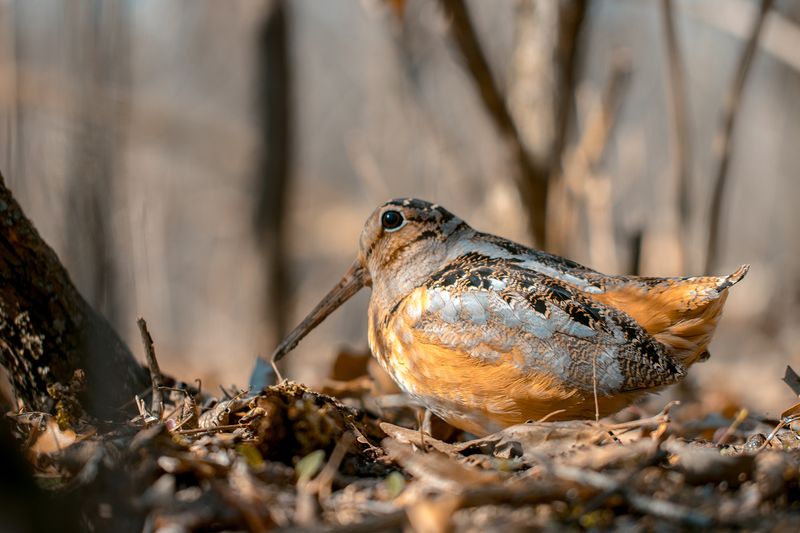
A plump, brown bird sits low in your leaves, barely moving, with a bill that looks far too long for its body. Many North Carolina homeowners think it must be lost or hurt.
In most cases it is an American Woodcock doing what woodcocks do. Here is what the visit can tell you, and what it cannot.
A woodcock on the ground may be behaving normally
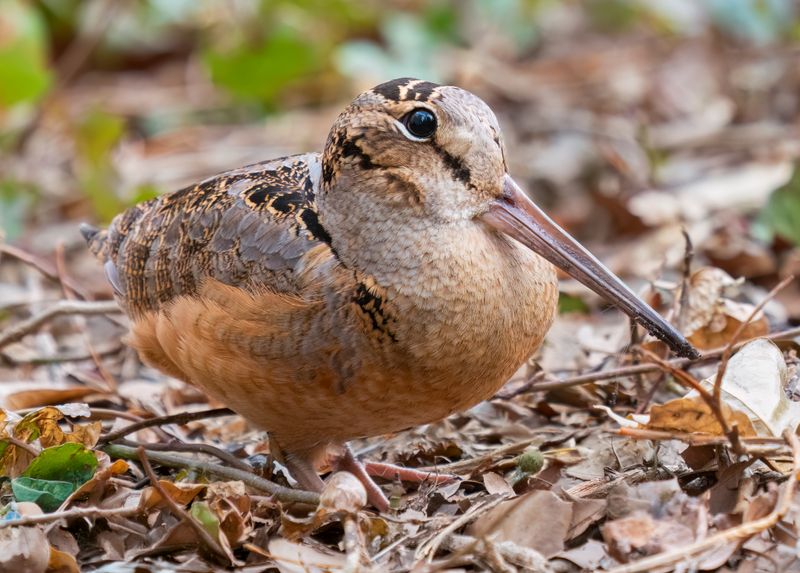
Picture a robin-sized bird with a round body, short legs, and a bill that seems borrowed from a much larger animal. That is the American Woodcock.
Its mottled brown, buff, and gray feathers blend so well with dead leaves that you might only notice it when it moves.
Woodcocks spend much of their time at ground level. They eat earthworms and other soil invertebrates, pushing that long bill into the dirt to find them.
NC Wildlife’s species page describes how well camouflaged and secretive the bird is, and notes that it forages at night.
That is why a woodcock can look wrong to a person who does not know it. A bird crouched low, bobbing slightly, or standing quietly may seem weak.
Yet Cornell Lab life history notes show that probing the ground and relying on camouflage are normal habits for this species.
Still, posture alone cannot tell you the whole story. A bird sitting on the ground is not proof of trouble, and it is also not proof that everything is fine.
Collisions with windows or cars do happen to many birds.
So look for clearer clues. Normal behavior includes quiet probing, slow walking, and flying off when you get too close.
Concerning signs are covered later, in the section on giving the bird room.
Winter does not mean the same thing across North Carolina
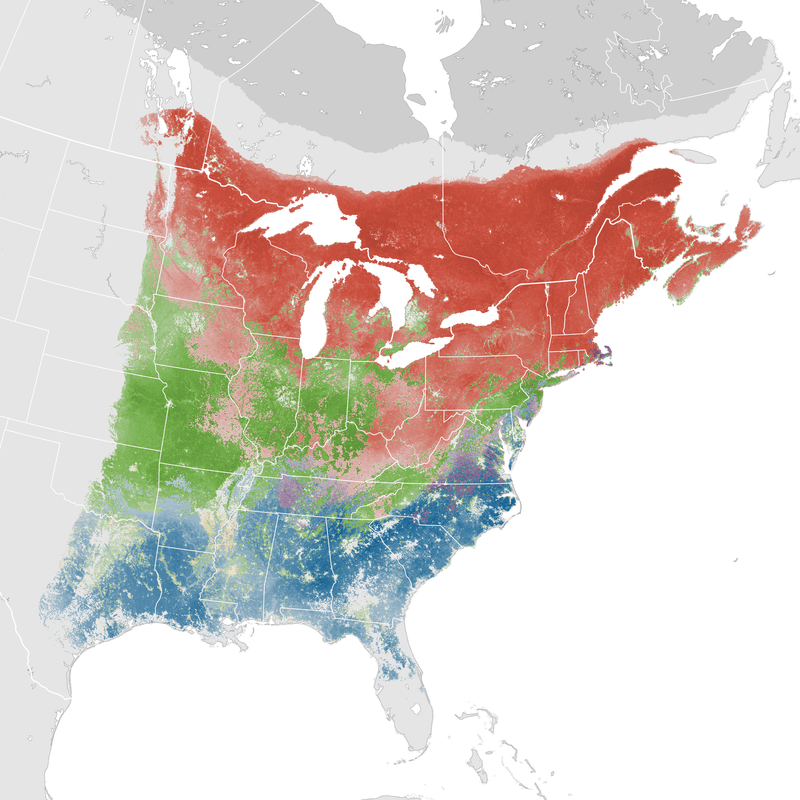
Calling a woodcock a winter visitor sounds tidy, but it does not fit every yard in the state. Woodcocks occur in North Carolina all year.
What changes is how many are around and where, depending on the region.
According to the NC Wildlife woodcock profile, they are more common in winter in the Piedmont. In the Coastal Plain they are permanent residents, with migratory movements layered on top.
In the mountains they are scarce in winter.
Think about what that means for your own bird. A woodcock in a Raleigh or Greensboro yard in January could be a bird that came south for the season.
One near the coast could be a local resident, or a migrant passing through. A winter sighting in the mountains would be less expected.
You cannot tell which kind of bird you are looking at just by seeing it. Nothing about its look in the yard reveals where it hatched or where it has been traveling.
State monitoring helps show the bigger picture. The 2021 Game and Furbearer Program Summary Report is one place where woodcock work in the state is documented, including birds that winter here.
A good way to record your sighting is to note the date, the county, and the weather. That gives you facts without guessing at the bird’s story.
Moist ground and mixed cover can make a yard useful
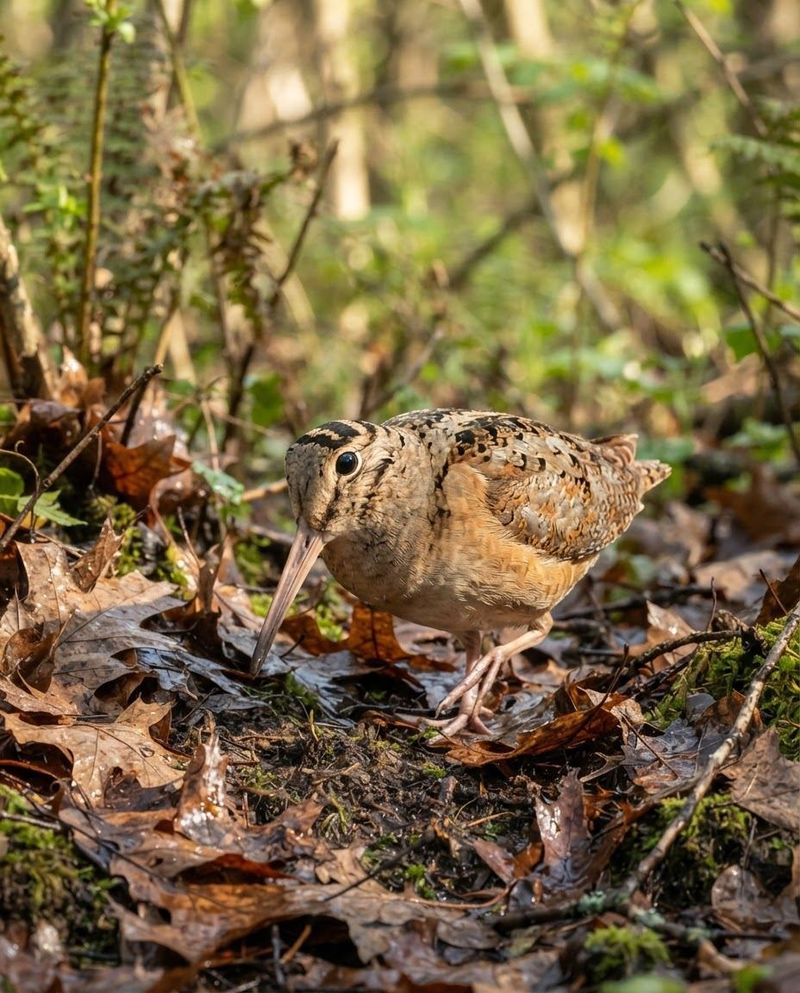
Dinner for a woodcock is hidden underground. The bird pushes its flexible bill into soft earth to find earthworms and other small soil animals.
That means it needs ground it can actually penetrate, not hard-packed or frozen soil.
Moisture helps keep soil workable. Cover helps keep the bird out of sight.
A US Forest Service review describes woodcock habitat as a mix that includes vegetation and ground cover along with some bare ground.
Moist woods, thickets, and young shrubby growth fit that description, as outlined in the Audubon field guide entry. A yard that borders a wooded stream, a damp thicket, or a brushy corner may offer pieces of that picture.
Leaf litter is one piece, not the whole puzzle. A deep layer of leaves can give shelter and hold moisture, but a bird also needs spots where it can reach soil.
Shrubs or low growth nearby give it a place to retreat, which matches the secretive habits NC Wildlife describes.
Notice the different layers in your own yard. Where is the soil damp?
Where do leaves collect? Where is there cover within a short flight?
Those questions say more than any single feature.
Research from particular study landscapes does not translate into a yard recipe. Treat these ideas as a way of seeing your space, not a plan for attracting a bird.
One visit cannot grade your soil
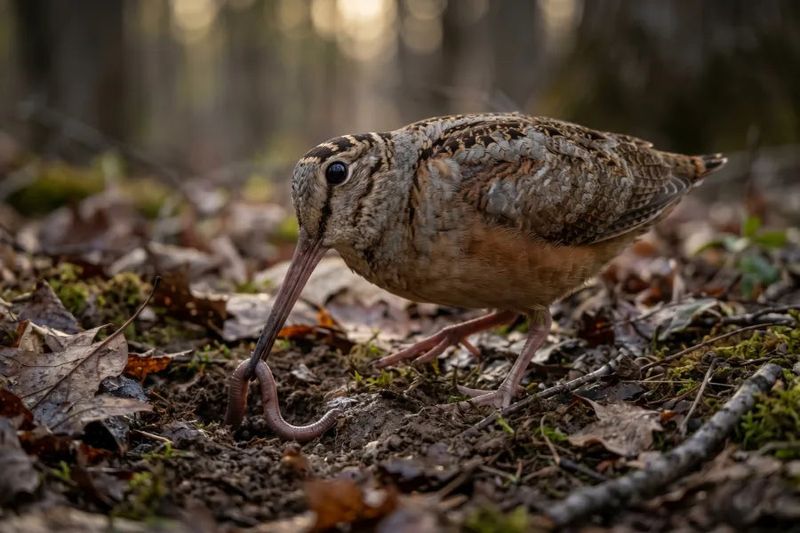
It is tempting to read a woodcock visit as a gold star for your soil. After all, the bird eats worms.
But a single sighting is a habitat clue, not a soil test.
A woodcock showing up may be consistent with food and cover being within reach. That is as far as the clue goes.
It does not prove your soil is healthy, full of earthworms, free of pesticides, or especially fertile.
The research backs this caution. The US Forest Service review summarizes studies in which earthworm numbers did not reliably track where woodcocks were found, and other habitat features mattered too.
A USGS study on earthworm populations and woodcock habitat use in central Maine looked at this very question. It is a good reminder that worms alone do not explain why a bird picks one spot over another.
The same goes for leaves. A yard with lots of leaf litter is not automatically good woodcock ground, and a yard with less is not automatically poor.
If you truly want to know about your soil, a soil test through your local cooperative extension office is the right tool. Let the woodcock be a pleasant surprise, and let the soil test answer the soil questions.
Give the bird room before deciding it needs help
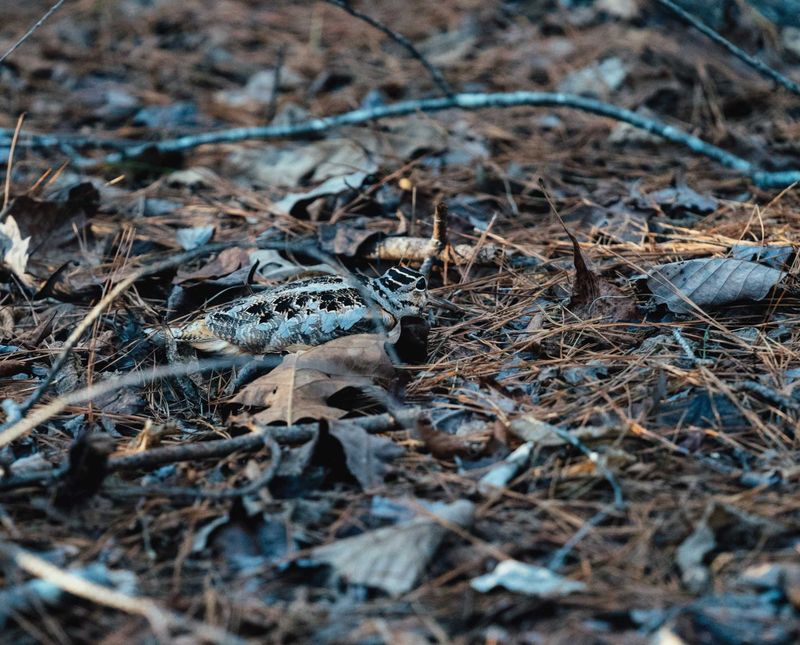
Your best move is usually the quietest one. Stay back, watch from a window or from a good distance, and keep dogs and cats indoors or leashed while the bird is around.
Do not try to pick it up, feed it, or move it.
A bird that is not moving can still be fine. NC Wildlife’s injured and orphaned wildlife guidance says that a motionless or frozen animal is not necessarily injured.
The agency recommends backing away and giving it several hours to move if it is able.
Freezing is a natural defense for a camouflaged bird. Walking closer for a better look can keep it frozen longer or cause it to flush in a stressful way.
Some situations are different. If the bird has an obvious, serious injury, such as a visibly broken wing, bleeding, or an inability to move even when left alone for hours, contact a licensed North Carolina wildlife rehabilitator.
The same NC Wildlife page explains how to find one.
Please do not try to nurse a wild woodcock yourself. Keeping most wild animals without a permit is illegal in North Carolina, and trained rehabilitators know how to handle this species.
If the bird is simply resting, it will likely be gone by evening, when woodcocks do much of their feeding.
Keep useful habitat without treating leaves as bait
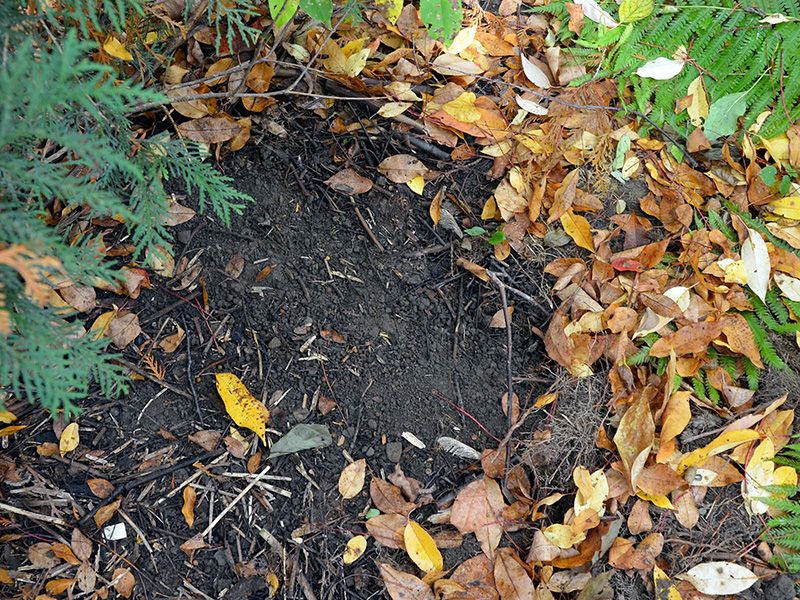
If you like the idea of a yard that could suit a woodcock, start small. Keeping some leaf litter and natural ground cover in appropriate corners, such as under shrubs or along a wooded edge, fits the kinds of features the US Forest Service review and Audubon’s field guide describe.
No single practice guarantees a visit, though. Think of it as general habitat-friendly care that also helps many other small creatures overwintering in your yard.
The sighting itself is a reason to look around and appreciate what you have, not to grade or rearrange it. A quiet bird in the leaves is a small glimpse of how much goes on in a yard after dark.