
Zinc in Your Garden Soil: Essential in Small Amounts, but Test Before You Add It
Zinc is a nutrient plants need in tiny amounts, yet those tiny amounts help run the whole plant. When corn, bean, or tomato plants look short and pale, it is natural to wonder if zinc is missing.
Sometimes it is, but many other problems can look the same. Here is how to sort out the clues and avoid making things worse.
Plants need zinc in small amounts, but more is not automatically better
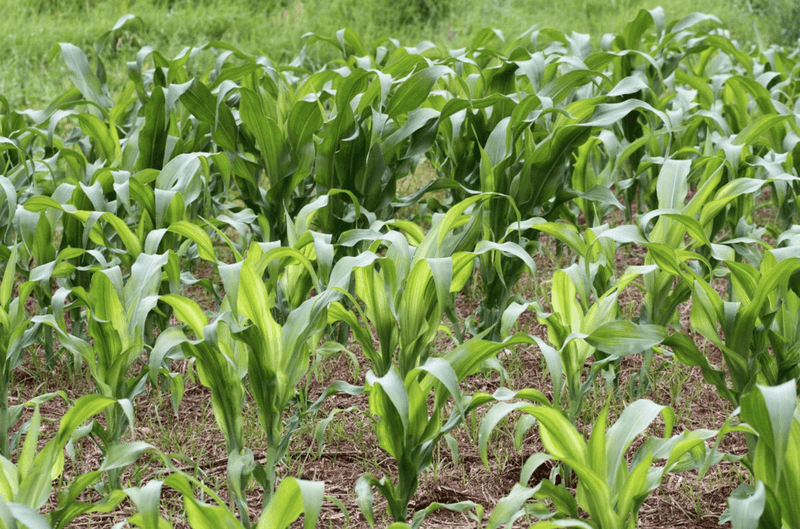
Zinc is one of the essential micronutrients, which means plants need it in very small amounts to finish their life cycle. University of Florida IFAS Extension explains that zinc helps power enzymes, the tiny workers that drive growth-related processes inside the plant.
Without enough of it, growth can slow and plants can end up stunted.
Think of zinc like a small gear in a big machine. The gear is tiny, but if it is missing, the machine runs poorly.
If the gear is already in place, adding a second one does nothing useful.
That is the key point for your corn, beans, and tomatoes. Zinc matters, but that does not mean every pale or short plant is short on zinc.
Many soils already hold enough available zinc, and a plant with enough gets no boost from extra.
Extra can even backfire. Too much of a micronutrient can injure plants or throw other nutrients out of balance.
NC State Extension notes that zinc deficiency in vegetables depends on soil conditions and should be confirmed rather than assumed.
So the useful question is not whether zinc is important. It is whether your soil actually lacks enough available zinc for your crop.
The rest of this article shows how to find out.
Possible zinc symptoms differ among corn, beans, and tomatoes
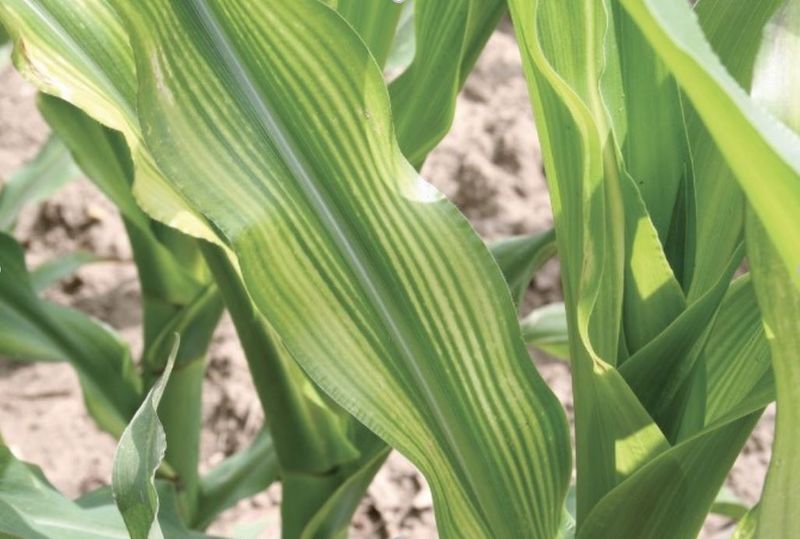
Each crop shows trouble in its own way. In corn, Colorado State University Extension describes pale or white bands on young leaves, often alongside stunted growth.
Those bands are a clue worth noticing, not a verdict.
Beans look different. UC Statewide IPM guidance describes zinc-deficient dry beans with deformed, pale younger leaves, yellowing between the veins, sometimes dead patches, and dwarfed growth.
Do not expect the white striping you might see on corn.
Tomatoes can also be affected. A University of California report on tomatoes documents zinc deficiency with yellowing of young leaves and stunting.
Even so, other nutrient problems can also cause yellow leaves or small plants.
That is why NC State Extension recommends confirming a suspected problem with a soil or tissue test. A struggling backyard tomato is far more likely to have another cause, such as watering, heat, disease, or a different nutrient issue.
Symptoms also vary with variety and growing conditions. Use what you see as a reason to look closer, not as proof of the cause.
Soil and weather can affect zinc availability
Zinc can be present in soil and still be hard for roots to use. Generally, zinc availability declines as soil pH rises, so alkaline soils are a place to be more watchful.
A pH reading is a helpful piece of context for any gardener with pale, stunted plants.
For corn, certain conditions raise the odds of a problem. Colorado State University Extension points to high-pH soils, and Cornell Cooperative Extension adds sandy, low-organic-matter soils as more likely trouble spots.
Weather matters too. Cold, wet early-season conditions can slow root growth and make young corn look worse, and the plants may improve as the soil warms.
That makes a rough start a poor reason to add zinc on its own.
High phosphorus can also tip the balance. If available zinc is already low, a lot of phosphorus can make a shortage more likely.
If your zinc is fine, high phosphorus does not by itself create a problem.
Treat each of these as a reason for suspicion, not proof. A sandy bed with a high pH and pale young corn is worth testing.
A rich, loamy bed with a normal pH probably has a different story.
Pale stripes can have causes other than zinc deficiency
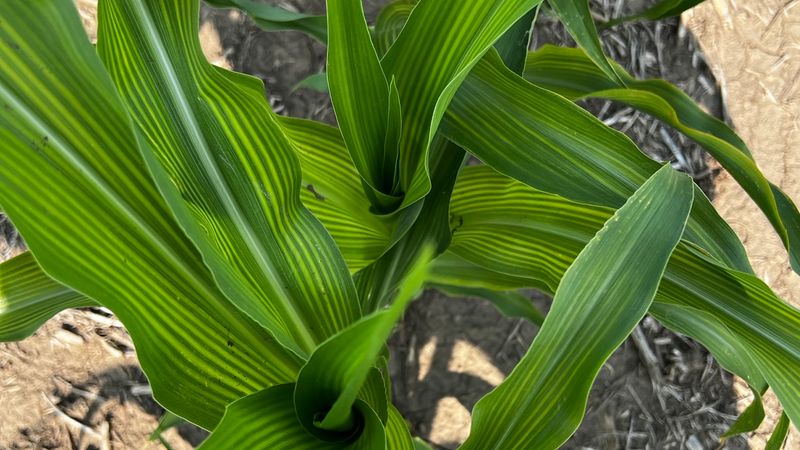
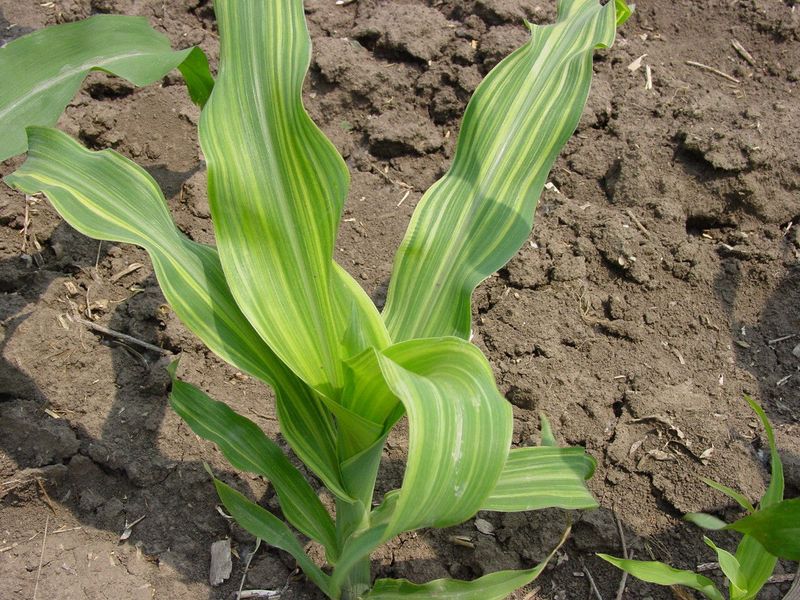
Striped corn leaves are easy to blame on zinc, but stripes are a pattern, not a diagnosis. Iowa State University Extension lists several possible causes of striped corn leaves, including nutrient shortages, genetics, and injury from herbicides.
Sulfur, manganese, and magnesium shortages can all produce striping. Some corn varieties have genetic striping that is harmless.
Herbicide drift or residue can leave streaks as well, and other stresses may add to the confusion.
Cornell Cooperative Extension also notes that zinc deficiency in corn has a typical look, with pale banding on young leaves, but similar patterns mean testing may be needed to be sure.
You can still narrow things down. Ask which leaves are affected, whether the pattern repeats across the whole row or only in patches, and whether you sprayed anything nearby recently.
Plants of the same variety with the same look in one spot point toward soil or weather.
These clues help you form a better question. They cannot answer it.
A soil test, and sometimes a plant tissue test, can do that.
Ask whether your soil test includes zinc
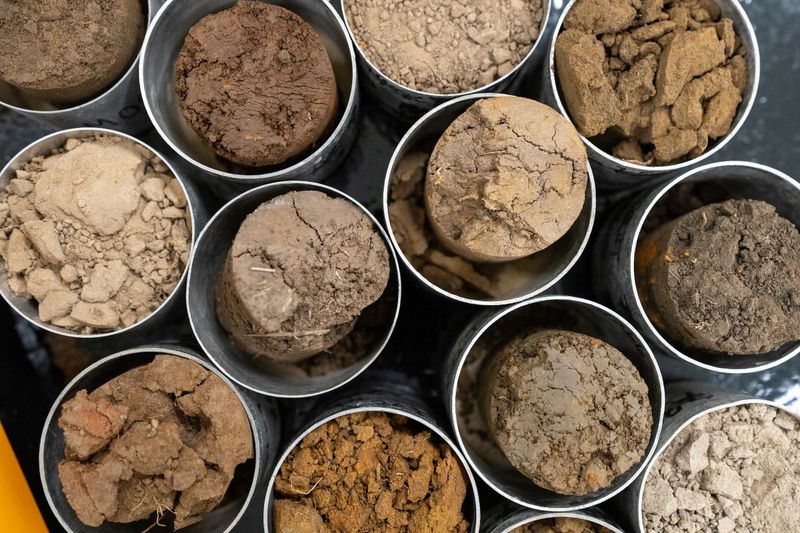
A soil test is the most reliable next step. When you suspect zinc, ask the lab directly whether the test measures it.
Many routine tests cover pH, phosphorus, and potassium, and not every one includes micronutrients.
Reading results takes some care. Iowa State University Extension explains how to interpret soil test results, and the same number can mean different things depending on the lab and the method it uses.
That is why there is no single zinc number that works everywhere. The Oregon State University soil test guide shows that categories and ranges are tied to specific tests and regions.
A cutoff from one state should not be used as a backyard rule in another.
Choose a lab that serves your area, often through your state extension office, and tell them what you are growing. Corn, beans, and tomatoes can have different recommendations, and the lab can match its advice to your crop and soil.
Take samples from the bed where the problem appears, and consider a second sample from a healthy area for comparison. Then follow the lab’s crop-specific guidance instead of judging by leaves alone.
Apply zinc only when a test-based recommendation calls for it
If your test shows zinc is needed, follow the recommendation for your crop and soil. Virginia Tech Cooperative Extension advises applying trace elements only when and at the rates recommended.
Rates vary with the crop, soil, product, and how it is applied.
That rules out a universal backyard pinch. A rate written for a farm field cannot simply be scaled down, and the product label matters.
Read it, measure carefully, and spread it evenly.
Avoid adding zinc just in case. Plants with enough available zinc will not gain from extra, and too much can injure plants or contribute to nutrient imbalances.
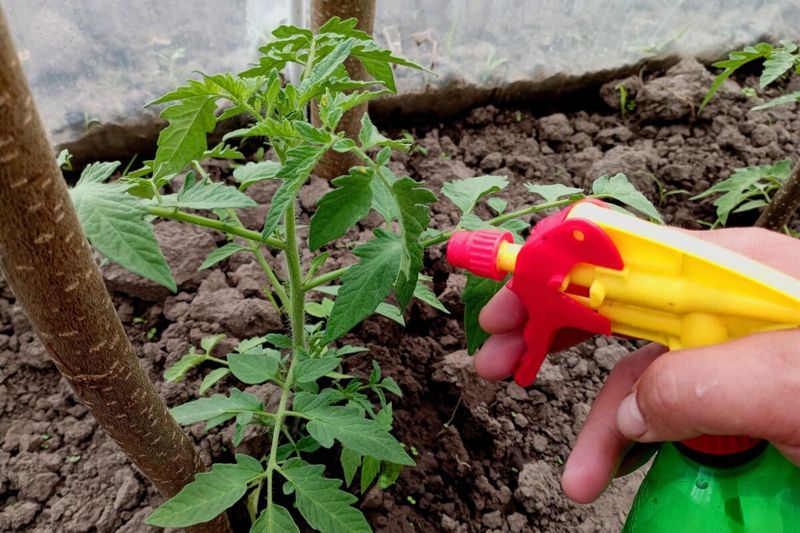
Foliar sprays are sometimes suggested. Penn State Extension stresses correct rates, since too much can burn leaves.
Colorado State University Extension notes that foliar zinc may green the foliage without fully correcting a soil deficiency or guaranteeing a better yield.
If zinc was not the problem, you may also be looking at a different nutrient or stress, as NC State Extension cautions for vegetables. Retest after any change to see what happened.
Pale leaves are a question, and the soil test is how you get the answer.