
A Robin’s Pause on the Lawn May Be Part of the Food Search
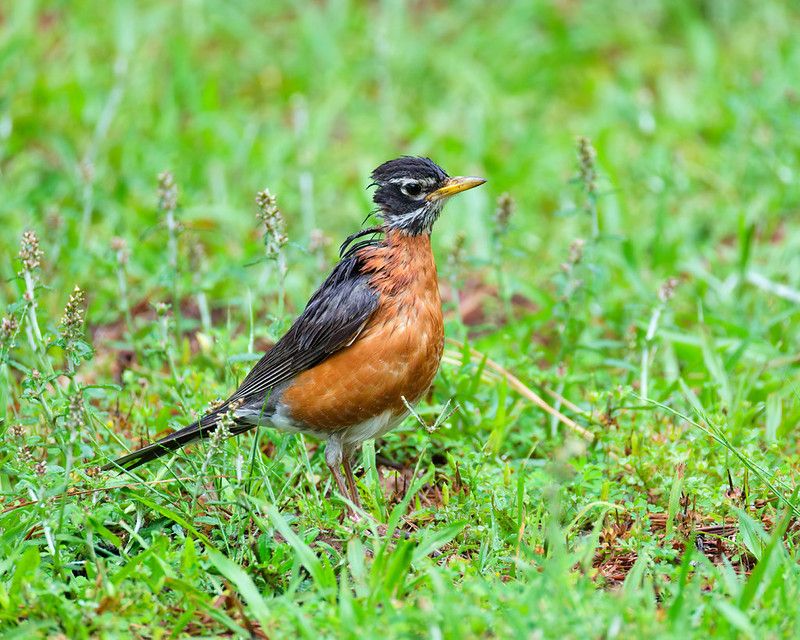
You have probably seen it a hundred times: a robin sprints across the grass, stops short, and seems to stare at nothing. It looks like a tiny mystery waiting to be solved.
Scientists have run experiments on how American robins find buried prey, and the results are interesting but more limited than many stories make them sound. Here is what those studies show, and what they leave open.
A robin’s pause fits a familiar lawn-foraging rhythm
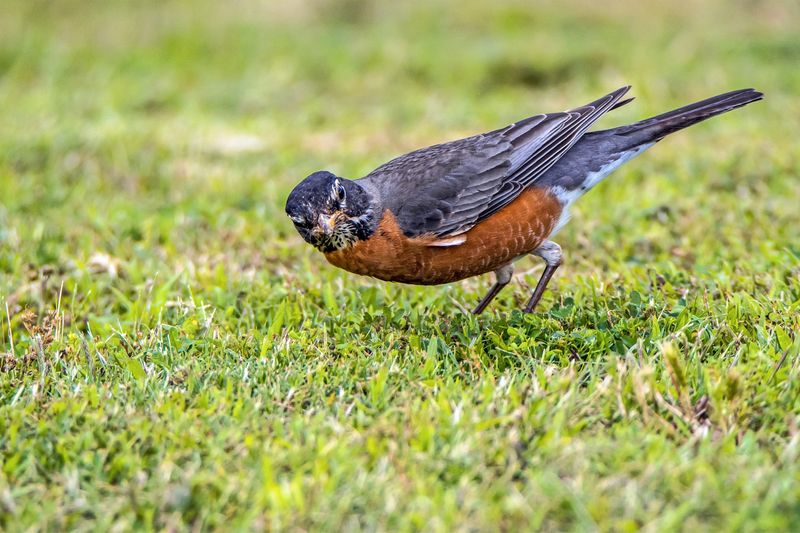
Picture the usual scene on a spring morning. An American robin runs a few steps across your grass, stops abruptly, and may stare at the ground with its head cocked.
Then it might peck, tug, and pull up a worm, or it might simply start running again.
A Cornell Cooperative Extension species sheet describes this run, stop, and look pattern as a familiar part of how robins forage on the ground. So the pause is a normal piece of the routine, and it is easy to see why it catches our eye.
Lawns are a regular hunting ground for these birds. The Cornell Lab of Ornithology reports that robins eat earthworms, insects, and fruit, with more earthworms in the morning and more fruit later in the day.
That means the same bird on your lawn at 7 a.m. and at 5 p.m. may be after quite different meals.
Here is the catch. A still bird is only a still bird.
From where you stand, a pause does not tell you whether the robin has picked up a clue about food, is scanning for a hawk or cat, or is simply taking a short break.
That uncertainty is what makes the sight so fun to wonder about. The pause fits foraging, but the bird keeps its reasons to itself, and the next few sections look at what researchers have actually tested.
The earlier experiment found evidence for sight
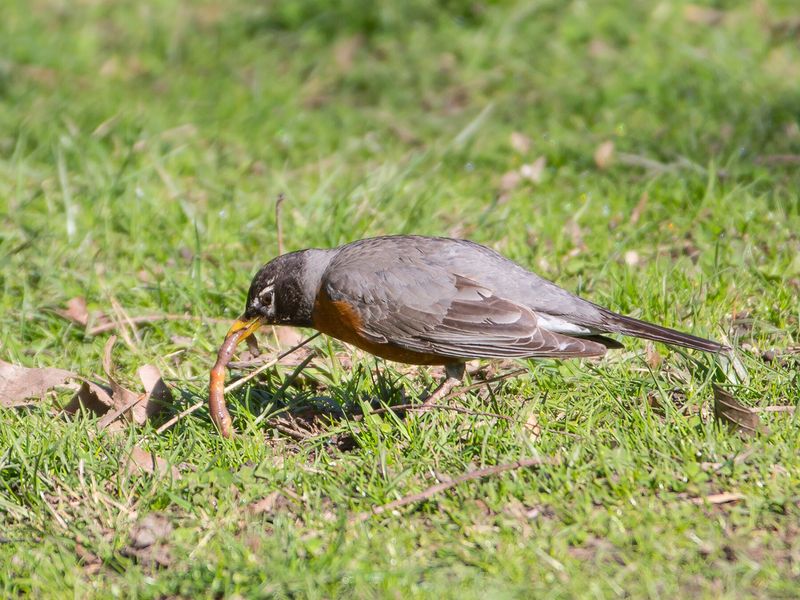
Back in 1965, researcher Frank Heppner set out to learn which senses American robins use to find earthworms. His study in The Condor tested visual, auditory, and olfactory cues, which means sight, sound, and smell.
The conclusion was that robins could locate worms using visual information. In plain terms, a robin may spot a worm or a sign of one, such as a bit of movement at the surface, and use that to guide its strike.
That fits the way a robin looks at the ground. Its eyes sit on the sides of its head, so a tilted head may simply be a way of pointing one eye at the grass.
It is a reasonable idea, though a tilt alone cannot prove what the bird is seeing.
It also helps to know what this study did not say. Finding evidence for sight does not mean sight is the only tool a robin has.
A bird can use more than one kind of clue, and a result about one sense does not rule out the others.
So the 1965 work gives us a solid starting point. Vision plays a role, and any story about a robin’s pause that leaves out its sharp eyes is missing a big piece.
A later experiment suggests sound can contribute
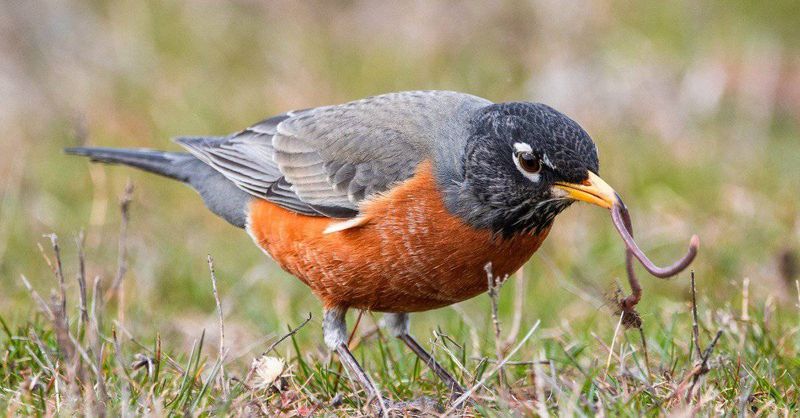
Decades later, a 1997 experiment looked at the question from a new angle. Researchers Robert Montgomerie and Patrick Weatherhead worked with four captive American robins and buried mealworms.
The team blocked visual and other cues, including the vibrotactile ones, and the birds still found buried mealworms. When background noise was used to mask sound, their success went down.
That pattern suggests hearing can contribute. Under those test conditions, the robins appeared able to use auditory cues to locate prey they could not see.
The setup matters, though. This was a small group of captive birds, and the food was mealworms, not the natural earthworms in your yard.
The study shows what robins can do in a controlled test. It does not show how wild robins usually find worms.
It also does not give a depth. Nobody measured how far down a wild robin might detect a worm in real soil, so any specific number you hear is not backed by this work.
Think of it as a clue, not a verdict. Sound may be one of the tools in a robin’s kit, and that is a pretty remarkable thing to learn about the bird hopping across your grass.
The studies do not reveal what a particular robin senses
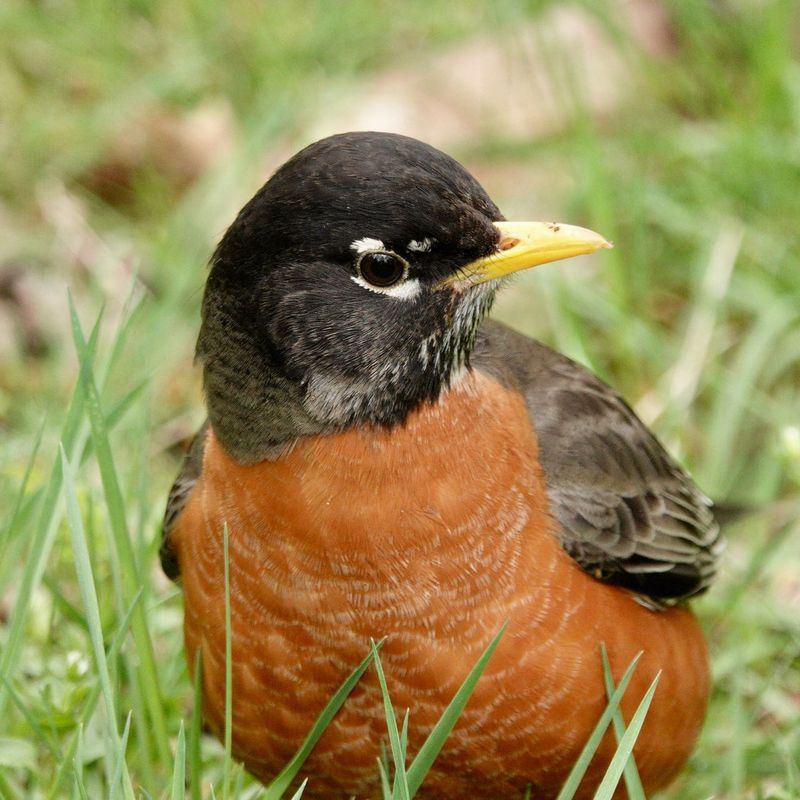
Put the two studies side by side and they fit together rather than compete. The 1965 work found evidence that robins can use sight.
The 1997 experiment suggests they can also use sound when other cues are blocked.
Neither one is a complete answer. Both were set up to test specific cues, and the real world is messier, with wind, traffic, light, soil, and many other things going on at once.
That leaves some clear limits. The experiments do not confirm a natural detection depth for earthworms.
They do not show that a robin feels a worm move through the ground, since the 1997 test was about sound and excluded touch-based cues. And they cannot explain why one particular robin on your lawn stopped at one particular moment.
Robins might be using sight in one moment, sound in another, or both together. A single pause could even have nothing to do with a worm at all.
This is a good place to stay curious without picking a favorite story. The research opens doors, and it is honest to say the wild-bird details are still unsettled.
Watch what happens next, not just the still pose
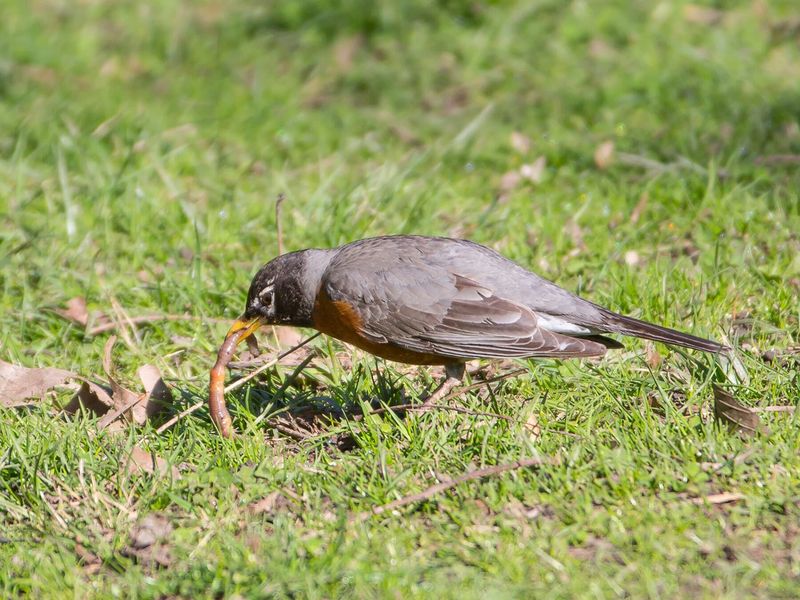
Next time a robin stops on your grass, try describing only what you can see. It paused.
It looked toward the ground. It pecked, or it did not.
It pulled something up, or it ran off.
Those notes are real observations. Guesses about what the bird heard or felt are not, and a pose by itself cannot confirm them.
A Cornell Cooperative Extension species sheet lists the pause as part of foraging, which is a useful hint but not proof in any single case.
Head tilting may also serve other purposes. Audubon explores the rich sensory world of birds, and a still robin could be watching for predators just as easily as hunting.
It might even be resting for a moment.
So watch the sequence. A pause followed by a quick stab at the soil leans toward foraging.
A pause followed by a sudden dash for the hedge tells a different story.
Keep a little notebook if you like, jotting the time of day, the weather, and what the bird did next. Over a few weeks you may spot patterns, and you will be practicing the same careful looking that good field research starts with.
Keep lawn-care choices cautious around wildlife
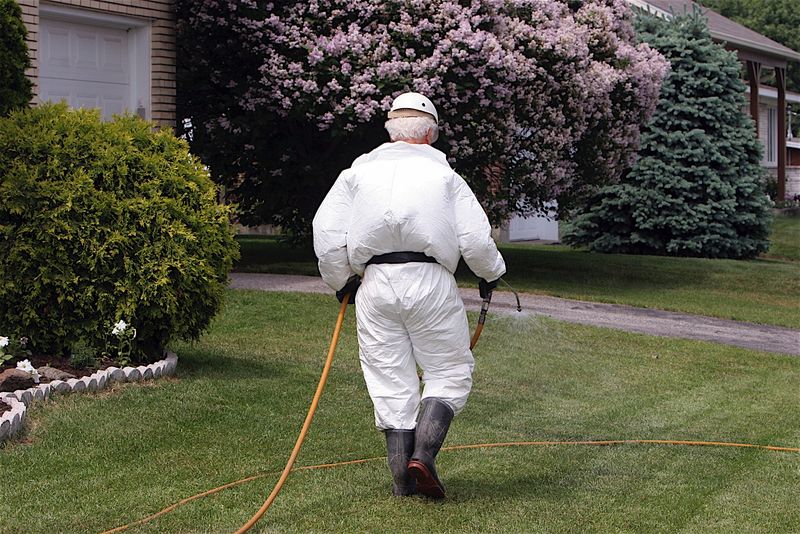
Because robins spend so much time on lawns, what happens on your grass can matter to them. Cornell’s overview notes that they eat earthworms and other foods as they forage, so they are in close contact with the ground you care for.
If you ever consider a pesticide, the EPA’s wildlife tips give simple guidance. Use pesticides only when necessary, treat only the areas that need treatment, and follow the directions on the product label.
Products differ, and they do not all carry the same risk to wildlife, so the label is the place to look for specifics. This is not a reason to treat a lawn to change what robins or worms do, and it is not a recommendation of any product.
For most backyard gardeners, the practical step is to pause before reaching for a bottle. Ask whether a problem really needs treatment and how small the treated spot can be.
Back to the bird on the grass. A pause may be part of a food search, yet it does not prove a hidden worm is moving beneath its feet, and that bit of mystery is part of the charm.