
Yellow Northern Cardinals: What Science Says About This Backyard Rarity
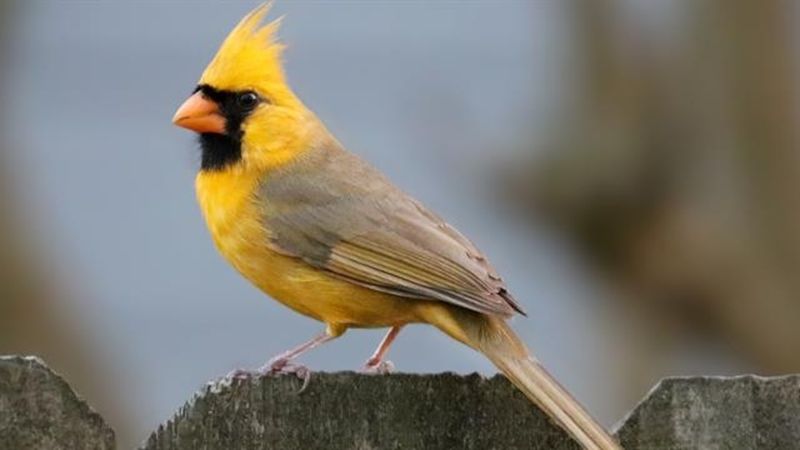
Picture a cardinal with the familiar crest and heavy bill, but glowing yellow instead of red. Photos of birds like this fly around the internet, and many people wonder if they can be real.
Scientists have actually looked inside the feathers of one yellow cardinal, and what they found is surprising. Here is what is known, what is still a mystery, and how to document a sighting the right way.
A yellow bird with cardinal features can be a Northern Cardinal
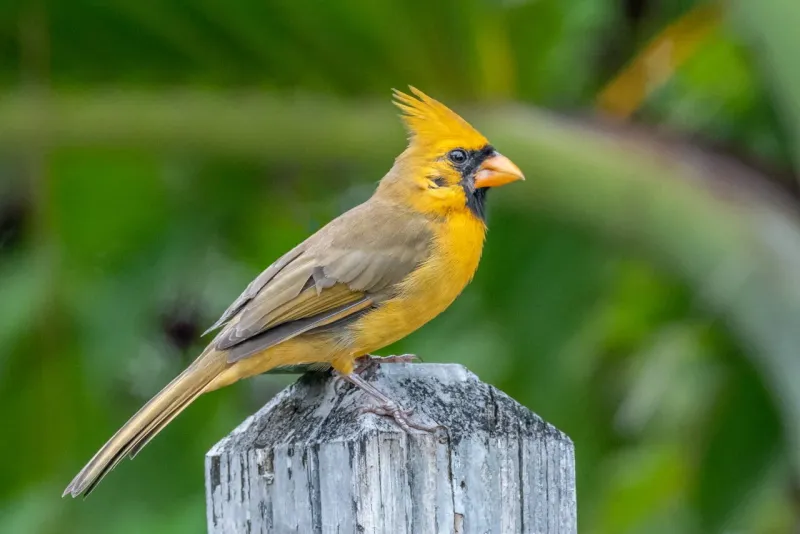
Crest, heavy cone-shaped bill, black face: those three clues say “cardinal” even when the feathers are the wrong color. A bird with that look can be a real Northern Cardinal with an unusual plumage color.
That possibility does not prove that any particular photo or sighting is genuine, since a picture alone cannot vouch for itself.
Start with what normal looks like. The Cornell Lab describes Northern Cardinal identification this way: males are bright red with a black mask, while females are pale brown with reddish tinges on the wings, tail, and crest.
Juveniles look much like females. So a tan or buff bird with a touch of red is just an everyday cardinal, not a yellow rarity.
Next, rule out a different species. The Yellow Cardinal is a separate bird that lives in South America, and it is not the same animal as a yellow Northern Cardinal.
A backyard bird in the eastern or central United States with a crest, thick bill, and black face is far more likely to be a Northern Cardinal with odd coloring, as covered in Audubon’s piece on why a Northern Cardinal can be yellow.
That leaves a puzzle. How can a bird that is red by nature end up gold?
The answer starts with the chemistry of feathers.
Red plumage depends on food pigments and the bird’s own chemistry
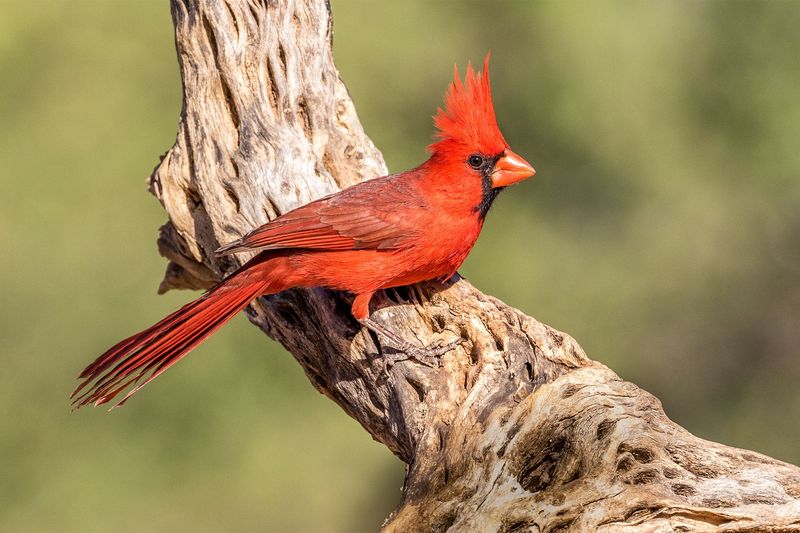
A cardinal does not paint itself red. Birds cannot make carotenoids from scratch, so they take in yellow pigments from seeds, fruit, and insects.
Then the cardinal’s own body converts some of those yellow pigments into the red ones that color its feathers.
That two-step process is why color depends on both food and internal chemistry. Researchers tested the food side in a 2001 feeding study of male cardinals and American goldfinches.
Cardinals kept away from red dietary pigments grew pale red feathers, not yellow ones.
That result matters for anyone who spots a golden bird. Diet can affect how intense a carotenoid color looks, so a cardinal with a poor diet might come out duller.
But a dull red feather and a vivid yellow feather are very different things, and “it ate the wrong food” does not explain a striking yellow male.
It also means feeders are not the answer. Please do not change what you put out or add supplements hoping to shift a wild cardinal’s color.
Nothing in the research suggests that would work, and the bird’s own chemistry does the heavy lifting.
So if food alone does not flip red to yellow, something must be going on inside the bird. A chemical analysis of one yellow cardinal offers a clue.
One studied yellow cardinal had yellow compounds in its feathers
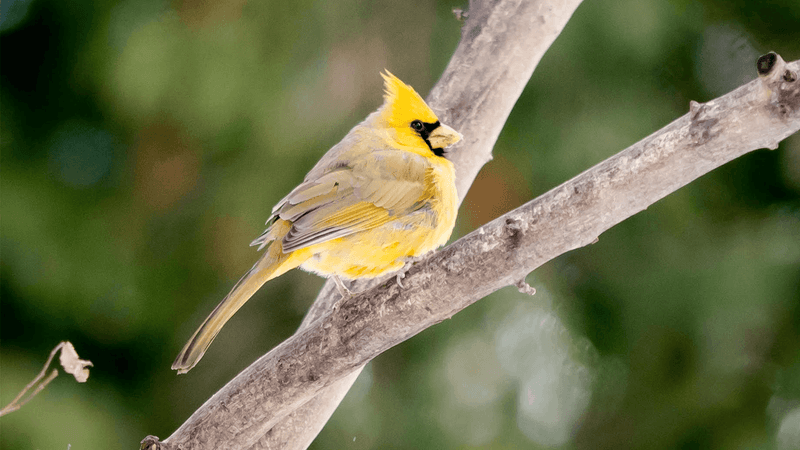
In 2003, researchers did something rare: they chemically analyzed feathers from one aberrantly yellow male Northern Cardinal. The study, published in The Condor, looked for the usual red pigments and came up empty.
Instead, the feathers held lutein, a yellow pigment, along with yellow metabolic derivatives. A normal male has four typical red pigments in his feathers.
This bird had none of them.
The pattern points to a hiccup in the bird’s carotenoid processing. The authors inferred that a certain class of chemical reactions, the ones that turn yellow pigments into red ones, was disrupted.
That supports altered carotenoid processing as an explanation for this bird’s color.
Notice the limits. The study covered one bird, so it tells us about that bird’s feather chemistry.
It does not show that every yellow-looking cardinal has the same pigment profile or the same cause.
The study also did not say why the processing went wrong. That is a separate question, and it brings genes into the story.
Researchers have not shown that one gene caused the yellow color
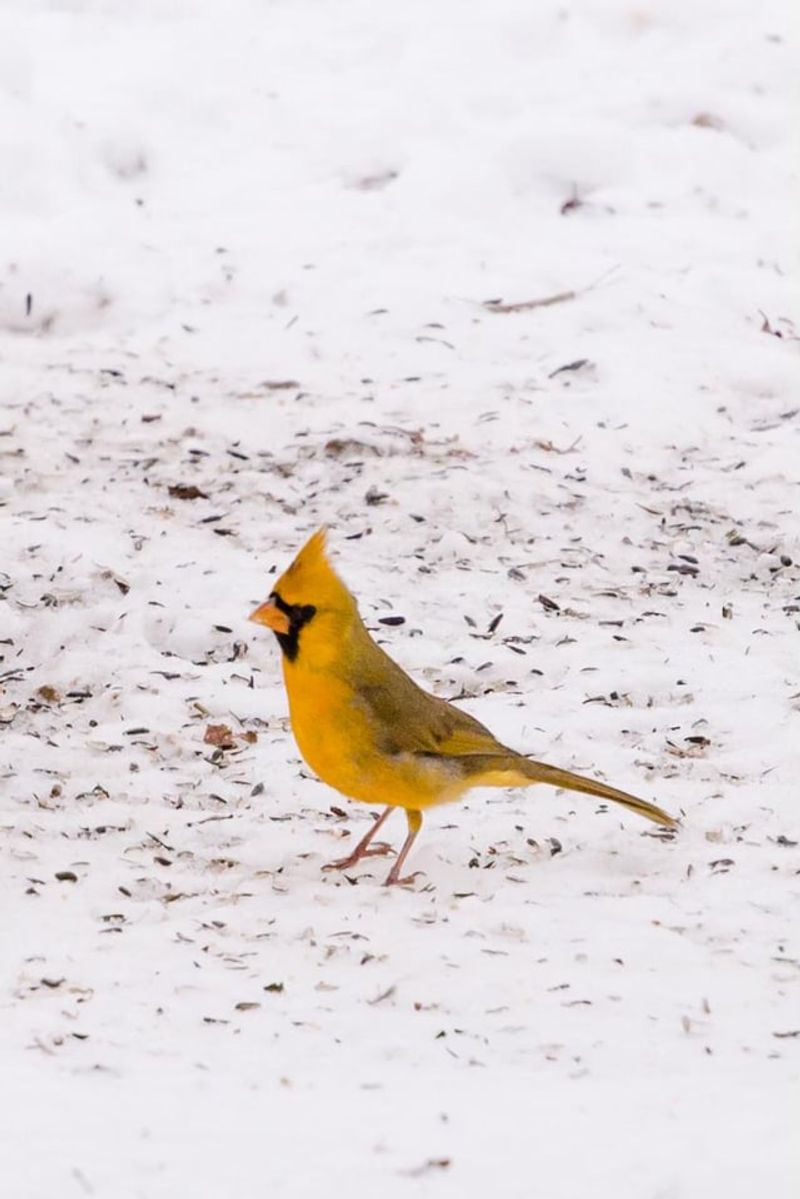
The popular headline says one gene turned the feathers gold. That is not something researchers have shown.
The 2003 study analyzed feather pigments, not the bird’s DNA, so it never identified a causal mutation.
Genes do matter for red color, though. A 2016 study on the genetic basis of red coloration in birds found that CYP2J19 is part of the pathway that makes red pigments.
It is a credible player in bird color, and cardinal genome work has flagged it as a candidate.
But a candidate is not a culprit. Newer work shows the red pathway is a team effort.
A 2026 study of the Northern Cardinal found three genes, CYP2J19, BDH1L, and TTC39B, working together to produce red ketocarotenoids. It did not find a mutation in a yellow cardinal.
So the safe wording is that CYP2J19 is involved in making red, not that a CYP2J19 mutation turned this bird yellow. Nobody has shown that, and a yellow cardinal’s actual DNA has not been tied to its color.
The honest summary is a supported chemical explanation for one bird, and an open question about the genetic cause.
Appearance cannot settle the cause—or how rare the bird is
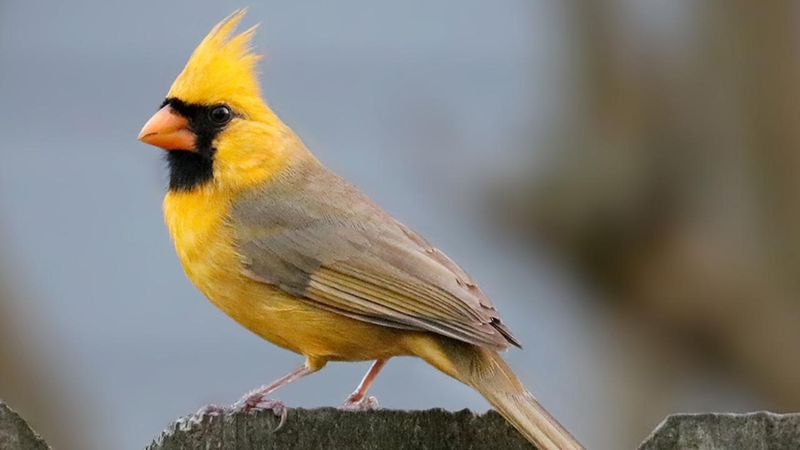
A photo shows color, not cause. You cannot tell from a picture whether a bird has a particular condition or genotype.
That is why describing what you see, an unusually yellow Northern Cardinal, works better than slapping a diagnosis on it.
Even experts hedge. Audubon reported on another yellow cardinal where poor feather condition or environmental stress were possible explanations, and the cause was not settled by looks alone, as discussed in its feature on a yellow cardinal.
Names also vary. Xanthochroism is used for extra yellow color, but the British Trust for Ornithology’s page on plumage abnormalities shows that plumage-anomaly terms are not used the same way everywhere.
Rarity gets the same careful treatment. You may see the line “fewer than one in a million.” That was an informal estimate from a birding expert quoted by Audubon, not a population survey and not the odds that you will spot one.
Counts like “only a dozen exist” or “most birders never see one” have no census behind them either. In Audubon’s Ask Kenn Kaufman column, the expert also noted that more reports may come from social media making sharing easy, not from more yellow birds.
The takeaway: these birds seem uncommon, but nobody has a reliable number.
Document a possible sighting without disturbing the bird
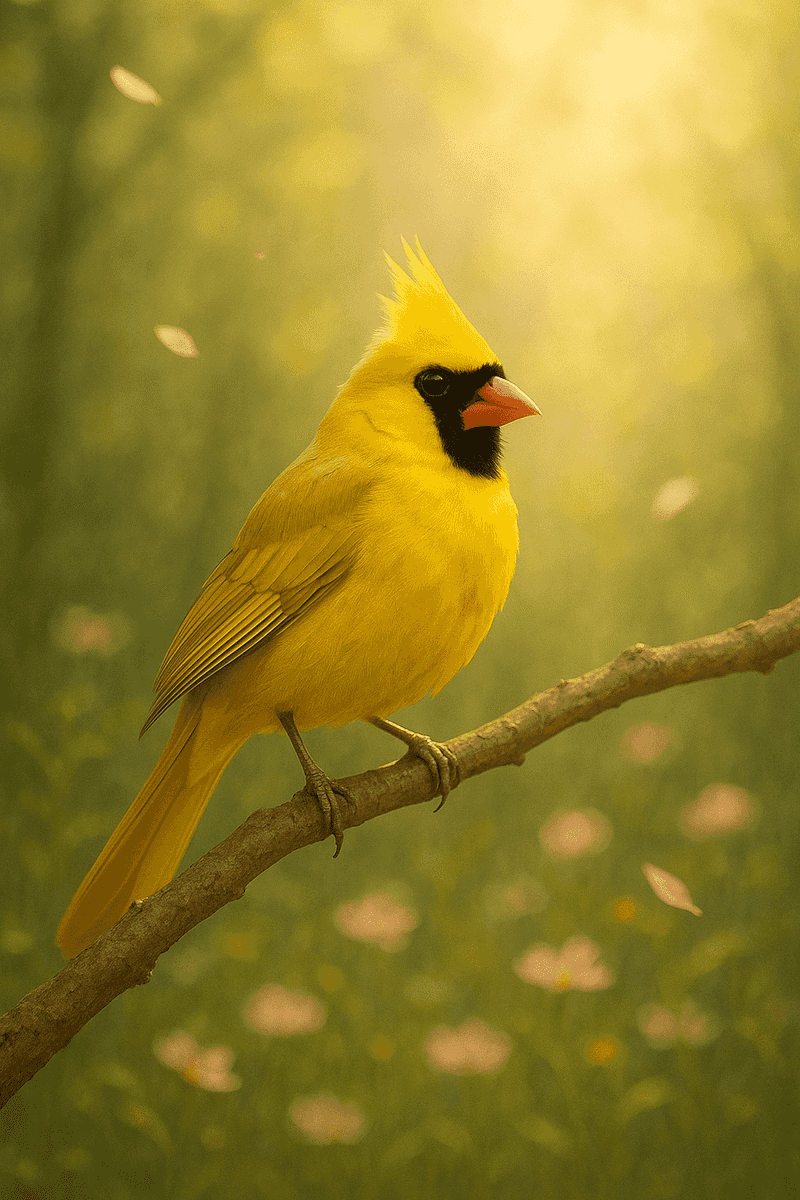
If a golden cardinal lands at your feeder, stay calm and stay put. Take photos or video from where you are, ideally through a window or from a few steps back.
A long lens or zoomed phone does the job without pushing closer.
Then write things down while they are fresh: date, time, exact location, weather, how the bird behaved, and which features you noticed. Mention the crest, bill shape, and black face, plus what the yellow looked like in different light.
The eBird Help Center explains how to document your sightings, and notes that documentation helps others assess an unusual report.
Keep your own photos and notes together, and share them with a local bird group or through eBird if you want others to review them. Clear shots from several angles beat one blurry frame.
Try to include a side view and a face view.
Do not chase the bird, crowd it, try to catch it, or handle it, even for a better picture. Stress can hurt a wild animal, and a calm bird is more likely to come back.
A yellow Northern Cardinal is possible, and the cause in any single bird may stay unknown. Sometimes the best sighting is the one you enjoy quietly and record well.