
Black Walnut and Your Tomatoes: What Juglone Can and Can’t Explain After a Tree Is Cut Down
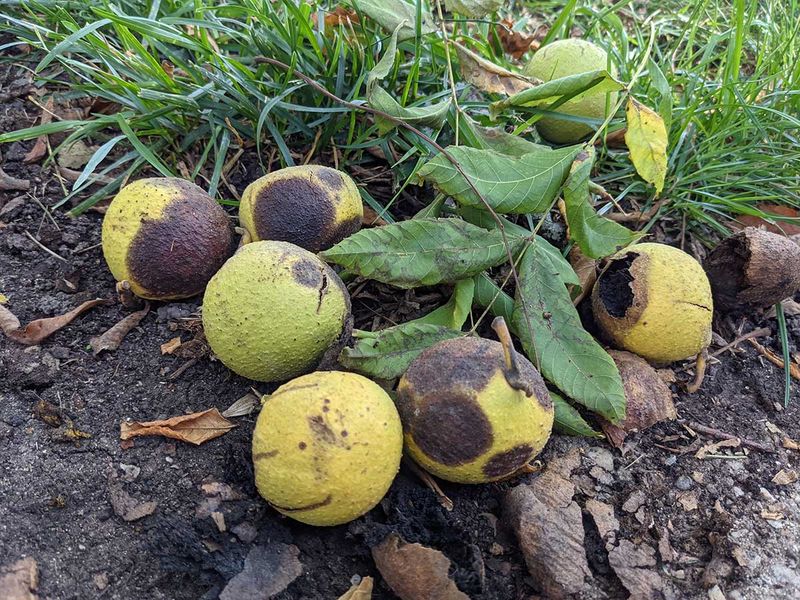
Your tomatoes are drooping, and a black walnut stands nearby, or maybe stood there until last year. Plenty of gardeners hear that the tree’s chemistry can linger in the soil and blame it right away.
The truth is more mixed, and knowing it could save you from guessing wrong about your plants. Here is what the science says, what it doesn’t, and what to check first.
Juglone Is a Suspect, Not a Diagnosis
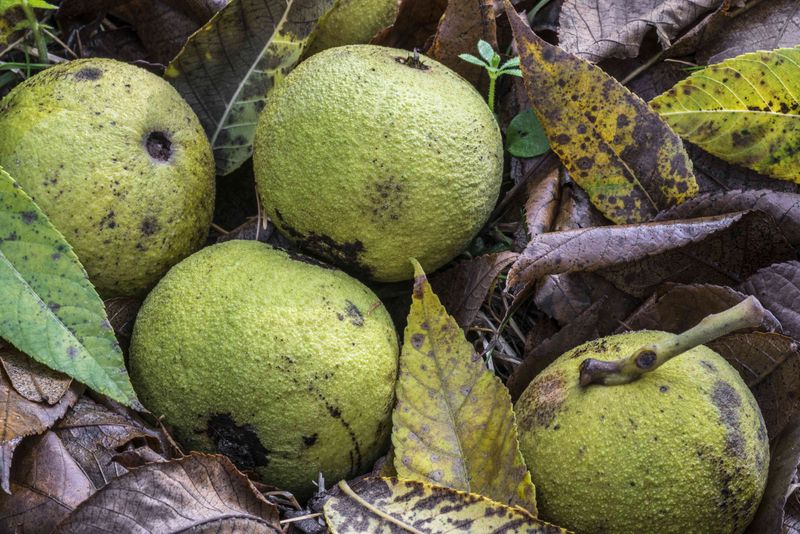
Ask around about black walnuts and you will hear one word again and again: juglone. It is a compound associated with black walnut, and gardeners often blame it when plants nearby look sad.
Tomatoes get named a lot, which is why a wilting plant near a walnut sparks worry.
There is some basis for the caution. Wisconsin Extension’s black walnut toxicity guide includes tomatoes in a table of plants that may be sensitive.
If you are choosing where to plant, that is worth knowing.
But a spot on a list is a caution, not a verdict. Wisconsin Extension says its table is based on observation rather than formal testing, and that information for some plants is conflicting or undocumented.
So the list cannot promise that every tomato near a walnut will struggle.
Think of juglone as a suspect in a lineup. It has a reputation and a motive, but nobody has caught it in the act in your garden.
Possible sensitivity tells you to stay alert. It does not tell you why your particular plant is struggling.
That difference matters because the fix depends on the real cause. If you assume juglone and the true culprit is something else, the problem may keep going while you rearrange the wrong things.
Treat the walnut as one clue among several, and keep reading before you pull anything out.
Soil Processes Can Break Juglone Down
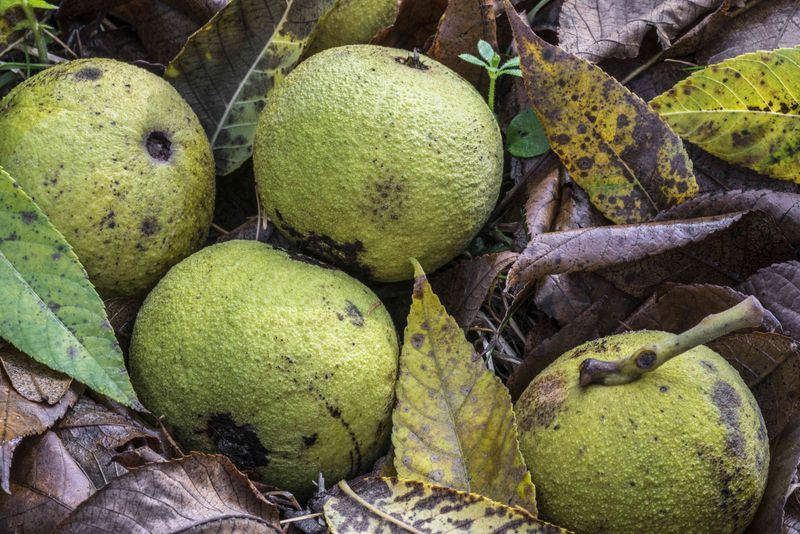
Soil is not a sealed jar where a chemical just sits forever. It is a busy place full of microbes, moisture, and air.
A peer-reviewed study, published in the Journal of Environmental Quality, looked at juglone in soils under black walnut trees.
The researchers found that juglone is degraded by both biological and nonbiological processes. Microbial activity supports faster breakdown, so soil that is alive and active tends to clear it more quickly.
They also measured juglone being released in the walnut root zone, so the compound is real and not just a rumor.
Soil conditions matter, though. The study noted that buildup in low-fertility soils is plausible.
A rich, well-tended bed and a tired, compacted patch may not behave the same way.
That is where the limits come in. This study does not hand you a number of months or years for your yard.
It was not a controlled test of what happens in every backyard after a tree comes down, so it cannot promise that your soil clears fast or slowly.
What you can take from it is simple. Juglone is not a permanent fixture, and healthy soil life works in your favor.
Adding compost and keeping the soil from getting compacted or waterlogged supports that life, but nobody can promise a specific outcome.
Does the Walnut Explain Your Tomato’s Wilt?
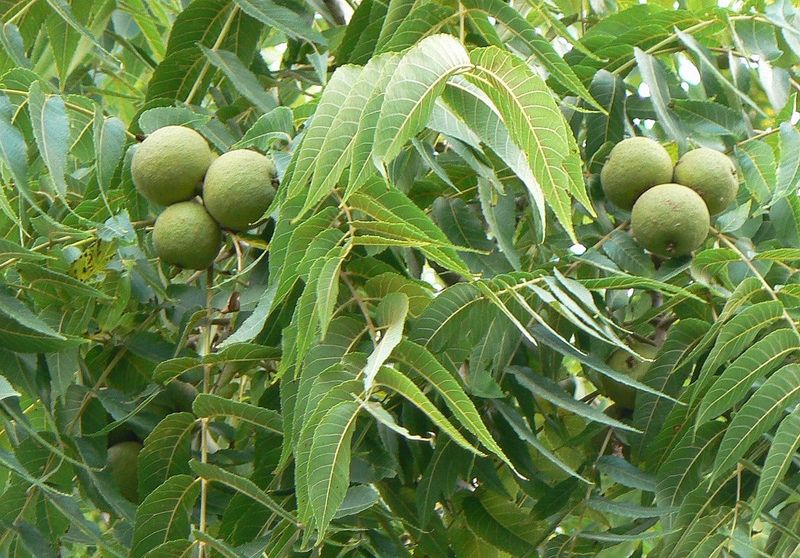
Here is the tricky part: living near a walnut is not the same as being harmed by one. It is easy to connect the two because they are right there together.
Your brain wants a story, and a famous tree makes a handy villain.
Washington State University Extension takes a careful look at this in its review of black walnut and other plants. It finds that field evidence confirming juglone as the cause of poor growth near walnuts is lacking.
In plain terms, nobody has firmly shown in real gardens that juglone is behind the trouble.
The review also points out that laboratory findings do not always carry over to gardens. A plant can react to a chemical in a controlled test and behave differently in a yard, where soil, weather, and neighboring roots all play a part.
So how should you think about your tomato? Treat the walnut as something to note, not something to blame.
Write down where the tree is, how far your bed sits from it, and when the trouble began.
Those notes help later, but they do not settle anything on their own. A wilting plant next to a walnut and a wilting plant across the yard may be sick for the same ordinary reason.
The next step is to look at the plant itself.
Tomato Wilt Has Other Possible Causes
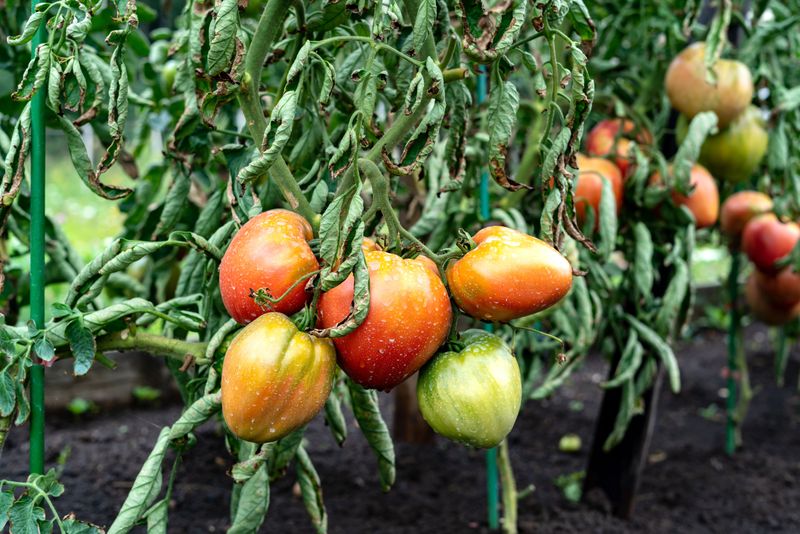
Wilting is the plant’s way of waving a flag without saying why. Many things can make a tomato droop, and several are far more common in summer gardens than you might guess.
Minnesota Extension’s tomato wilt guide lists diseases, pests, heat, and water stress among the possible causes.
The guide also describes signs that help tell them apart, so look beyond the droop itself. Check the stems, the roots, the undersides of leaves, and whether the plant perks up in the evening or stays limp.
Notice whether the whole plant is affected or just one branch.
Walnut injury is a tricky case too. Wisconsin Extension cautions that suspected walnut injury can look like disease, herbicide injury, or drought.
That means the same limp leaves could point in several directions.
Here are some practical checks. Push a finger into the soil to see if it is bone dry or soggy.
Look for insects or chewed spots, and think about whether the weather has been unusually hot.
No article can diagnose your plant from a description, and this one will not try. If the clues stay confusing, a local Extension office can help you narrow it down.
The goal is to find the actual cause before you blame a tree.
After Removal, the Timeline Is Not Settled
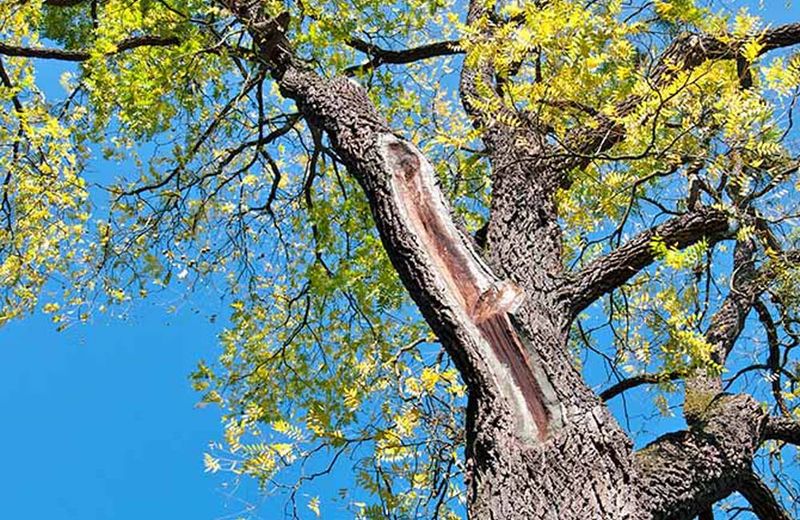
Cutting down a walnut feels like it should end the worry, yet the advice you will find after removal does not agree. Two universities, two different expectations.
That gap is why a flat claim about years of poisoned soil is too certain.
Iowa State Extension gives the shorter view. In its answer on juglone after walnut removal, it says most juglone is gone within a few months and that replanting the next growing season is reasonable.
Wisconsin Extension is more cautious. It warns that remaining root pieces may continue to exude toxins for several years.
That is a possibility to keep in mind, not a rule that applies to every yard.
Soil research offers some context. The Journal of Environmental Quality study found juglone breaks down through several processes.
It did not track what happens in every backyard after a tree is removed, so it cannot settle the debate.
If a stump and big roots are still decaying near your bed, the longer caution may matter more. If the tree is long gone and the soil is active, the shorter view may fit.
Either way, a struggling tomato still deserves a look at other causes first.
A Raised Bed Can Separate Roots From the Crop
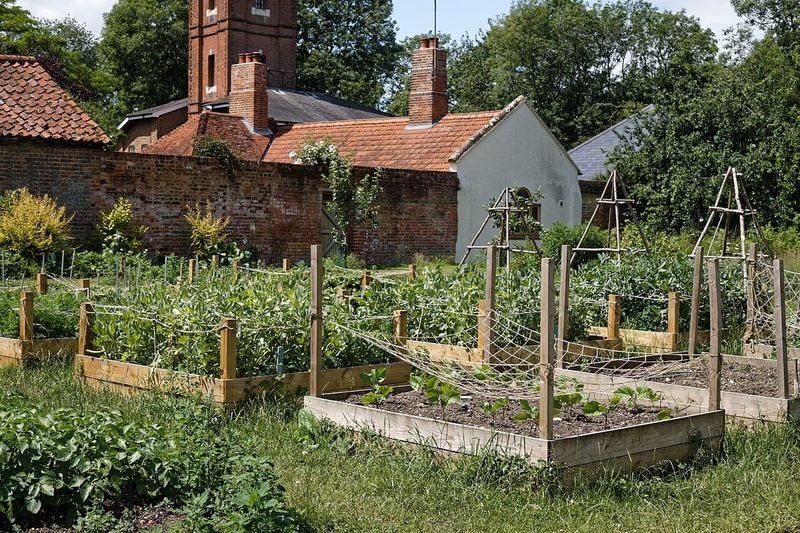
If a walnut is staying put and you still want tomatoes, there is a practical workaround. Michigan State University Extension suggests that for a sunny garden near a standing walnut, a raised bed with new soil is an option for sensitive vegetables.
The idea is separation. Your tomato roots grow in fresh soil you brought in, not in the ground around the tree.
It keeps the crop’s roots apart from whatever is in the surrounding soil.
Wisconsin Extension adds a useful detail: a barrier that limits roots growing through or under the bed. Without one, walnut roots can wander into your fresh soil over time.
A solid barrier under and around the bed helps keep that from happening.
Keep in mind what this does and does not mean. A raised bed is not proof that the surrounding soil is chemically poisoned, and it is not a guaranteed cure for sick tomatoes.
It is a way to lower the chances that tree roots and crop roots mix.
Pick a sunny spot, since tomatoes want plenty of light. Fill the bed with good quality soil, water it well, and watch your plants.
If they still struggle, the cause is likely something else, and that is useful to learn too.
Start With the Symptom, Not the Scary Story
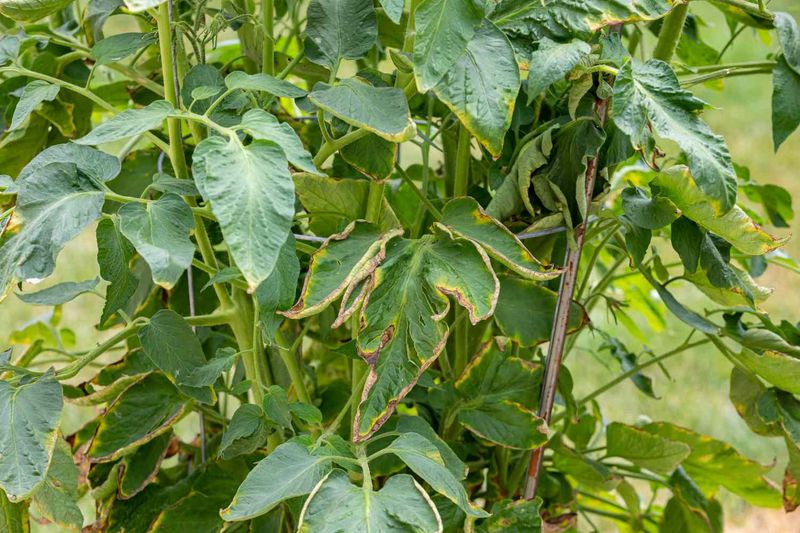
Begin with what your tomato is showing you. Use a guide like Minnesota’s wilt checklist to rule out the common causes, and keep juglone as one possibility, not the answer.
A tree cut down does not come with a guaranteed timeline, and Iowa State’s short estimate is only one view.
If a walnut still stands nearby, a well-built raised bed gives your tomatoes their own space.
A tree gets the blame because it is easy to see. The real cause is usually hiding in the leaves.