
Prune Raspberries by Type: Which Canes to Cut and Which to Keep After Harvest
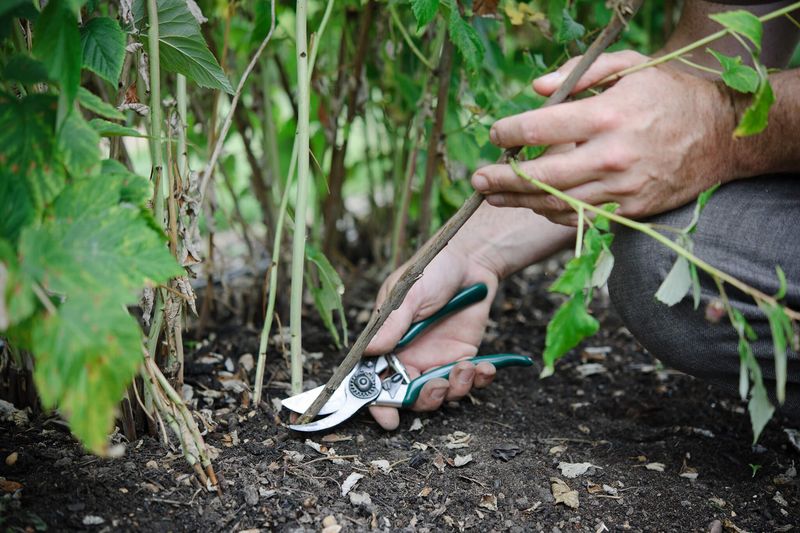
Your raspberry patch looks tired after harvest, and it is tempting to grab the loppers and clear everything out. But some of those canes may still be working for you next year.
The right cut depends on what kind of raspberry you grow and what kind of harvest you want. A few minutes of checking now can save you from cutting away a crop.
The cane’s age—not the cleanup instinct—sets the pruning choice
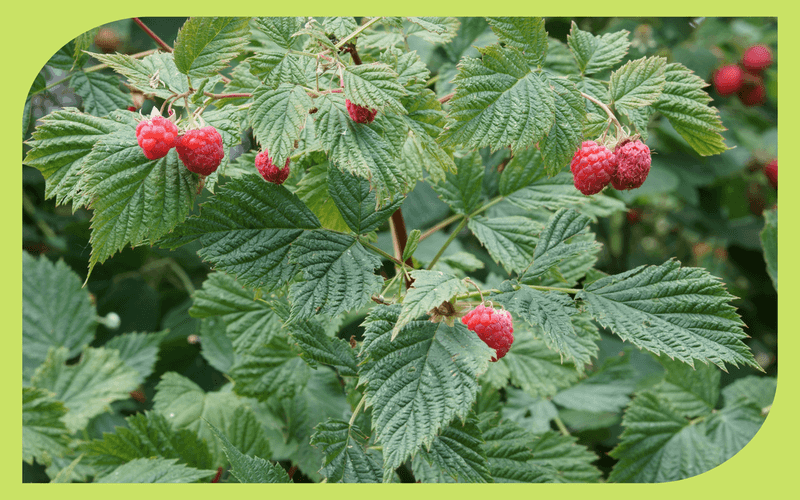
Picture a raspberry plant as a perennial root system that keeps sending up short-lived stems. The roots and crown live for many years, but each individual cane lives only two years.
That two-year clock is the key to every pruning decision you will make.
Summer-bearing raspberries grow canes during their first year and then fruit on those same canes in their second year. After the berries are picked, those second-year canes are finished and will die.
The new canes growing beside them are next summer’s fruiting wood, so they need to stay.
Fall-bearing raspberries, also called primocane-fruiting or everbearing, work differently. According to Iowa State Extension guidance, they fruit at the tips of first-year canes.
Those same canes can fruit again on their lower portions the following summer, which is why a blanket cleanup cut can remove a crop you wanted.
That leaves you with two questions to answer before cutting anything. First, which type do you have?
A plant label or a fall harvest alone is not a reliable clue, so look at when and where your canes fruited. Second, if you grow fall-bearing plants, do you want one fall crop or two crops, summer and fall?
Oregon State Extension describes both approaches, and the choice is yours.
Once you know the plant type and the crop system, the cuts become simple. Skip the major pruning until you have those two answers.
For summer-bearing raspberries, remove only the canes that already fruited
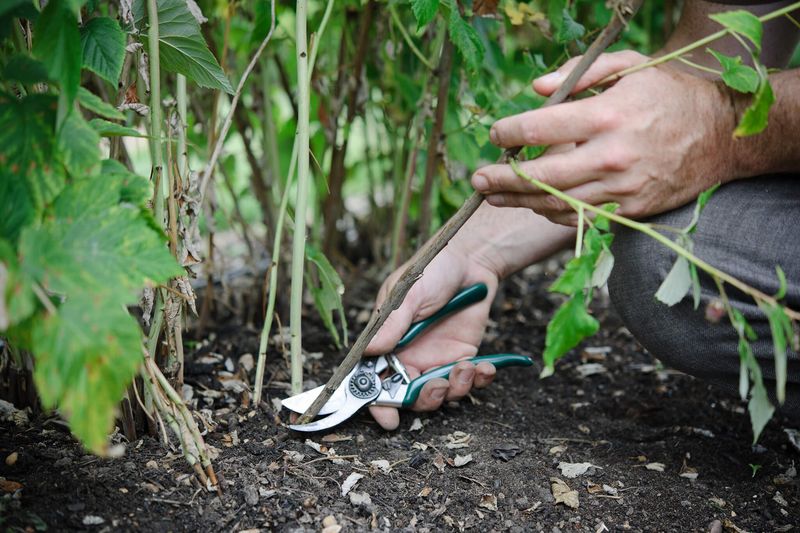
If your raspberries are summer-bearing, usually red or yellow types that give one crop in early to midsummer, the job is clear. Cut out the canes that just fruited and keep the new ones.
The old canes will not fruit again, so they are only taking up space and can harbor disease.
Spent canes are easy to spot. They are usually darker, woodier, and sometimes peeling or dry, with leaves that look worn out.
The new canes are greener, more flexible, and often shorter than the old ones.
Using sharp pruners or loppers, cut each fruited cane down to ground level, as described by Iowa State Extension. Then carry the cut canes out of the patch rather than leaving them on the ground.
Leave the healthy current-year canes alone so they can overwinter and bear next summer. University of Minnesota Extension notes that these are the canes that will carry your next summer crop.
If the row looks crowded, you can thin the new canes. Recommendations on spacing vary.
Minnesota suggests about four to five canes per foot for summer-bearing red and yellow types, while Iowa suggests about six inches between canes. Pick a spacing that gives air flow and room to pick.
Want two crops from fall-bearing canes?
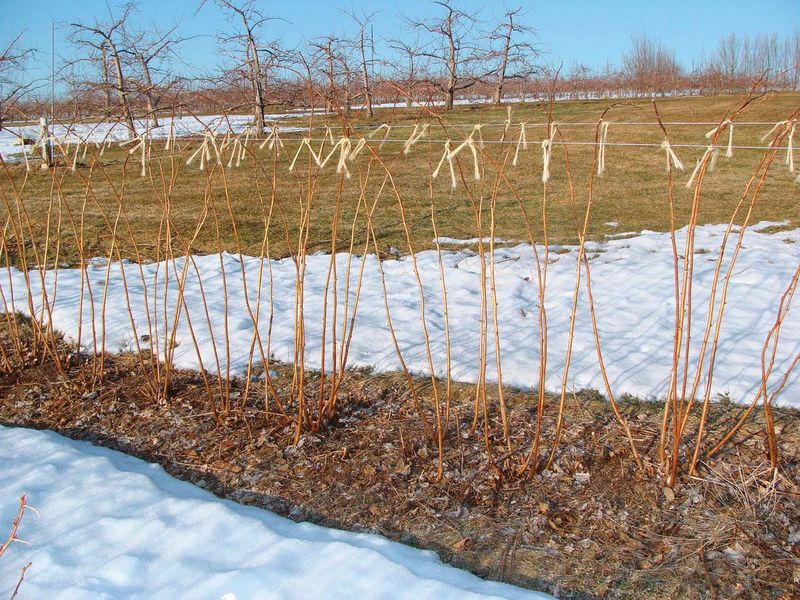
Fall-bearing raspberries give you a choice. If you want both a summer crop and a fall crop, do not cut every cane to the ground after the fall harvest.
The canes that fruited at their tips this year are not finished.
Keep the healthy canes that carried fall berries on their upper ends. In winter or early spring, trim off only the dead tips, cutting a couple of nodes below the dead portion.
Oregon State Extension describes this tip-only trim for plants managed for two crops.
Here is how the two crops fit together. The retained canes can produce berries on their lower portions in summer.
Meanwhile, new primocanes that emerge in spring grow through the season and fruit at their tips in fall.
This system asks a bit more of you, since old and new canes share the row. For region-specific details, Oregon State’s Central Oregon publication covers primocane-fruiting raspberry production.
Cold winters can damage canes, so check them before deciding what to keep.
If a cane looks weak, broken, or diseased, remove it. Only healthy canes belong in a two-crop plan.
A single fall crop calls for a different cut
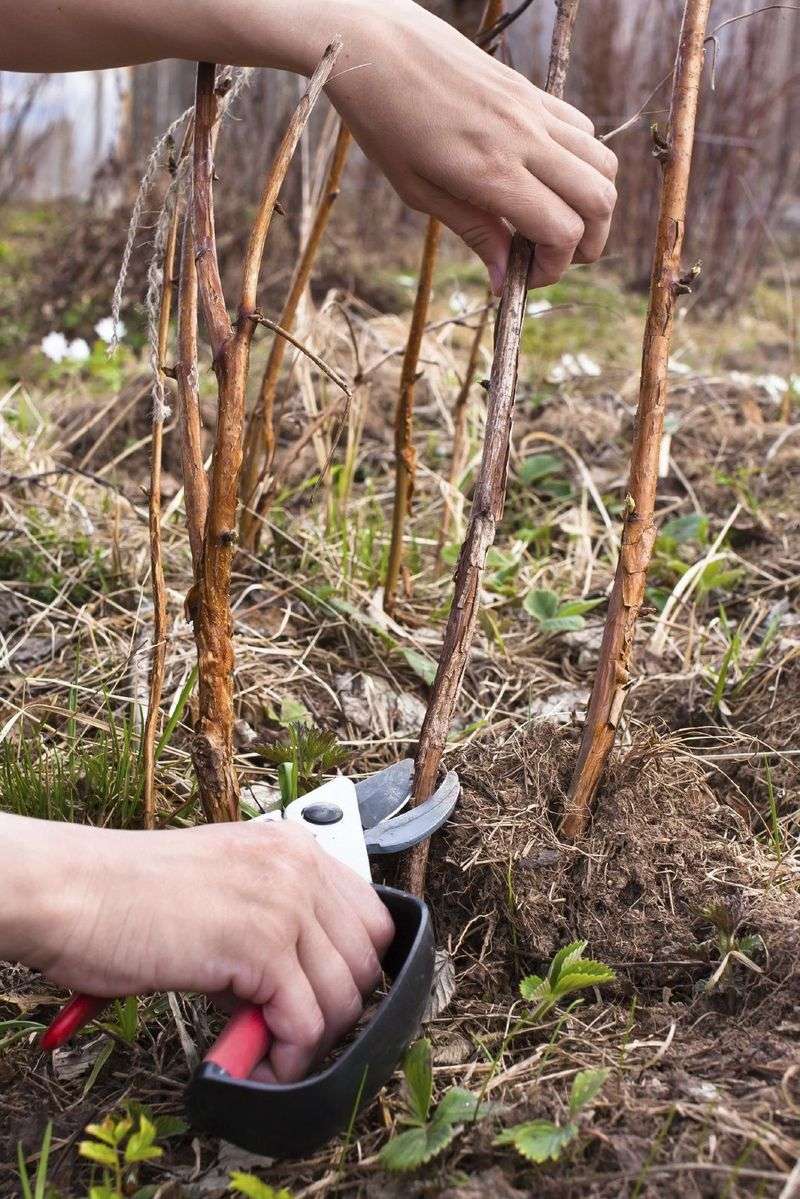
Some gardeners prefer a simpler plan: one fall harvest and one big cut. For fall-bearing raspberries, you can cut all canes down near ground level during dormancy, in late winter or before spring growth begins.
This is a deliberate choice, not a rule for every raspberry patch.
The tradeoff is clear. By removing all the canes, you give up the possible summer crop from the lower portions of last year’s canes.
In return, the new canes that grow in spring will fruit in fall, and pruning takes one easy pass.
Iowa State notes that a one-crop system typically produces a larger total crop than its two-crop system. It may also mature one to two weeks earlier, according to Iowa State Extension.
Think of those as typical results, not promises, since variety, region, and your own patch all play a role.
This method also makes sense if winter damage tends to hurt your canes, or if you want a tidy, low-effort routine. Just be sure the plants are truly fall-bearing before you cut.
Doing this to a summer-bearing patch would remove next summer’s fruiting canes.
Remove unhealthy canes, but let timing follow the plant and conditions
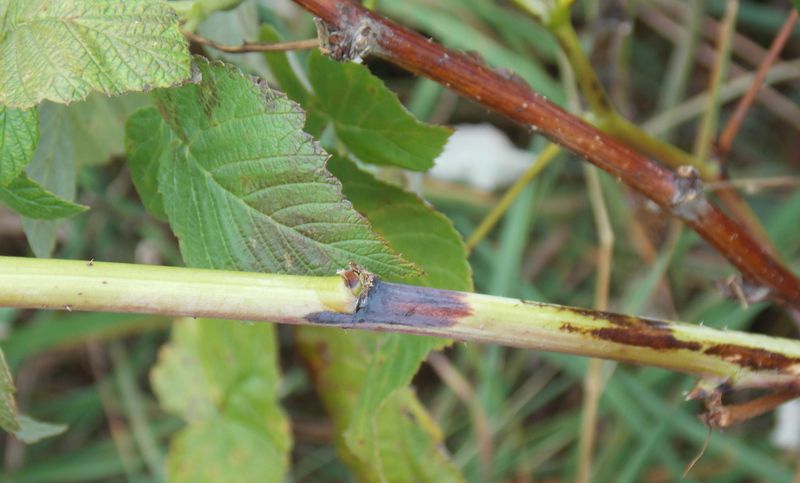
Whatever system you choose, every raspberry patch benefits from a health check. Look for weak, damaged, or diseased canes and remove them.
Then clear the cuttings out of the planting.
That last step matters. Iowa State Extension says removing and destroying prunings helps control diseases such as anthracnose and spur blight.
Leaving them on the ground gives problems a place to hang around.
Timing is where advice varies, and that is fine. There is no single deadline for the whole country.
Iowa State describes removing spent summer-bearing canes after the first frost, while University of Minnesota Extension says to do it after the last harvest.
For fall-bearing plants managed for two crops, Oregon State Extension says healthy canes can wait until winter. Diseased canes may be worth removing right after harvest.
Your climate and what you see on the canes should guide you. Dark spots, cracked bark, or dying canes in a wet year are good reasons to cut sooner.
Keep attending to water after the berries are picked
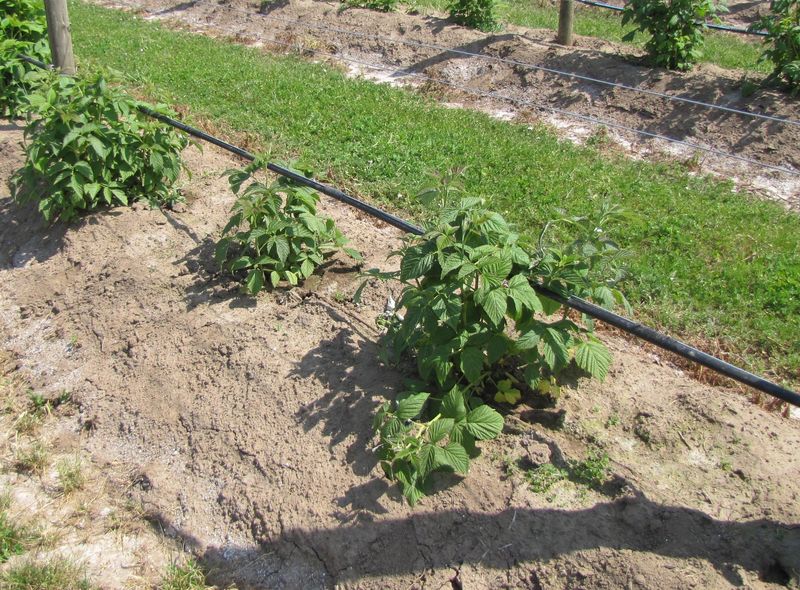
Picking the last berry does not mean the plants stop needing care. Raspberries still have roots and new canes to support.
University of Minnesota Extension says raspberries need water from spring until after harvest.
If your fall weather turns dry, check the soil a few inches down. When it feels dry, give the patch a good soaking rather than frequent sprinkles.
Mulch can help hold moisture, though you should keep it from piling against the canes.
Do not overdo it. The same guidance warns against overwatering and waterlogged soil, which raspberries do not tolerate well.
If water pools or the soil stays soggy, hold off.
Steady, sensible watering supports healthy plants, but it will not guarantee a particular harvest next year. Think of it as keeping the plant comfortable while the pruning does its own job.
Before you cut, match the cane to the crop you want
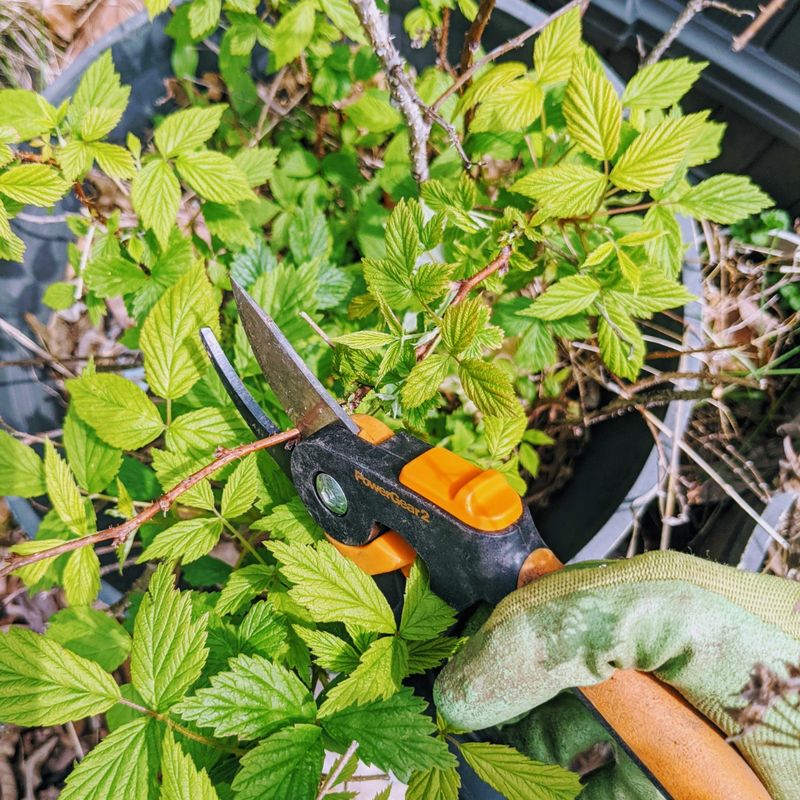
Start by identifying whether your raspberries are summer-bearing or fall-bearing. Then, for fall-bearing plants, decide on one crop or two.
Cut only the canes or cane parts that fit that plan, as explained by Iowa State Extension and Oregon State Extension.
The right cut keeps your chosen crop possible, but weather, variety, and disease still have a say. No pruning plan can promise a certain harvest.
A raspberry cane tells you what it can still do, if you ask before you cut.