
What Those Bright Red Seeds Bursting From Your North Carolina Magnolia Really Mean This Fall
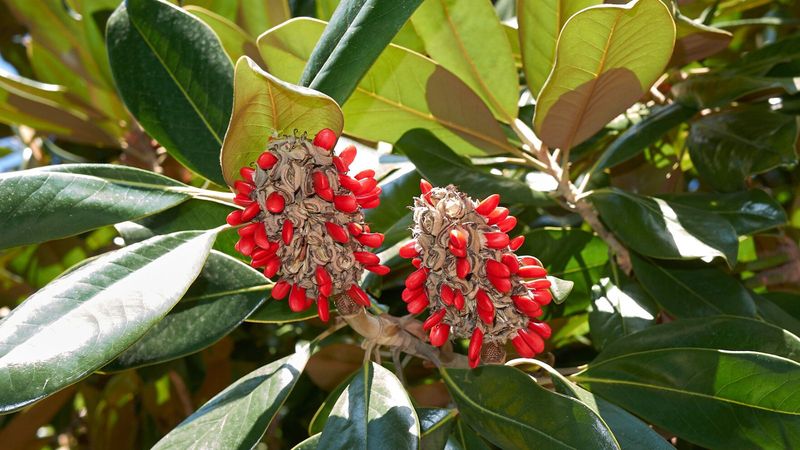
Somewhere in early fall, a familiar magnolia in your yard starts to look a little strange. Brown, cone-like clusters open up, and bright red seeds appear where there was only leathery brown fruit before.
The sight can make a homeowner wonder if something is wrong, or if the birds are trying to tell them something. Here is what is actually going on, and what it does and does not say about your yard.
The cone-like cluster opens to reveal individual seeds
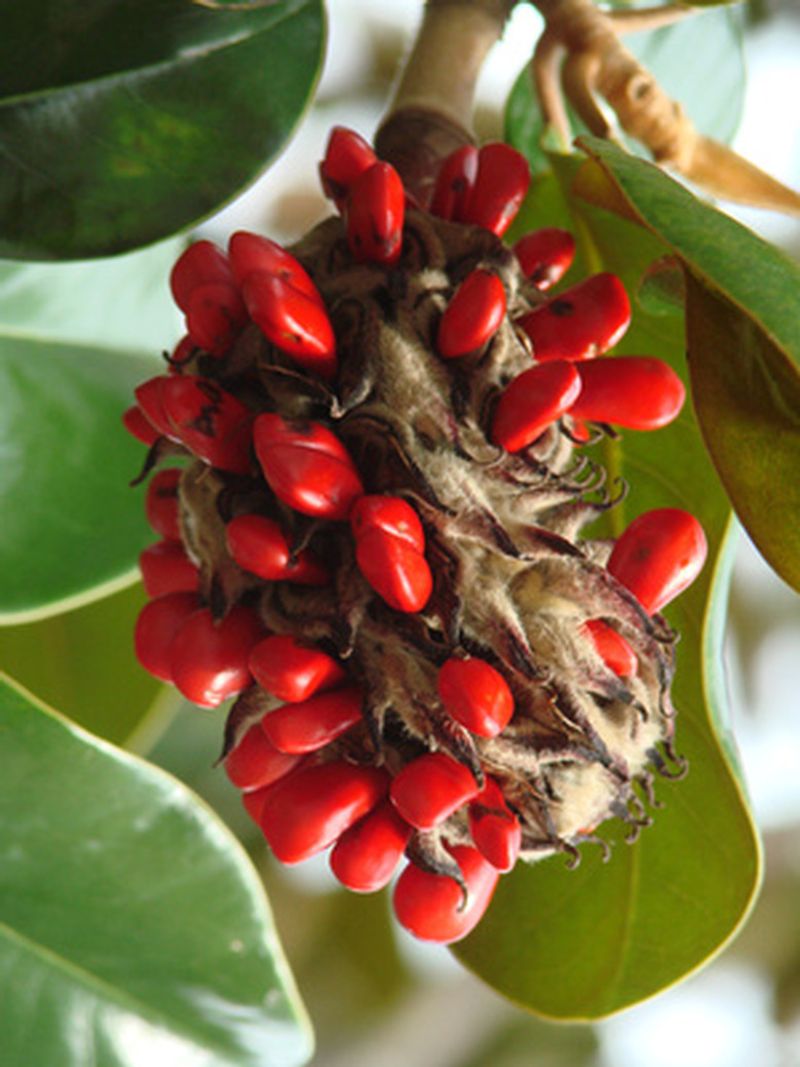
Look closely at that brown, cone-like thing on a Southern magnolia and you will find it is not really a cone at all. According to NC State Extension’s profile of Southern magnolia, the cluster is an aggregate of follicles.
Each follicle is a small, dry pod that holds a seed, and together they form the knobby, rough-textured structure you see on the branch.
As the fruit matures, the follicles split open along a seam. Inside, each seed wears a bright red coat, and the seeds may hang briefly from slender threads before they fall or get picked off.
The whole cluster does not burst or explode. It simply opens, a bit at a time, like a lot of tiny doors swinging wide.
That detail matters when you describe what you are seeing. The red parts are not berries, and the cluster is not one giant seed.
The red coating belongs to each individual seed, and one cluster can hold many of them.
Think of the cluster as a shipping crate and the red seeds as the packages inside. The crate is brown and dull, so the flash of red is what catches your eye from across the lawn.
Seeing that color is a normal stage of magnolia fruiting. By itself, it is not a sign of disease, and it does not point to an infestation.
If you want a closer look, a pair of binoculars or a camera zoom works well, since the seeds sit high in many mature trees. Notice how some follicles have opened while others on the same cluster are still shut.
That uneven timing is ordinary, and it can stretch the display over several weeks.
Fall is a typical time for the display
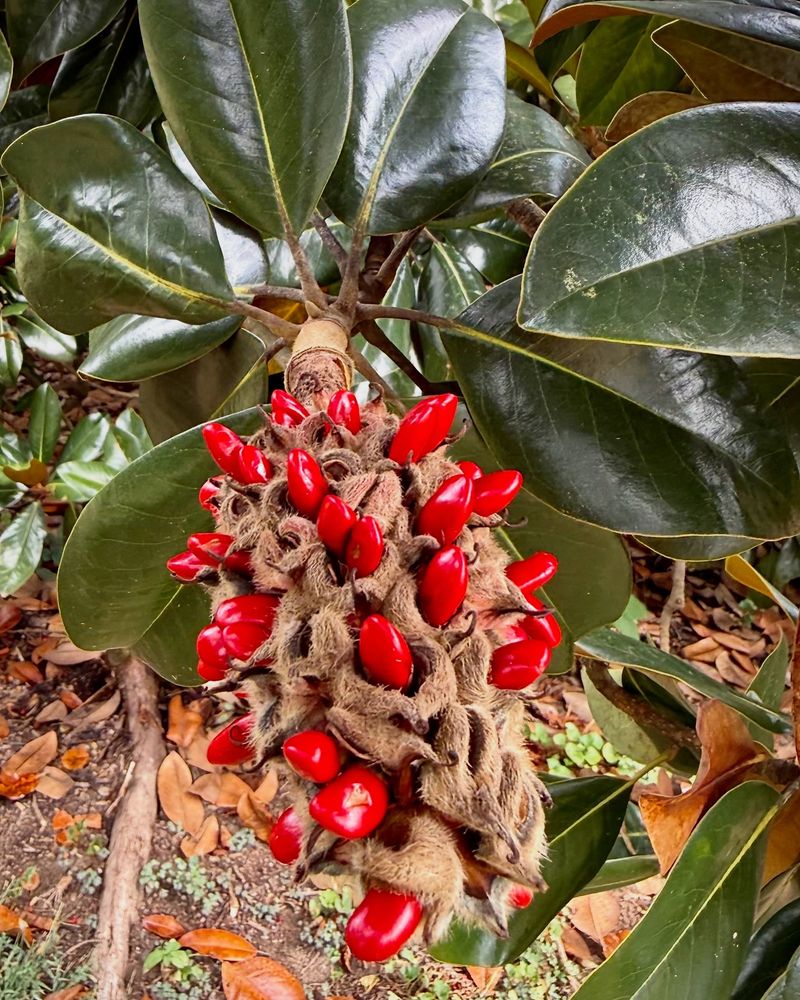
Mark your calendar for September and October if you want to catch the show. NC State Extension lists that two-month window as the typical time Southern magnolia fruit matures.
Many homeowners notice the red seeds right as the first cool mornings arrive.
The window is not a hard rule, though. The USDA Forest Service describes fruit maturing from September into late fall, which gives you a broader span to watch.
A tree on a warm, sunny slope in the Coastal Plain may not match a tree tucked into a cooler Piedmont yard, and a different magnolia species may follow its own calendar.
Weather can nudge things too. A dry summer, a wet spring, or a sudden cold snap can shift when the follicles open from one year to the next.
If your neighbor’s tree is showing red and yours is not yet, there is usually no reason to worry.
You may also notice a heavy crop one fall and wonder if it means something special. It probably does not.
The Forest Service notes that Southern magnolia can produce good seed crops regularly, so a conspicuous display is not rare and is not proof of unusual tree health.
A handy habit is to jot down the date you first spot red seeds each year. After a few seasons, you will have your own local timeline, which is more useful than any general calendar.
A red-seeded cluster does not identify the species by itself
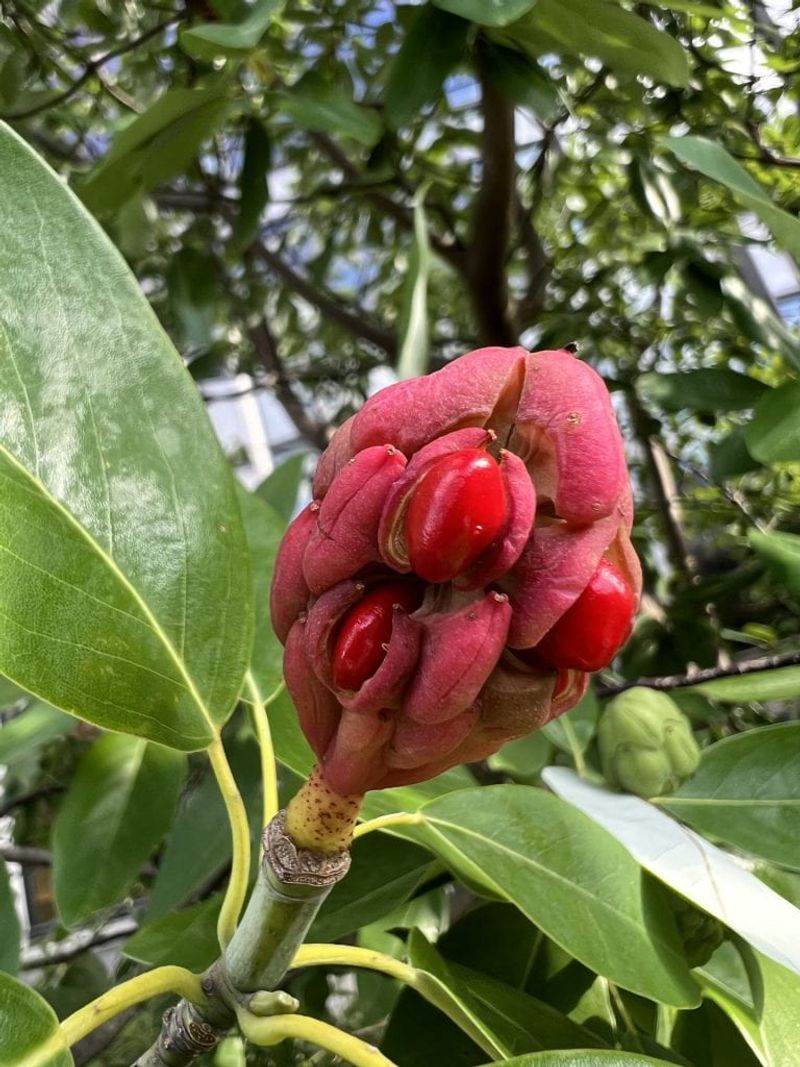
Plenty of people see red seeds on a magnolia and call it a Southern magnolia without a second thought. That guess is understandable, but it can be wrong.
Sweetbay magnolia, another North Carolina native, also forms cone-like fruit clusters with bright red seeds, as described in NC State Extension’s sweetbay magnolia entry.
North Carolina is home to several native magnolias, not just one. The NC State Herbarium’s page on magnolias covers the group, and it is a good reminder that the genus is bigger than the famous evergreen tree in front of old Southern homes.
So the red seeds tell you that you have a magnolia fruiting. They do not tell you which magnolia.
If you plan to name the species, look at more than the fruit, such as the whole tree and its leaves, and compare them with a trusted reference.
A local Extension office or a plant identification resource can help if you are stuck. Taking a few photos of the leaves, bark, and overall shape before you ask makes the job much easier.
Getting the name right is not just a matter of pride. It helps you read up on the correct care and seasonal timing, and it keeps you from applying advice meant for one tree to a different one.
Birds are using a seasonal food source
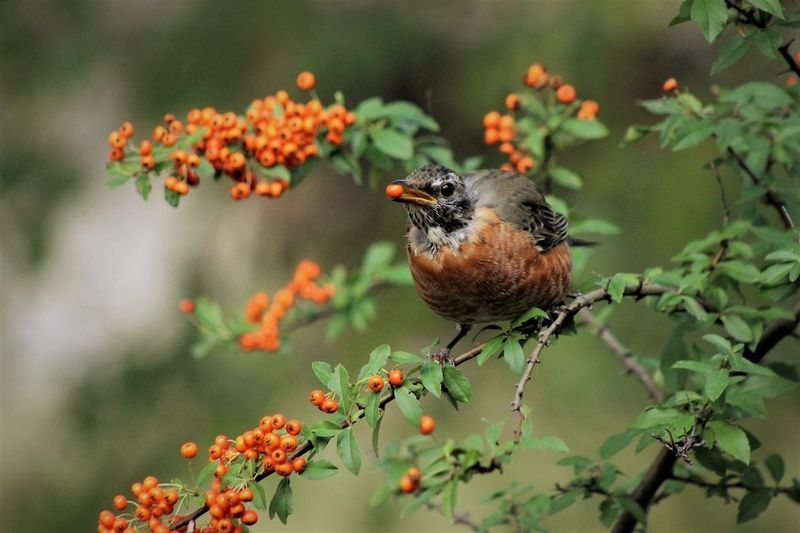
Once the red seeds show up, the visitors often follow. The USDA Forest Service says Southern magnolia seeds are dispersed mostly by birds and mammals, so wildlife that grabs a seed may carry it away from the parent tree.
Seeds that drop or get moved can end up in new spots around your neighborhood.
Extension guidance backs up the food value, too. N.C.
Cooperative Extension lists Southern magnolia among plants whose seeds or fruits benefit birds. When you see a bird working over an open cluster, you are watching an animal use a seasonal food source.
It is tempting to read more into it. A single visit, or a cluster picked clean in a few days, shows that wildlife found food.
It does not show that the tree is in great shape, and it does not show that your whole yard is a healthy ecosystem.
Birds can serve as useful clues about habitat, but that role comes with conditions. The USGS describes birds as ecosystem indicators in the setting of careful monitoring and particular focal species tied to known habitat features.
A casual sighting at one yard is a different thing.
Enjoy the show for what it is. A bird on a magnolia is a nice moment, and it is also just one moment.
Leaving some fruit can keep the food available
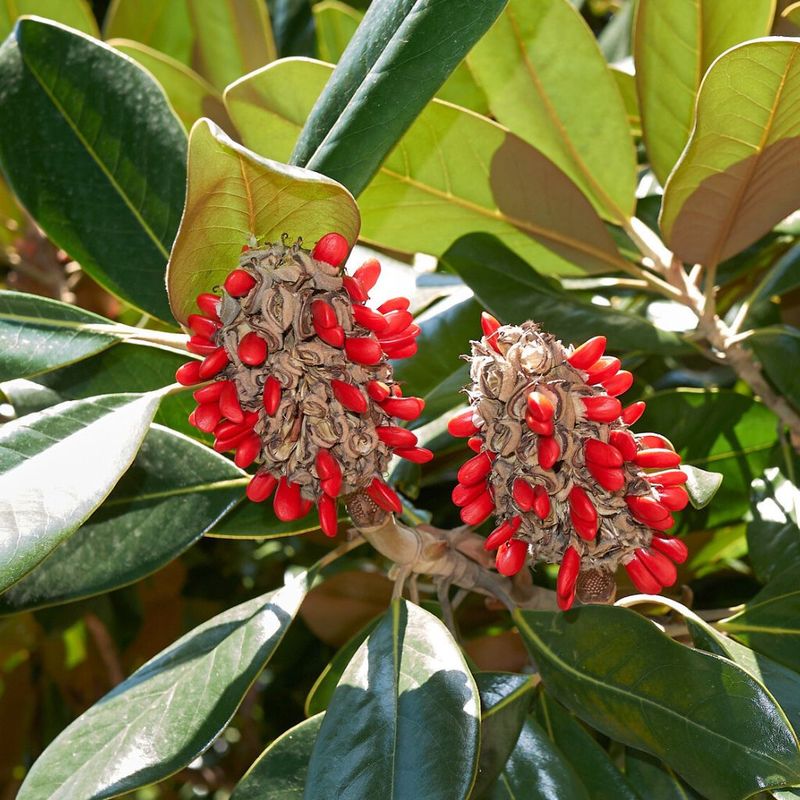
If you like the idea of helping wildlife, here is a small step. Leave some of the fruit on the tree instead of clearing away every cluster.
That keeps a seasonal food source within reach for animals that use it.
The advice fits with broader guidance on backyard habitat. N.C.
Cooperative Extension’s bird landscaping tips point to plants whose seeds and fruits feed birds, and NC State Extension’s guide to managing backyards and urban habitats for birds looks at the yard as a whole place for them to find resources.
Be realistic about the result. Leaving fruit makes the food available, but it does not promise that any particular bird will show up.
Which animals visit depends on what lives nearby and what else is on offer in your neighborhood.
You do not have to pick between a tidy yard and a useful one. Maybe you rake up the fallen pods near the patio and let the clusters higher in the tree stay put.
That is a modest choice, and it takes almost no extra work.
Keep the focus on the fruit itself. The goal is simply to let the tree’s natural crop do its job through the season.
Read the display as a natural event, not a health score
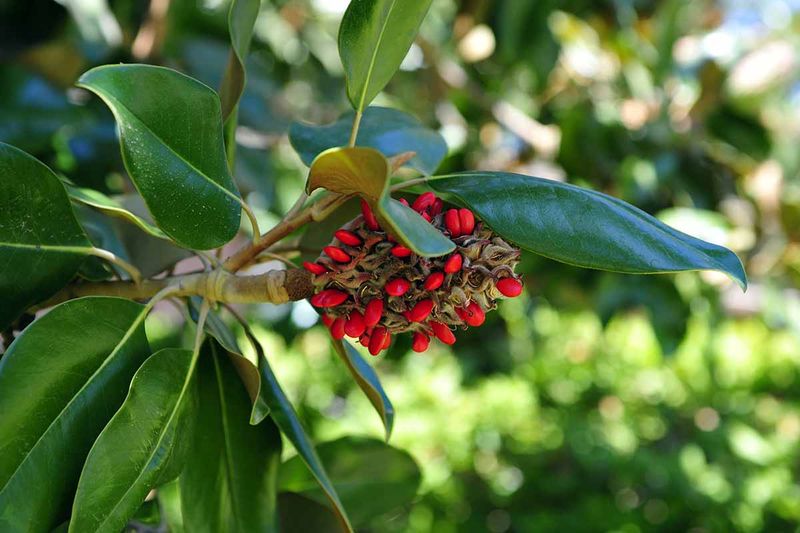
Those red seeds are magnolia fruiting doing what it normally does, and a bird visiting is wildlife using a seasonal food source. The USDA Forest Service notes that good seed crops can come regularly, so a heavy crop is not a special sign.
A stripped cluster is not a grade either, and the USGS ties birds as indicators to proper monitoring, not one casual look.
So let the display be what it is. A magnolia in October is a good thing to stand under and watch.