
The Surprising Reason North Carolina Gardeners Are Leaving Joro Spider Webs Up Around The Porch This Fall
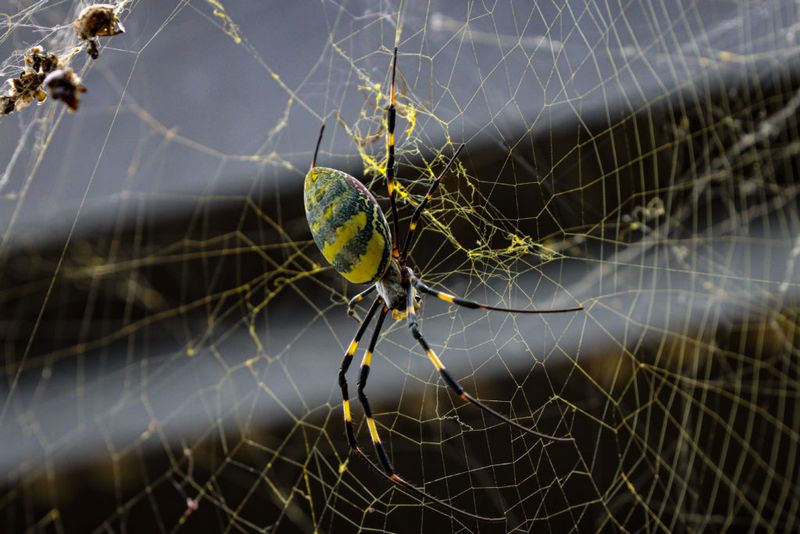
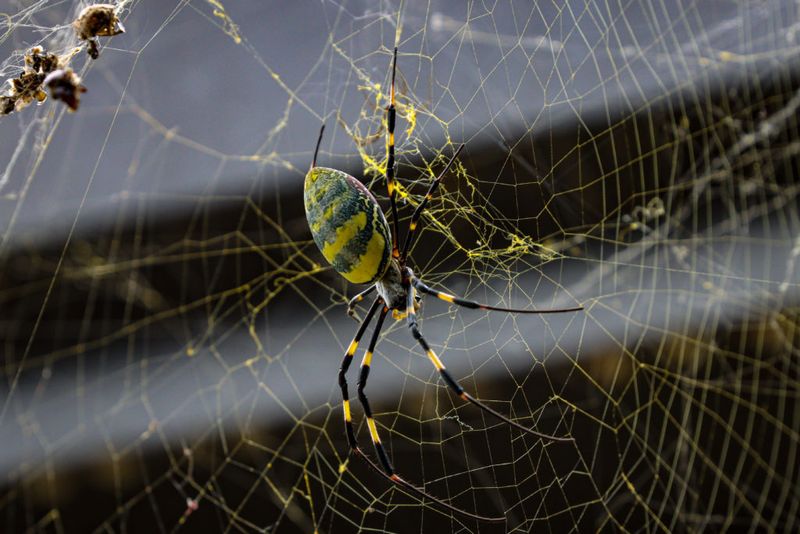
Those huge golden webs strung across yards each fall can stop you in your tracks. Many people grab a broom right away, while others wonder if the spider is doing something useful.
The truth is more careful than a catchy headline, and it depends mostly on where the web hangs. Here is how to decide what to do with one at your place.
Why Jorō webs become conspicuous in fall
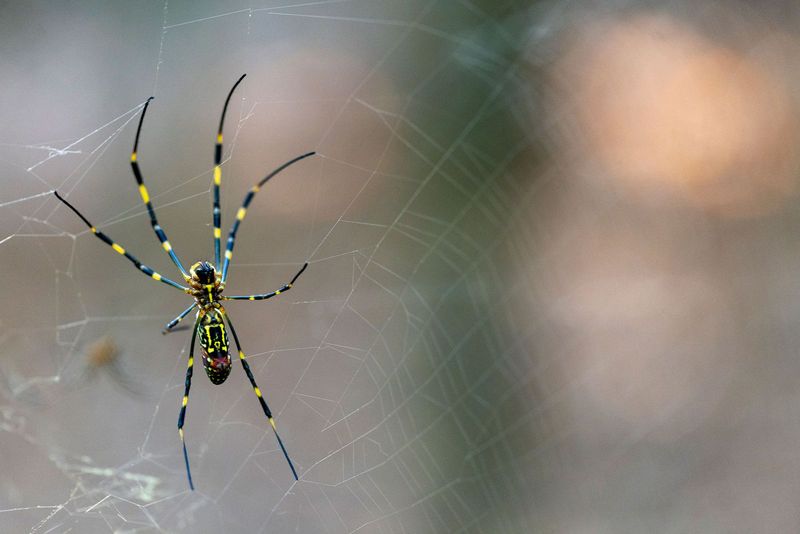
Fall is when Jorō spiders get noticed. By then the adult females have grown large, and they spin wide golden webs that can span several feet across shrubs, fences, and porch corners.
A web that was invisible in July can seem to appear overnight in October.
These spiders are introduced orb-weavers from East Asia. According to NC State Extension, the first detection in western North Carolina came in fall 2021.
Its map relies on iNaturalist reports through September 2025, so a sighting in one county says little about the next one. The spider is not equally established across the state.
The seasonal cycle is simple. Females lay egg masses in fall, the eggs overwinter, and the young hatch in spring.
That timing explains why the biggest webs show up just as the weather cools.
Before you decide anything, make sure you actually have a Jorō. Native orb-weavers can look similar, especially when they are young, and a web or a blurry photo is not enough to be certain.
If you are unsure, NC State Extension suggests uploading a clear photo to iNaturalist so the community can help with identification. Take the picture from a comfortable distance, and skip touching the spider.
What the diet research can—and cannot—show
A 2026 study in PLOS ONE offers the newest look at what Jorō spiders eat. Researchers analyzed DNA from spider guts collected at 52 sites in Georgia and South Carolina.
They found 26 prey groups that showed up only in Jorō samples. The native orb-weavers they sampled ate similar things at sites with and without Jorōs.
That is interesting, but it answers a narrow question about prey detections and diet overlap at those sites. It does not tell us anything about North Carolina yards specifically.
The authors call it an initial analysis and say more work is needed on web placement and where spiders overlap.
Just as important, the study did not test whether a web cuts down on household pests. It also does not show better biodiversity, and it does not prove the spiders cause no harm.
Those questions were simply outside its design.
An earlier 2022 review described the ecological effects of Jorōs in North America as poorly understood and urged people not to make confident predictions. The newer study adds a useful piece, yet the big picture remains open.
Anyone claiming the spider is clearly helping your yard, or clearly wrecking native wildlife, is getting ahead of the science.
A web does not distinguish pests from beneficial insects
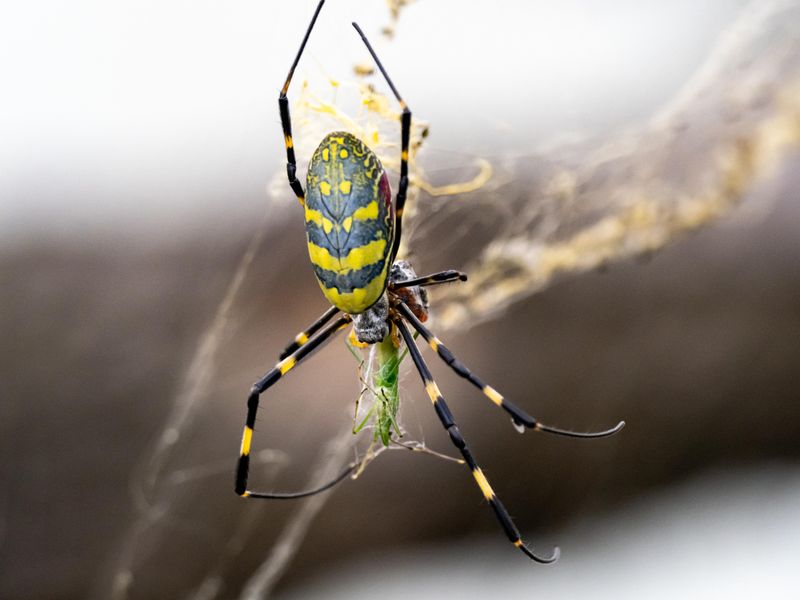
Silk does not read labels. A Jorō web catches a range of flying insects, and that can include helpful ones along with the annoying ones.
Catching bugs is not the same as targeted pest control.
One study does give a narrow, specific example. In research on monarch butterflies, staged trials and field surveys suggested Jorōs generally rejected monarchs.
That is a finding about one species, and it is good news for monarch fans.
It should not be stretched. It does not show that Jorōs spare every beneficial insect, and it does not mean native pollinators are safe near the webs.
A bee that drifts into silk is still a bee in trouble.
So the fair summary is neither cheerleading nor panic. The web is a passive trap that takes what flies into it.
That is the reason placement matters so much, especially around the flowers you planted for pollinators.
Let the web’s location guide the decision
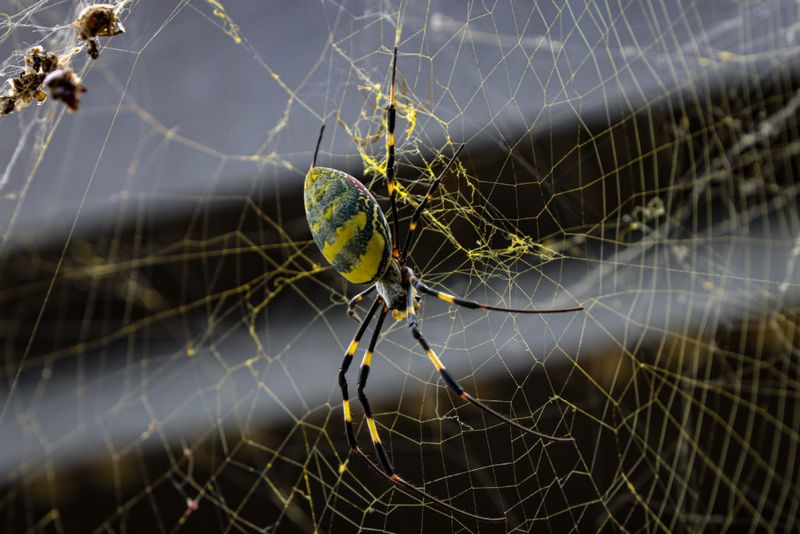
Location is the simplest way to decide. If a confirmed Jorō web sits in a quiet, out-of-the-way spot, such as a back fence corner or a shrub nobody brushes past, you can reasonably leave it alone.
Think of that as skipping needless work, not as installing a proven benefit for your yard.
Busy spots call for a different answer. UGA Extension recommends removing webs where people are likely to run into them.
A porch entrance, walkway, deck rail, or mailbox path all fit that description.
The same guidance says not to leave webs around pollinator or flower gardens or beehives. If your native milkweed or bee balm patch has a golden web stretched across it, that is a good reason to act.
You are never obligated to tolerate a web that causes a conflict. A quick test helps: would a person, child, or pet walk into it, or does it sit where your pollinators feed?
If yes, plan to remove or redirect it. If no, leaving it is a fine choice.
Remove a nuisance web without creating a bigger problem
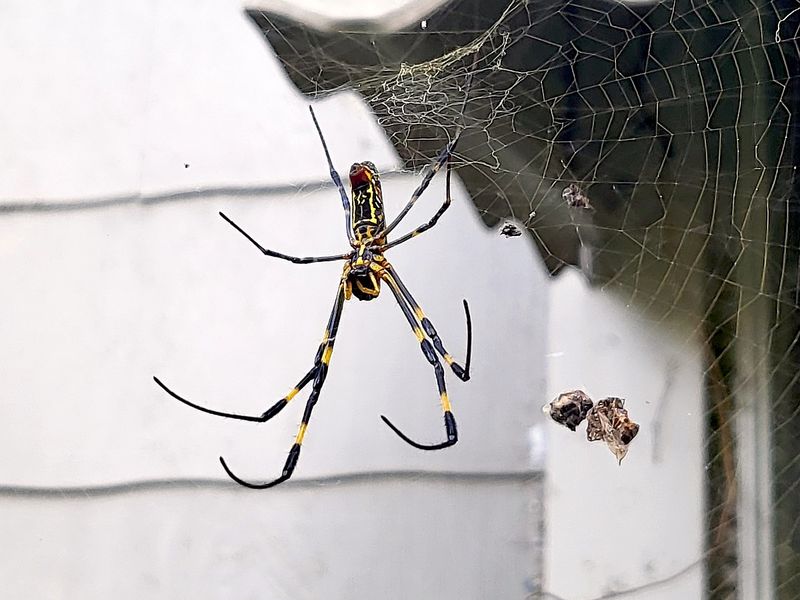
Knocking down a web feels like the end of the story, but it often is not. UGA Extension notes that the spider can rebuild quickly.
Its manual control advice focuses on the spider as well as the web, so clearing silk alone may only buy you a day or two.
Stay safe while you do it. Do not reach overhead or stand beneath a high web, and leave very high ones alone rather than climbing for them.
Skip the spray can. UGA Extension warns that broad sprays and fogging can kill pollinators, beneficial predators, and parasitoids along with the target insects.
That is a poor trade for one web, especially in a yard you keep for wildlife.
As for your own safety, NC State Extension says Jorō spiders are not a threat to people. A bite can still cause symptoms similar to a bee sting, so harmless is not quite the right word.
Keep your hands off the spider unless you truly need to move it.
Make a practical choice, not a claim about a trend
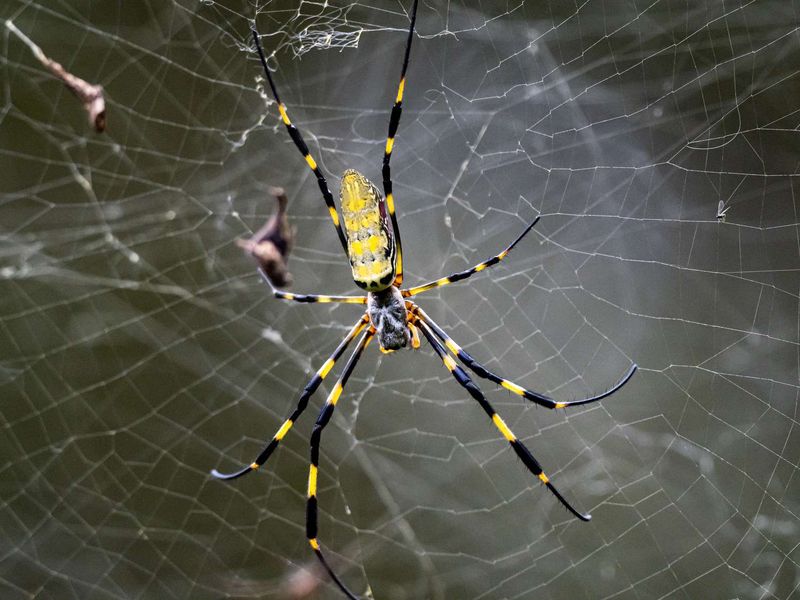
Start by identifying the spider, using NC State Extension’s photo suggestion if needed. Leave a confirmed web that is out of the way, and remove or redirect one near foot traffic, pollinator gardens, or hives, following UGA guidance.
No evidence shows gardeners are leaving webs up as a trend, and the diet study does not prove a yard benefit. Restraint is simply a reasonable choice.
A web in a quiet corner asks very little of you, so the broom can stay in the closet.