
Hydrangeas All Leaves and No Flowers? 8 Diagnostic Checks for Missing Blooms
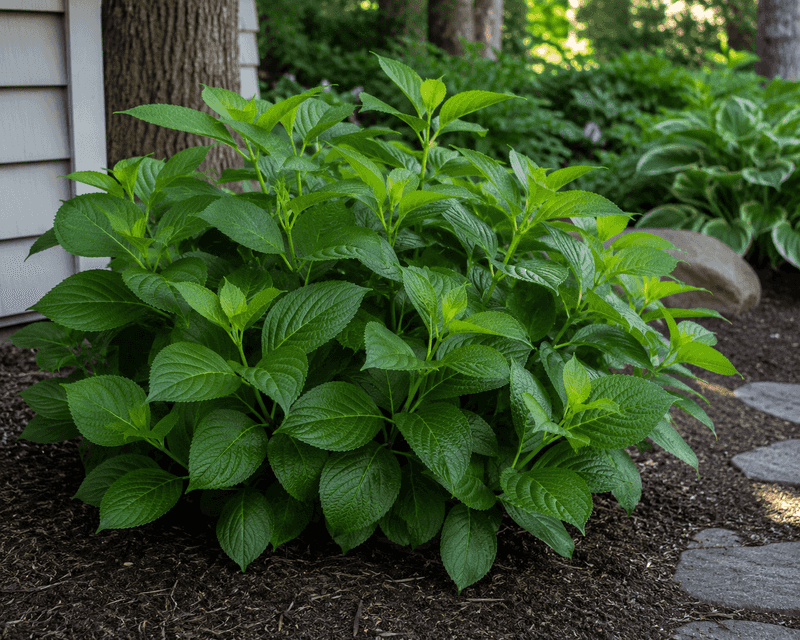
You water, you wait, and your hydrangea fills out with big, healthy leaves but not one flower. That can feel like you did something wrong, but a leafy shrub is often a clue and not a failure.
Leaves and blooms come from different buds, and those flower buds can be lost in several ways. Here are eight checks that help you work out what may have happened to yours.
Start with the hydrangea type, not the leaves
Thick green leaves tell you the plant is alive, but they say nothing about whether flower buds ever formed. Foliage and flowers grow from different buds, so a hydrangea can look perfect and still be bloomless.
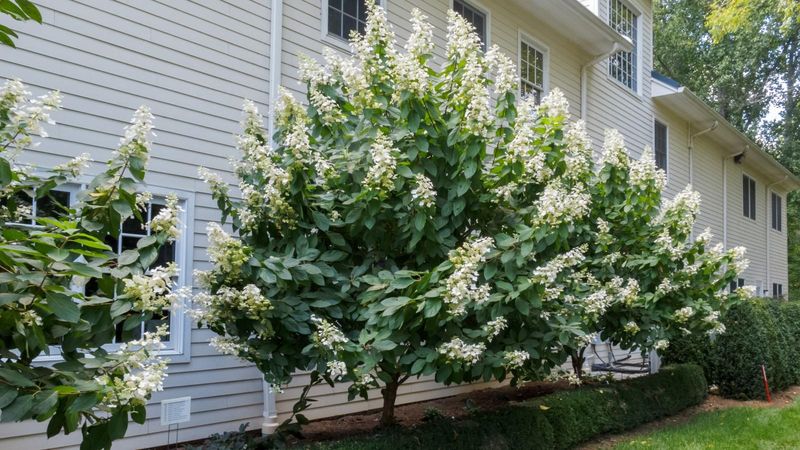
The first question is what kind of hydrangea you have. Bigleaf and oakleaf types generally bloom on old wood, which means stems that grew last year and carried their flower buds through winter.
Smooth and panicle types generally bloom on new wood, which means buds form on stems growing this season. Some bigleaf cultivars can rebloom on both old and new wood, but that trait depends on the specific cultivar, so check the plant tag or the nursery record.
This matters because the type shapes which problems are likely. As University of Maryland Extension notes, poor flowering can come from several causes, including pruning, bud loss, light, and too much nitrogen, and the right explanation depends on the plant and the site.
If you cannot identify your hydrangea, hold off on pruning it. Take photos of the leaves, the stems, and any old flower heads, and look for a tag or purchase receipt.
The next eight checks are possible explanations, not a pattern every plant follows, so treat them like a detective’s list and not a verdict.
Pruning can remove flowers before spring
Pruning history is one of the first things worth reviewing. Cutting old-wood hydrangeas in fall, winter, or spring can remove the flower buds they already carry.
Bigleaf and oakleaf hydrangeas are the usual victims of a tidy-up that went a little too far.
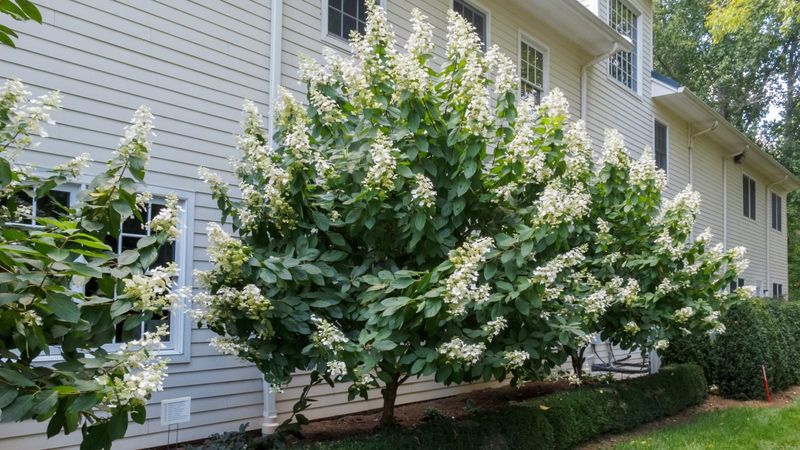
Smooth and panicle hydrangeas play by different rules. They generally bloom on new wood and are typically pruned in late winter or early spring, according to University of Maryland Extension pruning guidance.
Some bigleaf cultivars rebloom on both old and new wood, so they can be more forgiving, but that varies by cultivar.
Think back over the past year. Did someone cut the shrub back last fall as a cleanup chore?
Did you trim it in early spring because the stems looked rough? If the answer is yes and your plant is an old-wood type, lost buds are a strong suspect.
Notice that no single calendar date fits every hydrangea or every region. The safest approach is to identify the type or cultivar first, then match the pruning to how it blooms.
Until you know what you have, leave an unidentified hydrangea unpruned. Dead, broken, or clearly damaged stems are a separate matter, and you can wait to see how they leaf out before judging them.
Winter injury can leave foliage intact
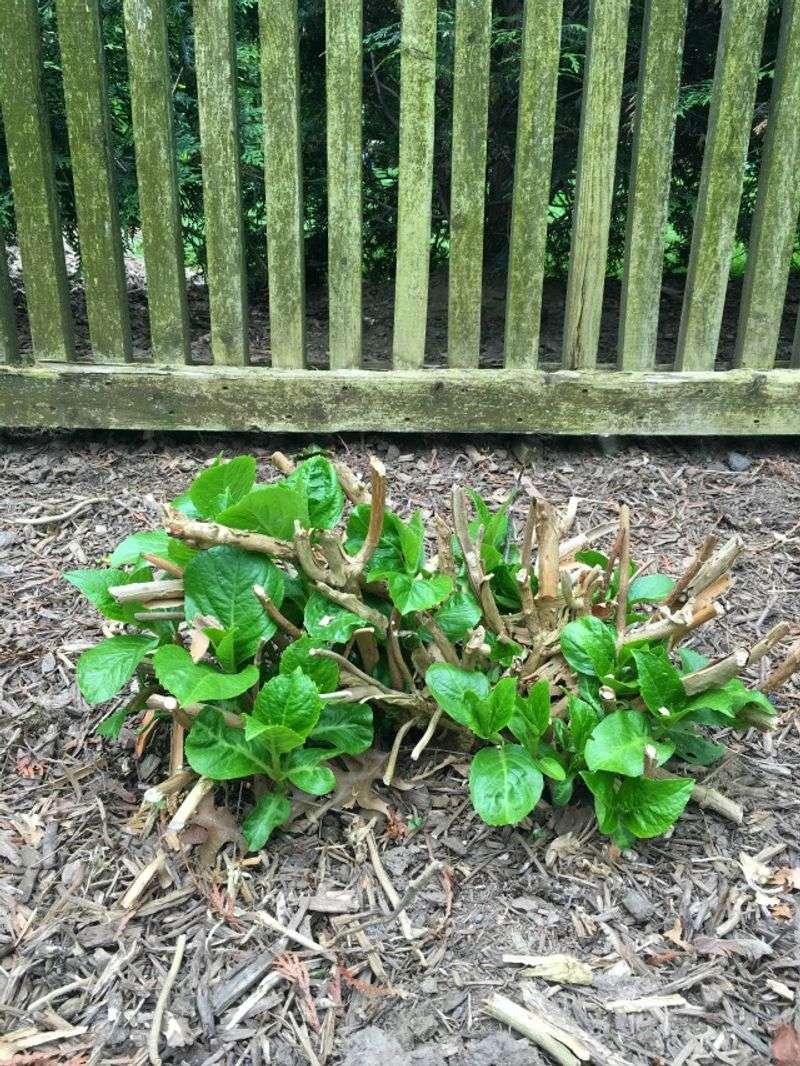
A hydrangea can come through winter, leaf out beautifully, and still have lost every flower bud. Cold or drying winter conditions can kill buds on old wood while the roots and lower stems stay alive.
The result is exactly what you may be seeing: plenty of leaves and no blooms.
This is most relevant to bigleaf hydrangeas and to cultivars whose buds do not reliably survive local winters, as University of New Hampshire Extension describes. Hardiness differs from one cultivar to the next, and a spot that is sheltered in one yard may be exposed in another.
To investigate, compare last winter with your plant’s habits. Was it unusually cold, windy, or dry?
Did the upper stems die back to the ground while new shoots grew from the base? Stems that look brown and brittle in spring, with growth only low on the plant, point toward winter injury.
Also look at your own bloom history. If the shrub flowered well in milder years and skipped flowers after harsh winters, that pattern is a useful clue.
There is no single protection method that suits every yard in the country. Local extension offices can tell you what works for your climate.
Treat a bloomless year after a rough winter as information, not a sign that you did something wrong.
Did a late freeze hit emerging buds?
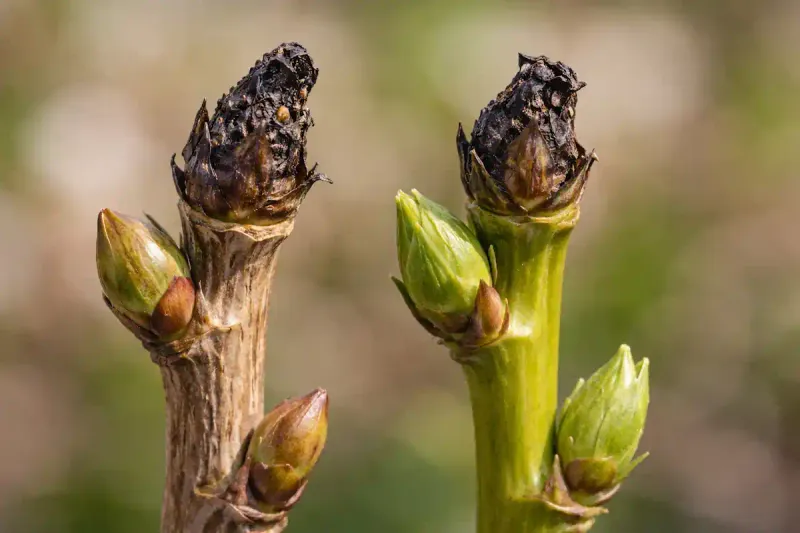
Spring weather can undo what winter spared. A warm spell may coax hydrangea buds out of dormancy, and a hard freeze right afterward can kill the tender growth.
That is a different problem from winter injury, because the buds were alive and waking up when the cold arrived.
According to University of Maryland Extension, late frosts can damage emerging buds and leaves, and a warm stretch followed by a hard freeze can kill flower buds that have begun to grow.
Your weather history is the best clue. Recall whether March or April brought a run of mild days followed by a sudden dip below freezing.
Check the plant itself for blackened, limp, or crispy new leaves from that period. Many shrubs push out a second round of leaves after frost, which can hide the damage and leave you with a green plant and no flowers.
Keep in mind that weather alone cannot prove the cause. A frost may have hit the buds, or it may have only nipped some leaves.
Look at the timing of the freeze against the plant’s spring growth, then weigh it alongside pruning and winter conditions.
If late frosts are common in your area, that pattern may help you decide whether an old-wood hydrangea is a good fit for the spot.
Browsing may take buds before they open
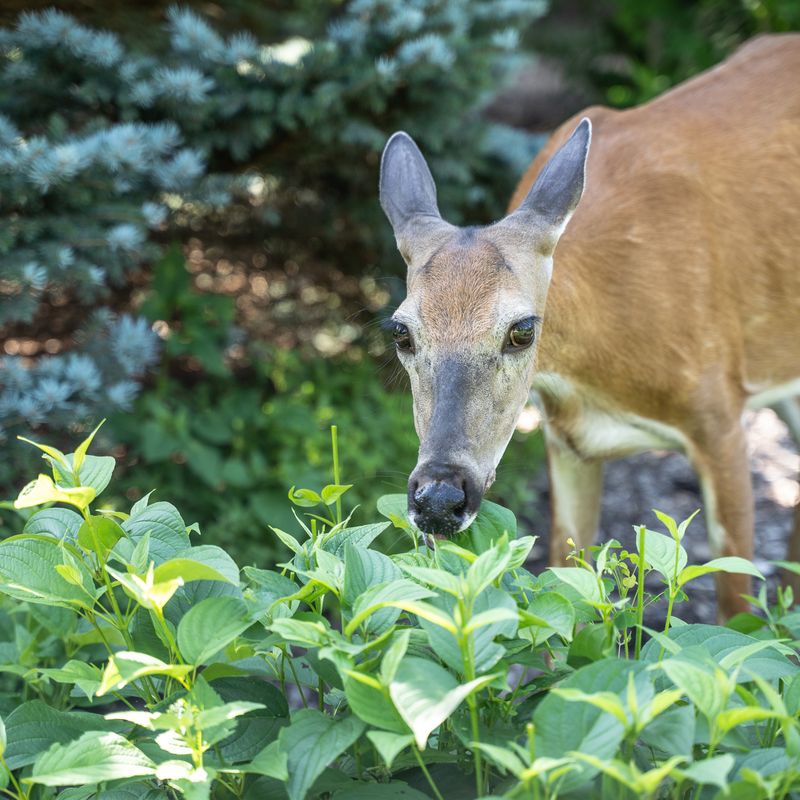
Sometimes the buds were there, and something ate them. Deer may nibble tender shoots, buds, and leaves, and that browsing can reduce or even wipe out blooms, especially on old-wood types.
The plant then regrows leaves and looks fine at a glance.
Walk up close and inspect the stems. Deer lack upper front teeth, so they tend to leave torn or ragged edges instead of clean cuts.
Look for shortened branches, missing tips, and hoofprints or droppings nearby. Rabbits and other critters tend to leave neater, angled cuts closer to the ground.
Ask yourself whether deer visit your yard at all. If you have seen them, or neighbors report them, browsing is worth considering.
Without signs or local evidence, though, do not assume deer are the cause.
If you do find signs, University of Maryland Extension suggests protecting vulnerable plants where deer are present. Fencing or netting around the shrub is a common approach, and your local extension office can suggest options that suit your area.
Because the buds on old-wood hydrangeas are exposed through the cold months, protection matters most during the time those buds are tender.
Light and fertilizer can favor foliage over flowers
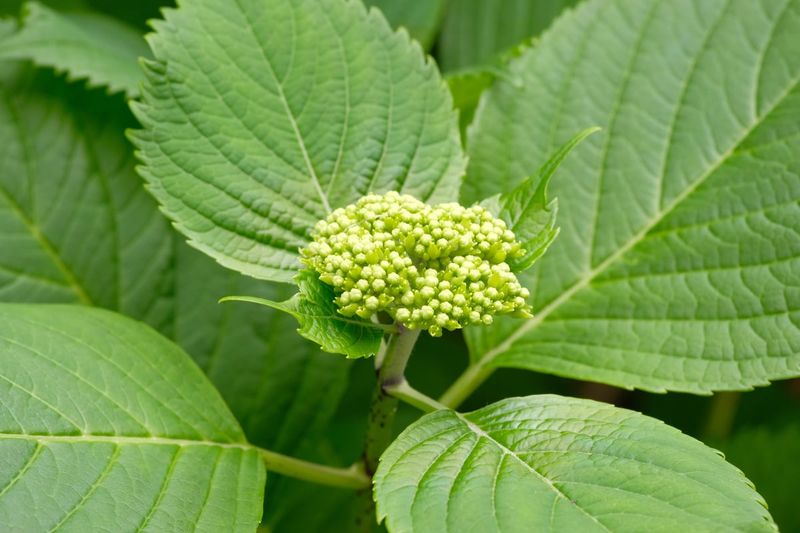
Two separate checks belong here, and they should not be mixed up. One is light.
The other is nitrogen.
Too little light can reduce flowering, but hydrangeas do not all want the same amount. Some prefer partial shade, and a hotter or sunnier site can raise water needs or scorch the leaves, as University of Illinois Extension explains.
So skip the urge to move every plant into full sun. Instead, watch how many hours of light your shrub gets and compare that with what your specific type prefers.
A plant buried under a dense tree canopy is a different case from one that gets a few hours of morning light.
Fertilizer is the second check. Too much high-nitrogen fertilizer can push leafy growth and sometimes reduce flowering, according to University of Georgia Extension.
Think about lawn fertilizer that may wash over the root zone, or regular feeding you gave the shrub.
A bloom booster is not an automatic cure. Adding nutrients the soil does not need can backfire.
A soil test tells you what is actually there, and this University of Maryland guide to soil test reports can help you read the results.
Soil pH deserves a quick mention. It affects flower color on many bigleaf hydrangeas, but it is not an established fix for missing blooms, so lime or aluminum sulfate is not the answer here.
Drought can disrupt bud formation
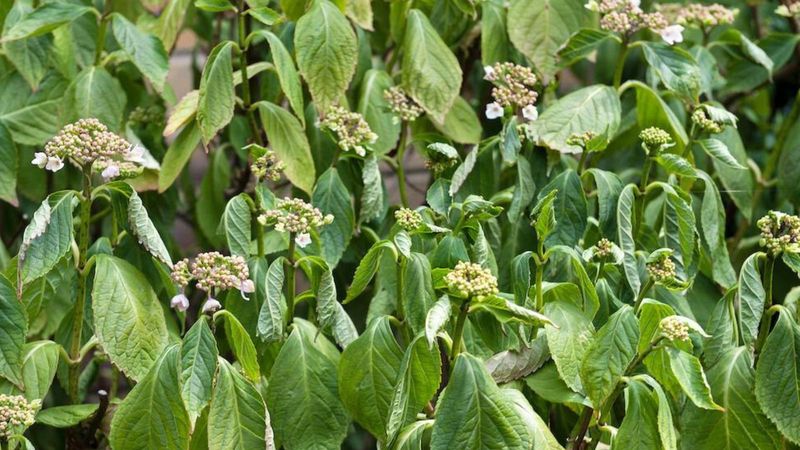
Hydrangeas are known for dramatic wilting, and it can fool even experienced gardeners. A droopy plant at 3 p.m. does not always mean the soil is dry.
Heat can cause temporary midday wilting even when the root zone is moist, and the leaves often perk up again by evening.
The better habit is to check the soil. Push a finger a couple of inches down near the base of the plant.
If it is dry, water deeply. If it is damp, hold off, because soggy soil causes its own trouble.
The goal is a root zone that stays adequately moist without being waterlogged.
Why does this matter for flowers? University of Maryland Extension notes that hydrangeas wilt in dry conditions and that drought can inhibit flower bud formation.
Buds are set during the growing season, so a dry, hot stretch while they are forming may be a factor.
Look back over this summer. Were there long dry spells with little rain, or a heat wave when you were traveling?
Was the shrub planted near a wall, driveway, or large tree that competes for moisture? A layer of mulch can help the soil hold water.
Treat drought as a possibility to investigate, not a guaranteed diagnosis.
A new or poorly matched plant may need time
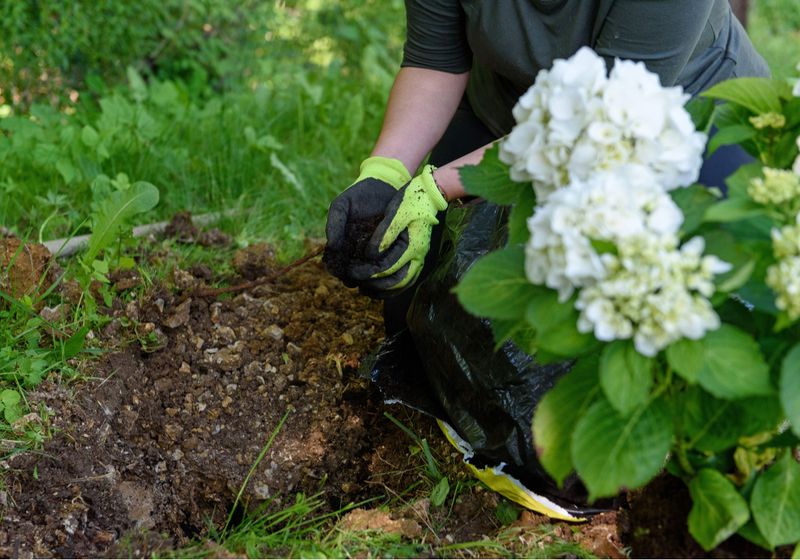
Sometimes the answer is simply age or fit. A newly planted hydrangea may spend its first seasons building roots before it flowers reliably.
A shrub that was recently moved can do the same, putting energy into recovery first.
That does not mean every young or transplanted plant will skip blooms. Some flower right away.
It just means the shrub’s age and history belong on your checklist.
Site suitability is the other half. A hydrangea sold as a flowering gift plant may not be hardy enough for your winters, and it may have bloomed beautifully in the pot and struggled outdoors, as Cornell Cooperative Extension’s hydrangea Q&A points out.
A shrub that is not well matched to your climate may leaf out each year while its buds fail.
Start by confirming what you have. Look for the original tag, a receipt, or photos, and compare the cultivar with its listed hardiness.
Then think about where it sits. Is it exposed to harsh wind, or in a spot that is too hot, too dry, or too shaded for its type?
If the match looks poor, your local extension office can suggest hydrangeas that suit your area. Patience and a good fit often count for more than any quick fix.
Turn this year’s clues into next year’s plan
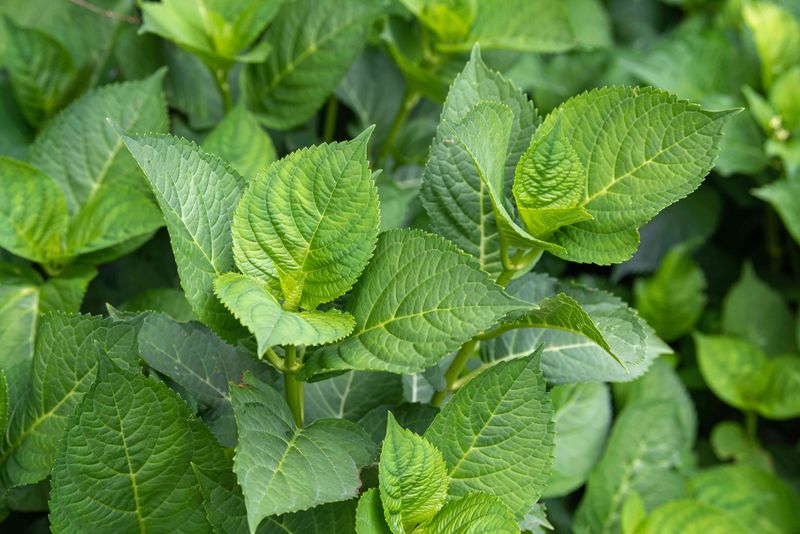
Grab a notebook and go through the checks one at a time. Write down the hydrangea type, your pruning history, last winter and spring weather, any signs of browsing, the light the shrub gets, what you fed it, and how it handled summer heat.
Patterns often show up quickly once they are on paper.
Identify the plant before you cut anything. As University of Maryland Extension’s pruning advice makes clear, fall pruning can remove next year’s buds from old-wood types, so skip the autumn cleanup unless you know what you have.
Then make only the adjustments your diagnosis supports.
Be honest about what October can do. Many old-wood hydrangeas may have already set buds, and checking now can guide future care but cannot guarantee that those buds survive winter or that next summer brings flowers.
Weather, cultivar, and site still play a part.
A bloomless year is a puzzle with clues, not a verdict. Keep notes, and the shrub will usually show you what it needs.