
Your Christmas Cactus Runs On A Calendar: A Fall Care Routine That Can Improve Your Odds Of Holiday Blooms
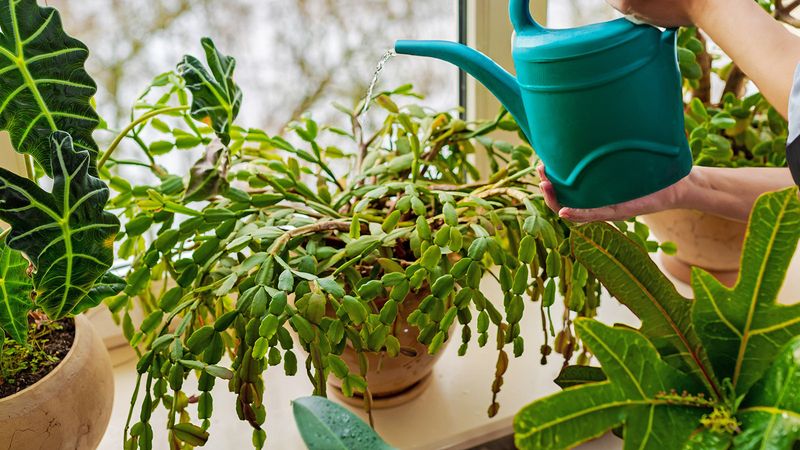
Your holiday cactus has been sitting there all year with nothing but green leaves, and now you want flowers. The good news is that the plant follows seasonal cues, and you can work with them starting in October.
A simple routine of light, cool nights, and steady care can help buds form and stay put. It will not promise a bloom on a certain day, but it can tilt things in your favor.
First, identify which holiday cactus you own
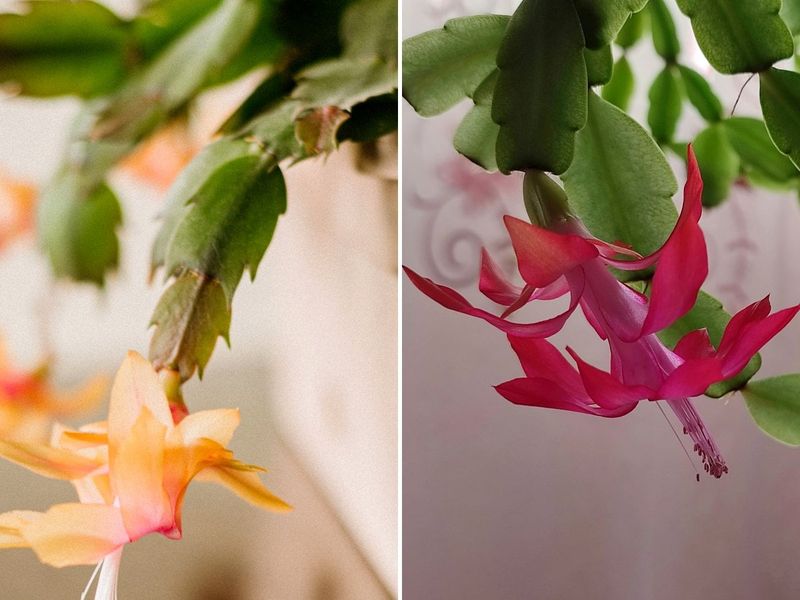
Here is a surprise for many plant owners: the cactus sold as a Christmas cactus is often a Thanksgiving cactus. The two look alike at a glance, but a close look at the stems tells them apart.
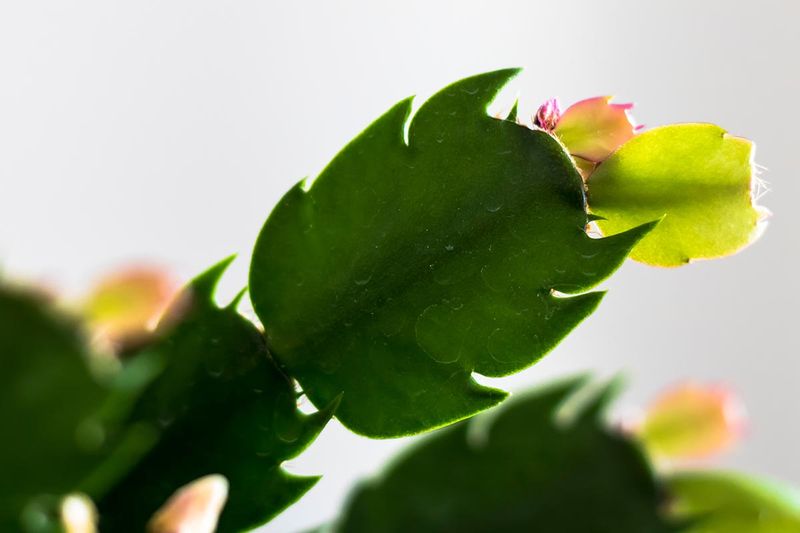
Run your eye along a stem segment. Thanksgiving cactus segments have pointed, claw-like edges, almost like little teeth.
True Christmas cactus segments are more rounded and scalloped, with softer curves. University of Illinois Extension describes these differences and notes that the two types usually bloom at different times.
Thanksgiving cactus often blooms from late November to late December. True Christmas cactus typically blooms from late December into March.
That means a plant with pointed segments that flowers before the holiday is behaving normally, and a rounded-segment plant that opens after New Year’s is not late.
Keep in mind that growers can force plants to bloom outside these usual windows, so the plant you bought in a store may not match the natural schedule. Your own plant’s cultivar, light, and temperature also matter.
Think of these bloom windows as a general guide rather than a deadline. Knowing which plant you have helps you set fair expectations before you start the fall routine.
In October, encourage bud initiation
October is when your cactus starts reading the calendar. Give it bright light during the day and long, uninterrupted nights, along with cooler conditions.
Those three things work together to help buds begin forming.
Published advice varies, so treat the numbers as ranges. UConn Extension suggests 12 to 14 hours of darkness for four to five weeks, while Illinois Extension mentions at least 12 hours for five to six weeks.
Some sources go as high as 14 to 16 hours, and some cultivars respond to shorter dark periods.
For temperature, practical indoor guidance often puts nights around 55 to 65 degrees F and days around 60 to 70 degrees F. North Carolina State Extension notes that cultivar responses vary with night temperature and day length, so no single cutoff fits every plant.
You may not need any special treatment. Natural shortening days can be enough if lamps, TVs, or porch lights never shine on the plant at night.
A stray light that clicks on at 9 p.m. can break up the dark period.
If your living room is bright at night, a spare room or basement is an option for controlling conditions. It is a handy choice, not a requirement for every plant.
In November, keep conditions consistent while buds form
Once the routine is running, the job in November is to keep it steady. Hold on to the cooler temperatures and uninterrupted nights until you actually see buds, instead of changing things because a certain date showed up.
Plants do not all move at the same pace. A cultivar, the plant’s age, and how much light and cool air it gets can all shift the timing.
Your neighbor’s cactus may show buds a week or two before yours, and that is normal.
If you have been relying on natural fall day length, keep an eye out for night light. Illinois Extension explains that nighttime lamps can interfere with bud formation.
A quick walk through the room after dark can show you whether a hallway light or screen is reaching the plant.
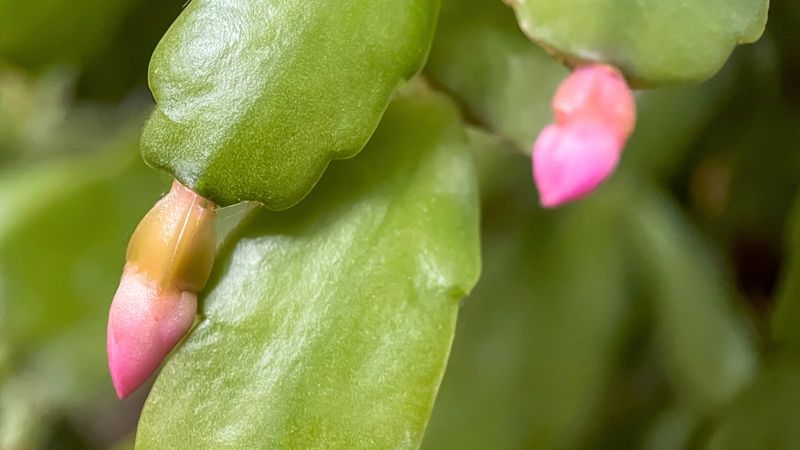
Check the tips of the stems every few days. Buds look like tiny bumps or small pinkish nubs at the ends of the segments.
UConn guidance indicates that short-day treatment can stop after buds are visible.
Spotting those first buds is a turning point. From there, your goal shifts from starting flowers to protecting the ones already on the way.
Once buds appear, stop treating darkness as the goal
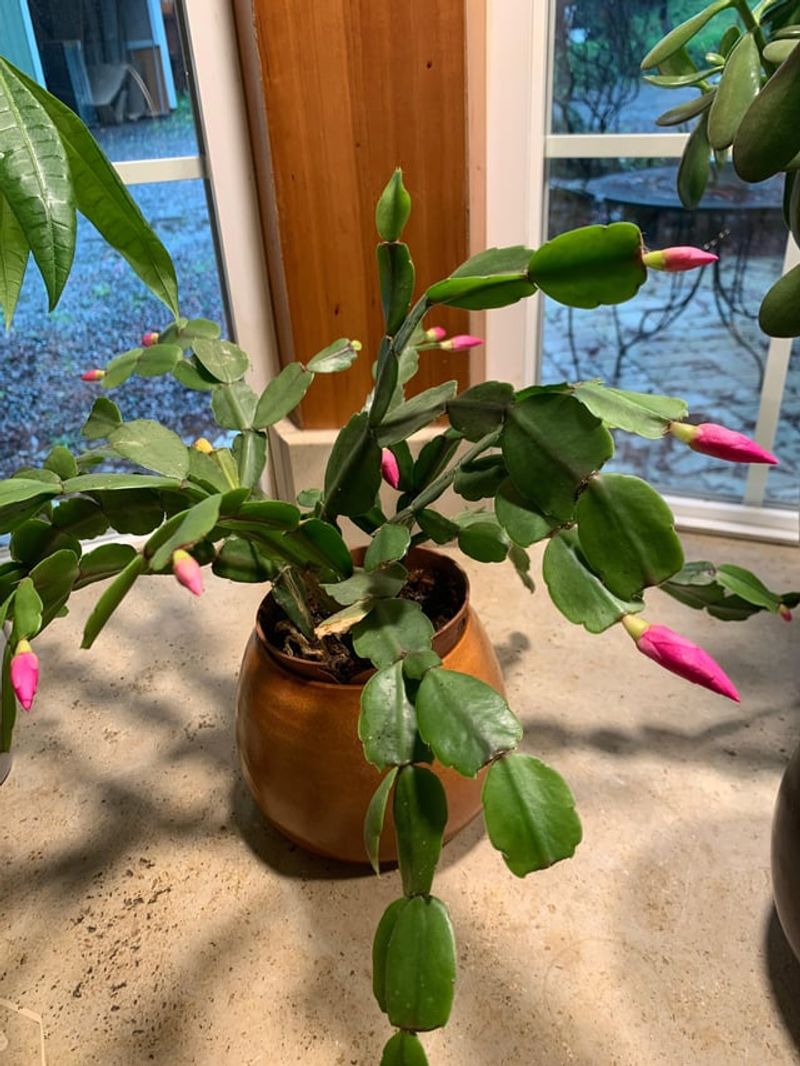
Seeing buds feels like a finish line, and it changes your to-do list. According to UConn guidance, short-day treatment can stop once buds are visible, and day length no longer affects how they develop.
That means the closet or dark-room routine can end if you were using one. Your cactus does not have to sit in darkness until the flowers open.
Move the plant to bright, indirect light. A spot near a window with a sheer curtain works well, since strong direct sun can be harsh on the stems.
Illinois Extension also points to bright, indirect light for holiday cacti.
Be careful with big moves. If the plant has been in a cool spare room, carrying it straight to a warm, busy spot may be a shock for the buds.
A spot with similar light and temperature is a safer choice.
Do not worry if buds are uneven. Some stems may show buds early while others lag behind, and a plant can have buds at several stages at once.
Water by checking the mix, not by following a weekly schedule
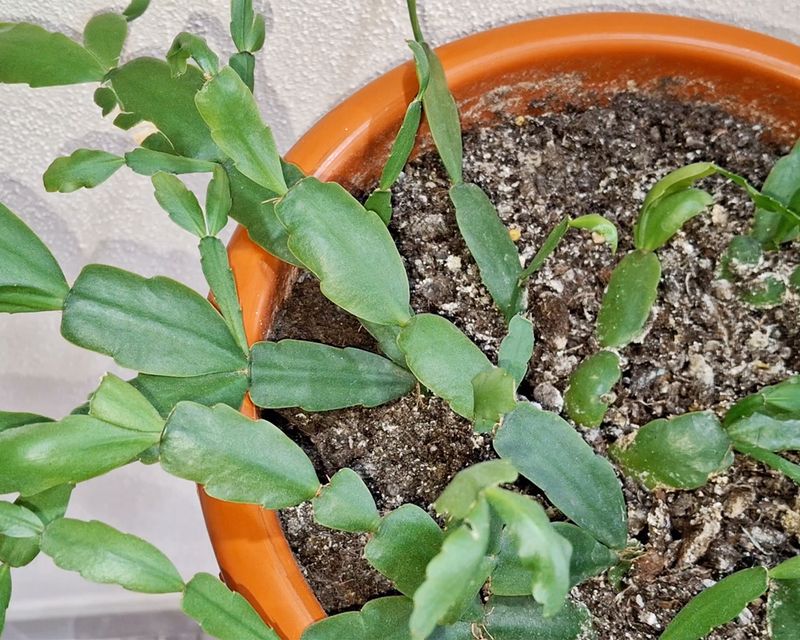
A weekly watering schedule rarely fits a plant that is changing from week to week. Instead, let the potting mix tell you what to do.
Poke a finger an inch or so into the mix and see how it feels.
Advice differs on how moist the mix should stay during budding and bloom. Iowa State Extension recommends evenly moist soil, while UF/IFAS Extension advises keeping the mix moist but not wet.
UConn describes a drier side during bud formation and bloom.
The shared message is simple. Avoid letting the mix go bone-dry, and avoid keeping it soggy.
Both extremes can cause trouble, from limp stems to dropped buds or damaged roots.
Remember that holiday cacti are tropical forest plants, not desert cacti. They grow in the wild on trees, so they do not need to be kept dry just because the word cactus is in the name.
Use a well-drained potting mix and a pot with drainage holes. When you water, let the extra water run out, then empty the saucer.
Illinois Extension also cautions against letting the pot stand in water.
Protect developing buds from sudden changes
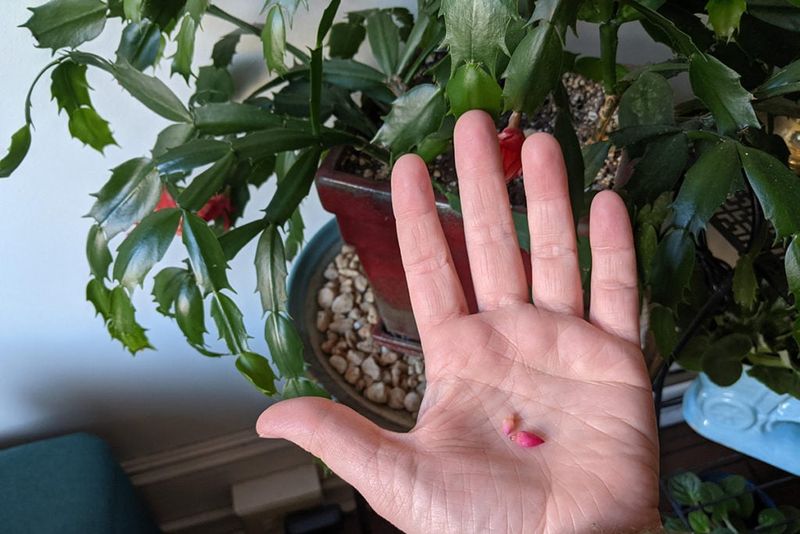
Bud drop is frustrating, and it rarely has just one cause. Drafts, heat, abrupt changes, too little light, dry air, and watering problems can all play a part.
A dropped bud alone will not tell you which one it was.
Think of stability as the main goal. UConn guidance notes that moving the plant during bud development can contribute to bud drop, and it points to sudden changes as a risk.
Walk around your plant’s spot and look for trouble. Cold drafts near a door, warm air from a heating vent, and a nearby fireplace can all swing the temperature.
UF/IFAS Extension advises protecting the plant from these kinds of changes.
Light and air matter too. If the room is dim or very dry, buds may struggle.
A bright, indirect spot and a little extra humidity, such as a pebble tray with water below the pot, may help.
Moving the plant is not always harmful, so there is no need to freeze it in place. Wait until flowers begin opening before taking it to a display spot.
Then carry it gently and choose a place with similar light and temperature, as Illinois Extension suggests.
Let the plant set its own holiday schedule
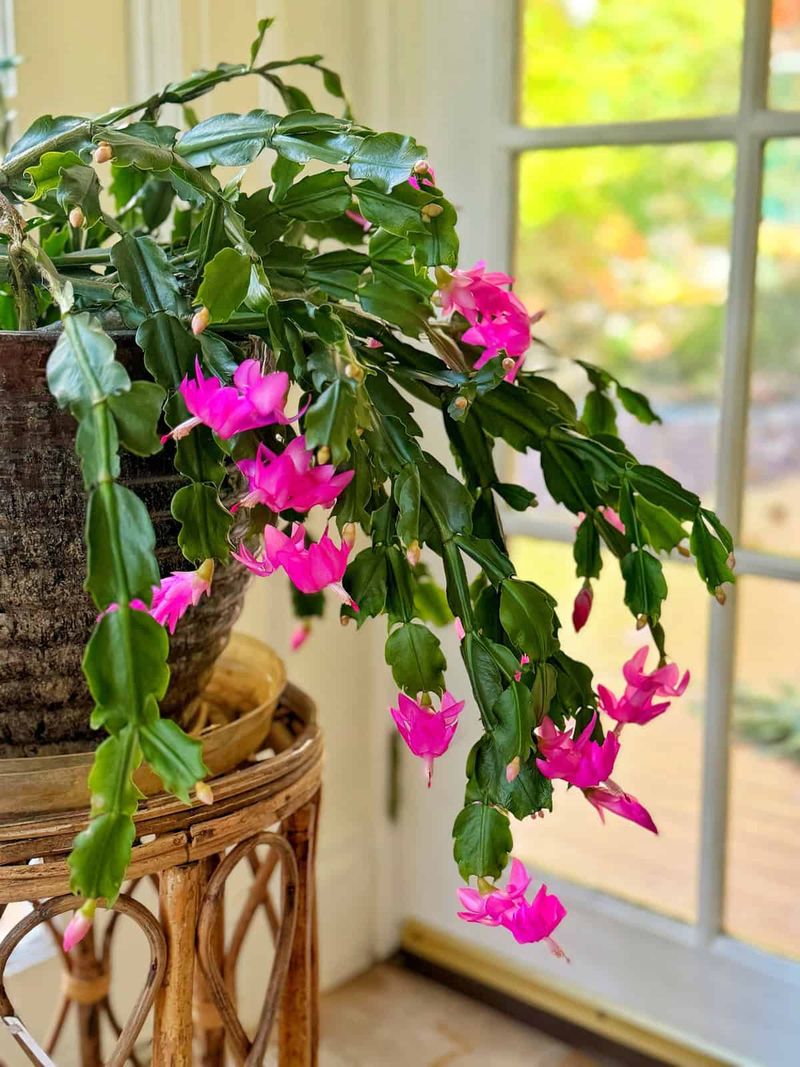
Fall conditions start the process, and steady light, moisture, and surroundings carry it through. Your cactus may open early, on time, or after the holidays, depending on the type and how it was grown, as Illinois Extension describes.
A calendar is a good guide to the plant’s stages, but the plant keeps its own clock. Flowers that arrive in January are still a win.