
A North Carolina Native Vine That Drapes Your Pergola In Purple Blooms, Less Aggressive Than Chinese or Japanese Wisteria
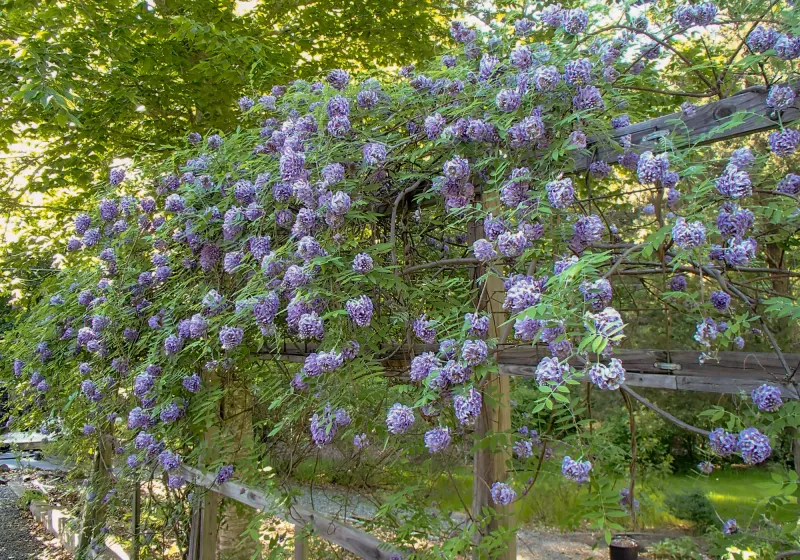
Picture purple-to-blue flower clusters hanging over your pergola on a warm spring day. A native vine can give you that look, and it grows wild in parts of North Carolina.
It is also a calmer choice than the Asian wisteria that has overrun so many yards. Before you plant one, though, you need to know what it asks of you and your structure.
American wisteria offers a native pergola option
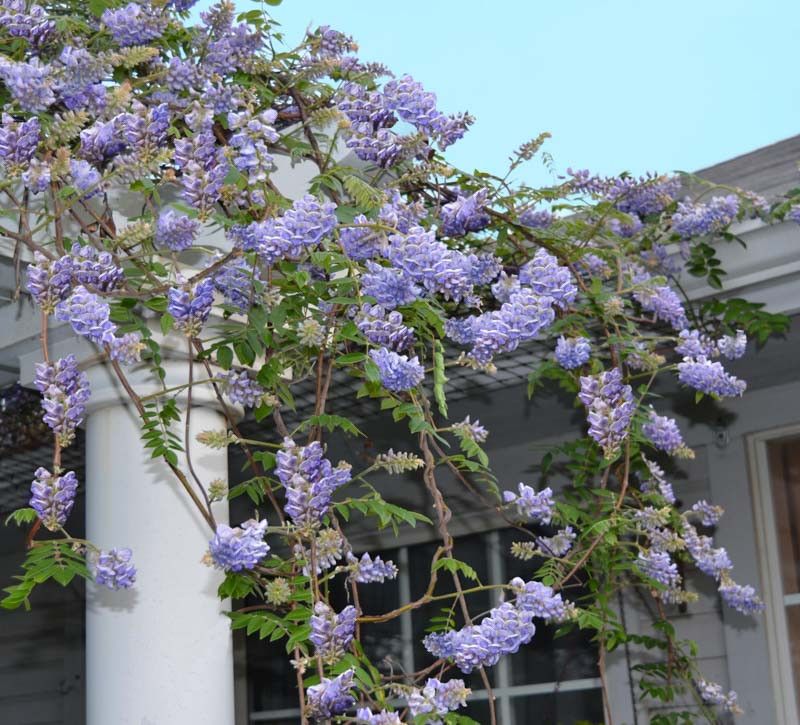
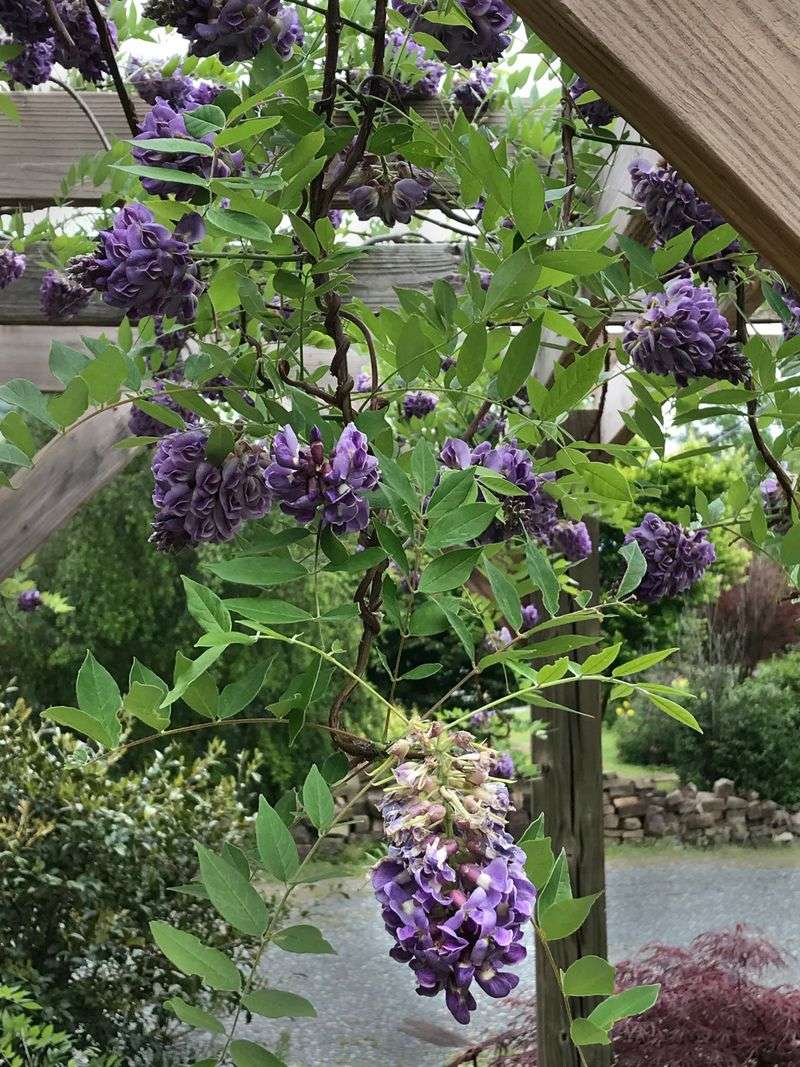
Hanging purple flowers do not have to come from an invasive import. American wisteria (Wisteria frutescens) is a woody vine native to North Carolina, and it can be trained over a pergola to produce fragrant clusters in shades from purple to blue.
Its home turf matters, though. According to NC State Extension, it is common on the Coastal Plain and rare in the Piedmont.
So it belongs in our state, but whether you would find it growing wild near you depends on where you live.
Wildlife value is real but narrow. The same NC State profile lists it as a larval host plant for Marine Blue, Zarucco Duskywing, and skipper butterflies, and as a nectar source for adult butterflies.
That makes it a thoughtful pick for a steward who wants to swap out an Asian wisteria with a plant that fits the local ecosystem better.
Go in with clear eyes. This is a big, vigorous vine that can reach 40 feet or more.
It is not carefree, and it is not a plant you can plant and forget. The sections ahead cover the flowers, the site, the pruning, the roots, and the safety details so you can decide whether it suits your yard.
Its flower clusters are shorter and arrive after leaf-out
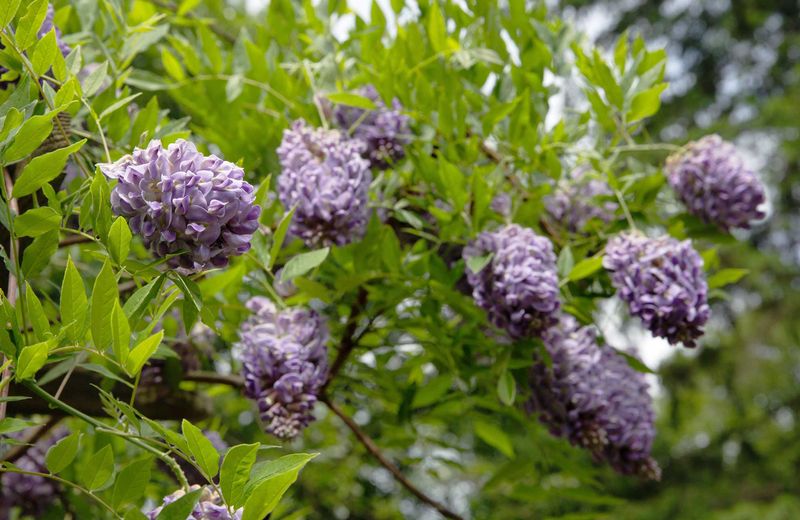
Walk up to a blooming American wisteria and the first thing you notice is the fragrance. The flowers hang in clusters in purple-to-blue shades, which gives a pergola that soft, draping look many gardeners want.
The show is different from the one Asian wisteria puts on, however. University of Arkansas Extension notes that the native vine’s clusters are typically shorter, and its flowers open after the leaves emerge.
The flowers sit among green foliage rather than standing alone on bare branches.
Chinese wisteria is the vine most people picture when they think of long, dramatic blooms. NC State Extension’s Chinese wisteria profile describes a plant that is invasive in North Carolina, and its flowers can appear before the foliage.
That is a look you should not expect from the native, and it is not a reason to plant the invader.
Think of American wisteria’s display as lovely but more modest. Picture shorter purple tassels peeking through fresh leaves over your seating area.
If you want a pergola that sets a quiet spring mood and supports butterflies, that is a fair trade. If you want a floral waterfall, adjust your expectations before you buy.
A sunny, sturdy pergola must carry its mature growth
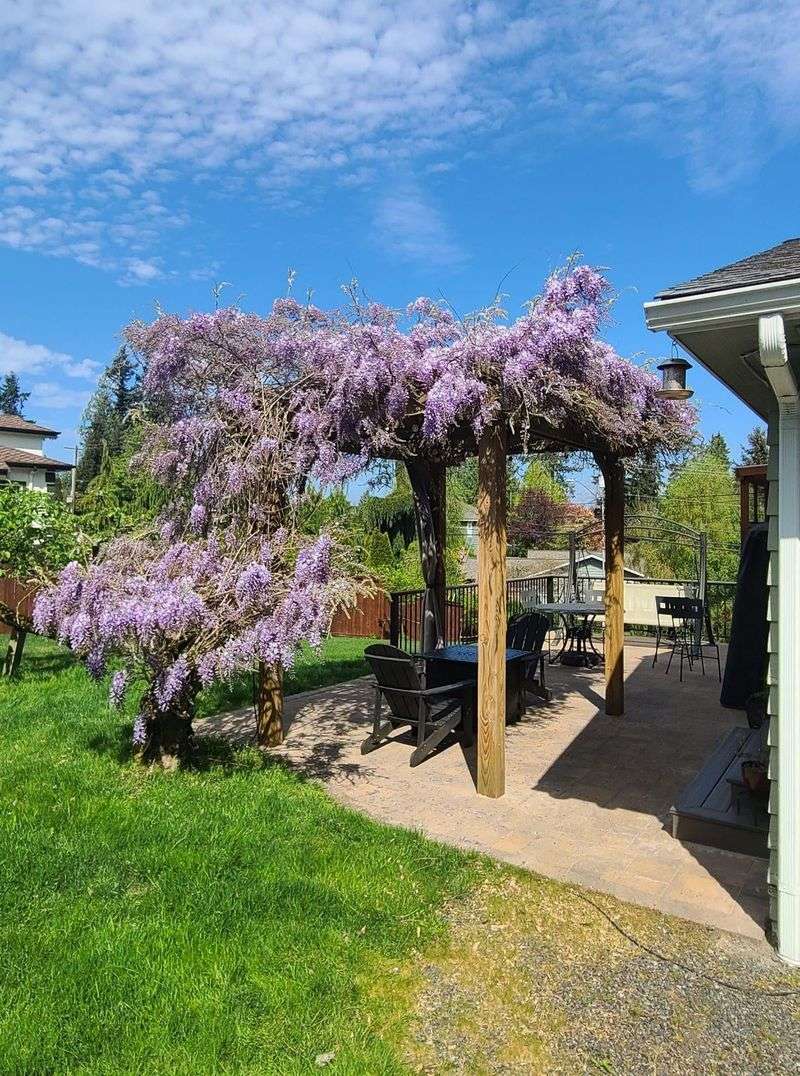
Start with the site, because it decides most of what happens later. Full sun gives the best flowering, so choose a spot that gets strong light through much of the day.
Next, look hard at the structure. NC State Extension says American wisteria can reach 40 feet or more and needs a sturdy surface to grow on.
A thin decorative frame will not do. Look for solid posts, strong joints, and beams that can hold a heavy, woody vine for years.
Do not assume any pergola is automatically safe. NC State’s general wisteria profile warns that wisteria can become heavy and damage structures.
A mature vine can twist and tighten around whatever it climbs, so a practical check is to inspect the pergola each year for loose fasteners, cracked wood, or bent supports.
As for patience, the vine may flower by its second or third year, but it can take longer. Do not count on a particular bloom date.
Plan to enjoy the foliage while the plant settles in, and treat any early flowers as a bonus rather than a promise.
Pruning after flowering helps keep the vine in bounds
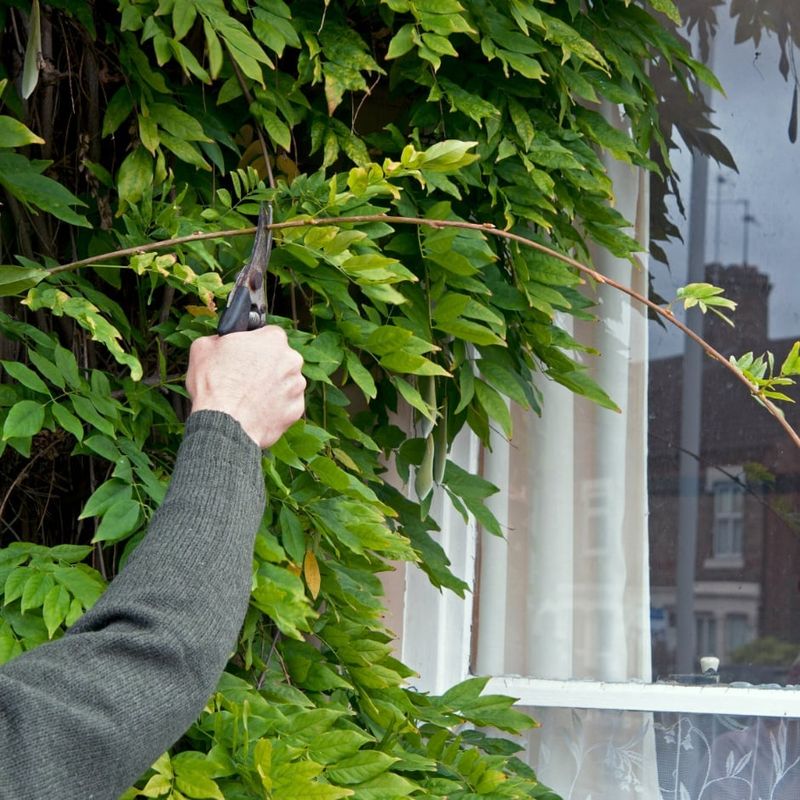
Pruning is the chore that keeps this vine a good neighbor. According to NC State Extension, regular pruning helps control the size of American wisteria and encourages flowering.
For a vine growing over a pergola, University of Arkansas Extension recommends cutting it back after flowering each year. It also suggests setting limits on how large the vine may grow.
Decide early where the vine should stop, such as the edge of the roof frame, and trim anything that wanders past that line.
Plan on this as a yearly habit, not a single big cleanup. Pruning right after the blooms fade fits neatly into a late spring routine.
Keep an eye out during summer for stray shoots reaching toward gutters, siding, or nearby trees, and snip them back as you spot them.
Pruning will not guarantee a heavy bloom, and it will not shrink a vine that has been ignored for years overnight. It simply keeps the plant manageable and gives the flowers a better chance.
Keep sharp pruners and sturdy gloves handy.
Less aggressive does not mean root-proof
Chinese wisteria (Wisteria sinensis) is the one that gives wisteria its bad name here. NC State Extension identifies it as invasive in North Carolina, where it can climb into trees and crowd out native plants.
Japanese wisteria (W. floribunda) is also a nonnative invasive species. The U.S.
Forest Service species review covers both and notes that nonnative wisterias hybridize in the Southeast, which makes identification harder. If you already have one of these in your yard, removing it and planting a native is a stewardship win.
Here is where the native vine comes in. NC State says American wisteria is less aggressive a spreader and less damaging to buildings than Chinese or Japanese wisteria.
That is a comparison, and a useful one, but it is not a guarantee.
The comparison does not prove that its roots cannot spread or cause problems. So avoid planting it right against a foundation, and do not assume it is safe near a house.
Watch for suckers or shoots popping up where you do not want them, and remove them promptly. Relative restraint still takes attention from you.
Keep seeds and pods away from curious mouths
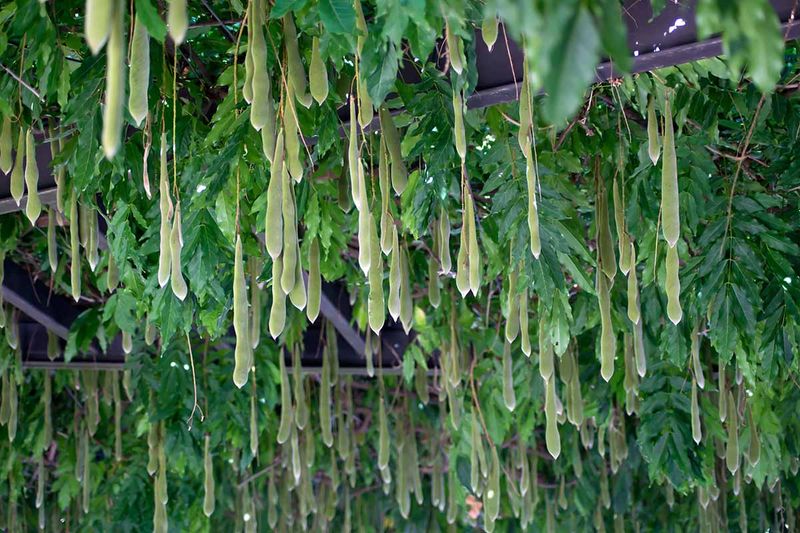
Native does not mean edible. Wisteria is a plant to admire with your eyes and nose, never your mouth.
Poison Control says wisteria seeds and pods are especially toxic. Swallowing plant material can cause symptoms including mouth irritation, stomach pain, vomiting, and diarrhea.
Do not eat any part of the plant, and do not treat the flowers as a snack or a garnish. Skip any foraging ideas completely.
If you have young children or dogs, keep a close watch when the vine sets its pods. Rake up fallen pods from the ground beneath the pergola, and teach kids that the fuzzy pods are not toys or treats.
If someone does chew or swallow part of the plant, contact Poison Control for advice.
Choose the vine with realistic expectations
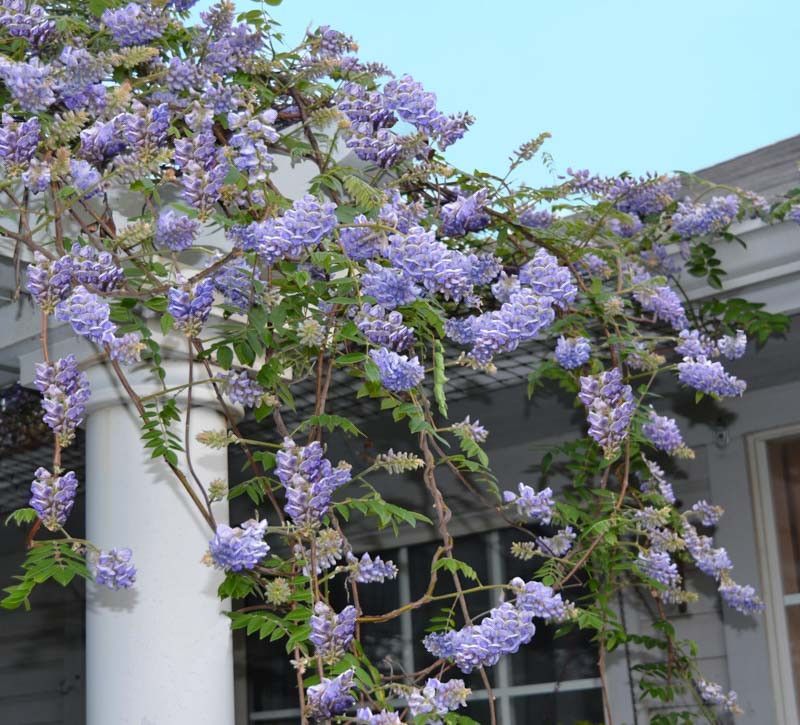
American wisteria gives North Carolina yards a native way to get hanging purple blooms overhead, and NC State Extension backs that up. You still have to plan for big growth, a sturdy pergola, and pruning every year.
It is less aggressive than invasive Chinese wisteria and Japanese wisteria, but it is neither root-proof nor carefree. A good vine, it turns out, still wants a good gardener.