
Your Hanging Petunias Look Perfect At Breakfast And Limp By 3 PM – 5 Reasons Why (And The Fixes)
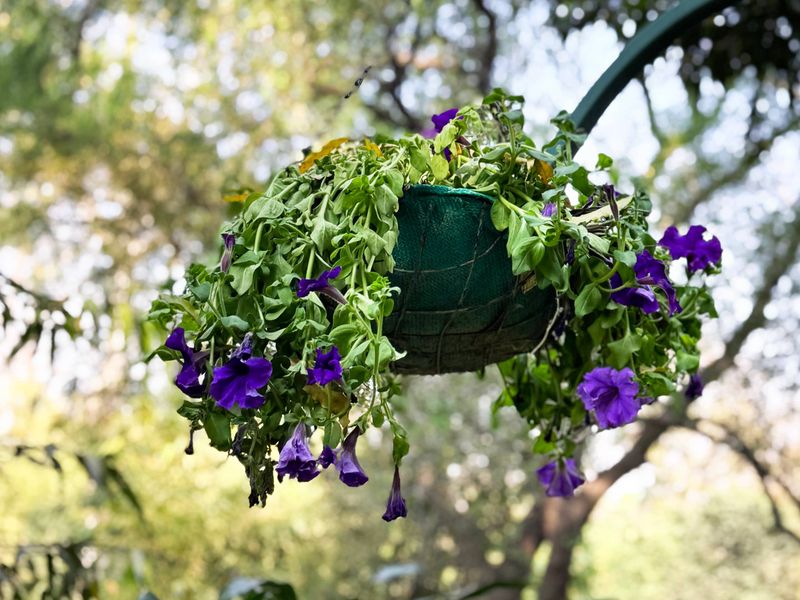
You hang up a basket of petunias that look full and fresh at breakfast. By midafternoon the stems droop and the blooms look tired.
Before you grab the watering can, a few quick checks can tell you what your plant really needs. Here is how to read the signs and rescue the petunias you already own.
Start with the root zone, not the clock
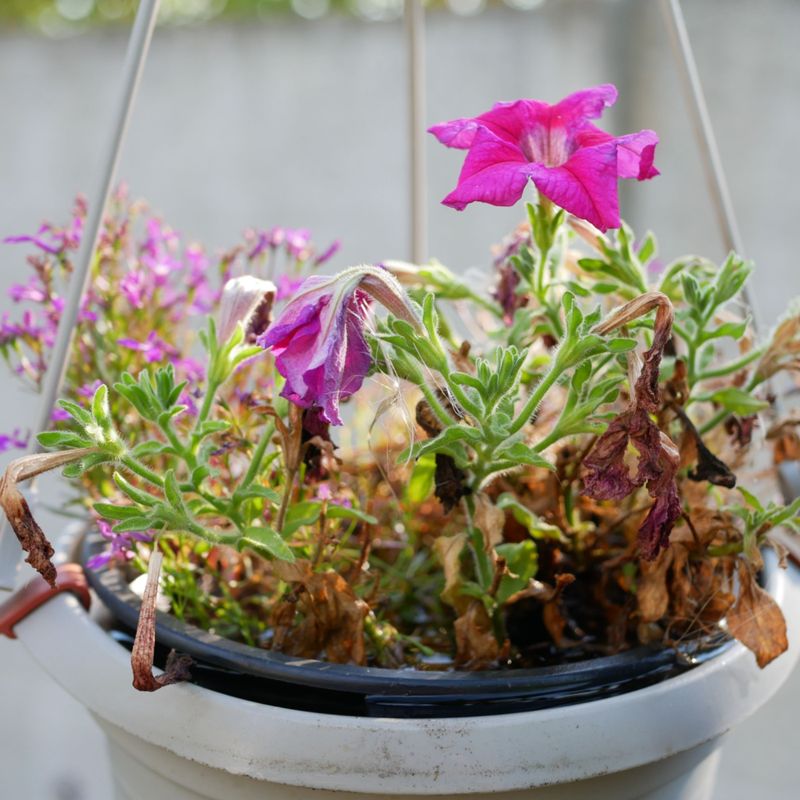
Morning-fresh and afternoon-limp is a useful clue, but the time of day does not tell you what is wrong. A basket can droop for several different reasons, and some of them have nothing to do with thirst.
So begin with your fingers. Push one finger two inches into the mix near the roots and see if it feels dry, damp, or soggy.
Then lift the basket gently. A basket that feels surprisingly light is probably dry, while a heavy one is likely still holding plenty of water.
This quick check matters because University of Minnesota Extension notes that heat can make plants wilt even when the soil is moist. Adding more water in that case will not help.
Wet roots can also cause drooping, since Iowa State Extension explains that waterlogged or damaged roots leave plants wilted. Let what you feel in the mix guide your next move, and you avoid drowning a plant that was never thirsty.
An exposed basket can lose water faster than roots replace it
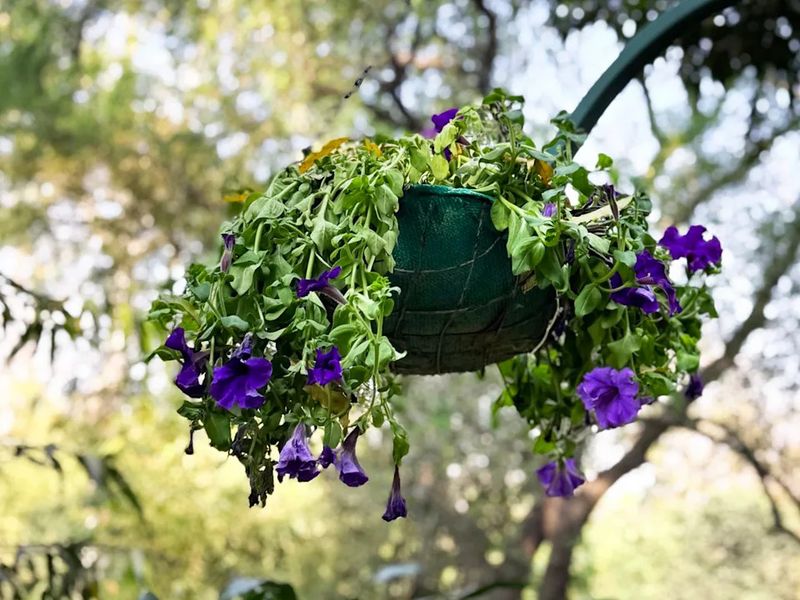
Rapid drying is the leading explanation for a predictable afternoon slump. A hanging basket holds only a small amount of potting mix, and it hangs out in sun, heat, and wind from every side.
On a warm day, the plant can lose water faster than its roots can pull it up.
Illinois Extension points out that baskets, especially moss or coir lined ones, dry out quickly. Iowa State Extension adds that well-grown baskets often need frequent watering because the roots fill the space fast.
Check your baskets every day. If the mix is dry, water slowly and thoroughly at the root zone until water drips from the bottom.
Skip the fixed schedule. University of Minnesota Extension notes that container needs change with weather, plant size, and pot type.
A breezy, hot week may call for a second watering in some baskets, while a cool, cloudy stretch may need far less.
Morning watering helps prepare the plant for the day. Still, if you find a truly dry, wilted basket at 3 PM, water it then rather than waiting until tomorrow.
Very dry mix can let water pass the roots
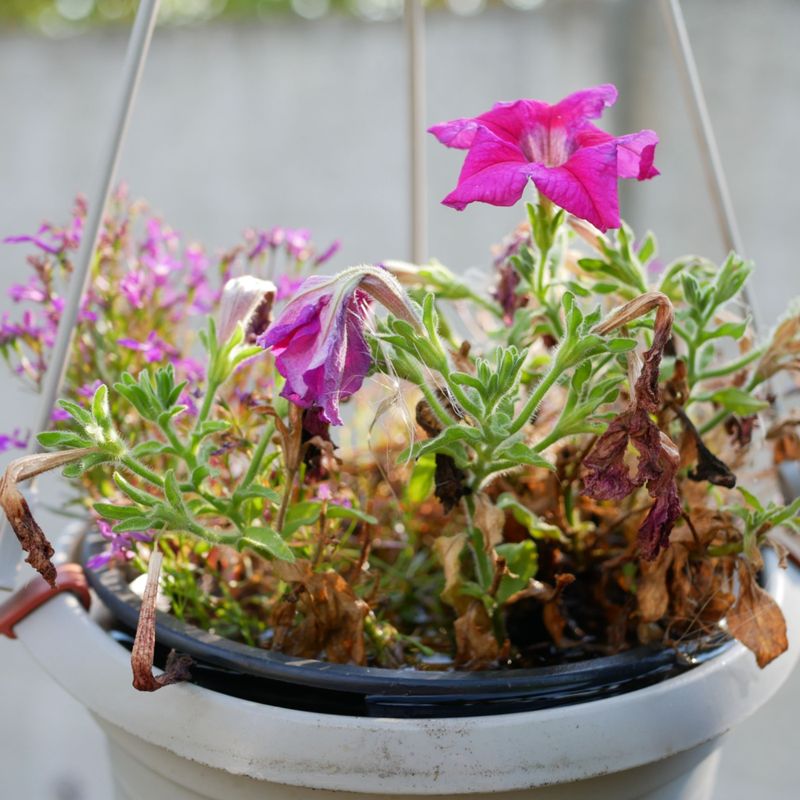
Sometimes a basket dries out so completely that the mix shrinks and pulls away from the sides. Water then races down the gap and out the bottom, leaving the root ball barely damp.
The basket feels watered, yet the plant keeps drooping.
Illinois Extension warns that very dry mix can repel or bypass water, so quick drainage is not proof the roots got a drink.
After the first pass, wait a few minutes and water slowly again. Then press into the mix to confirm that it is truly moist, not just wet at the edges.
For a severely dried basket, a brief soak can help. Iowa State Extension describes soaking a badly dried basket, then letting it drain well.
Treat the soak as a recovery step, not a routine. Lift the basket out of the water after a short time and let it drip until it stops, so the roots never sit in standing water.
Heat can wilt petunias even when the mix is moist
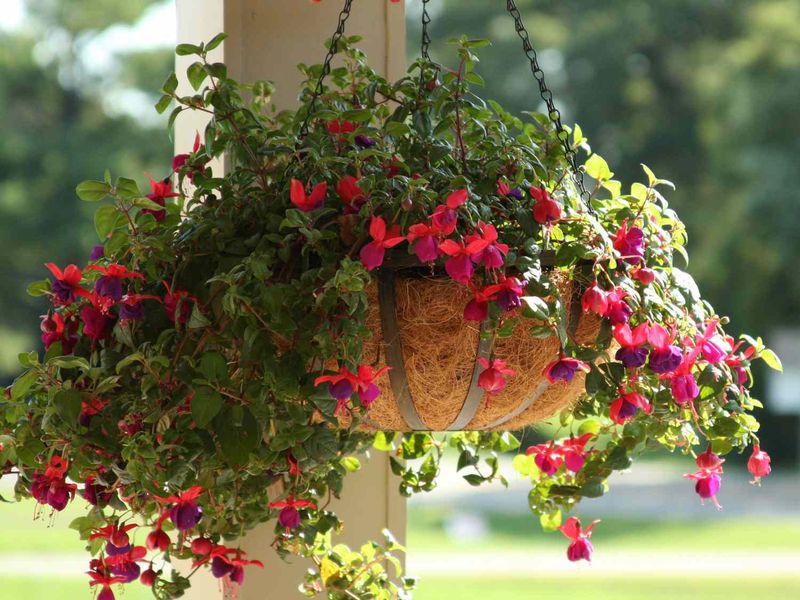
Picture a basket in full sun at 3 PM, with the mix damp to the touch and the leaves still hanging limp. That can be heat stress.
The plant is losing water through its leaves quickly, and even moist mix may not keep up for a few hours.
University of Minnesota Extension says heat alone can cause wilting even when soil moisture is adequate. If the mix is already damp, extra water will not fix it and could do harm.
During severe heat, offer some relief. Hang the basket where it gets shade through the hottest hours, or move a movable one to a cooler, sheltered spot.
A porch corner or the shade of a tree can do the job.
Treat shade as an option, not proof of the cause. Check the mix first, give the plant time, and see whether it perks up as evening cools things down.
Saturated roots can leave a basket wilted too
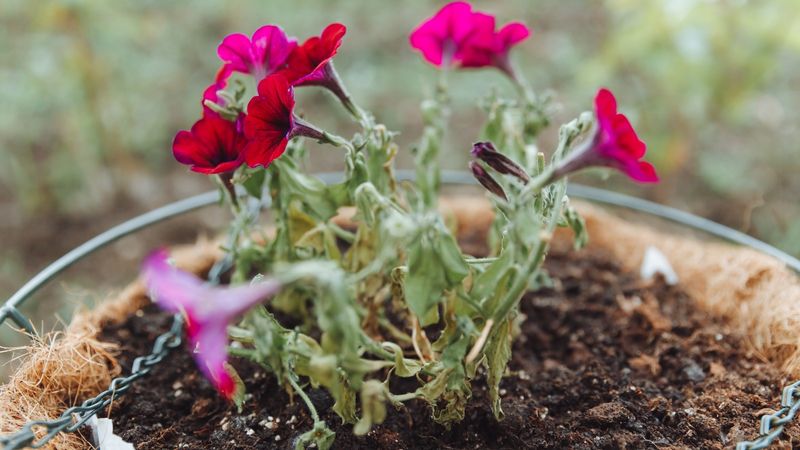
A wilted plant in soggy mix looks a lot like a thirsty one, which is why overwatering catches so many gardeners. When roots sit in saturated mix for long, they can be damaged and stop taking up water well.
Iowa State Extension notes that wilting can go along with overwatering.
Flip the basket and look at the bottom. Make sure drainage holes are open and not clogged with mix or roots, and that no saucer or liner is holding standing water.
University of Minnesota Extension stresses good drainage for container plants. If the basket is heavy and wet, hold off on watering until the top layer begins to dry.
Watch for other clues. Wilt that stays in damp mix, yellowing leaves, or steady decline calls for a closer look at the roots and base of the plant.
That still does not point to a specific disease. Penn State Extension lists rapid decline and wilting at the crown among signs of Phytophthora crown rot in petunias, but wilting alone is not enough to name it.
If the wilt persists, inspect before assuming the cause
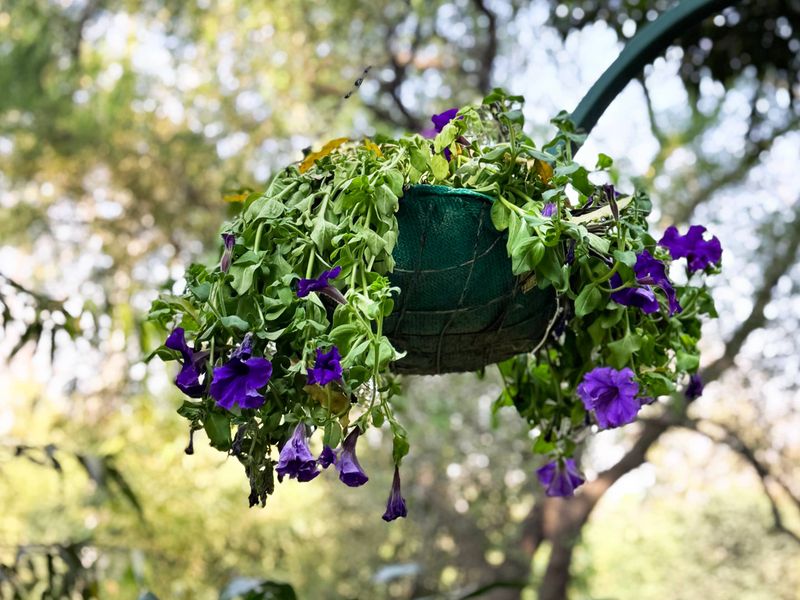
Suppose you have checked moisture, watered properly, and made sure drainage is fine, yet the petunias still droop. That is the time to look closer instead of guessing.
Slide the plant out gently and look at the root ball. Healthy roots look firm and light colored, while mushy, dark, or foul-smelling ones point to a problem.
Also note how much mix the basket holds for the size of the plant.
Iowa State Extension says hanging basket roots grow quickly, which is one reason frequent watering is often needed. Even so, do not assume the roots are crowded just because the plant wilts, and do not count on repotting as a guaranteed cure for the daily droop.
Disease is a possibility only when wilt comes with other signs, such as yellowing, a damaged crown, or fast decline. Penn State Extension stresses that correct identification matters before choosing any treatment.
If you are unsure, take clear photos to your local extension office.
Check before reaching for fertilizer
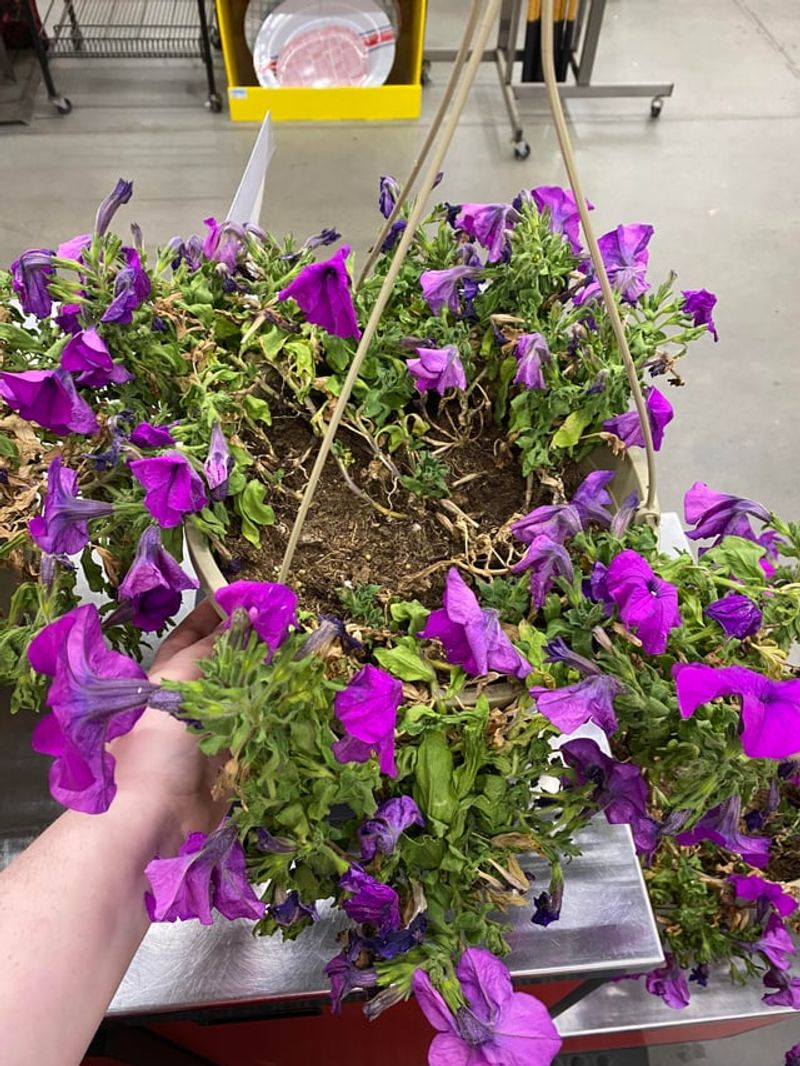
Run the routine in order. Feel the root zone, confirm that water actually reaches the mix, look at the drainage, and then weigh heat or persistent root trouble if nothing else explains the droop.
Fertilizer is not a wilt rescue. Iowa State Extension explains that too much fertilizer can injure roots, and a drooping plant does not prove a nutrient shortage.
Texas A&M AgriLife Extension covers soluble salt injury, which petunias can suffer from.
Follow the product label, and look for extra clues like a white crust on the mix before blaming feed.
A limp basket is often just asking a question, and your fingers can answer it.