
Why Deer Keep Browsing North Carolina Gardens in Fall: What Their Visits Can and Cannot Tell You
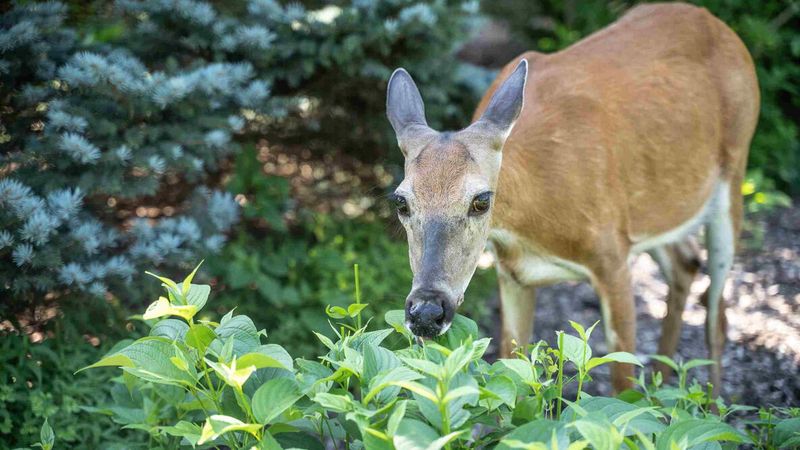
You walk out one morning and find your hostas nibbled down to stubs. A few days later, the same thing happens to the shrubs by the fence.
It is tempting to blame the acorn crop or the breeding season, but a chewed garden tells a smaller story than most people think. Here is what recurring fall browsing can hint at, what it cannot prove, and how to protect your plants without harming the deer.
A fall raid is a clue, not a diagnosis
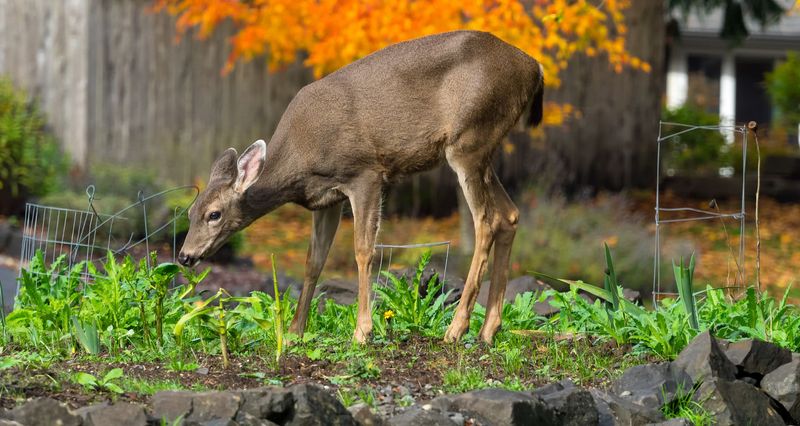
Finding browsed plants after a few autumn mornings feels like a clear message from the woods. It is really just a clue.
White-tailed deer eat a wide mix of foods, from acorns and other nuts to leaves, twigs, and fungi, and NC State Extension describes their diet as flexible and seasonal.
Tender garden plants can simply be food, whatever else is going on nearby. Deer may also be passing through your yard on a route that connects bedding areas, woodlots, and other feeding spots.
Acorns can play a part in that movement, and a U.S. Forest Service study of acorn crops and deer offers one example we will look at shortly.
Still, chewed leaves cannot tell you why deer chose your yard, and they do not tell you how often visitors come. Treat the damage as a reason to watch your property and protect the plants that matter most.
The rest of this article separates what is reasonable context from what no one can read off a damaged hosta.
Acorns can influence where deer forage
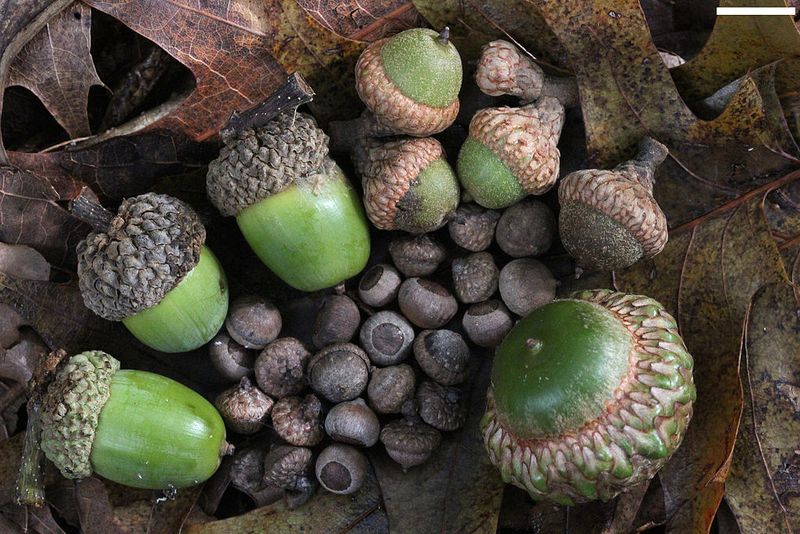
Acorns are a prized fall food. Deer eat both hard mast, like acorns and hickory nuts, and soft mast, like persimmons and wild fruits, along with leaves, twigs, and fungi.
They also nibble tender garden plants, so your beds can be on the menu whether or not oaks are dropping heavily.
Researchers have looked at how acorn supply shapes deer movement. In a Virginia forest study of 10 radio-collared female deer, the animals expanded their home ranges to include acorn-producing areas during mast fall.
That points to a believable link between acorn drop and where deer spend time.
Keep the limits in view, though. The study took place in Virginia, not North Carolina, and it followed a small group of females in a forest.
It shows that acorns can pull deer around, but it does not explain why a particular deer wandered into your yard.
So think of acorns as one possible influence. If oaks grow near your property, they might be part of the picture, but they are only one piece among many.
Garden damage cannot reveal the local mast crop
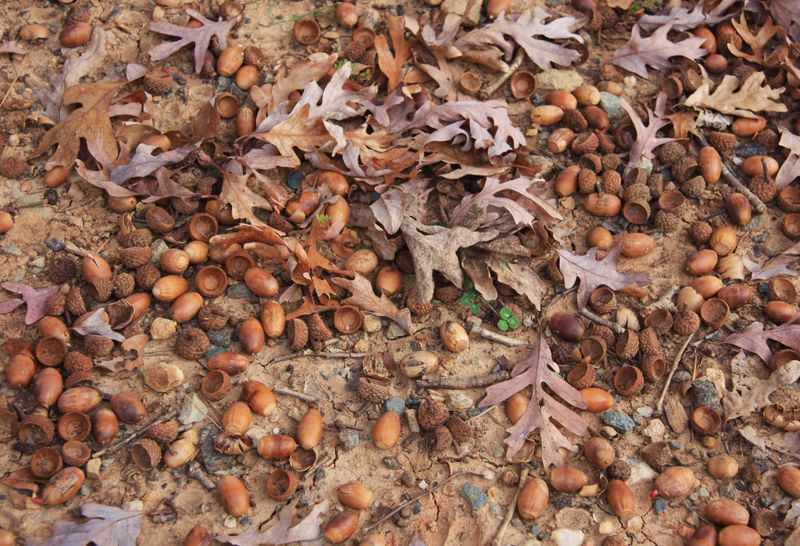
It sounds logical: deer are in the garden, so the oaks must have failed. That conclusion does not hold up.
Deer use many foods, and habitat conditions also shape where they go, so a yard visit cannot diagnose the food supply in the woods next door.
A well-fed deer might still sample your tender plants, and a deer in a good acorn year may still cross your lawn on the way somewhere else. Research such as the Virginia acorn study shows that mast can affect movement, but it never turns browsing into a measuring stick for acorns.
Official mast data exist, but they are narrow. The NCWRC reports page lists 2023 as its latest hard- and soft-mast report.
That survey covers western North Carolina’s Mountain Bear Management Unit, so it does not speak for the Piedmont, the Coastal Plain, or your own street.
If you want a rough sense of your area, look up at the oaks in your neighborhood and see how many acorns are underfoot. That is a personal observation, not proof of why deer visited.
North Carolina’s breeding season varies by region
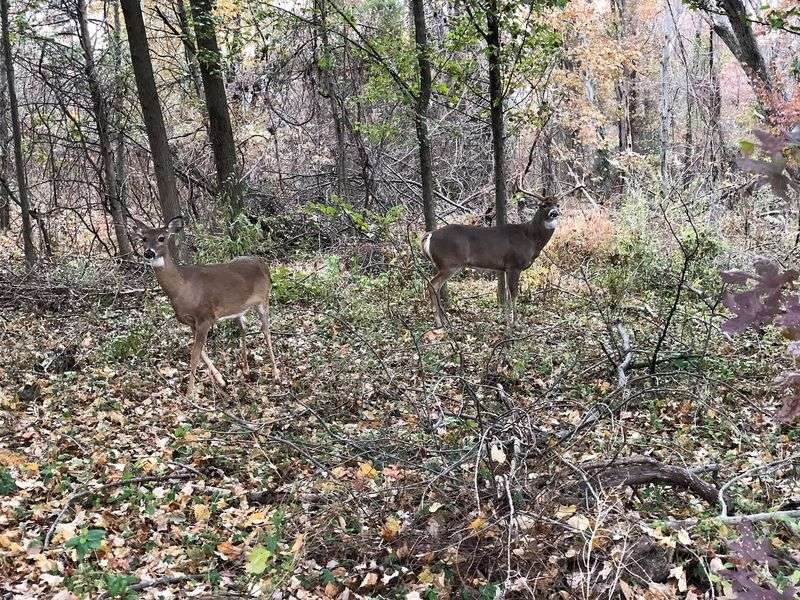
Fall is also breeding season for white-tailed deer, but the timing is not the same everywhere in the state. In its 2025 estimates, the North Carolina Wildlife Resources Commission put average peak conception as early as October 31 in the Southeastern zone and as late as December 5 in the Western zone.
Those dates are averages for season zones, and local breeding varies around them. The agency also notes that county estimates have varying precision because sample sizes differ.
Its 2025 map reports 1,776 reproductive samples statewide through May 2025, and some counties need more samples.
What sets the clock? NCWRC says shortening day length triggers breeding, rather than weather or moon phase.
So a cold snap or a full moon will not move the calendar.
For a gardener on the coast, in the Piedmont, or in the mountains, this means breeding timing differs by where you live. These dates describe when conception peaks.
They are not a forecast of when deer will browse your yard.
Nighttime visits do not prove the rut is driving the browsing
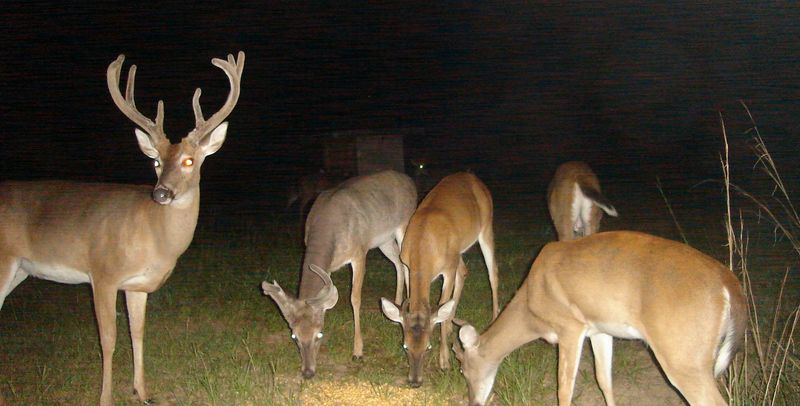
Seeing a deer in the dark feels like a clue, but deer do not keep a strict night schedule. According to the U.S.
Forest Service species review, white-tailed deer are active both day and night, with activity commonly highest around dawn and dusk.
Many things shape when a particular deer moves. Age, sex, season, habitat, and weather all play a role, and so does human disturbance.
A yard with dogs, porch lights, and evening foot traffic may see deer mostly after people go inside, simply because they avoid us.
That is why a nighttime sighting cannot establish that the rut, an acorn shortage, or any other single cause brought deer to your garden. You may be seeing normal movement that happens to fit when you are asleep.
If you are curious, a trail camera aimed at the beds can show what visits really look like. Note the times, how many animals appear, and which plants they choose.
That gives you facts about your yard instead of guesses about the forest.
Physical barriers protect plants more reliably than guesses
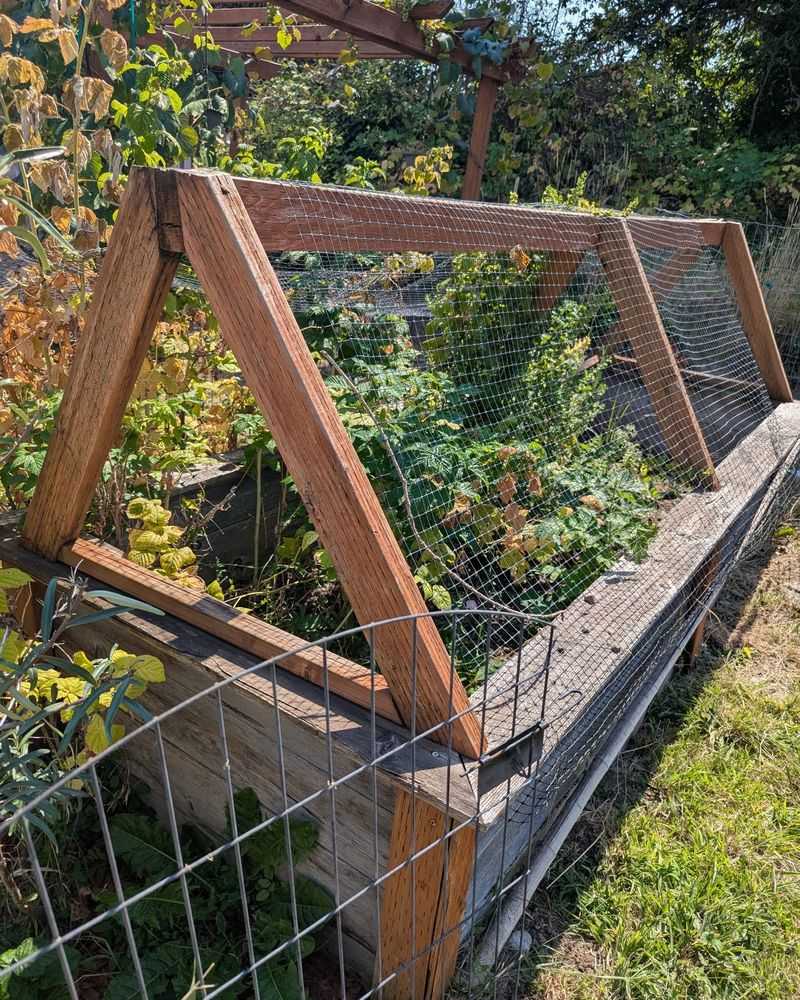
Once you accept that deer behavior is hard to read, protection gets simpler. Barriers work on the plants, not on the deer’s reasons.
NCWRC advises that short fences may reduce damage in small areas or around individual plants.
Full exclusion is a bigger job. It calls for a strong, impenetrable fence about 8 feet or taller, and even that can have limitations.
Check local rules, neighborhood covenants, and any permit needs before you build.
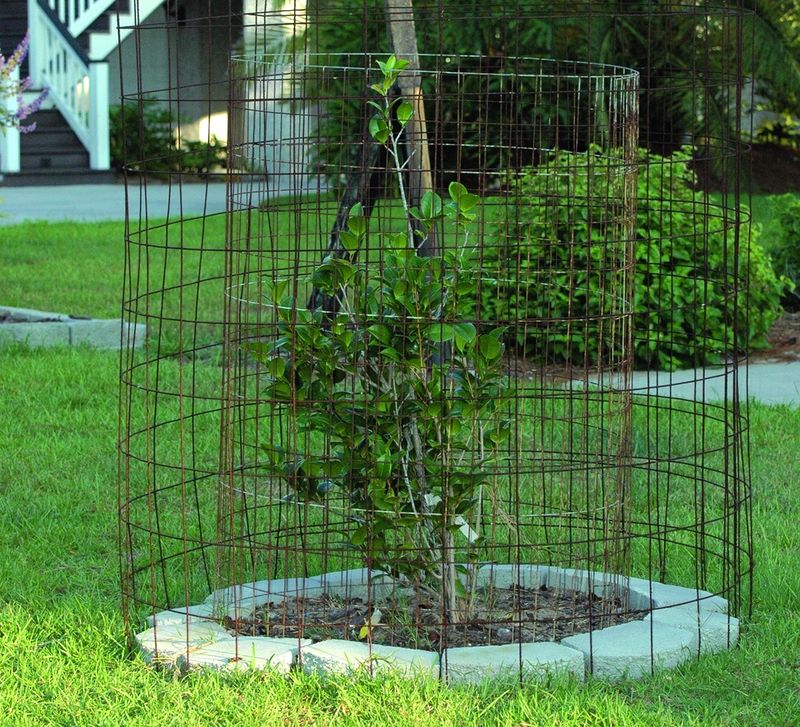
For most backyards, a practical middle path is a small cage or sturdy barrier around especially vulnerable plants, such as young shrubs, hostas, or fall vegetables. Put protection up before the browsing starts, since deer often return to plants they have already sampled.
Repellents are a conditional tool. NC State Extension advises checking labels for food-crop safety if you grow edibles, applying only as directed, and expecting rain and new growth to reduce protection.
Skip the folk remedies. Extension says no research validates human hair or rotting eggs as deterrents, and it warns against using mothballs for deer.
Protect the garden without drawing deer closer
When deer keep returning, some people consider putting out corn or feed to lure them away from the plants. Please do not.
NCWRC warns in its guidance on feeding deer that concentrated feeding can habituate deer, create conflicts, and increase disease-transmission risk, including concern about chronic wasting disease.
Feeding pulls animals together and teaches them to expect food at your house. That usually brings more deer to the yard, not fewer.
Follow current local rules on feeding as well.
Seasonal foods and movement give useful context, but they will never diagnose your yard. Put your effort into fencing and cages, and let the deer be wild neighbors.
Deer are going to walk past your garden long before anyone understands why, so build a gate they cannot open.