
Why Mushrooms Pop Up in Your Lawn After Wet Weather: Ordinary Fungal Activity Explained
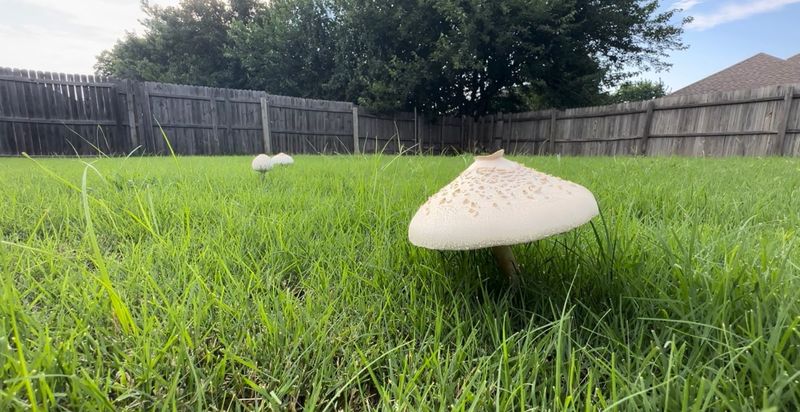
You walk out after a rainy night and find a cluster of mushrooms that was not there yesterday. It can feel alarming, but those caps are usually just one part of a much bigger story happening under your grass.
Knowing what they are, and what they are not, helps you decide whether to do anything at all. A few simple clues in your turf can tell you when to relax and when to look closer.
The mushrooms are only the visible part of a larger fungus
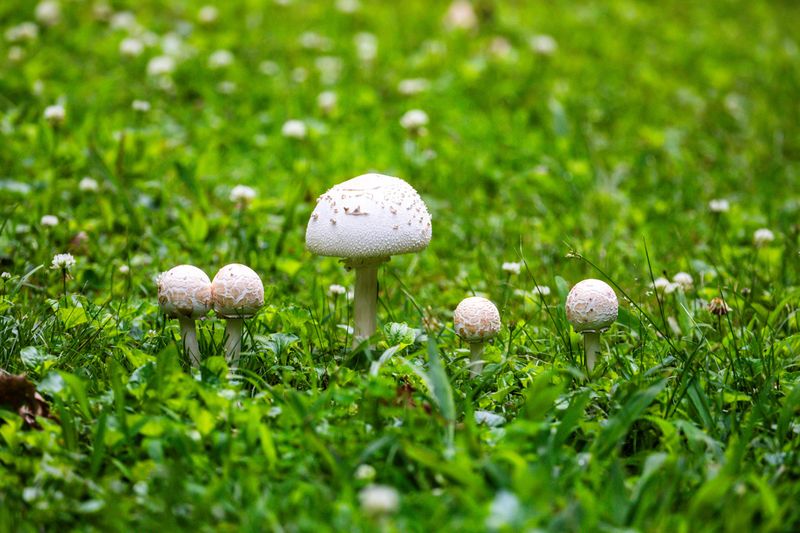
Think of a lawn mushroom like an apple on a tree. The apple is what you see, but the tree is the real organism.
In the same way, a mushroom is the fruiting body of a fungus that is already growing in the soil or in the thatch layer, the mat of dead grass stems and roots just above the dirt.
That is why mushrooms seem to show up overnight. The fungus has been spreading out of sight as thin threads, and the mushroom is the part it sends up to release spores.
According to University of Minnesota Extension, moist conditions after rain or irrigation can prompt these fruiting bodies to appear.
Notice the wording there: rain can prompt the mushrooms, but it did not necessarily create the fungus. The organism was likely already living in your yard before the first drop fell.
The wet weather simply gave it a good moment to show itself.
So a sudden flush of caps does not mean something new has invaded. It means a fungus that was already there got the conditions it wanted.
Mushrooms may last only a day or two before they collapse, while the fungus underneath carries on.
Underground fungi help break down organic matter
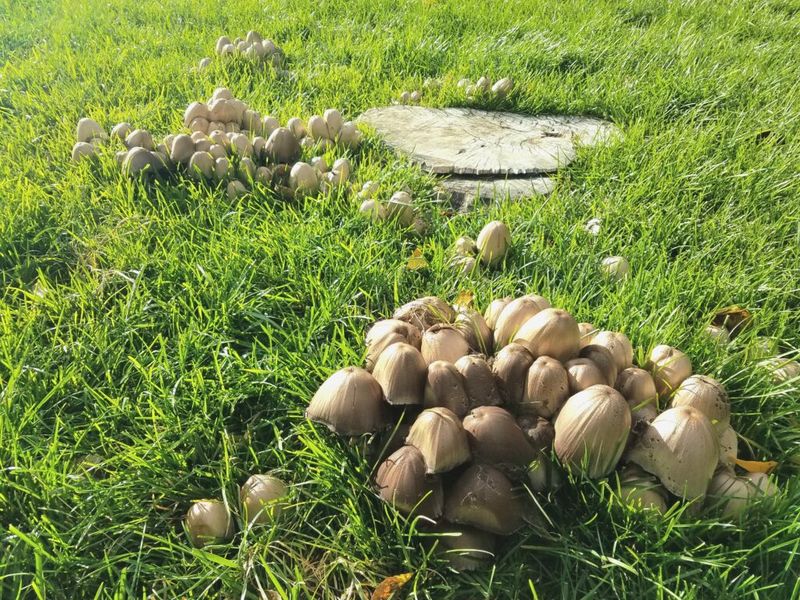
Under your lawn, a busy crew is at work. Soil fungi are among the organisms that break down dead plant material, such as old grass clippings, fallen leaves, and buried roots.
As that material decomposes, nutrients locked inside it can become available again, which is a big part of nutrient cycling in soil.
The USDA Natural Resources Conservation Service describes fungi as part of the biological community that does this recycling work, alongside bacteria and other soil life.
It helps to keep that benefit in proportion. Decomposition is a normal process in nearly any soil with organic matter in it.
It does not mean that the mushroom you see is feeding your grass directly.
Some fungi also form partnerships with plant roots, and those can be helpful. But a mushroom popping up in the lawn does not prove that kind of partnership is present.
Other fungi simply feed on dead material, and a few are linked to turf stress.
The takeaway is that fungi are a normal, useful part of soil biology. That is a gentler way to see them than as invaders, and also a more careful one than calling every mushroom a gift to your lawn.
Rain can prompt mushrooms, but it is not the whole explanation
Rain gets most of the blame, and it does play a role. Both rainfall and heavy irrigation create the damp conditions that go along with mushrooms emerging, as noted by University of Minnesota Extension.
If your sprinklers run long, you can get the same effect on a dry week.
Still, weather is the trigger, not the source. The fungus needs something to live on, and that food is often hidden.
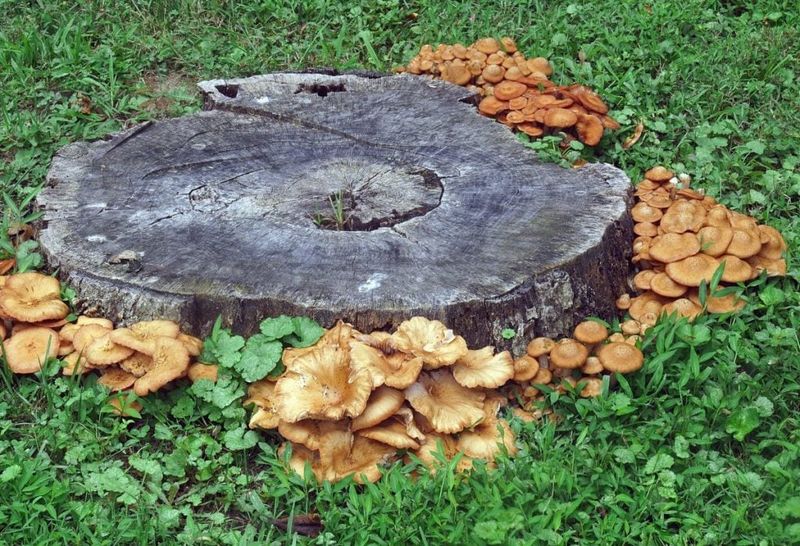
Some species grow from buried tree roots, old stumps, or chunks of wood left behind after construction or tree removal, a point also covered by UC Statewide IPM Program.
Here is a practical example. If mushrooms keep returning in the same spot near where a tree once stood, buried wood may be feeding the fungus.
If they scatter widely across the yard, the food may be thatch or other organic matter in the soil.
So treat the phrase after rain as a useful clue, not a full answer. It tells you when mushrooms appear, but not what the fungus is eating or whether your lawn has any problem at all.
A flush of mushrooms does not grade your soil
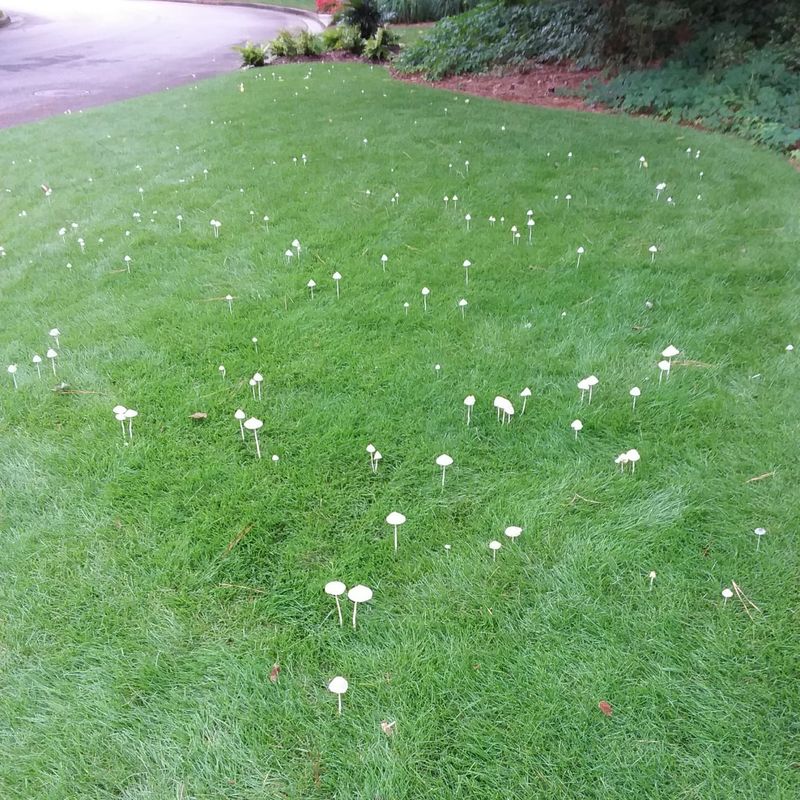
It is tempting to read mushrooms like a report card. Some people say they prove your soil is rich, and others say they signal something wrong.
Neither claim holds up. A mushroom tells you a fungus found suitable conditions to fruit, and that is about all.
The USDA NRCS backs up the role of fungi in breaking down organic matter and cycling nutrients. That role is real.
But it is a long step from there to saying a mushroom measures fertility, overall soil quality, or a helpful root partnership.
Many lawn mushrooms are not tied to disease either. As University of Minnesota Extension explains, if the lawn otherwise looks fine, mushrooms alone generally do not call for treatment.
That means two things you can skip. Do not pat yourself on the back and skip lawn care because you saw mushrooms.
And do not rush to add water, fertilizer, or chemicals because you saw them.
If you really want to learn about your soil, a lab soil test is the tool built for that job. For the turf itself, look at the grass: its color, thickness, and any odd patterns.
Those clues say far more than a cap in the grass.
Grass patterns can reveal when to look closer
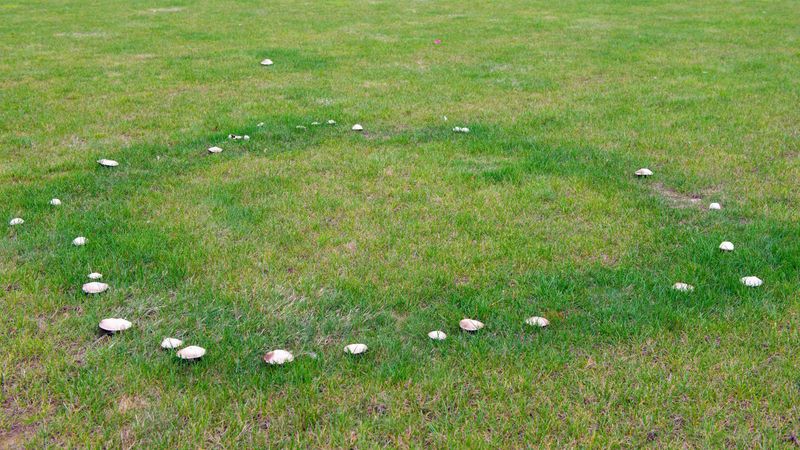
Scattered mushrooms in grass that looks thick and even are usually just ordinary fungal activity. The pattern changes the picture.
If mushrooms return in a circle or an arc, especially with a band of unusually green, brown, or dead grass, you may be looking at a fairy ring.
Fairy rings are not all alike. Illinois Extension notes that some produce greener grass, while others cause brown or dead patches.
Some of the fungi involved break down buried wood or other organic matter.
The trouble for turf often comes from how dense the fungal growth gets. According to Texas A&M AgriLife Extension, thick growth in the soil can make it hard for water to move through, which stresses grass.
The University of Wisconsin-Madison also describes this water-repelling effect.
Here is a simple check. Walk your lawn a day or two after the mushrooms appear.
Ask whether the grass in a ring or arc looks different, and whether the same shape comes back each season.
If the turf looks normal, the mushrooms are probably not harming anything. If you see a repeated ring with stressed grass, the symptoms, not the mushrooms, are what to manage.
Photos and notes across a season will help if you ever ask a local extension office for advice.
Most lawns do not need treatment for mushrooms alone
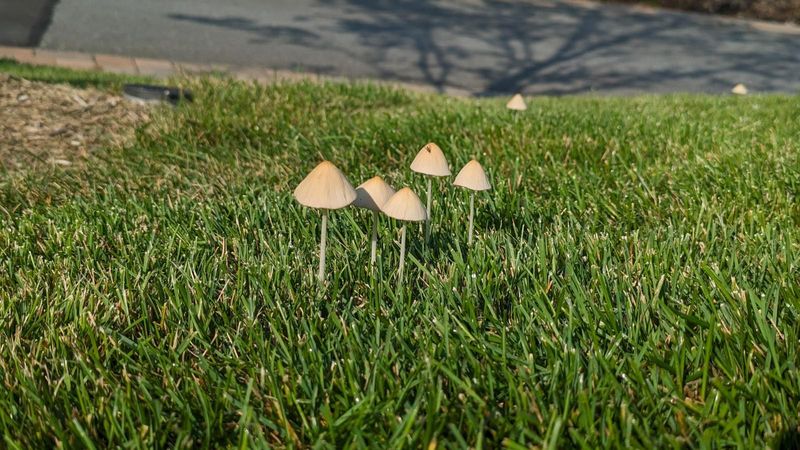
If your lawn otherwise looks good, you have an easy choice: leave the mushrooms alone. They usually fade within days.
University of Minnesota Extension says mushrooms by themselves generally do not require treatment.
If the look bothers you, rake or knock them over and remove them. Just know what you are doing.
You are clearing the fruiting bodies, not the fungus underneath, which may keep going while its food source and damp conditions remain.
Next, take a look at your watering. If the lawn is being overwatered, reducing or pausing irrigation makes sense for the lawn’s sake.
Do not add water just because mushrooms showed up.
Two other chores can fit into a normal care routine. Aeration in fall can improve drainage, and raking in spring can clear dead plant material.
Think of these as general lawn-care measures, not guaranteed ways to stop mushrooms.
As for sprays, skip them. Illinois Extension says there are no recommended fungicides for the nuisance mushrooms it covers.
Fairy rings with real turf damage are a separate matter and depend on how severe the pattern is.
Digging up the yard or adding fertilizer because of a few caps is also unnecessary. Patience is the cheapest fix here.
Keep wild lawn mushrooms away from children
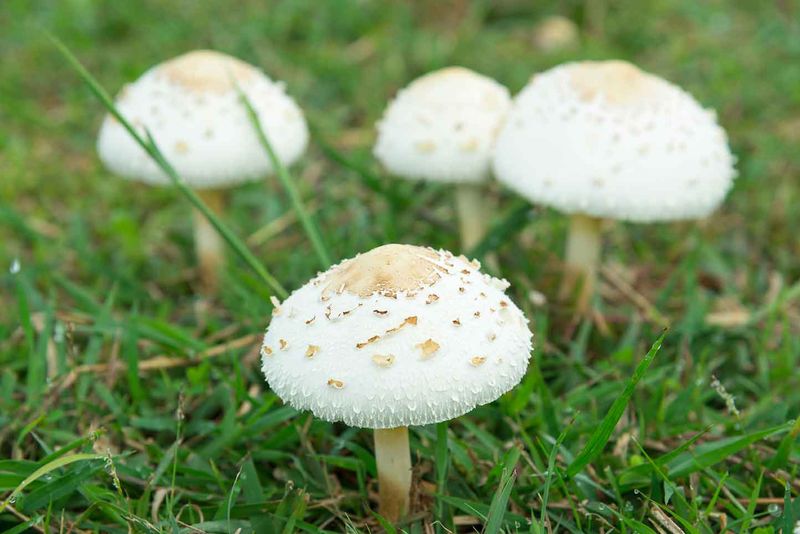
Lawn mushrooms are fine to ignore, but they are not fine to eat. Small children explore with their hands and mouths, so it is smart to check the yard after rain and clear any caps you find before kids get to them.
Never decide a mushroom is safe because it looks familiar, matches a photo online, or fits a friend’s casual description. Poison Control warns that poisonous mushrooms can look much like non-poisonous ones, and wild mushrooms are hard to tell apart without expert identification.
Teach older kids a simple rule: look, but do not taste or pick wild mushrooms. That rule works for every yard, park, and trail.
If someone does eat a mushroom from your lawn, do not wait for symptoms. Contact Poison Control right away at 1-800-222-1222.
A mushroom may be harmless to your grass and still be a real risk in a small mouth, and a quick sweep with a rake is a small price for peace of mind.