
Your Clematis Isn’t Done After Summer: A Type-Aware Fall Plan That Avoids Costly Mistakes
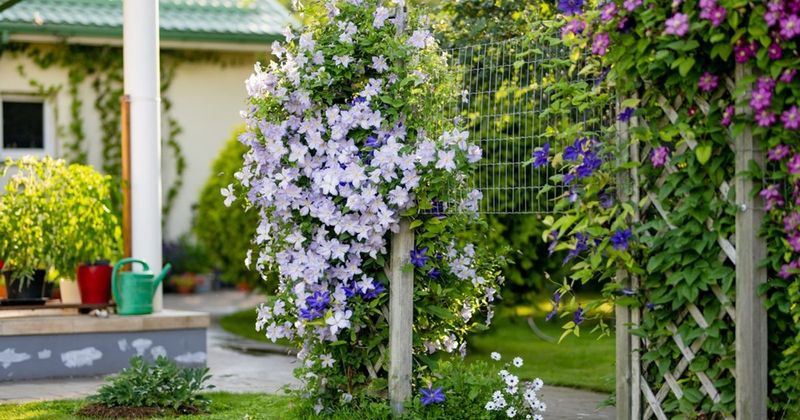
Your clematis may look tired and tangled by October, but that does not mean you should grab the pruners. Some clematis carry next spring’s flowers on stems that grew this year, so one wrong cut can cost you blooms.
A few careful fall checks can help your vine head into winter in good shape. Here is a plan that works whether you know your vine’s name or not.
October is a checkpoint, not a bloom deadline
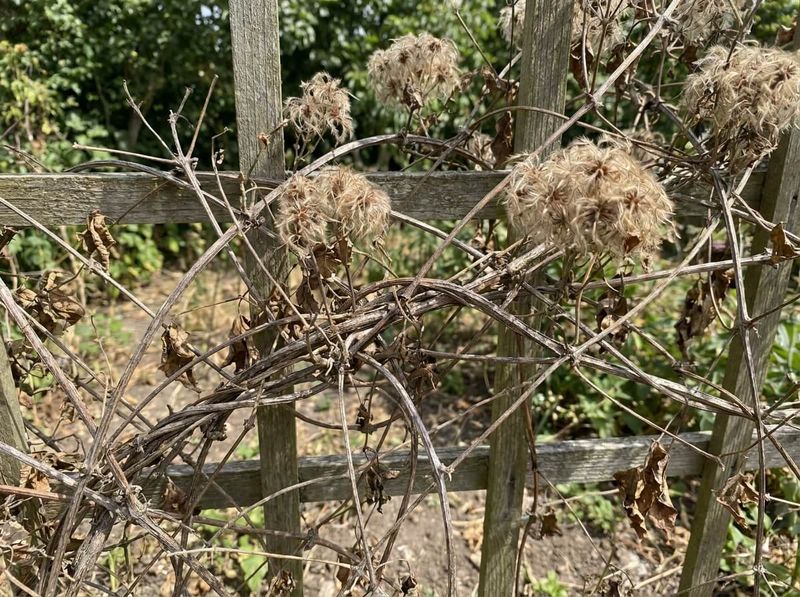
Staring at a ragged clematis in October, it is easy to worry that this month decides everything about next year’s flowers. That worry makes sense, but the full story is more relaxed.
Fall care can help a clematis stay healthy, yet October is not a universal deadline that sets how heavily it blooms.
The bigger risk is cutting at the wrong time. Many clematis that bloom in spring flower on stems grown the previous year, while many summer and fall bloomers flower on new growth, as Iowa State University Extension explains.
Pruning guidance such as the Royal Horticultural Society pruning guide sorts clematis into groups for exactly this reason. A single fall haircut for every vine could remove the very stems that carry spring flowers.
So think of October as a checkpoint rather than a finish line. Your jobs are to figure out which kind of clematis you have, hold off on a hard cut if you are unsure, water if the weather turns dry, and clean up diseased debris if you had trouble this year.
None of these steps guarantees a heavier bloom, but they help you avoid mistakes and keep the plant in good condition.
The next sections walk through each check in order, starting with the simple question of what you are growing.
Use flowering time as a clue
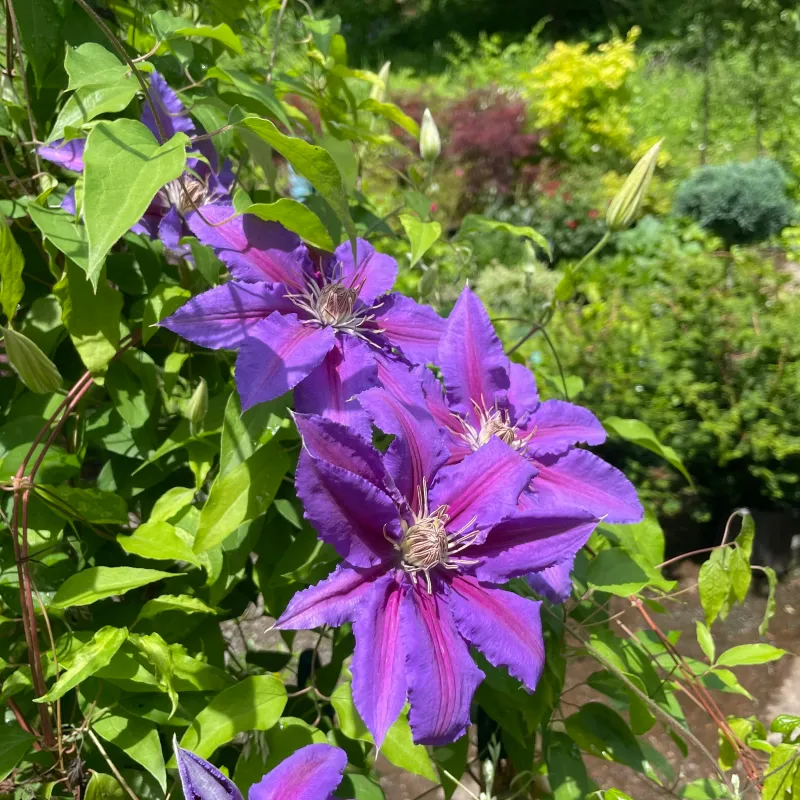
Before any pruning, look for the plant tag. If you tossed it, check your garden notes, purchase receipt, or photos from the nursery.
Knowing the name is the best way to learn how the vine should be pruned.
No label? Think back to when the vine bloomed.
According to Illinois Extension, clematis that flower in early spring typically do so on last year’s stems. Many that bloom in summer or fall flower on the current season’s growth, a pattern that Iowa State University Extension also describes.
Jot down what you remember: the month the first flowers opened, whether there was a second flush, and whether blooms appeared low on the vine or high up. A note on your phone now will save guessing next year.
Treat bloom time as a clue, not proof. It can point you toward a cautious decision, but it cannot name your cultivar or place every clematis in a group with certainty.
If your vine bloomed in May and you are unsure, assume those flowers grew on older stems and protect them. When the clues feel mixed, the safe move is to leave major pruning for later.
Hold off on the hard cut
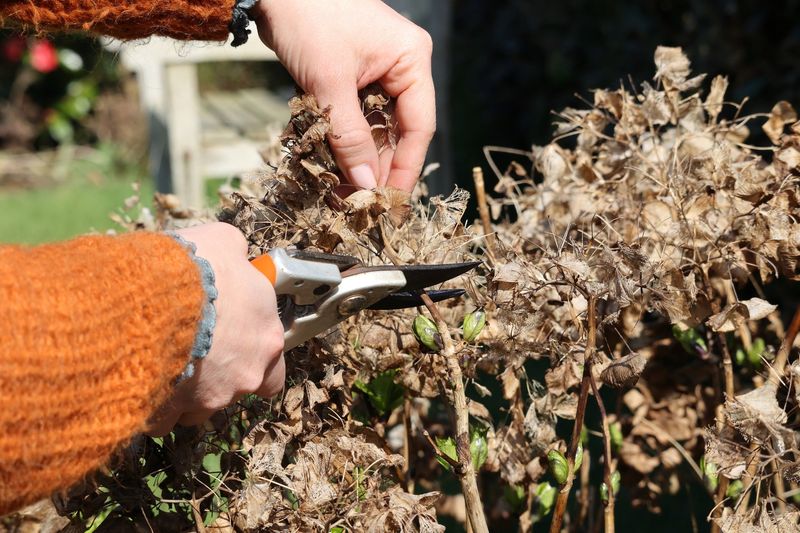
Here is where the clue turns into a decision. Early-flowering clematis, often called Group 1, usually need little pruning and are trimmed after they bloom.
A hard cut in October could remove old growth that holds next spring’s buds, as the Royal Horticultural Society guidance suggests.
Group 2 types also call for restrained pruning. These are often large-flowered clematis that may bloom on older stems first, so heavy cutting can cost you flowers.
Group 3 clematis flower on new growth. They are generally cut back in late winter or early spring rather than in October, which matches advice from Clemson Cooperative Extension.
Exact timing depends on your region and how your winters behave.
If you cannot tell which group your vine belongs to, skip major fall pruning. Removing a few dead, clearly broken pieces is a modest step, but leave the main framework alone.
Then look for the label, ask a local Extension office, or watch when it blooms next year and record it for future seasons.
Waiting costs you very little. Cutting the wrong stems can cost you an entire spring show.
Water when fall turns dry
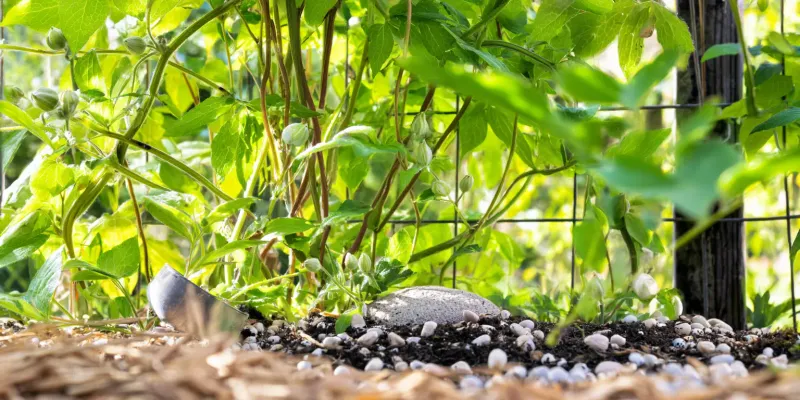
Clematis like steady moisture while they are growing. Iowa State University Extension gives about an inch of water a week as a growing-season guide.
That number is not a fixed fall rule, because October rain, soil type, and temperatures vary widely.
Instead of watering by the calendar, check the ground. Push a finger a few inches into the soil near the base of the vine.
If it feels dry and there has been little rain, a slow drink is reasonable.
Sandy soil dries out faster than heavy clay, and a vine near a wall or under an eave may miss rain completely. A wet, soggy spot needs no extra water at all.
The timing matters too. Watering during dry spells is sensible while the soil is still unfrozen, a point the University of Minnesota Extension makes in its fall checklist.
Once the ground freezes, there is nothing to soak.
Think of this as ordinary plant care, not a special bloom booster. A vine that is not stressed by drought simply has fewer problems to carry into winter.
Keep mulch away from the stems
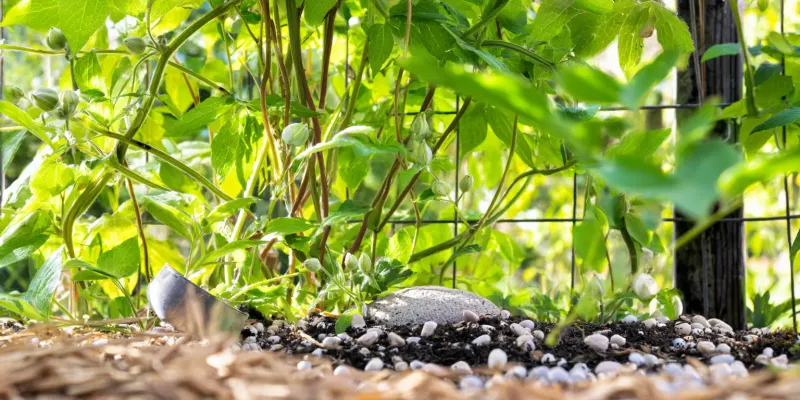
Clematis are often described as plants that want their heads in the sun and their feet in the shade. Mulch or low-growing plants around the base can shade the roots and keep them cooler, as Iowa State University Extension notes.
This is a general growing-season habit, not a special October trick that has been shown to produce more flowers.
If you do spread mulch, keep it off the stems. Illinois Extension advises leaving a gap of 4 to 6 inches between the mulch and the vine.
Piling it against the stems can hold moisture where you do not want it.
A simple check: if you see mulch touching the base of the vine, rake it back into a doughnut shape. A thin, even layer is plenty.
Winter mulch is not a requirement for every clematis. Whether it helps depends on your climate and your plant, so look to local guidance before covering the whole bed.
If your roots already have shade from a neighboring perennial or a groundcover, you may not need to add anything this fall.
Clear diseased debris, not every healthy stem
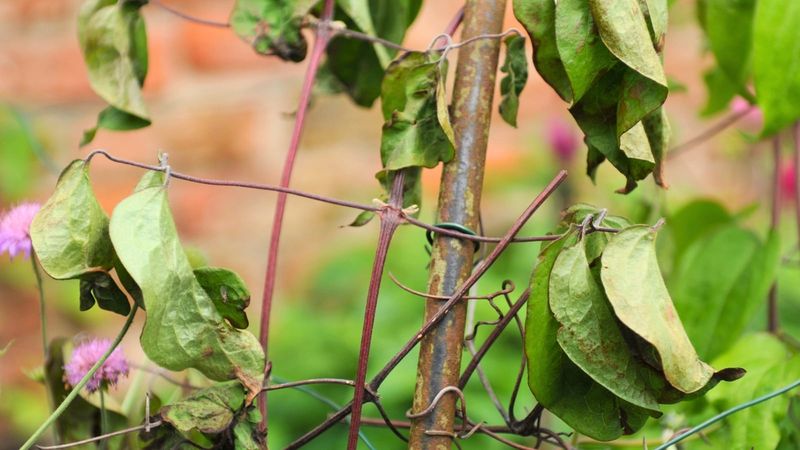
Cleanup and pruning are different jobs. If your clematis had disease trouble this year, such as leaf spots or wilt, fallen leaves and stems can carry problems into next season.
Illinois Extension recommends fall cleanup and destroying debris when disease has been a problem.
For wilt, the same source advises cutting affected stems below the infected portion and disposing of the clippings. Bag them rather than adding them to a compost pile.
Notice what this advice does not say. It does not ask you to strip healthy stems off the vine.
If your clematis stayed disease-free, there is no need for a big fall tidy-up, and leaving healthy growth in place protects stems that may carry spring flowers.
Wear gloves when handling cut or damaged foliage. University of Vermont Extension notes that clematis can irritate skin and be harmful if eaten, so keep clippings away from children and pets until they are bagged.
A quick walk around the base with a bag and gloves is usually all it takes.
Fertilizer and deadheading are not bloom guarantees
It is tempting to add one more chore, like a fall feeding or a round of deadheading. Neither is a sure path to more flowers.
Feeding advice varies from source to source, and Iowa State University Extension recommends fertilizing established clematis in spring and warns that too much nitrogen can produce leafy growth with fewer blooms.
Other schedules exist, such as those from Maryland Extension and UMass Amherst Extension, which is exactly why a routine heavy fall feeding is hard to defend. If you suspect a nutrient problem, a soil test and your local Extension office will give better direction than a guess.
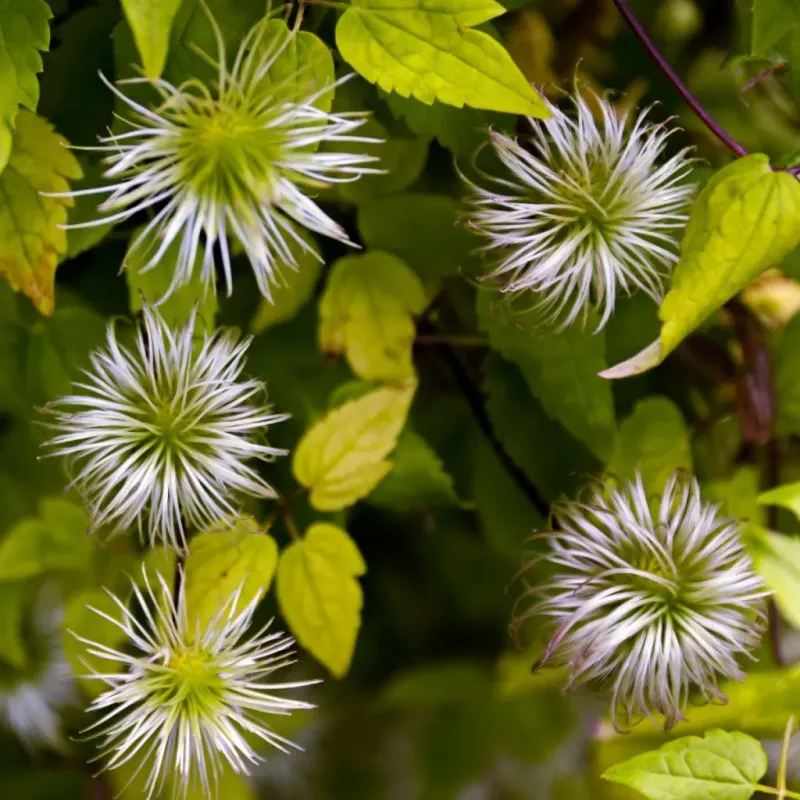
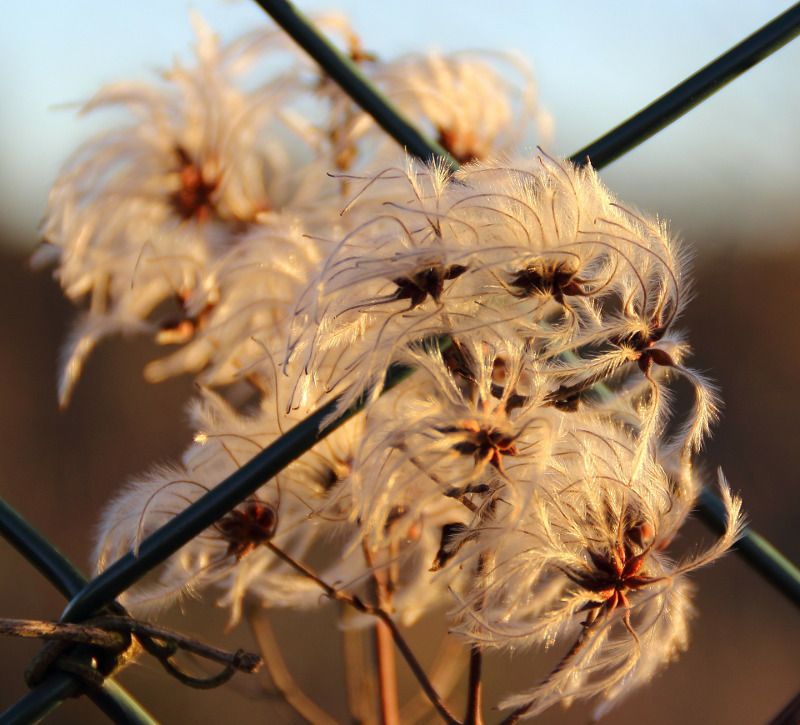
Deadheading is similar. Some clematis make attractive seed heads, and you can leave them for winter interest.
Illinois Extension says deadheading spring bloomers may encourage rebloom in some varieties.
That is a narrow benefit, not a rule. Removing every seed head will not guarantee more flowers next year, and the Royal Horticultural Society guidance centers on pruning at the right time rather than on seed head removal.
If you enjoy the fluffy seed heads, you can leave them in place. If they bother you, snip a few, but know that neither choice is a bloom fix.
Choose the low-risk route into winter
Start with the name. Find the label or note when the vine bloomed.
If you cannot tell which group it belongs to, skip the hard October cut and wait for better information.
Water only when the weather is dry and the ground is unfrozen. Clear diseased debris if you had problems, and leave healthy stems in place.
These steps support sound care but do not promise a heavier bloom. A young plant may take a year or two to settle in, as Iowa State University Extension notes, and poor light or unsuitable conditions can also hold flowers back.
A quiet vine in October is often just resting, not failing.