
Can One Patio Pot Grow Pounds of Potatoes? How To Set It Up For Spring
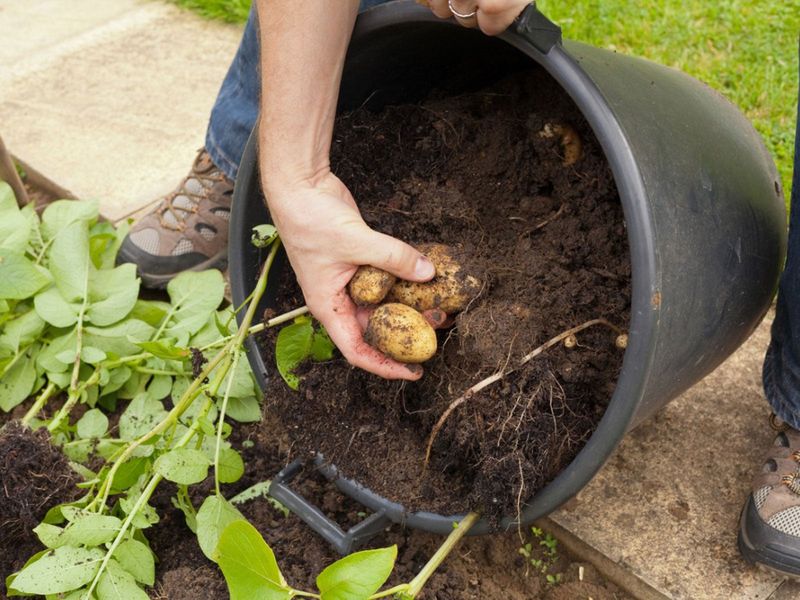
Imagine pulling fresh potatoes out of a single pot beside your back door, with no garden bed to dig. Some gardeners have done just that, and the idea is catching on for small spaces.
Results swing quite a bit from one gardener to the next, so it helps to know what is realistic. Here is how to set up one container, plant it, and harvest at the right time.
How much can one container really yield?
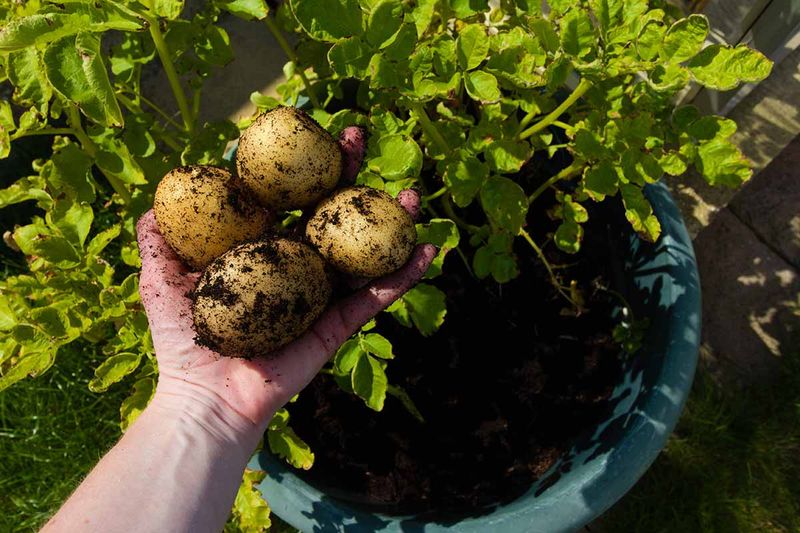
Growing potatoes on a patio is a real option, and you do not need a garden bed to try it. A single large container can hold a whole crop, which is a big draw if your space is limited to a deck, balcony, or strip of concrete.
The title’s big promise needs a reality check, though. A University of Maryland Extension project reported about 3 pounds on average from its 12-gallon bags.
Larger bags grown at home averaged 5 to 6 pounds.
A University of Maine Cooperative Extension account described 5 to 7 pounds per bag, and as much as 13 pounds in a good year. That “good year” detail matters.
Weather, variety, light, and care all push the number up or down.
Treat these as examples of what some gardeners have seen, not a minimum you can count on. They are individual gardening reports, not a side-by-side test.
Some gardeners also see poor results, and University of Maryland Extension says on Ask Extension that it has not seen container yields match those of in-ground or raised-bed planting.
So think of a pot as a way to grow potatoes where you otherwise could not. If you have a yard with open soil, the ground will usually give you more.
If you have a patio, one pot can still give you a satisfying harvest of home-grown spuds.
Start with a roomy, food-safe container that drains
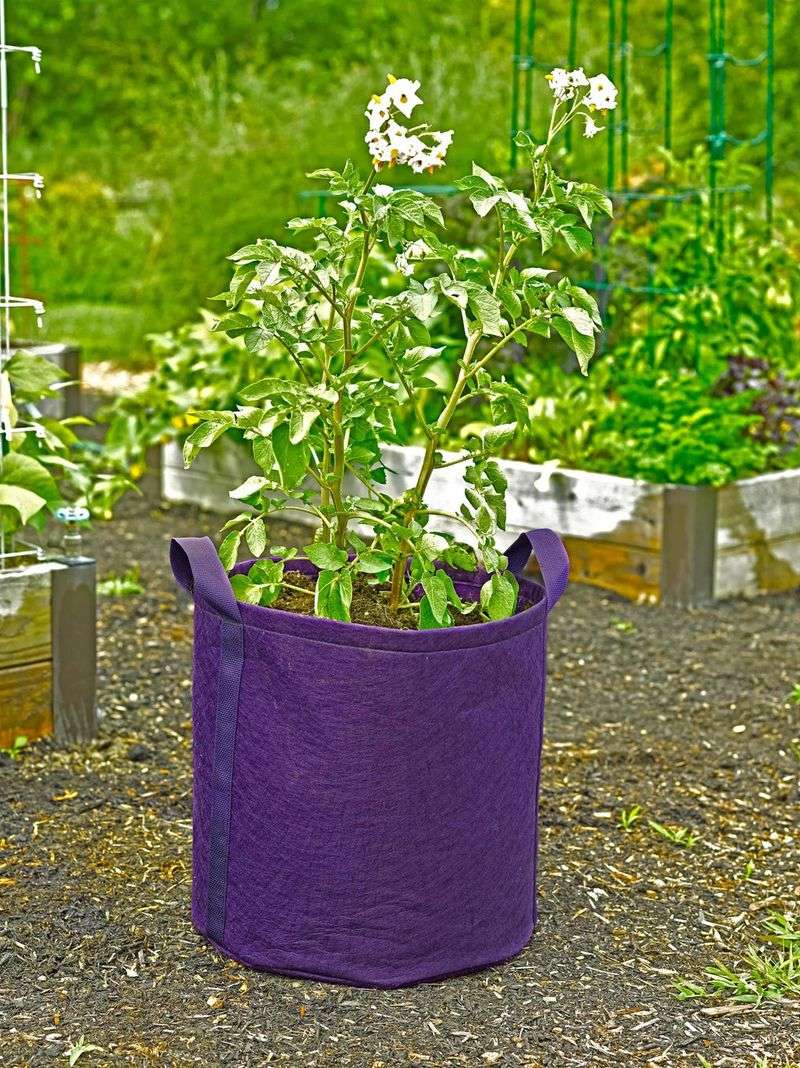
Your container is the one big purchase, so choose with care. Look for something opaque, food-safe, and equipped with drainage holes.
Penn State Extension recommends exactly that, and waterlogged mix can harm plants. Skip anything made for non-food use, and never use a pot with no way for water to escape.
A good starting range is about 10 to 15 gallons. Fabric grow bags, sturdy food-grade buckets with holes drilled in the bottom, and even a new trash can set up for potatoes, as University of Georgia Extension describes, can work if drainage is added.
Extension advice on ideal shape is not uniform. Oregon State Extension suggests at least 18 inches wide and 3 feet deep for the most potatoes.
University of Maryland Extension guidance favors a 10 to 15 gallon opaque container and cautions that very tall ones can be harder to water evenly.
Since the experts differ, aim for plenty of volume, decent width, and good drainage rather than a perfect size. Fill the container with potting mix, and blend in some compost if you like.
Garden soil tends to compact in pots, which makes life harder for roots and tubers.
Spring planting time depends on where you garden
Nobody can hand you a single spring date that works from Florida to Minnesota. Your local conditions decide when potatoes should go in, so the best clock is the weather outside your door.
The general rule is to plant when conditions in your area are suitable and long stretches of cold, wet soil are behind you. University of Minnesota Extension offers timing advice tied to its own growing region, which shows how much it can vary.
You may have seen a March 15 to May 1 window. That comes from University of Maryland Extension and applies to Maryland, not to the whole country.
Use it as an example of how a local window is set, not as your own schedule.
To find your timing, check your local extension office or a nearby garden center. Watch for a stretch of mild weather, and notice whether your soil is soggy after rain.
A patio pot often warms and drains faster than a bed, but a cold snap can still be hard on new growth. If one is forecast, you can wait a week or two.
Certified seed potatoes give the crop a sound start
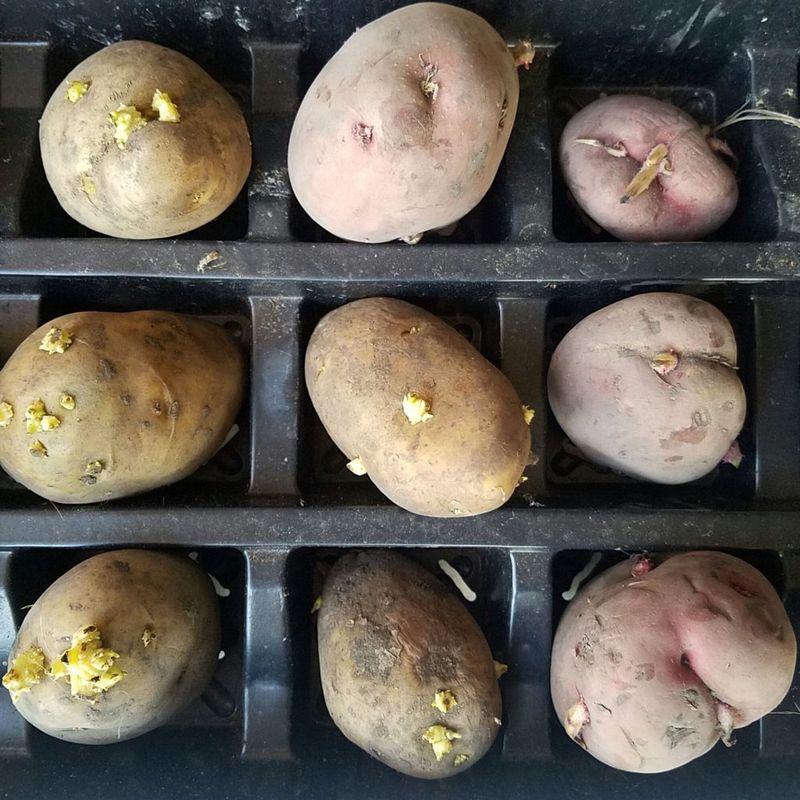
Grocery-store potatoes look like an easy shortcut, but they are a gamble. Some are treated to hold back sprouting, and they can carry disease even when they look perfectly healthy.
Certified seed potatoes are grown and inspected for planting, which gives your single pot a better shot. Both University of Maryland Extension and University of Minnesota Extension point gardeners toward certified seed.
With just one container, you cannot afford to start with a weak batch.
Small seed potatoes can go in whole. If yours are larger, cut them into pieces, making sure each piece has at least one eye, which is the little dent where a sprout will grow.
Then give the cut pieces time to dry. Leave them somewhere dry and out of direct sun until the cut surfaces form a dry skin.
Planting them while still wet raises the chance of rot in damp mix.
If you are unsure how many eyes a piece has, look for small dimples and the beginnings of sprouts. Chunks about the size of a golf ball are a handy rule of thumb, as long as each one carries an eye.
Plant shallow, then cover stems without building a tower
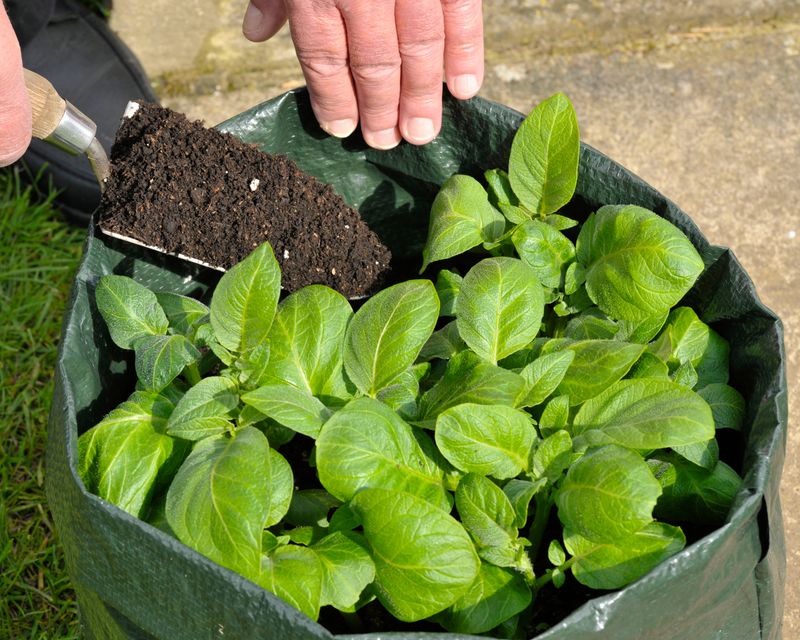
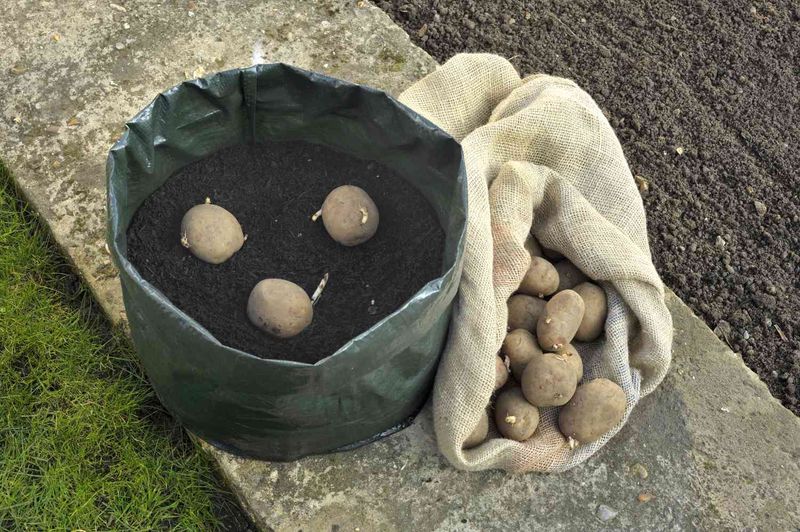
One workable method comes from a University of Maryland Extension project using 12-gallon bags. Start with about 4 inches of mix in the bottom.
Set 3 to 5 seed potatoes or pieces on top, eyes facing up, then cover them with roughly 3 inches of mix.
As the plants grow, add more mix around the stems in stages. Leave the leafy tips showing so the plant can keep making food from sunlight.
This is one example, not the only right way.
Adding mix has a clear job. Developing tubers need to stay covered so light does not turn them green.
University of Minnesota Extension notes that more buried main stem can produce more stolons, the stems that tubers form on.
Still, a tower of ever-taller mix is not a sure way to a bigger harvest. University of Maryland Extension answered a reader question by saying mounding beyond covering the tubers does not cause more of them to form.
Its home garden guide adds that potato towers usually do not work.
A good habit is to check the top of the mix every week or so. If you see pale tubers peeking out, add a little more mix.
If everything is covered, leave it alone.
Sun and regular moisture keep the container on track
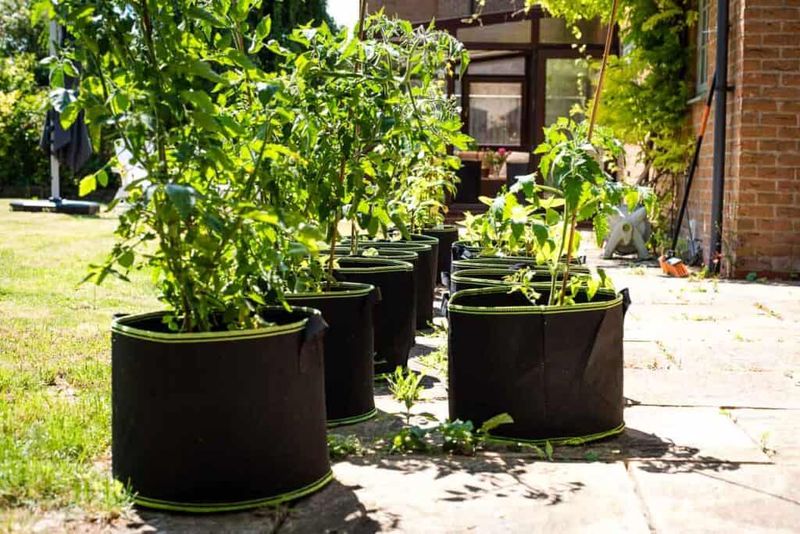
Put your pot where it gets plenty of sun, since potato plants need light to fill their tubers. A bright patio corner is usually a better bet than a shady porch.
Water is the daily balancing act. Potatoes like steady moisture, but the mix should never turn soggy.
University of Maryland Extension stresses regular watering for the crop, and drainage holes let extra water leave so roots are not sitting in a puddle.
Containers lose moisture faster than garden beds. Fabric bags can dry out especially fast, and the Project Spudnik bags show how quickly mix can change with the weather.
Heat and wind speed it up even more.
Rather than follow a rigid schedule, check the mix often. Push a finger a couple of inches down.
If it feels dry, water slowly until you see it drain from the bottom. If it feels wet, wait.
Wilting leaves can mean too little water or too much, so check the mix before you reach for the watering can. A hot, windy afternoon may call for an extra check, while a cool, rainy week may need none at all.
Harvest new potatoes early or wait for mature ones
You get two chances to harvest. If you want tender new potatoes, you can start picking after the plants flower, per University of Maryland Extension.
They are small, thin-skinned, and best eaten soon.
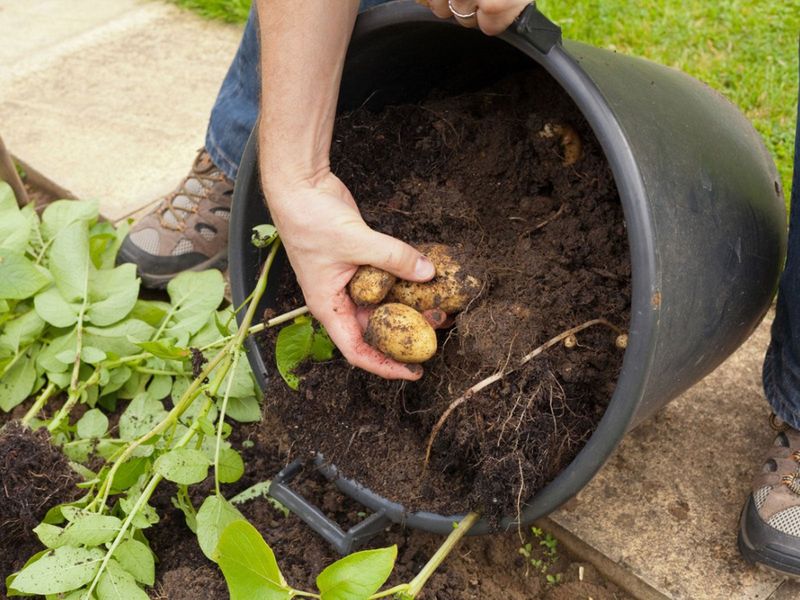
For mature potatoes that store better, wait until the tops yellow or die back. Containers make this part easy.
You can reach in gently, or tip the whole thing onto a tarp, as the Project Spudnik gardeners describe for their bags.
Once tubers are out of the mix, keep them out of prolonged light. Light causes greening, and University of Minnesota Extension warns that excessively green potatoes are poisonous.
It advises removing green areas and not eating potatoes with extensive green areas.
So if a potato is very green, do not eat it. A small green patch can be cut away, but when in doubt, toss it.
Brush off loose mix, let the skins dry a little in a shaded spot, and store them somewhere cool and dark. Harvesting on a cloudy day or in the shade also helps.
Choose container growing for convenience, not a guaranteed maximum
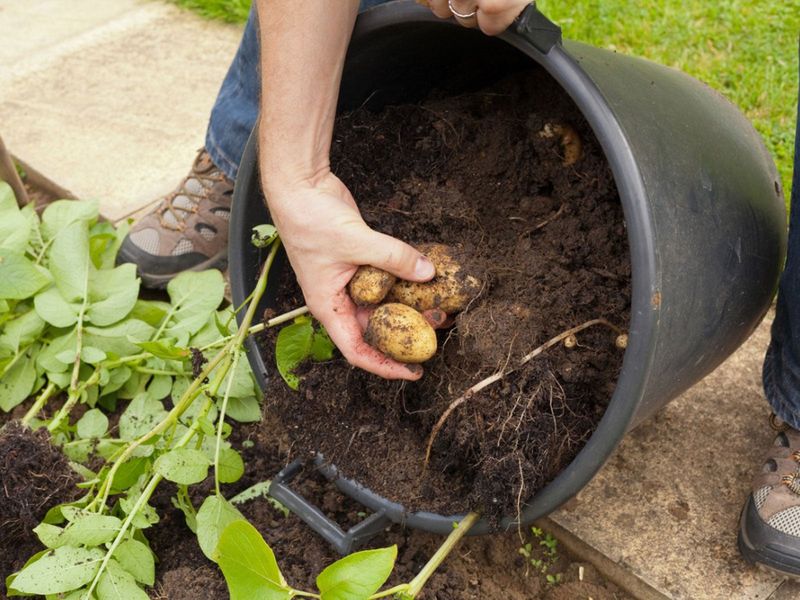
One container lets you grow potatoes with no bed, no digging, and a harvest that is simple to reach. For apartment, deck, and small-yard gardeners, that is a real win.
It is not a recipe for a record crop. University of Illinois Extension treats containers as a handy option, and Ask Extension shows that some gardeners are disappointed with their yields.
What you control is simple: a roomy pot that drains, sound seed potatoes, and steady attention. Do those well, and you give the plants a fair chance.
A single pot of homegrown potatoes is a small, tasty experiment, and even a modest harvest tastes better than you might expect.