
These Small North Carolina Backyard Trees Throw Real Shade Without Ever Outgrowing Your Yard
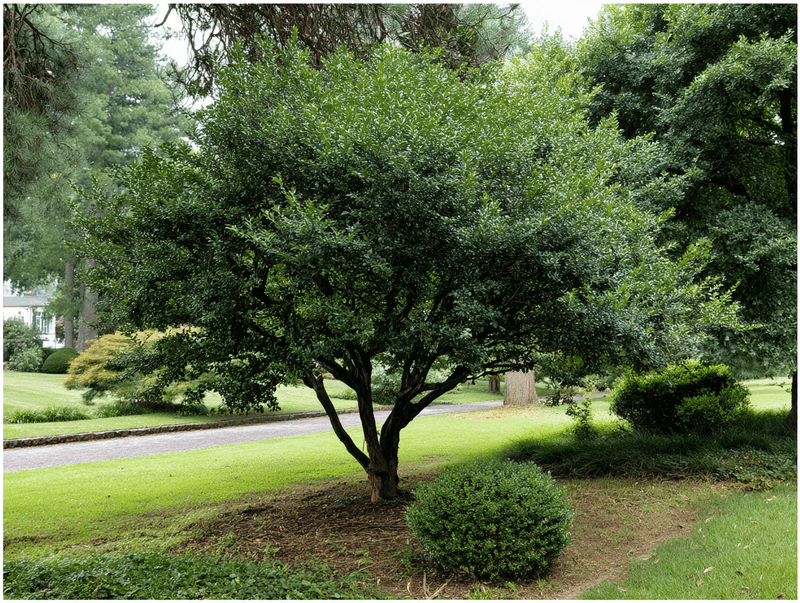
A hot August afternoon in North Carolina can make a sunny backyard feel like a frying pan. The good news is you do not need a giant oak that swallows your whole lot to get cool shade.
The small native trees below stay a sensible size, keep roots away from your foundation, and feed the songbirds, butterflies, and fireflies that make your yard feel alive. Pick one or two, and your patch of NC gets cooler and wilder at the same time.
1. Eastern Redbud
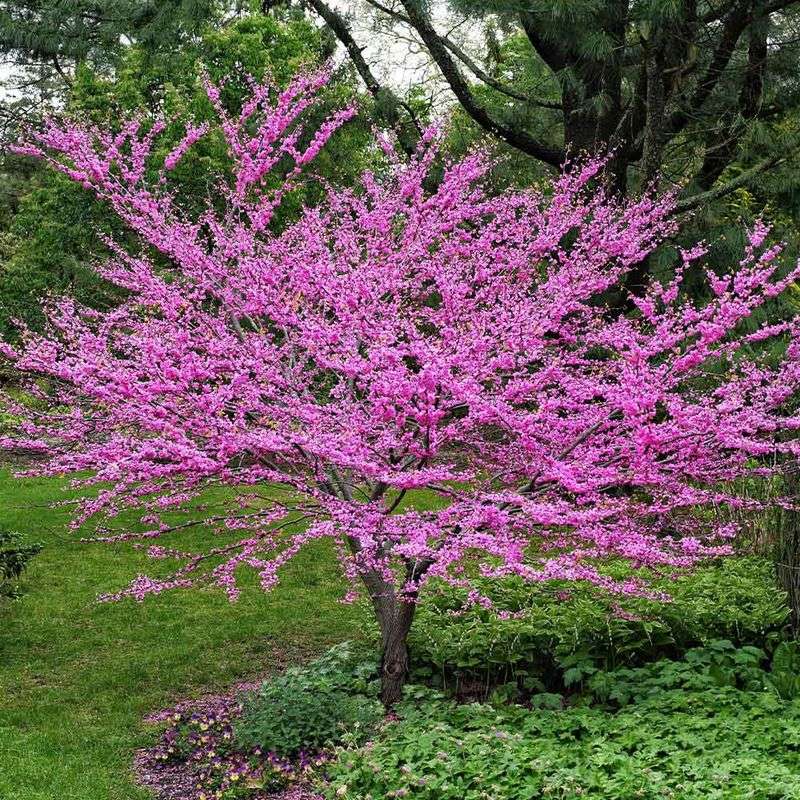
Long before the dogwoods wake up, redbuds paint North Carolina roadsides pink. Blooms pop straight out of the bark, even on the trunk, which kids find delightfully strange.
Height usually tops out at 20 to 30 feet with an equally wide crown, so you get a broad umbrella of heart-shaped leaves without a monster tree. Piedmont clay, full sun, and dry spells barely faze it.
Wildlife loves it too. Early flowers feed bees and hummingbirds, and more than 23 kinds of native caterpillars munch the leaves, which becomes baby food for nesting songbirds.
Cardinals and quail pick at the seeds later.
Roots stay polite, so planting near a patio or walkway is fine. If a Bradford pear is sitting in your yard, this is the swap to make.
Pears are invasive across NC, and a redbud gives you spring color without the spreading thickets.
2. Downy Serviceberry
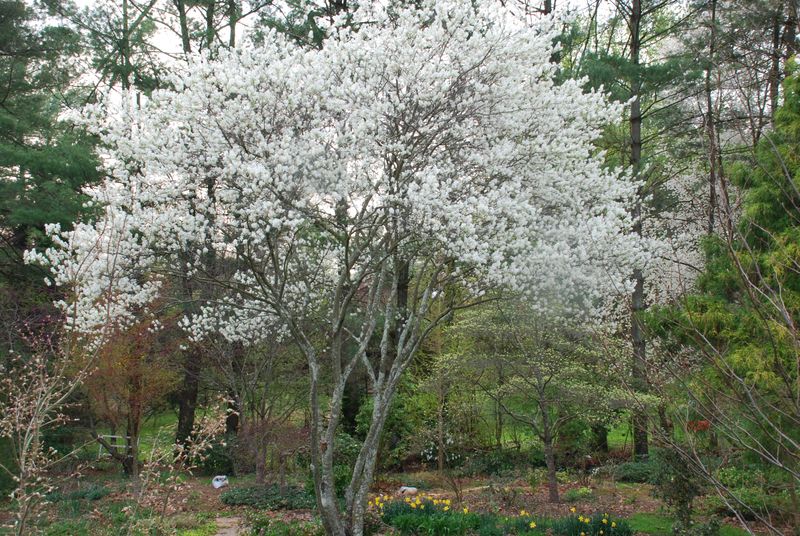
Ask any cedar waxwing about serviceberries and it will tell you with its whole flock. When the berries ripen in early summer, birds show up like they got a dinner invitation.
Growing 15 to 25 feet on several slender trunks, serviceberry casts light, dappled shade that is perfect over a bench or a shade garden. White blossoms arrive in early spring, berries follow, and the leaves turn fiery orange in fall.
More than 40 bird species eat the fruit, including robins and thrushes, and around 120 kinds of moths and butterflies use it as a host. You can eat the berries too, if you beat the birds.
Downy serviceberry handles dry spells well, and its fibrous roots behave near beds and paths. Plant it this fall for blooms next spring.
3. Fringe Tree
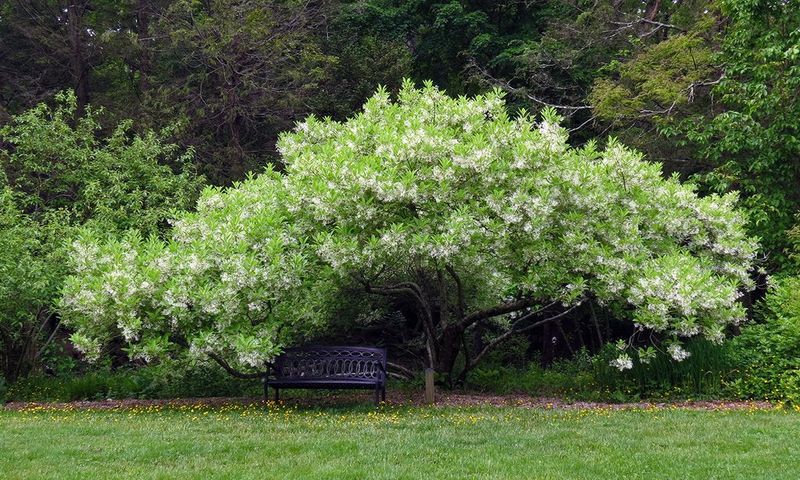
Old-timers in the mountains called it Grancy Graybeard, and one look in May explains why. The whole tree drips with wispy white flowers that look like an old man’s beard and smell sweetly of honey.
Slow growth is the secret here. Most fringe trees settle at 12 to 20 feet tall and just as wide, making a rounded shade spot that never crowds the house.
From mountain coves to the Coastal Plain, it adapts to just about every NC corner. Bees and butterflies swarm the blooms, and female trees grow dark blue fruit that bluebirds, catbirds, and robins snap up in late summer.
Its dense, tough wood shrugs off ice storms and hurricane gusts better than many small trees. Pruning is rarely needed.
One honest note: emerald ash borer has been found attacking fringe trees, so keep an eye out for thinning branches.
4. Carolina Silverbell
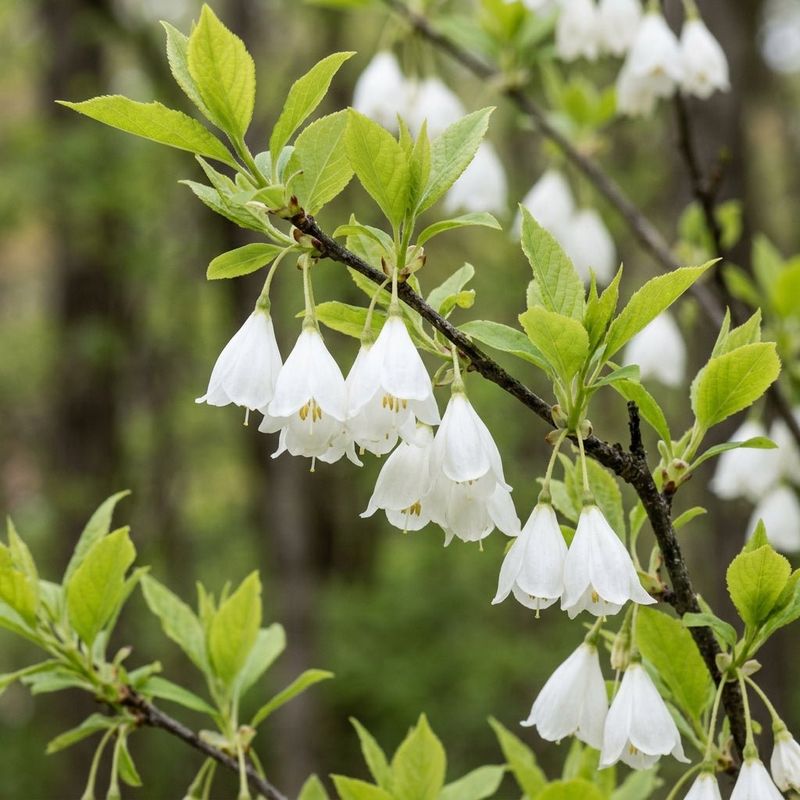
Picture hundreds of tiny white bells swaying on bare branches in April. That is the Carolina silverbell, a tree that looks like it wandered out of a fairy tale and into your yard.
Native to our mountains and Piedmont, it grows well in all three NC regions if given decent moisture. In a home landscape it usually stays on the smaller side and forms an open, airy canopy, though very old trees in the wild can get tall.
Hummingbirds and bees visit the bells. Eastern tiger swallowtails and mourning cloak butterflies lay eggs on the leaves, so you are basically running a butterfly nursery.
Pests and diseases mostly leave it alone. Give it morning sun and afternoon shade, plus mulch to keep roots cool, and it will reward you every spring.
5. American Hornbeam
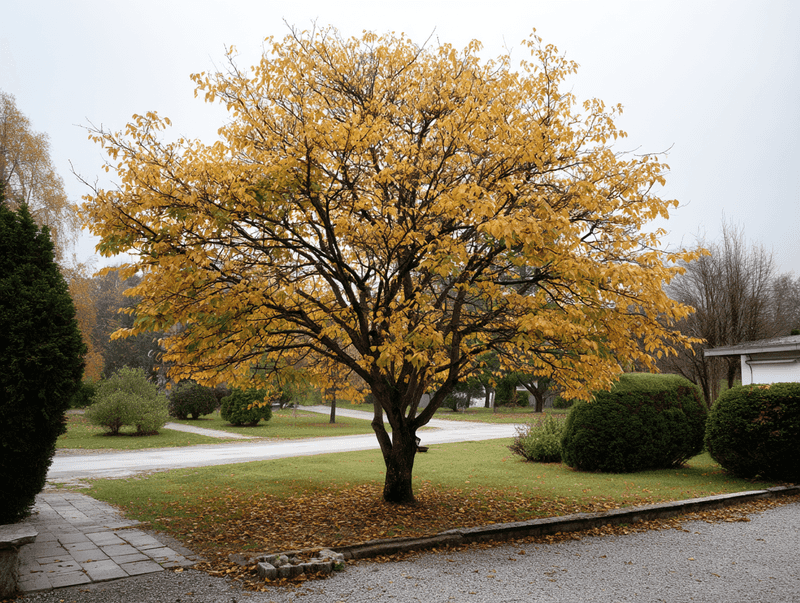
Run your hand along the trunk and you will see where the nickname musclewood comes from. The smooth gray bark ripples like a flexed arm.
If your yard is already shaded by big pines or oaks, hornbeam is the rare small tree that happily grows in heavy shade. It reaches 20 to 35 feet with a dense crown that throws serious shade on its own.
Here is a stat worth bragging about: 68 caterpillar species feed on it, including red-spotted purples. That means more food for chickadees raising babies.
Songbirds, wild turkeys, and squirrels eat the little nuts, and the thick branches offer nesting cover.
The deep, compact roots will not heave sidewalks. Fall brings a show of orange, red, and yellow.
It is a quiet workhorse that makes a shady yard feel complete.
6. Sweetbay Magnolia
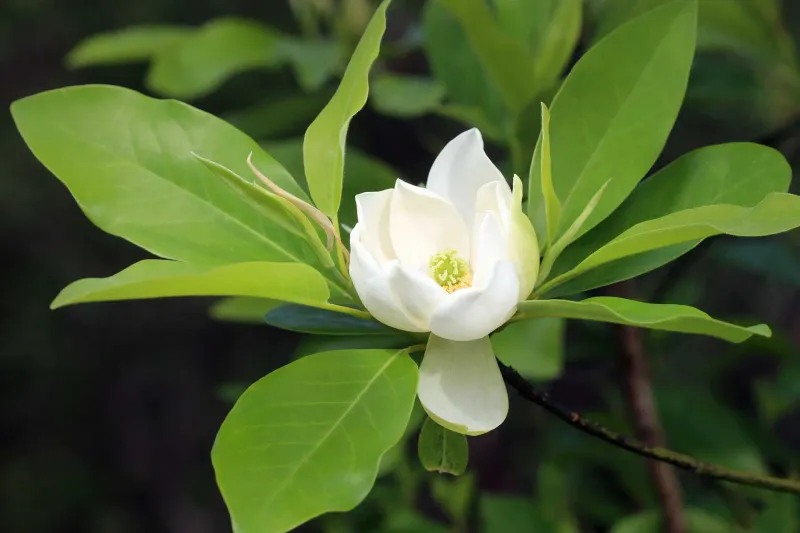
Got a soggy low spot where nothing seems happy? Sweetbay magnolia actually likes wet feet, which makes it a rain garden hero.
Unlike the giant Southern magnolia, sweetbay usually stays 10 to 20 feet tall and 10 to 15 feet wide. Creamy flowers with a lemony scent open from late spring into summer, and the leaves flash silver underneath when the wind blows.
Eastern tiger swallowtails and Palamedes swallowtails use it as a host plant. In fall, bright red seeds pop out of the cones, and blue jays, towhees, and flickers line up for them.
Along the coast it often keeps its leaves all winter, giving birds year-round cover. Roots are gentle, so it fits nicely near a deck.
7. Yaupon Holly
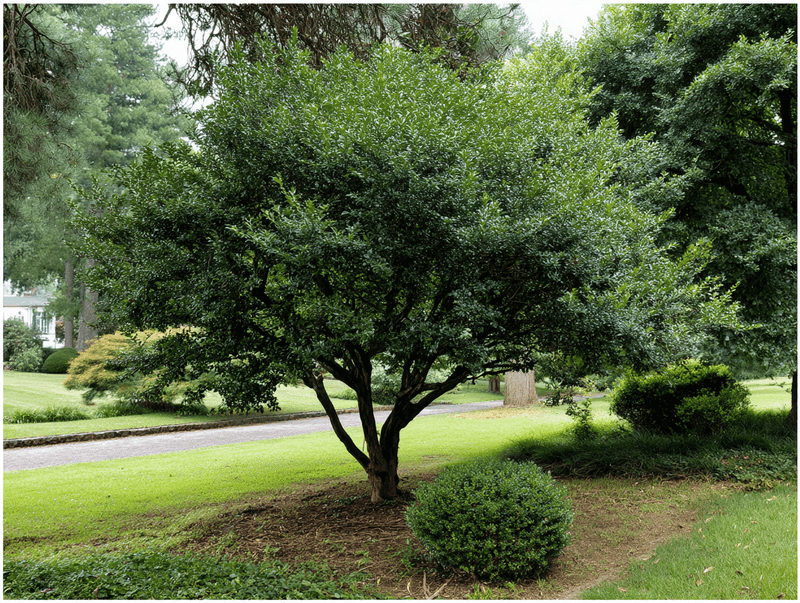
Here is a fun fact: yaupon is the only native plant in North America with caffeine. Native peoples on the Carolina coast brewed its leaves into tea for centuries.
Trained into a small tree, it grows 12 to 20 feet tall and 8 to 12 feet wide. Being evergreen, it shades and shelters all year, and it handles salt spray, sand, and drought like a champ.
Female plants load up with red berries that hang on into winter, just when bluebirds, mockingbirds, and cedar waxwings need food most. Henry’s elfin butterflies also use it as a host.
Deer usually skip it. Want a native swap?
Replace invasive privet or nandina, whose berries can be toxic to birds, with yaupon and you give birds a safe winter meal instead.
8. Wax Myrtle
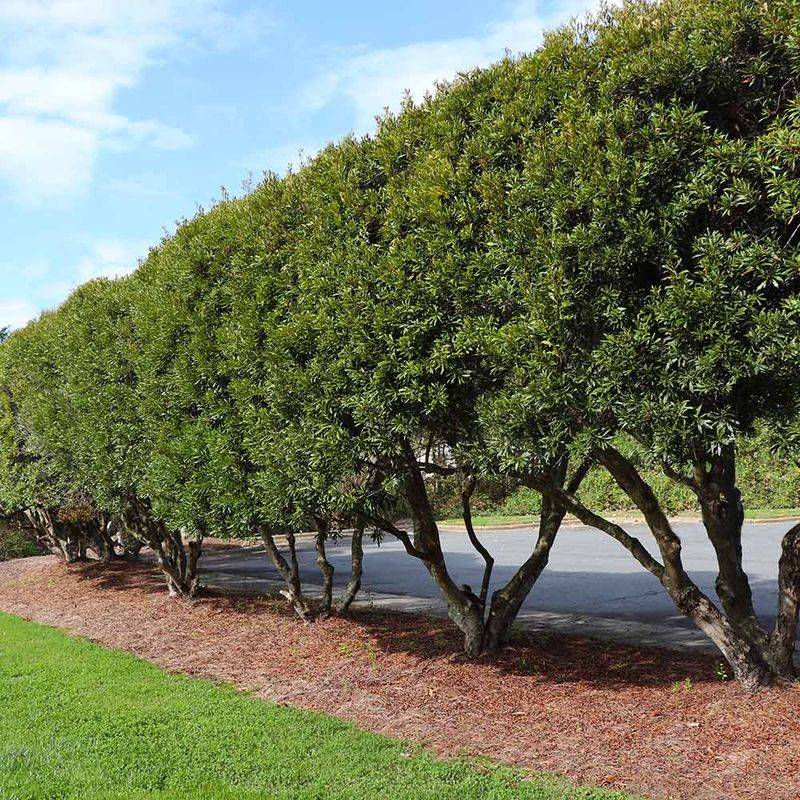
Crush a wax myrtle leaf and you get a spicy, clean smell. Colonists once boiled the waxy berries to make bayberry candles.
Grow it as a hedge or prune it into a small multi-stemmed tree around 10 to 20 feet tall. It is fast, fills in quickly, and makes shade and privacy in a hurry, especially in sandy Coastal Plain and Piedmont yards.
Yellow-rumped warblers depend on the blue berries in winter. In fact, they can digest the wax, which is how they survive cold snaps here.
Red-banded hairstreak butterflies also use the plant.
Wind, salt, and deer rarely bother it, and its roots stay away from foundations. Keep up with occasional trimming so it stays tree-shaped.
9. Flowering Dogwood
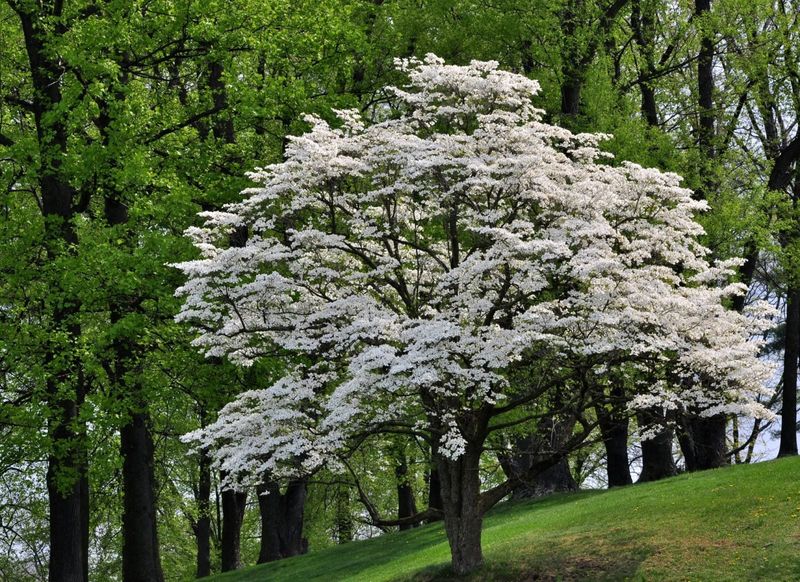
No list of NC trees would feel right without our state flower. Flowering dogwood has decorated Tar Heel yards for generations, and it still earns its spot.
Mature trees reach about 15 to 30 feet, with flat, layered branches that spread wide. That shape is excellent at shading a patio or the west side of a house during summer afternoons.
Fall berries are packed with fat, which migrating thrushes and bluebirds need to fuel long flights. More than 100 caterpillar species use dogwood, too.
Give it some afternoon shade, mulch, and water during dry spells, since stress invites disease. Avoid the Kousa dogwood if you want maximum wildlife value, and go with the native instead.
10. Pawpaw
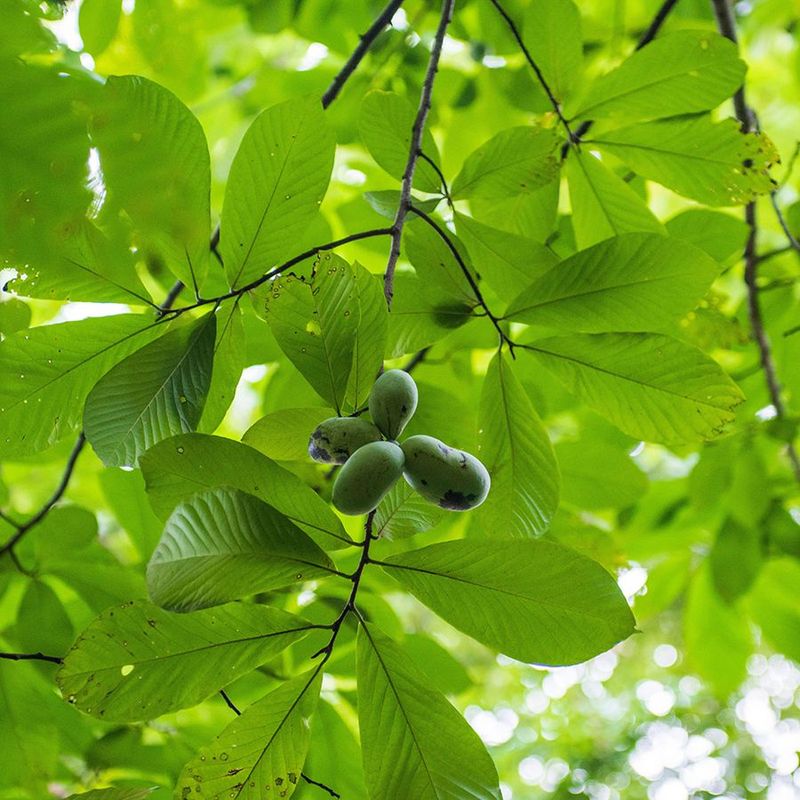
Tropical fruit growing wild in North Carolina? Sounds made up, but pawpaw is real, native, and tastes like a mix of banana and mango.
Plants usually stay 15 to 25 feet tall, and big floppy leaves create a jungle-like shade pocket. It does best in moist, rich soil and can spread into a small grove by root suckers, so mow around it if you want just one trunk.
Zebra swallowtail butterflies need pawpaw. It is the only host plant their caterpillars eat, so planting one helps keep these striped beauties around.
Plant two different varieties for good fruit. Deer tend to leave the leaves alone, and you may find yourself with a backyard harvest each September.