
Your Potted Geraniums Keep Blooming Indoors All Winter With These 15 Feeding Tricks (+2 Mistakes That Stop Flowers Cold)
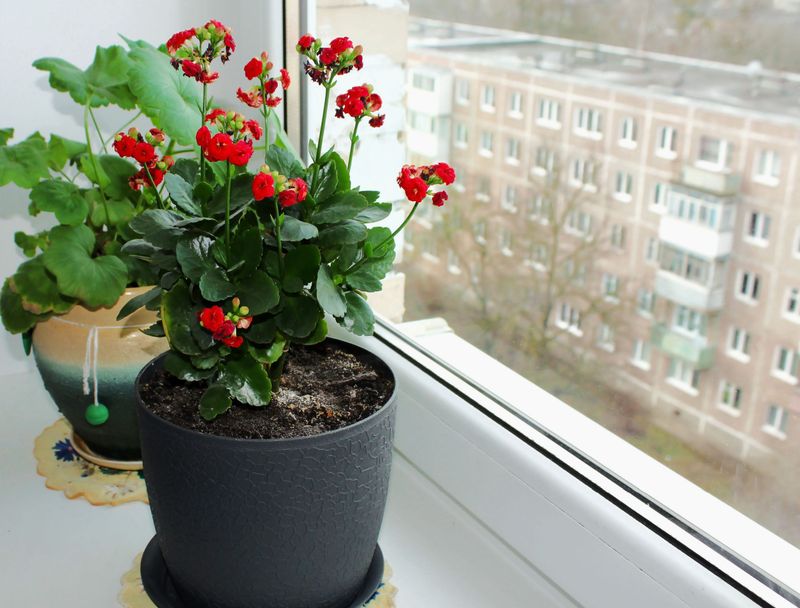
Your geraniums came inside for winter, and now the flowers are fading fast. That does not mean the plant is dying, but it does mean it needs a smarter feeding plan.
Indoor geraniums can keep making bright red, pink, and white blooms all winter if you feed them the right way at the right time. Here are 15 simple feeding tricks, plus two common mistakes that can shut down flowers almost overnight.
1. Use a Diluted, Balanced Fertilizer
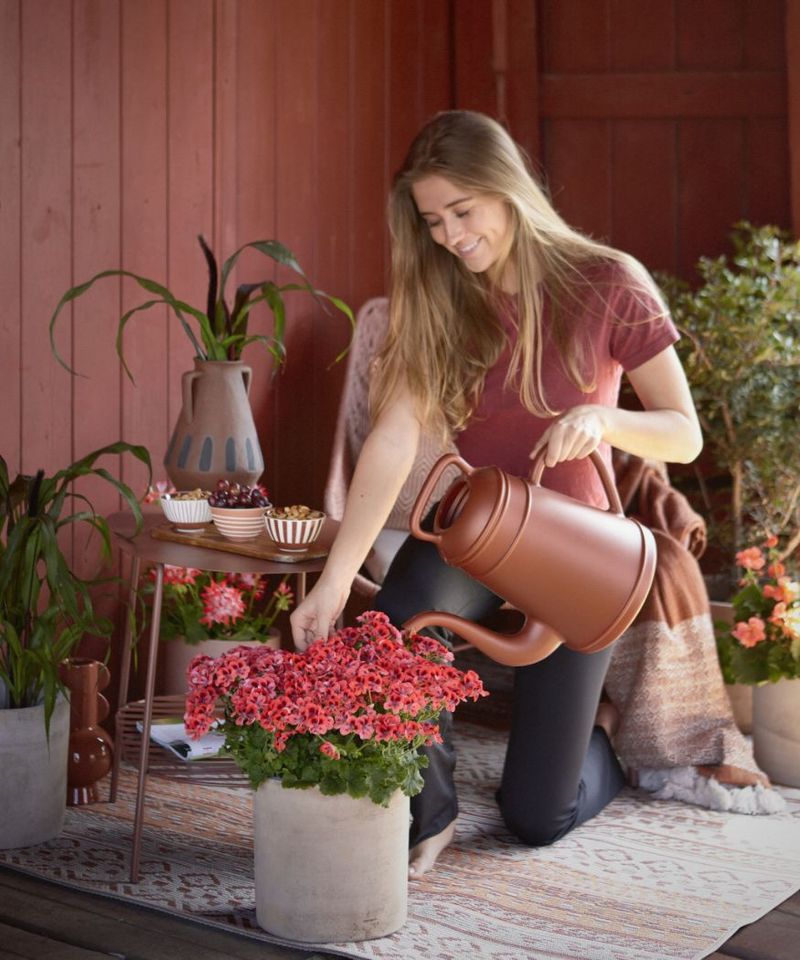
Think of winter feeding like a light snack, not a holiday feast. Indoor geraniums grow more slowly when days are short, so they simply cannot use a full dose of plant food.
Mix a balanced liquid fertilizer, something like a 10-10-10 or 20-20-20, at half or even quarter strength. Feed every 4 to 6 weeks instead of every week like you might in summer.
Why so little? Extra fertilizer pushes weak, stretchy stems that flop over and rarely bloom.
A gentle, steady trickle of nutrients keeps your plant sturdy and ready to set buds when the light allows.
2. Pick a High-Phosphorus, Low-Nitrogen Food
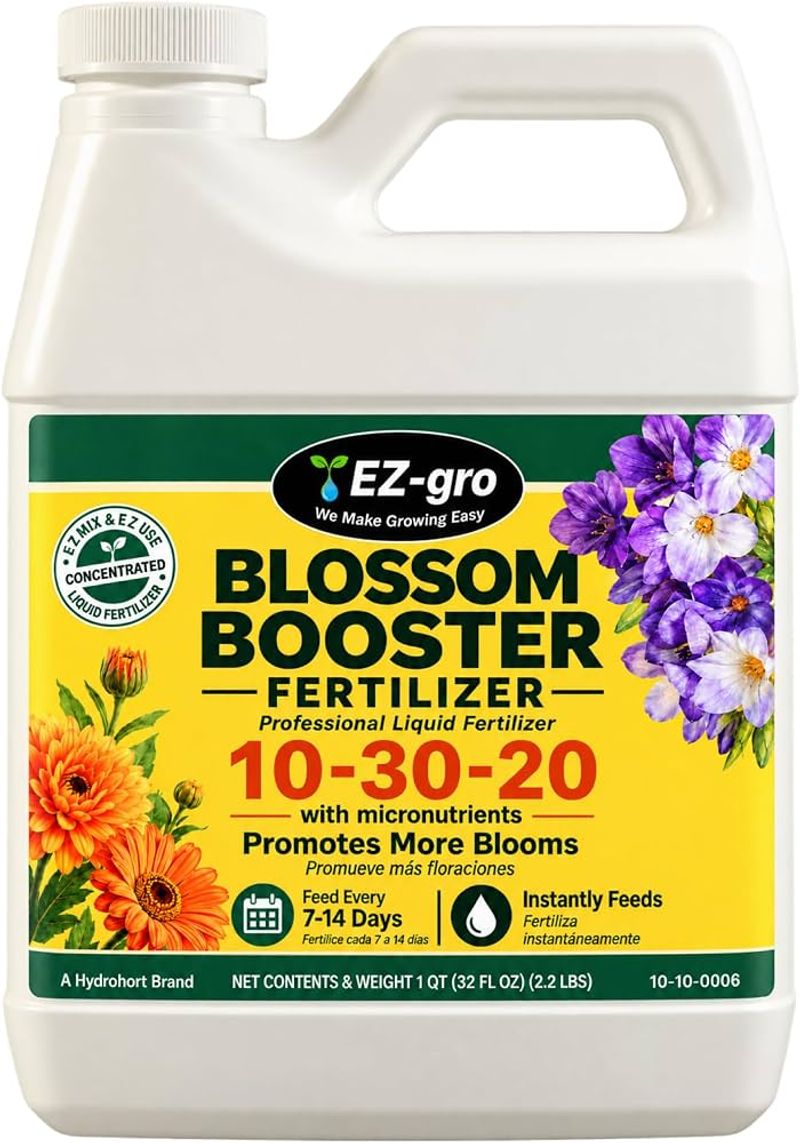
Flip that fertilizer bottle around and look at the three numbers. They stand for nitrogen, phosphorus, and potassium, and for flowers, the middle and last numbers matter most.
Nitrogen builds leaves. Phosphorus and potassium support roots, buds, and blooms, which is exactly what you want from a geranium sitting in your living room in January.
A formula like 5-10-10 or a labeled bloom food tilts the plant toward flowering. Potassium-rich liquid feeds are especially helpful for keeping new flower clusters coming.
Your geranium reads that label even if you skim it, so choose wisely.
3. Cut Back Feeding in Low Light
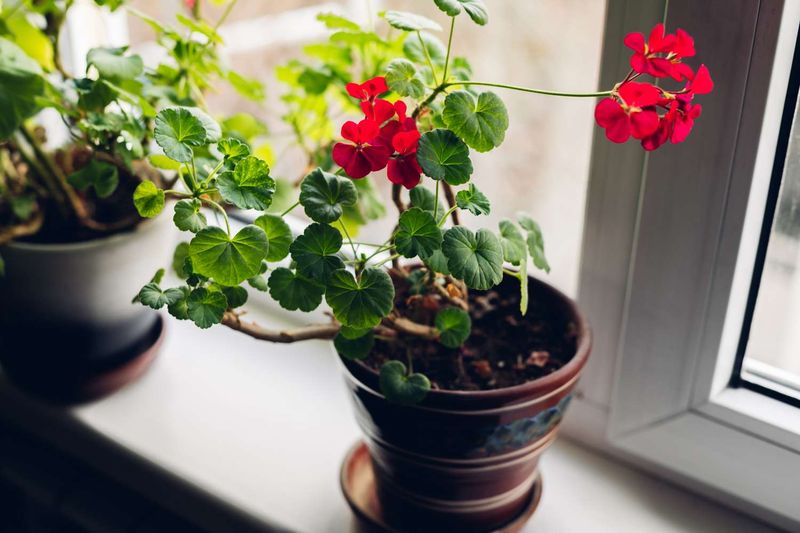
Light is the engine and fertilizer is the fuel. If the engine barely runs, pouring in more fuel just makes a mess.
Geraniums sitting a few feet from a window, or in a north-facing room, are using far less energy than ones basking in a sunny spot. Those plants need less food, so stretch feedings to every 6 to 8 weeks or weaken the mix even more.
Here is an easy rule of thumb. Bright window and new growth?
Feed lightly on schedule. Dim spot and no new leaves?
Hold off and focus on finding more light first.
4. Mix in a Slow-Release Fertilizer at Potting Time
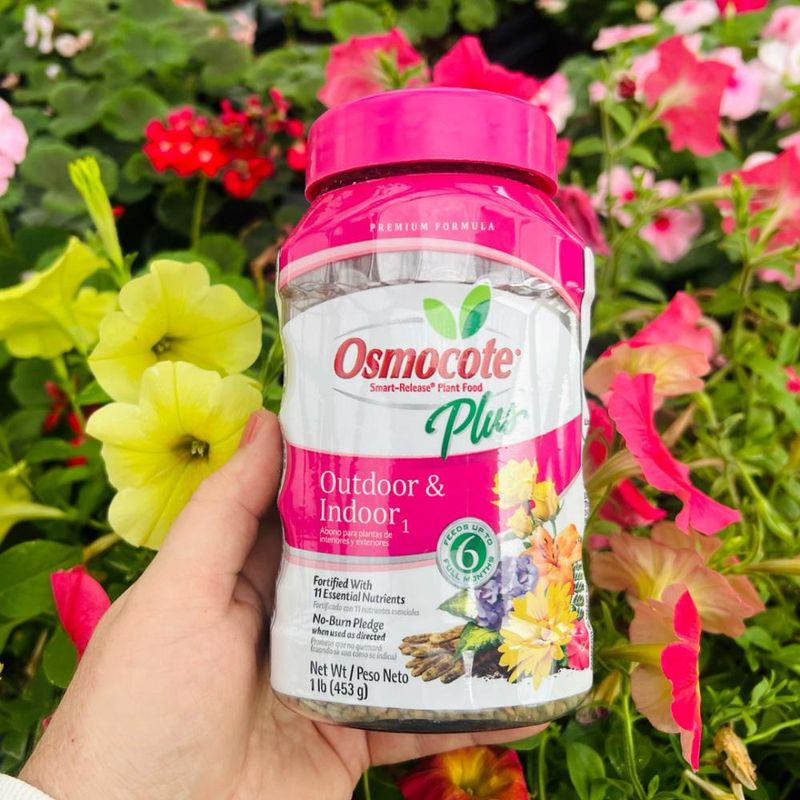
Busy gardeners, this one is for you. When you pot up or bring geraniums inside in fall, stir a slow-release fertilizer such as Osmocote Plus into the potting mix.
Those little coated beads release a small amount of nutrients each time you water. It is like setting your plant up with a pantry it can snack from for months.
Use the low end of the label rate for indoor plants. Once those granules are in place, you can skip most liquid feedings, or add only a weak bloom drink if the plant is pushing lots of buds.
5. Time Your Bloom Booster Right
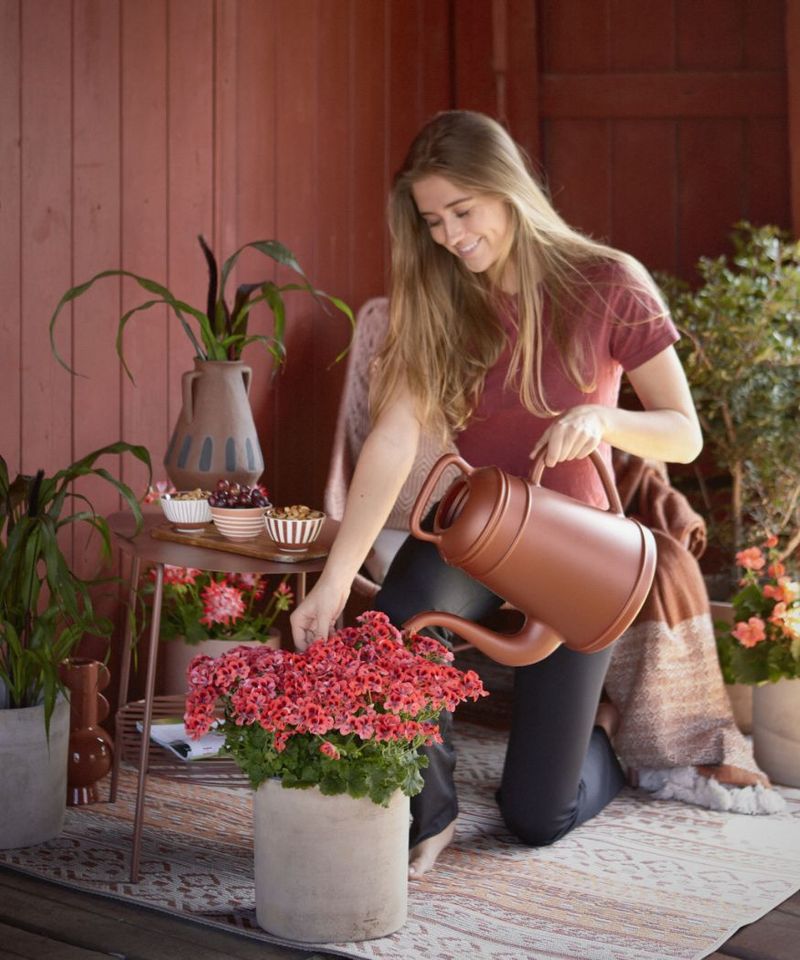
Timing is everything with bloom boosters. Those bright blue water-soluble formulas can work wonders during active growth, when geraniums are pushing out leaves and buds like crazy.
Weekly bloom boosts make sense in spring and summer. As temperatures cool in early fall, ease off, because a plant slowing down for winter cannot handle that much.
Once indoors, only bring the booster back at a weak strength if your plant is clearly growing in a bright window. Late winter, as days lengthen, is a great time to restart gently and wake those flower buds up.
6. Water Before You Fertilize
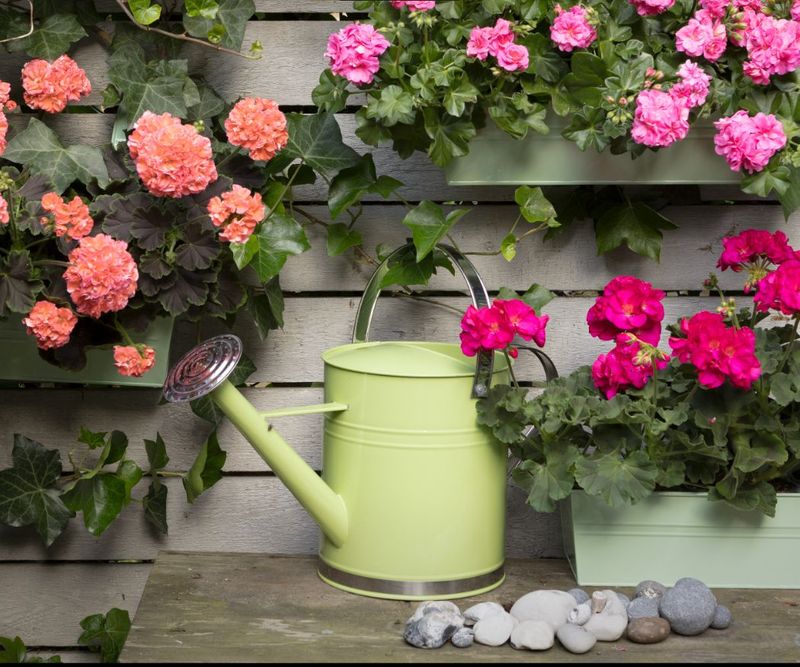
Picture taking a strong vitamin on an empty stomach. Geranium roots feel something similar when fertilizer hits dry soil.
Dry roots soak up salts too fast, which can burn the tips and cause brown leaf edges. Always water your geranium lightly first, wait an hour or so, then add the diluted fertilizer.
Damp soil spreads the nutrients evenly and protects delicate root hairs. It takes two extra minutes and may save you a lot of crispy leaves.
7. Brew Banana Peel Tea
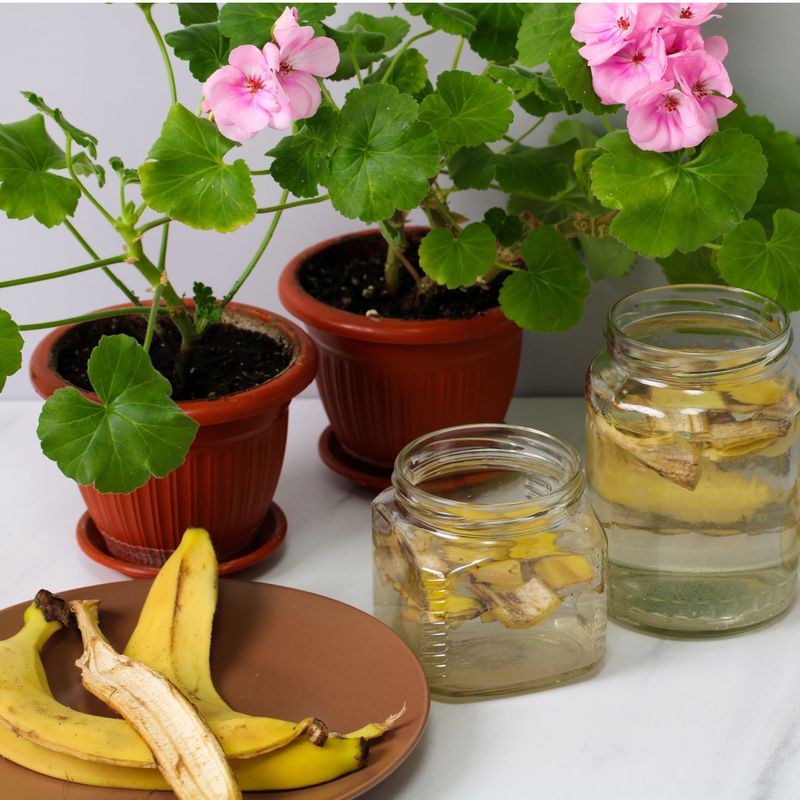
Don’t toss that banana peel just yet. Grandma’s kitchen trick has a simple logic behind it, since peels contain potassium, a nutrient tied to flower production.
Soak one or two fresh peels in a jar of water for 24 to 48 hours. Pull out the peels, then use the water on your geranium in place of a regular watering.
Banana tea is mild, so it works as a light supplement rather than a full meal. Use it every couple of weeks, and do not leave peels sitting in the pot, since rotting fruit can invite fungus gnats indoors.
8. Sprinkle Crushed Eggshell Powder
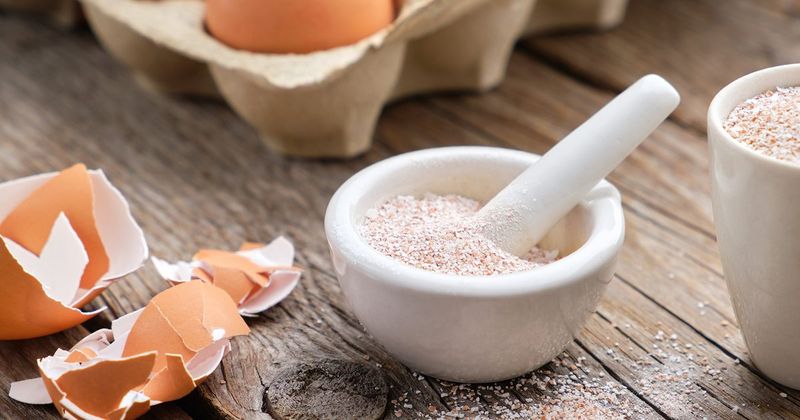
Floppy flower heads drooping over the pot edge? Calcium helps build strong cell walls and stems, and your breakfast leftovers can supply a little.
Rinse eggshells, let them dry completely, then grind them into a fine powder. Big chunks take ages to break down, so a coffee grinder or mortar works best.
Sprinkle about a tablespoon around each plant once or twice a season and scratch it lightly into the soil. Results are slow and gentle, so think of it as long-term support rather than a quick fix.
9. Save Your Potato Water
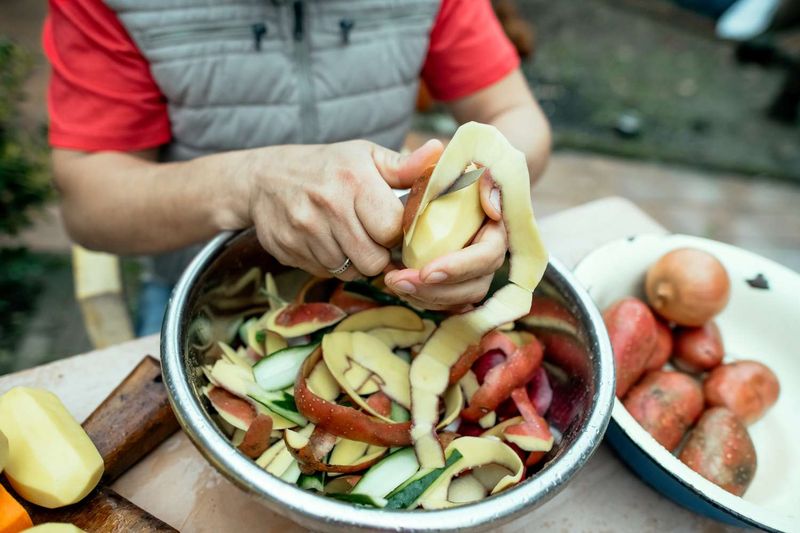
Every time you boil potatoes, a little bonus plant drink goes down the drain. Potatoes carry starch plus small amounts of minerals and vitamins.
You can soak potato peels in water for a few days, strain it, and pour it on your geranium. Cooled, unsalted cooking water works too, but salt is a hard no for potted plants.
Keep amounts small and use it only occasionally, since starchy water left sitting can smell sour. Leftover scraps are even better tossed into the compost bin for next spring’s potting mix.
10. Try a Weak Coffee Ground Brew
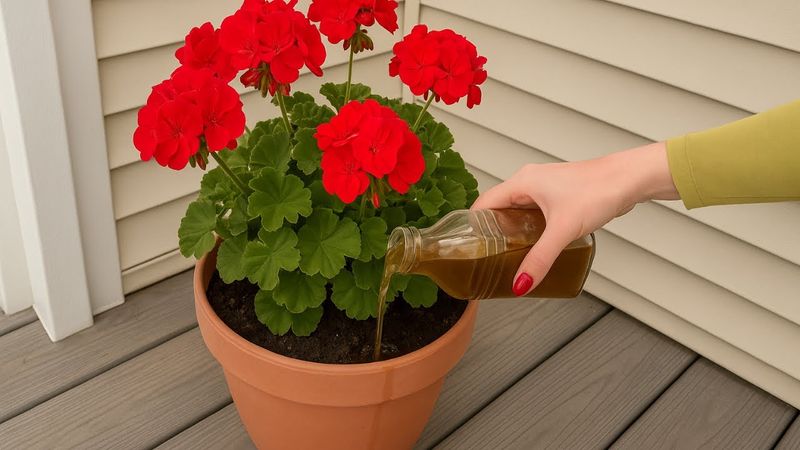
Coffee lovers can share a sip with their plants. Used grounds hold minerals and a bit of nitrogen.
Mix two tablespoons of used grounds into four cups of water. Let it sit for an hour, strain, then give each pot about one cup every two weeks.
A word of caution, though. Because it adds nitrogen, coffee brew is best for plants looking pale or tired, not ones already bursting with leaves.
Never pile dry grounds on top of the soil, since they can crust over and hold too much moisture.
11. Stir Up a Yeast Fertilizer
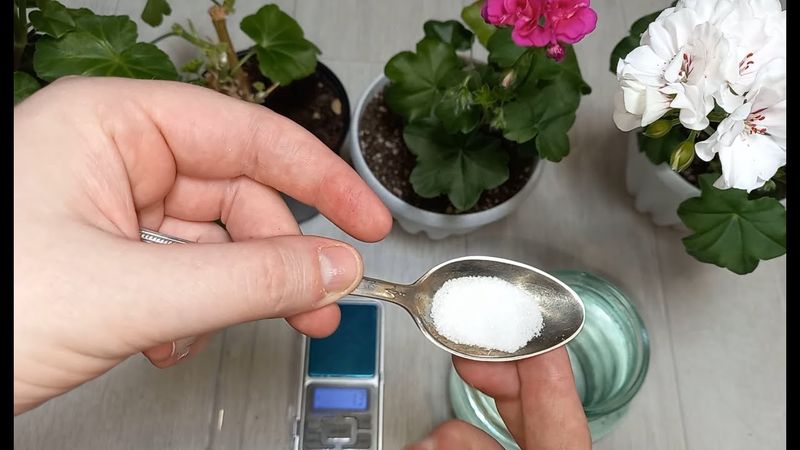
Bread bakers, grab your yeast. A popular old-school recipe uses it to perk up geraniums, and many gardeners swear by it for new bud formation.
Combine two teaspoons of fresh yeast, two tablespoons of sugar, and four cups of lukewarm water. Let it sit for an hour, then give each plant about one cup every two weeks.
The idea is that it may encourage healthy soil activity and root growth. Science on this one is thin, so treat it as a fun experiment and watch how your own plant responds.
12. Steep Onion Peel Water
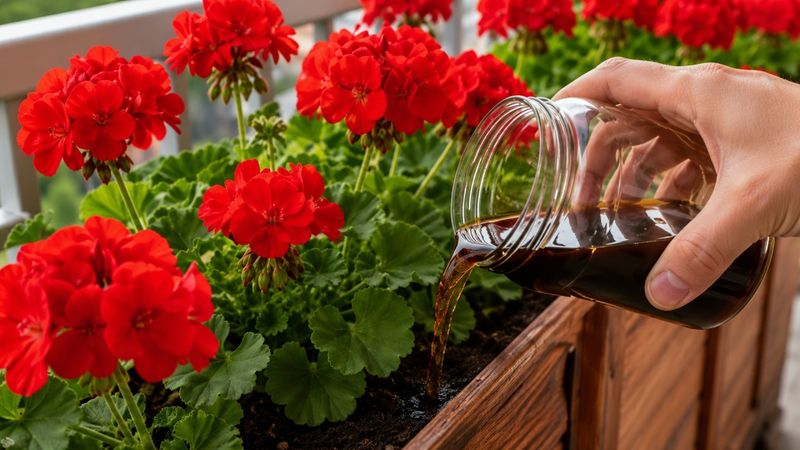
Those papery onion skins piling up in your kitchen are surprisingly handy. Onion peels contain small amounts of potassium and other minerals.
Steep two handfuls of peels in about a liter of hot water overnight. Strain, then dilute with another liter of water before pouring it on your geraniums.
Some gardeners also mist the undiluted liquid on leaves. If you try that, do it in the morning so foliage dries quickly, since damp geranium leaves in cool rooms can attract mold.
13. Make a Rice Flour Mixture
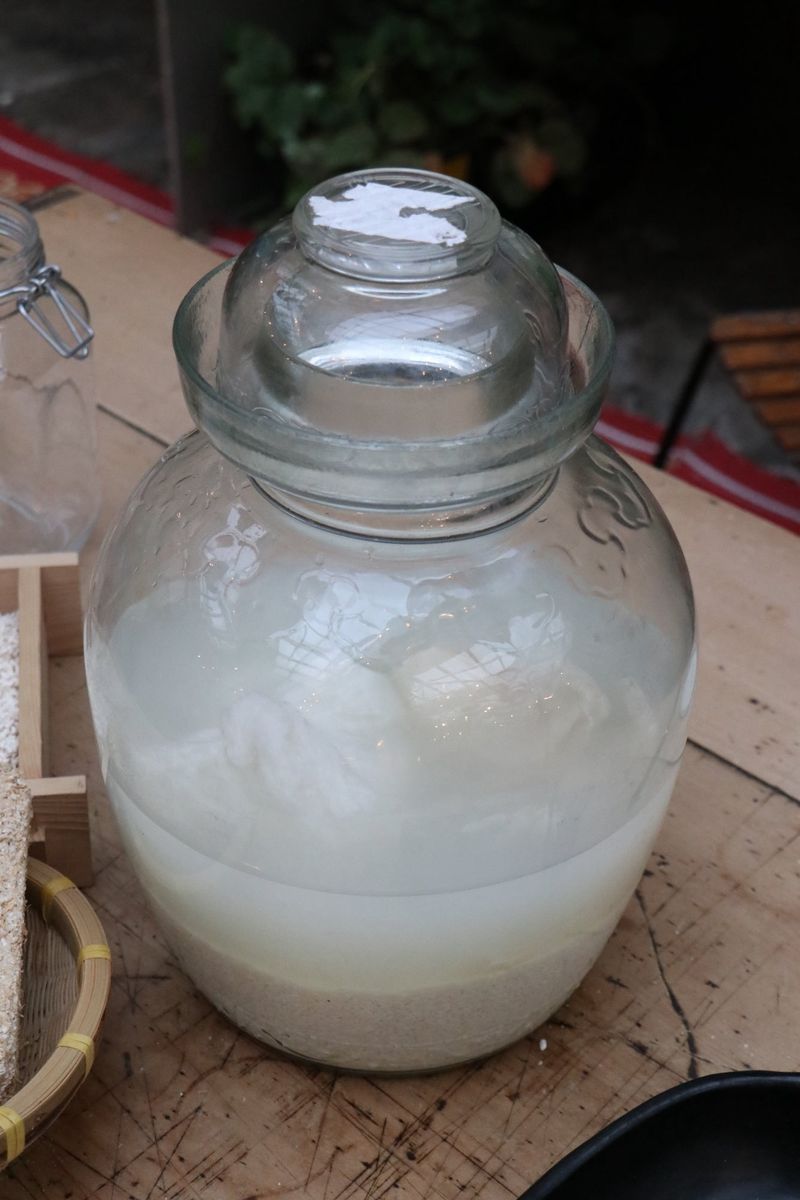
Here is one for patient gardeners. A rice flour mix is a folk recipe said to supply trace amounts of silicon, iron, and phosphorus.
Mix one tablespoon of rice flour and one tablespoon of sugar with half a liter of hot water. Let it rest for three days, strain, then dilute one part mix with five parts water.
Use it every two weeks as part of your watering. Skip it if you are already using a commercial bloom food, since stacking feeds is how plants get overfed.
14. Lean on a Proven Rose and Flower Food
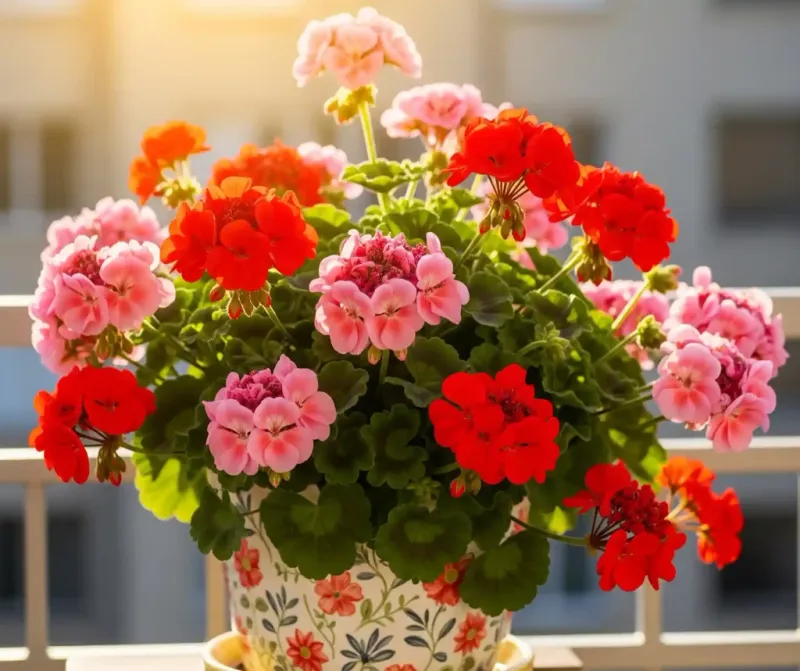
Sometimes the easiest answer is a product designed for flowers. Many indoor gardeners have good luck pairing a rose and flower food, like Master Nursery Rose and Flower Food, with a rich potting mix such as Gardener’s Gold.
Rose foods usually lean toward phosphorus and potassium, which suits geraniums nicely. A quality soil also holds nutrients well and drains freely.
Follow the label but cut the amount for winter. A sprinkle every couple of months can be plenty for a geranium indoors.
15. Feed Only When Your Geranium Is Actively Growing
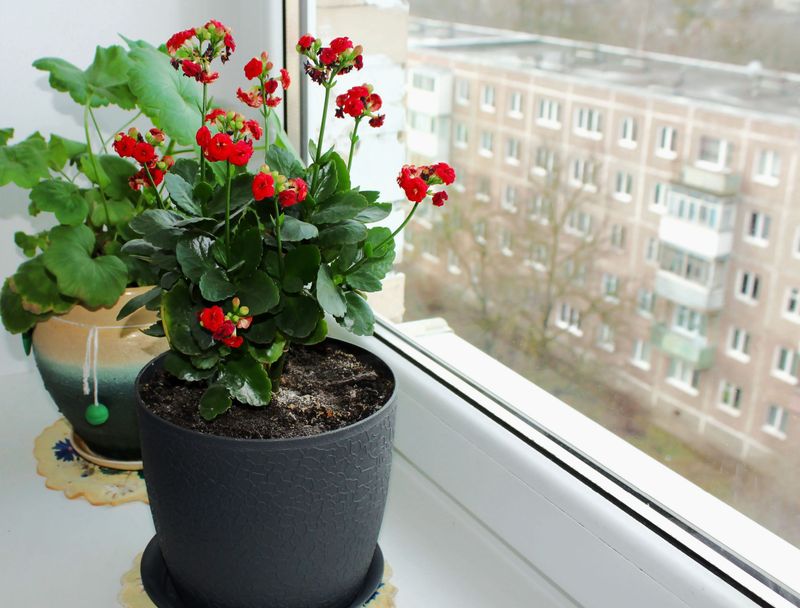
Your plant will tell you when it is hungry, if you know what to look for. Fresh leaves, new buds, and longer stems mean it is actively growing.
Most plants need little or no fertilizer during winter rest. If your geranium is sitting still with no new growth, extra food just builds up as salt in the pot.
Pale leaves or slow growth in a bright spot? That is the moment for a weak dose.
Checking first beats feeding on autopilot.
16. Mistake: Too Much Nitrogen or Overfeeding
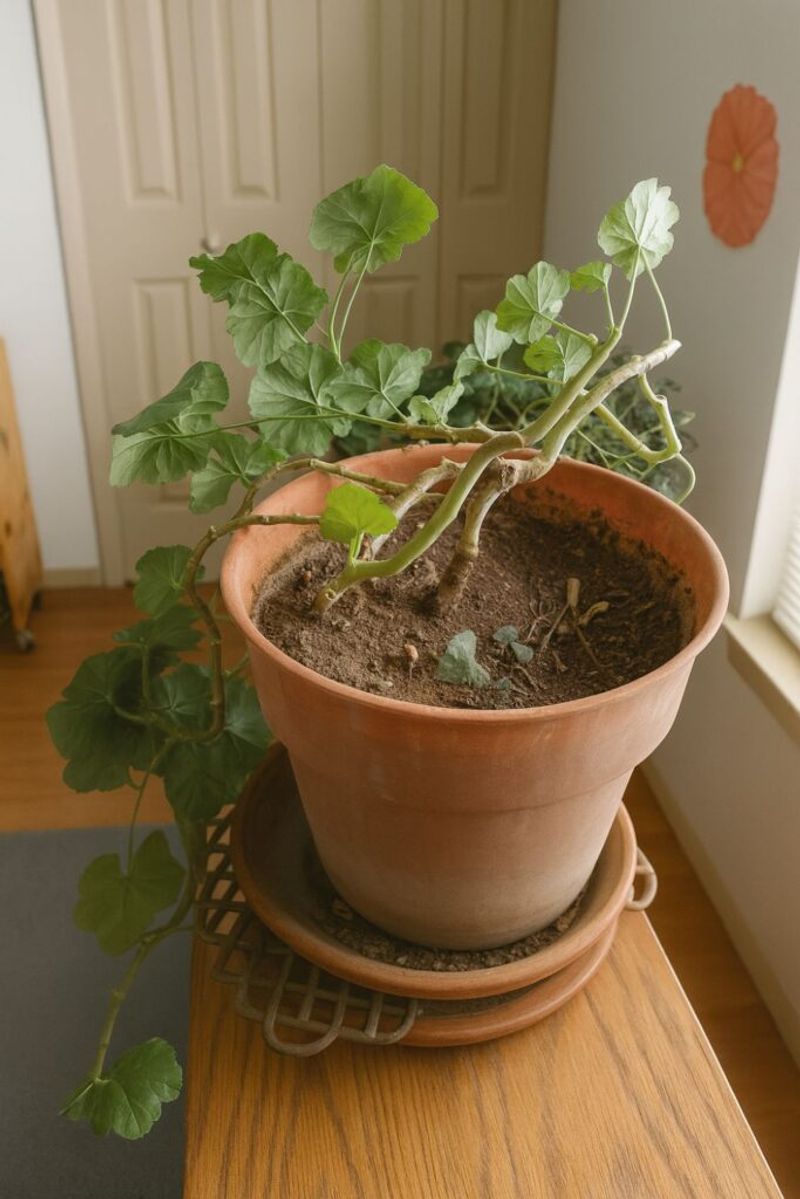
Gorgeous leaves, zero flowers. If that sounds like your geranium, nitrogen is likely the culprit.
High-nitrogen fertilizers, including lawn food and some all-purpose houseplant feeds, tell the plant to grow leaves instead of blooms. Feeding too often has the same effect, producing spindly stems and salt crust on the soil.
To fix it, stop feeding for a few weeks and flush the pot with plain water until it runs out the bottom. When you start again, choose a low-nitrogen bloom formula at half strength.
17. Mistake: Not Enough Light
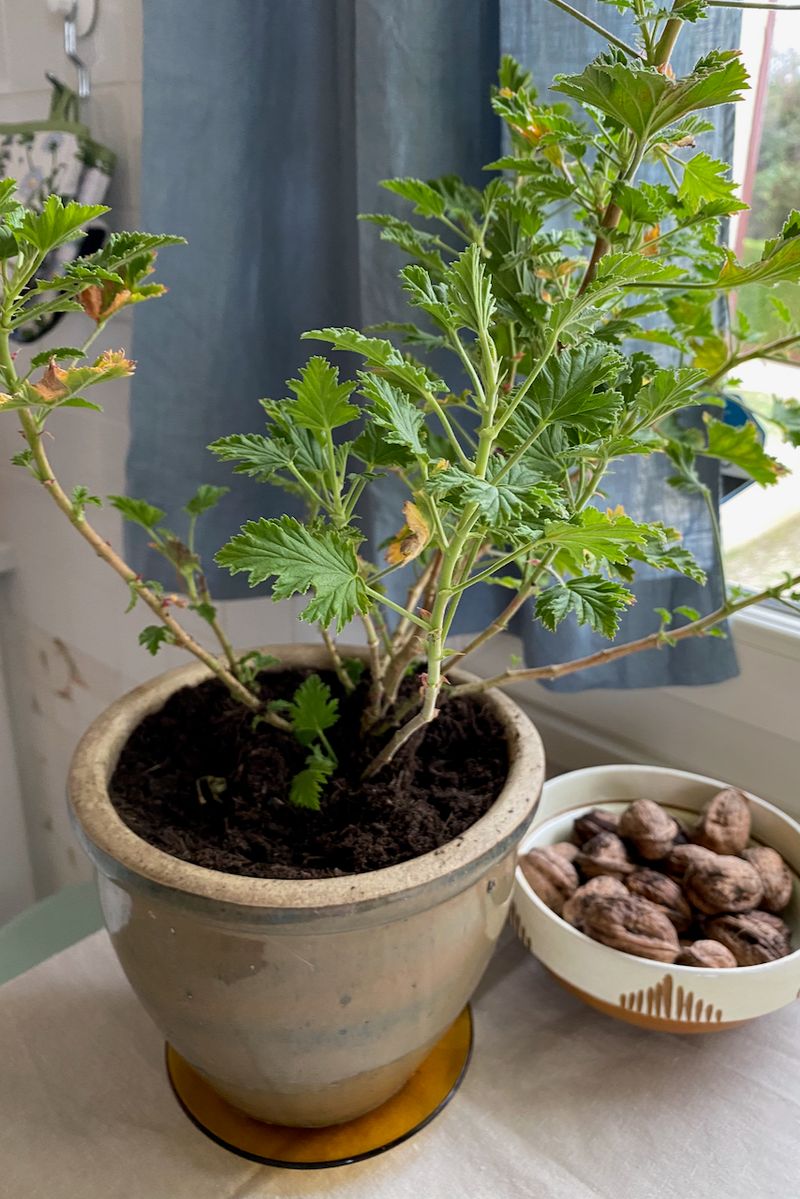
No feeding trick in the world can make up for a dark room. Light is the number one reason indoor geraniums stop flowering.
Geraniums need six or more hours of bright light a day to bloom well. In winter, move them to your sunniest south or west window, and turn the pot every week so stems grow straight.
If your home is dim, a simple LED grow light 6 to 12 inches above the plant for 12 to 14 hours can work wonders. Pair good light with cool rooms around 60 to 65 degrees, and those buds should start showing again.