
What It Could Mean When You Hear a Possible Great Horned Owl Hooting Outside Your North Carolina Bedroom Window This Fall
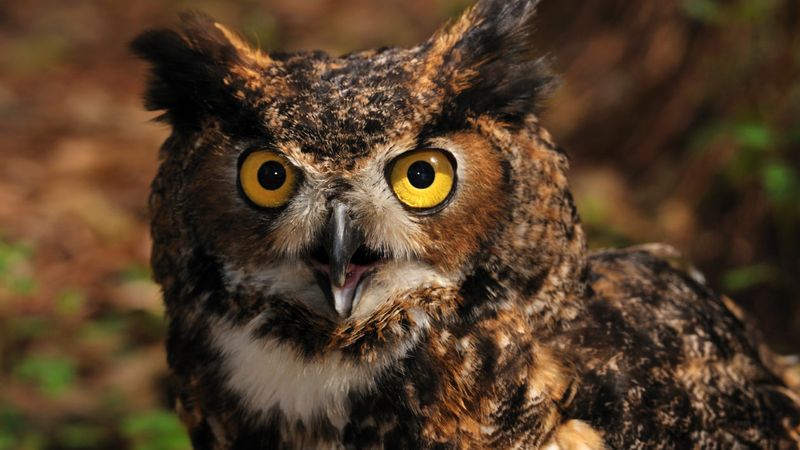
Maybe you were drifting off to sleep when a deep, stuttering hoot rolled across the yard. In North Carolina, fall is a busy season for owl voices, and the sound is usually ordinary wildlife talk, not a mystery.
Knowing what a call can tell you, and what it can’t, helps you enjoy it without worrying or disturbing the bird. Here is how to make sense of the night sounds outside your window.
Why great horned owl courtship calls rise in fall
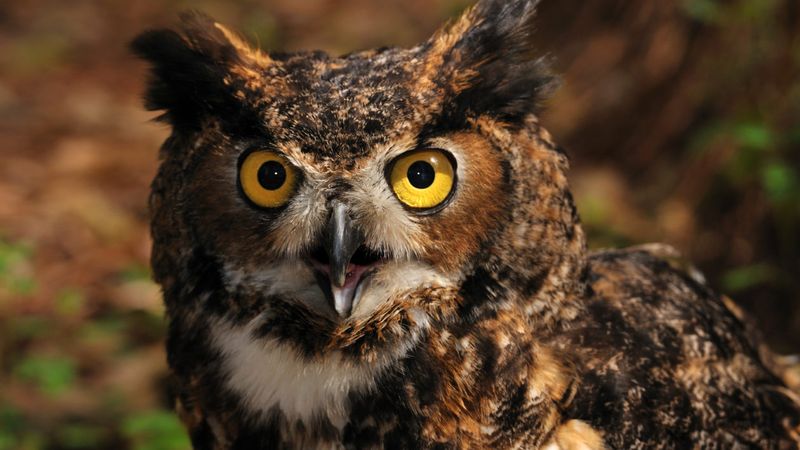
Evening in October can bring a new soundtrack to your neighborhood. North Carolina Wildlife says great horned owl courtship calling begins in October and peaks in November and December, often around dusk and after dark.
That is why so many people notice hooting just as the days get shorter and the air turns crisp.
Great horned owls live all across the state, and that includes suburbs. They do well in neighborhoods that have mature trees, wooded lots, and open spaces nearby.
So a call close to town is not unusual, and it does not mean something is wrong in your yard.
Keep the wording of that timing in mind, though. The October-to-December pattern describes courtship calling in great horned owls as a season.
It does not mean every single hoot you hear is a courtship call, and it does not mean every owl sound in fall comes from a great horned owl.
Think of it as a seasonal volume knob. Owls call at other times of year too, but fall and early winter are when the great horned owls get chatty.
If you hear a deep hoot on a November evening, a great horned owl is a reasonable guess, and a guess is all it is until you learn more clues.
The next sections explain what else those hoots can mean, how to tell them from other owls, and what you can safely do about them, which is mostly to listen.
A hoot can do more than court
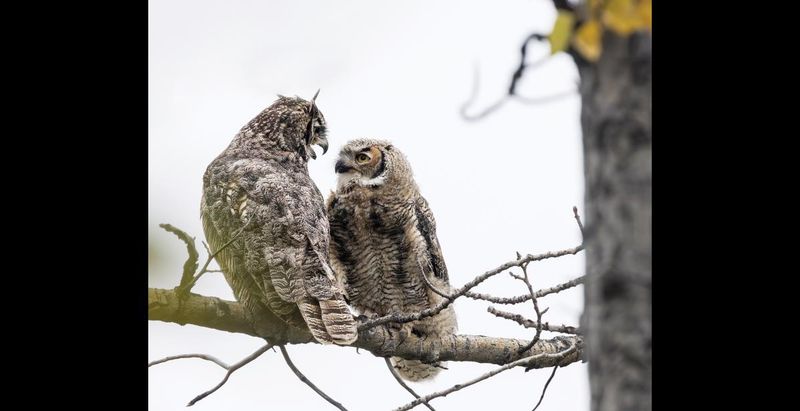
Owls have a small set of sounds, so one hoot often has to do several jobs. According to the Cornell Lab, the hoot is a way to advertise territory.
That means a bird may be announcing, in owl terms, that this patch of woods is taken.
Calls can also help defend a territory, and University of Maryland Extension describes both territorial defense and courtship calling. So a hoot in November could be a pair staying in touch, a bird warning off a neighbor, or a mix of those things.
From your bed, you cannot tell which.
Sometimes a male and female answer each other in a duet. In a pair’s back-and-forth, the female’s call is higher-pitched than the male’s.
That detail is fun to listen for, but pitch from far away is not a dependable way to say which owl is which, since distance, wind, and trees change how a sound reaches you.
Here is a practical way to hear it. If you catch two voices trading hoots, count the gaps between them.
A steady back-and-forth suggests two birds are communicating with each other.
That conversation is between the owls. The sound is not aimed at you, your house, or your window, even if it feels personal at midnight.
Could the caller be a barred owl?
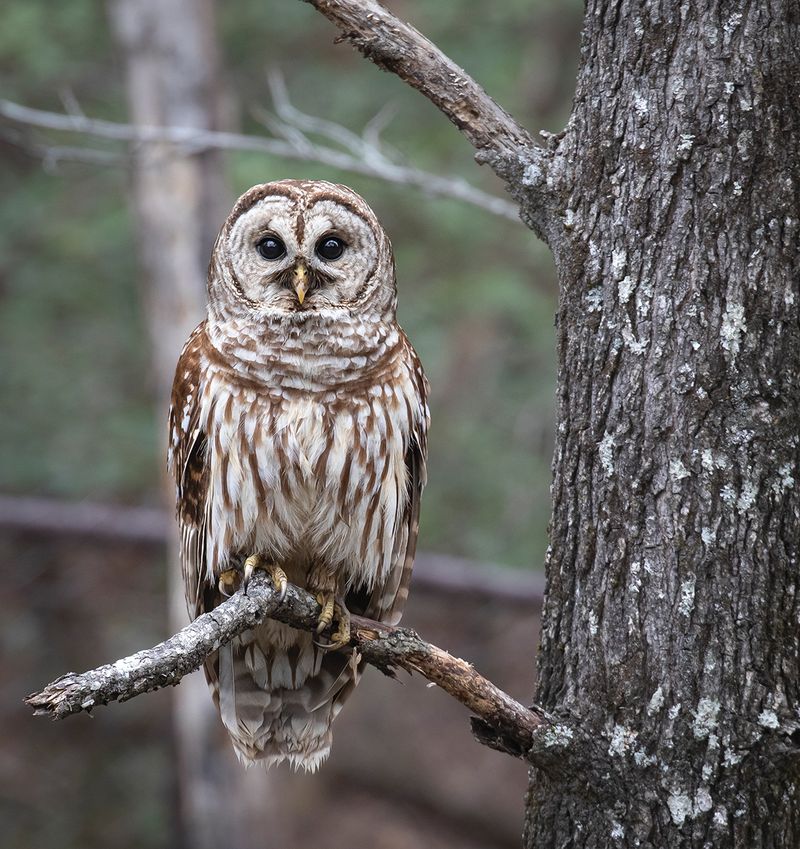
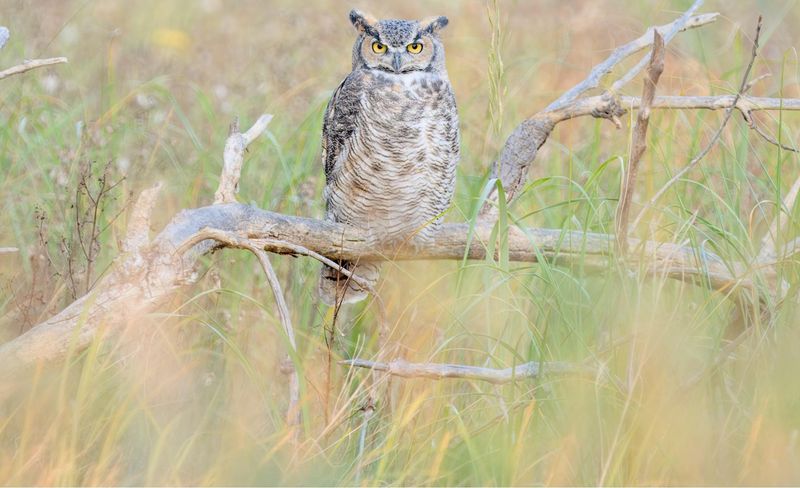
Plenty of people who think they hear a great horned owl are actually listening to another species. A great horned owl’s hoot is deep and stuttering, often a short string of low notes.
Cornell Lab sound pages describe it that way.
A barred owl sounds different. Its call is often longer, the familiar “Who cooks for you?” rhythm described in Cornell’s barred owl guide.
If your night visitor seems to be reciting a sentence, a barred owl is a good candidate.
Habitat adds another clue. Both species live statewide, according to NC Wildlife, but barred owls are more typical of swamps, floodplains, and moist woodlands.
A yard near a creek bottom or river swamp leans toward barred owls, while a drier suburban lot with scattered tall trees leans toward great horned owls.
Treat all of this as a set of hints. Words on a page cannot confirm which bird is calling, and a distant owl can sound different from the descriptions.
Some yards even hear both species in the same season.
Try writing down what you hear, such as short or long, deep or sharp, one voice or two. You can compare your notes to recordings later and decide which bird fits best, with some room left for doubt.
What a call from your window cannot tell you
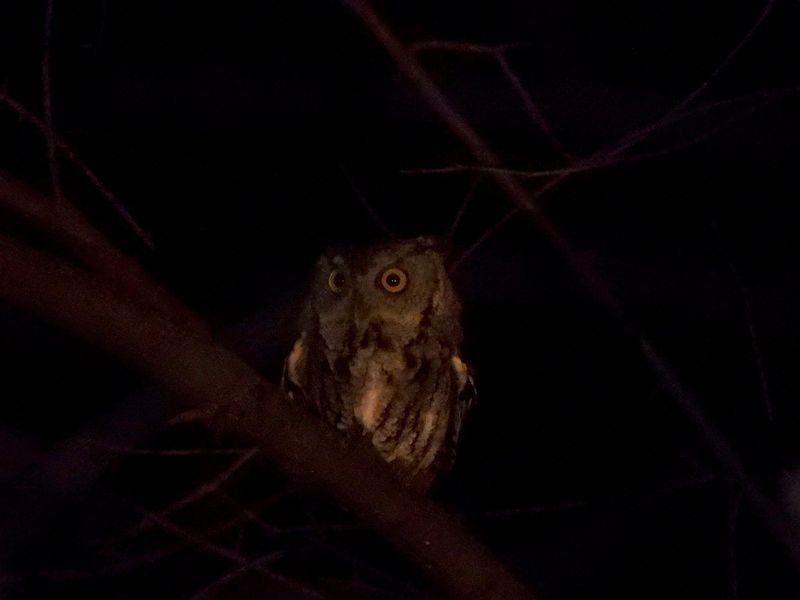
Owl sound travels surprisingly far through quiet night air, and trees can bounce it around. That makes a call seem to come from right outside, even when the bird is much farther away.
Hearing a hoot at the window does not pinpoint where the owl is sitting.
It also does not prove the owl is perched in your yard, nesting on your property, or courting a mate there. A call near your house does not show that the bird picked your lot, or that a territory edge runs along your fence.
Cornell notes in its great horned owl nest FAQ that estimated territory sizes vary widely with nesting density, food supply, and how they are measured.
Fall hooting does not mean eggs or chicks are already there, either. For the Carolinas, Cornell reports eggs are laid from late December to early January, and timing varies by location.
A November chorus is closer to the opening act than the nest.
The same goes for common sense about the setting. Because great horned owls are common in wooded suburbs, a call near a home is not a sign of an unusual event or a problem in your yard.
What you can say is simple. An owl, maybe a great horned one, called within earshot of your window.
That is plenty to enjoy.
Listen without drawing the owl closer
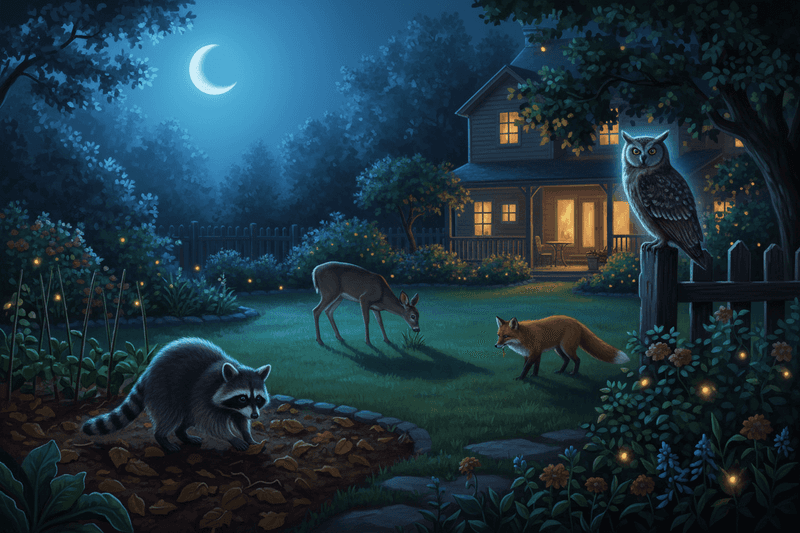
The easiest way to enjoy owls is also the kindest to them. Step onto the porch or crack open a window, keep the lights low, and just listen.
You can also set your phone to record from home and play the clip back in the morning.
Resist the urge to call back with a recording. Using playback to coax a response can pull a bird away from hunting or resting and add stress, and the American Birding Association’s code of ethics advises minimizing disturbance and using caution around nests and roosts.
The same thinking applies to flashlights and wandering. If you suspect a nest or roost in a nearby tree, do not walk over for a closer look.
Staying back keeps the birds calm and keeps you from guessing wrong about what is in that tree.
Restraint is not a chore here. You do not need to investigate the owl, manage it, or prove anything about it.
Your yard’s job is simply to remain a quiet, dark place where wildlife can go about its business.
A few easy habits help, such as turning off extra outdoor lights, keeping pets inside after dark, and making notes about the date and time of each call. Those notes make a nice record of how the season unfolds.
A grounded owlet may not need rescuing
Come spring, you might spot a fluffy young owl sitting on the ground and feel a rush of worry. NC Wildlife explains that a recently fledged owlet may spend several days on the ground while it learns to fly, and its parents may still be feeding it.
A bird on the ground is not automatically an abandoned bird.
The best move is usually to leave it alone and keep pets and people away. Step in only if the owlet is injured, sick, or in immediate danger, such as sitting in a driveway.
For an injured owl, contact a licensed raptor rehabilitator for advice before you handle or move it.
The law is on the owls’ side. Native owls are protected in North Carolina, and it is illegal to injure, harass, or kill them, or to harm or destroy an active owl nest.
That protection covers the quiet young ones in your yard as much as the loud adults overhead.
So the stewardship plan is gentle. Enjoy the hoots from a distance, watch from a window if a youngster shows up, and let the parents do their work.
Sound alone cannot confirm a nest in your yard, which is a good reason to keep your curiosity at arm’s length.
An owl’s best neighbor is the one who lets the night stay dark and the tree stay quiet.