
The North Carolina Native Tree That Feeds More Caterpillars Than Anything Else You Could Plant
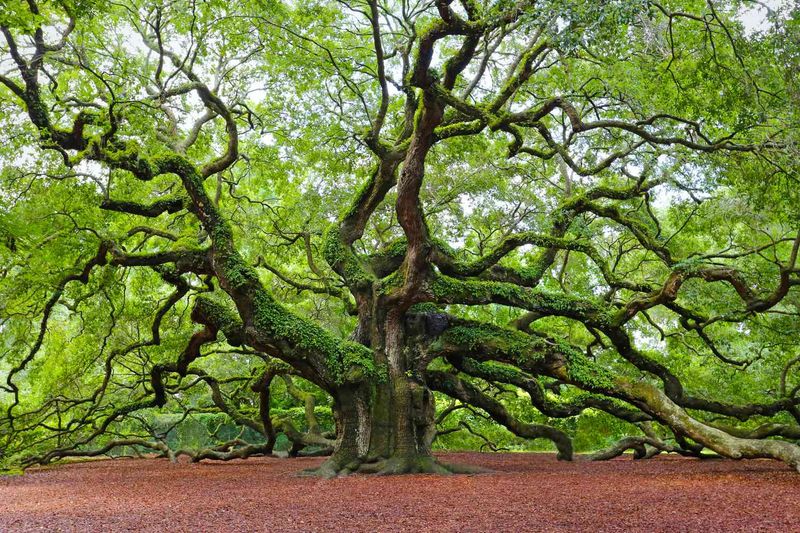
Chewed leaves on an oak can look like a problem, but they often mean the tree is doing its job. Caterpillars, the young stage of butterflies and moths, eat leaves, and many birds eat the caterpillars.
Researchers have ranked oaks at the top of the list for how many butterfly and moth species use them as host plants. Here is what that ranking means for your North Carolina yard and how to pick an oak that fits it.
What the 534-species figure really measures
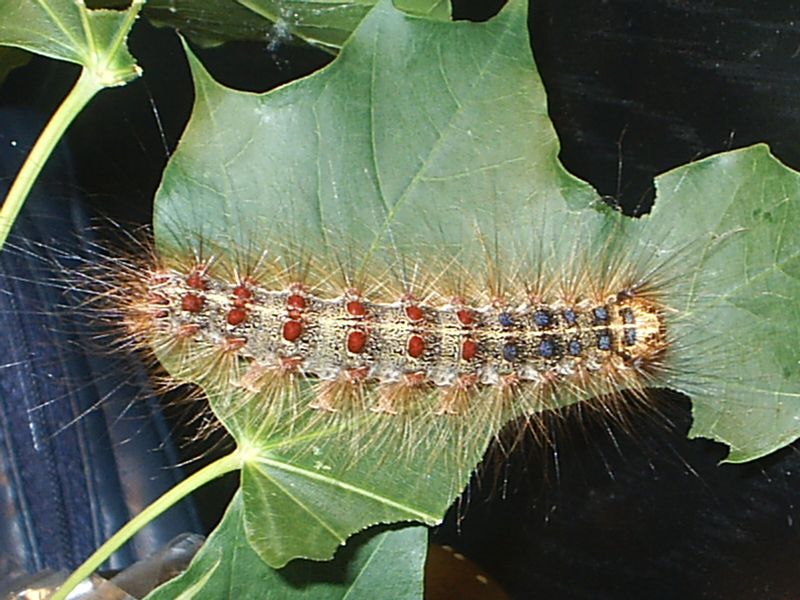
A peer-reviewed 2009 mid-Atlantic study ranked plant genera by how many butterfly and moth species are recorded using them as hosts. Oaks, the genus Quercus, came out first.
Researchers recorded 534 Lepidoptera species with host relationships to oaks, ahead of cherry and plum at 456 and willow at 455.
Read that number carefully. It is a total for the whole oak genus across a region, not a count for one oak species and not a count for one tree.
It also is not a North Carolina number, because the study area did not include our state. Think of it as strong regional evidence that oaks matter to moths and butterflies, not an exact local tally.
The researchers built their list from host records in published sources. Many of those records named only the plant genus, so the data cannot always say which oak species a caterpillar ate.
The study measured how many species have a recorded link to oaks. It did not measure how many caterpillars a backyard oak produces.
The National Wildlife Federation uses this research in its Native Plant Finder, which is why you may see oaks credited with supporting more than 500 species. That is a fair summary of the genus.
It does not promise that your yard will host them all, since local insects, neighboring plants, and site conditions all play a part.
So the title’s big claim needs a narrower wording. Among plant genera in that study, oaks had the richest documented host list, and that is a solid reason to consider one.
Caterpillars connect an oak to the bird food web
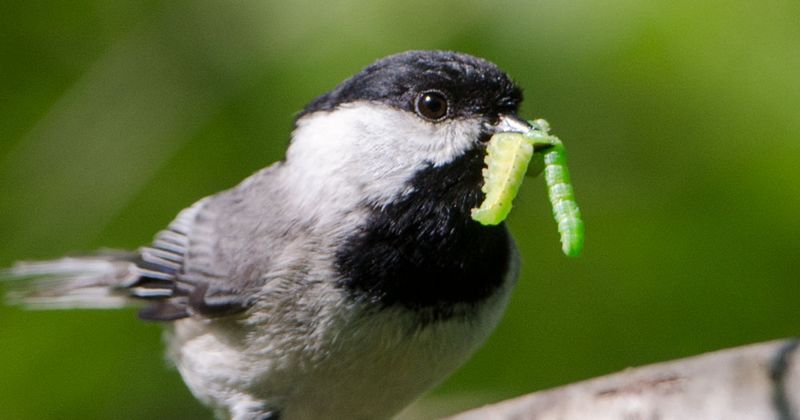
Many songbirds spend spring and summer hunting soft, protein-rich insects, and caterpillars are a big part of the menu. NC State Extension notes in its native plants chapter that the foliage of canopy trees supports caterpillars that birds eat.
That is the link between an oak leaf and a chickadee, wren, or warbler.
This is a food-web benefit, and it works at the level of the whole landscape. An oak that hosts caterpillars adds a food source to the neighborhood.
It does not guarantee that birds will visit your yard, build nests in it, or raise young successfully.
The host-plant research backs the caterpillar side of the story. The mid-Atlantic ranking shows oaks are used by a wide range of butterfly and moth species.
It did not count birds, and it did not test what a single planted tree does for nesting.
A practical way to see the connection is to watch your own tree. On a May morning, look for small birds working the leaf clusters and branch tips.
If you see them, you are watching the food web at work, even though no study promised it.
The right oak depends on where you garden
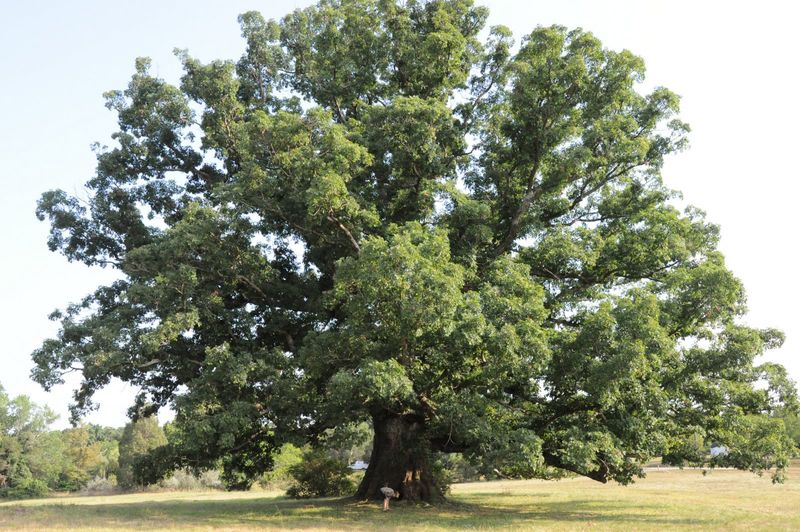
North Carolina stretches from mountain ridges to coastal sands, and no single oak fits every yard in between. A tree that thrives in a Coastal Plain lot may struggle on a mountain slope.
Start with your region, then look closely at your own soil, drainage, and sun.
NC State Extension lists white oak among canopy trees suited to the Mountains, Piedmont, and Coastal Plain in its native plants guidance. That makes white oak a reasonable candidate to research for many yards.
It still needs a site that matches what it likes.
Southern live oak is a different story. According to the NC State Plant Toolbox, it grows in the Coastal Plain, so it is a coastal option and not a pick for a Piedmont or mountain yard.
Before you buy, walk your property and check a few things. Does water pool after a storm, or does the soil drain fast and dry out?
Does the spot get full sun most of the day? Your answers narrow the list, and your county Extension office can help you match a native oak to the spot.
Can your yard give a canopy tree enough room?
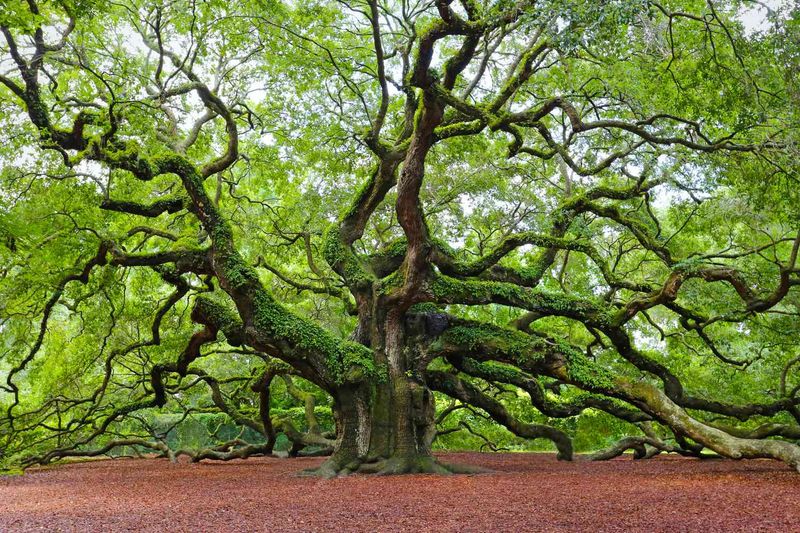
Picture the tree at 40 years old, not the sapling in the nursery pot. Canopy trees commonly reach 40 to 80 feet or more, according to NC State Extension.
Spread matters as much as height, because a wide crown can shade a house, drop limbs, and crowd its neighbors.
Southern live oak is a good example of how big the footprint can get. Its broad crown can spread 40 to 100 feet, based on the NC State Plant Toolbox.
That is far wider than many suburban lots.
The NC Forest Service gives live oak specific planting advice in its Arbor Day guidance. Allow at least 40 feet of open space, keep the tree at least 15 feet from sidewalks and other hardscape, and stay away from utility lines.
The agency also flags live oak as highly flammable and says not to plant it within a home’s defensible space.
Those numbers belong to live oak, not to every oak. A different species may need more or less room, so look up the mature size of the specific oak you want.
If your yard is small, it is better to learn that now than to face a costly removal later.
A careful first season helps an oak establish
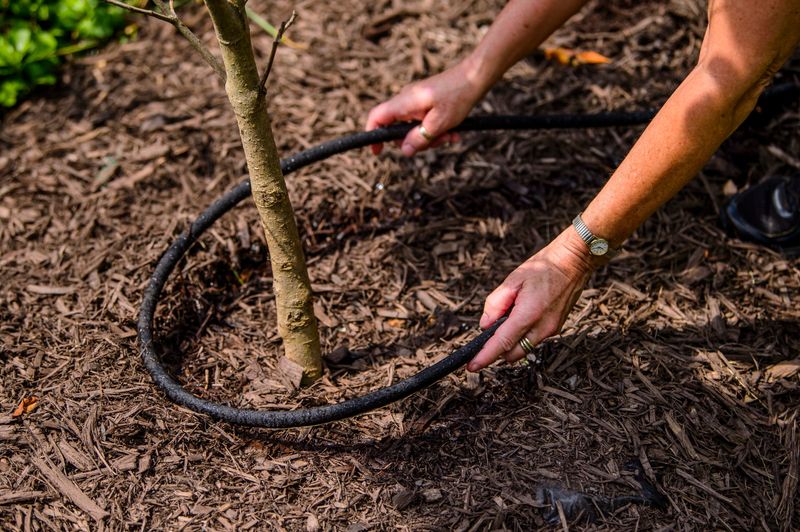
A young oak has not yet grown the deep roots that carry a mature tree through dry spells. The first season is when your attention pays off most.
NC State Extension advises in its native plants guidance keeping new native plants well watered for the first few weeks.
After that, adjust your care to the species, the soil, and the site. A tree in sandy ground may need attention sooner than one in heavier soil.
Instead of following a fixed calendar, check the soil a few inches down and water when it feels dry.
A few habits help. Keep a ring of mulch around the trunk without piling it against the bark.
Keep mowers and string trimmers away from the base, since bark wounds are an easy mistake on young trees.
Good establishment care helps the tree survive and grow. It does not change what the study found about oaks and their host species.
It simply gives your oak the chance to reach the size where it can matter for wildlife.
Chewed leaves do not automatically call for spraying
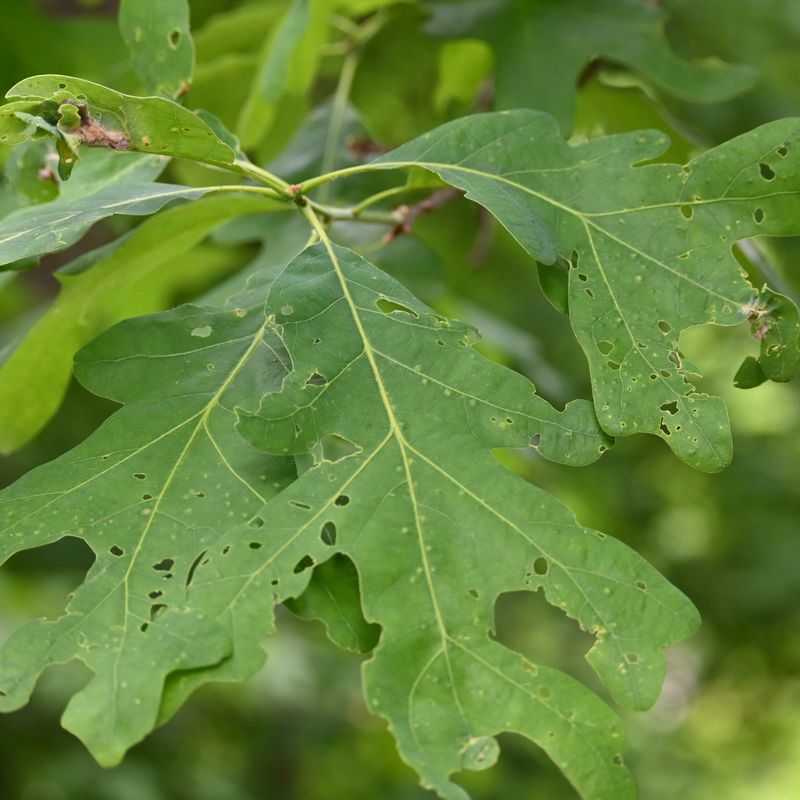
Holes in oak leaves are often the sign you wanted. Caterpillars that eat foliage are the reason oaks rank so high for wildlife, so a few chewed leaves are usually ordinary.
Spraying just because something is eating the tree can also harm the other insects you hoped to support.
Start by identifying what you are seeing. NC State’s guide to common insect pests of oak in North Carolina separates particular pests and circumstances, so a photo and a close look at the insect come first.
Your county Extension office can help with an ID.
Then assess the damage. Ask how much of the canopy is affected and whether it happens year after year.
NC State notes that repeated defoliation can harm trees, and young trees deserve extra attention because they have fewer reserves.
Spongy moth is one specific concern. NC State reports it is invasive and affects oaks, but it is not considered established in North Carolina, and the state manages sporadic infestations.
If you suspect it, report it instead of guessing at a treatment.
For light, scattered chewing, the usual best step is to wait and watch.
Plant for habitat, not a guaranteed nest
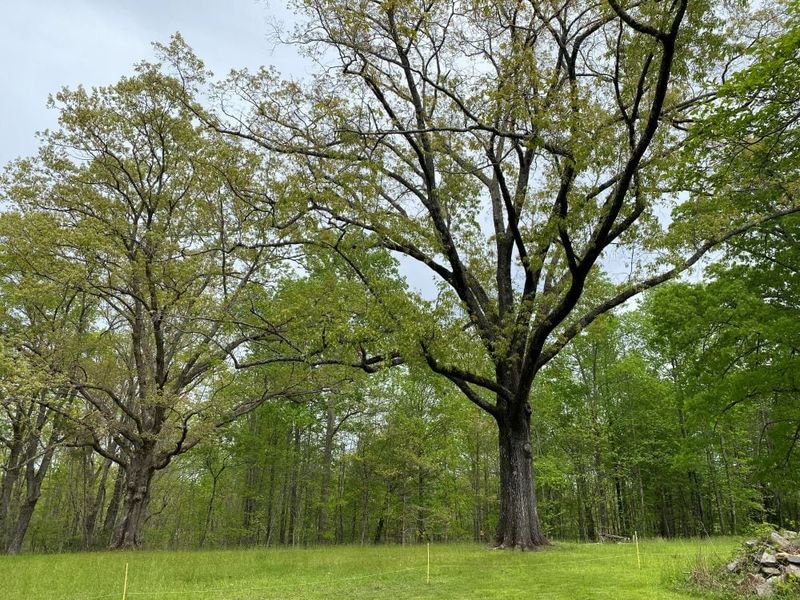
A well-chosen oak can add real caterpillar habitat to your yard. The 534-species result describes regional host records for the whole oak genus, not a promise for one tree or one property.
Plant it as a good bet, not a guarantee.
Pick an oak that fits your region and your space, then care for it through its first seasons. NC State’s native plants guidance points toward diverse, layered plantings for broader wildlife benefits.
Add shrubs and perennials beneath the canopy so the oak is one part of a bigger system.
An oak is a long project, and the payoff builds slowly with every leaf it grows.