
Stop Spreading Road Salt Near Your Garden Beds This Winter – Here’s What Protects Your Soil Instead
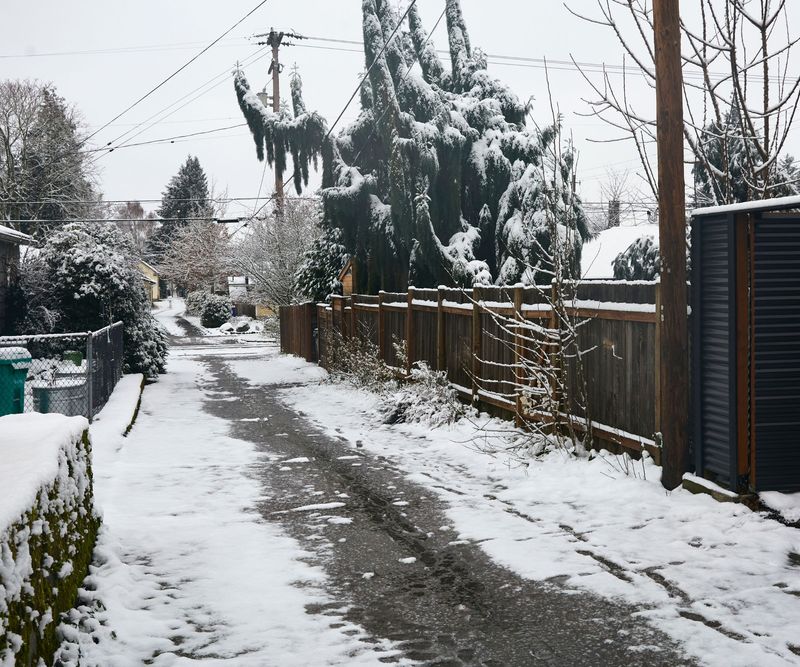
That bag of rock salt by the door might be quietly poisoning the soil your hydrangeas, roses, and tomatoes depend on. When salted snow melts, it soaks into nearby beds and can leave plants wilting, browning, or refusing to bloom come spring.
The good news is that a few simple swaps can keep your walkway safe and your garden healthy. Here are seven easy ways to protect your soil before the next storm hits.
1. Switch to Calcium Magnesium Acetate

Picture your hydrangea bed sitting right next to the front steps, soaking up every drop of melted ice all winter. If that melt carries sodium chloride, the shrub may leaf out weak and skip blooming altogether.
Calcium magnesium acetate, often sold as CMA, is one of the gentlest swaps you can make.
CMA is made from limestone and vinegar’s main acid, so it contains no chloride at all. It is much kinder to plants, pets, and concrete.
The tradeoff is that it works best when temperatures stay above about 20 degrees Fahrenheit.
For most US winters, that covers plenty of storms. Keep a bag of CMA for steps and paths that border your flower beds, and save stronger products for truly frigid days far from the garden.
2. Reach for Sand or Grit Instead of Melting
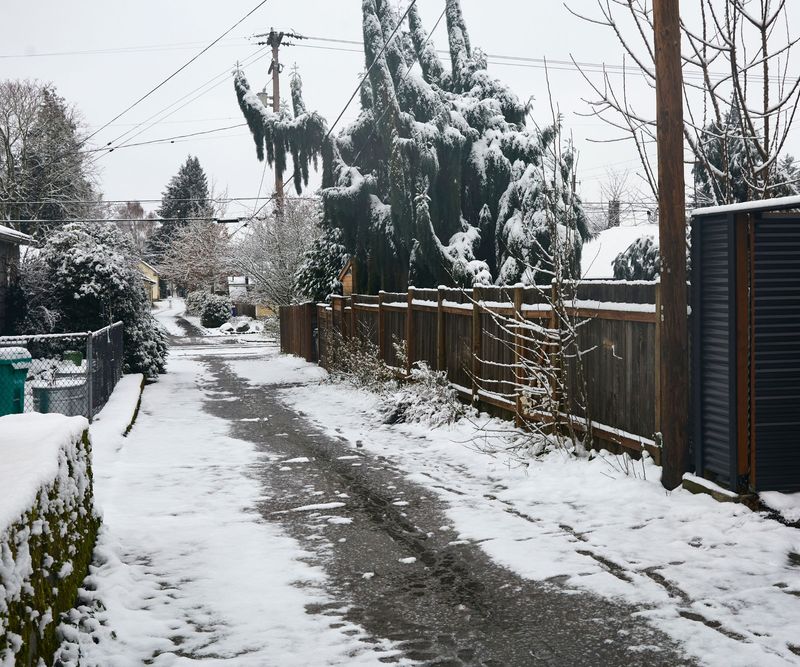
Sometimes you don’t need ice to disappear. You just need to keep from slipping on your way to the mailbox.
Sand, fine gravel, and stone grit give your boots instant grip without adding a single grain of salt to the soil. Coffee grounds and sawdust work in a pinch for small spots, too.
None of them melt ice, but they make it far safer to walk on.
Here’s a bonus most gardeners love: a little sand washing into a bed won’t burn your roses or tomato patch. Just sweep up the heavy leftovers in spring so they don’t build up into a crusty layer.
Keep a bucket and scoop by the back door, and you’ll be ready the moment freezing rain starts.
3. Use Any De-Icer the Smart, Sparing Way
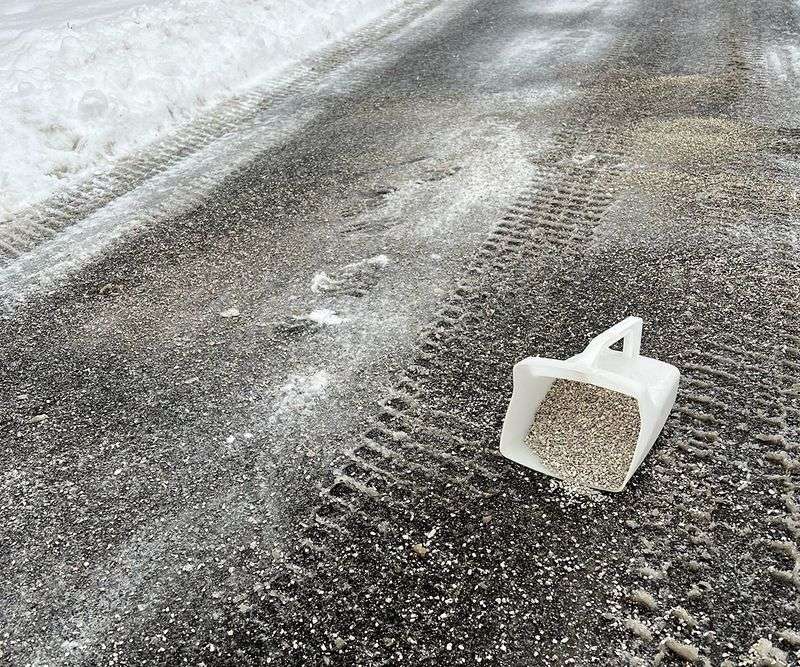
A single coffee mug. According to university extension experts, that is often enough de-icer to treat a 20-foot driveway.
Most of us dump three or four times that amount without thinking.
If you do use calcium chloride, magnesium chloride, or even regular salt, target only the trouble spots. Think steps, slopes, and the patch where you climb out of the car.
Leave flat, rarely used areas alone.
Once the ice melts, grab a broom and sweep up leftover crystals before the next thaw washes them toward your beds. That one habit can keep a surprising amount of salt out of the soil around your clematis and perennials.
Sugar beet juice blends are another helpful option, since they boost melting power so you can use less product overall.
4. Put Up a Burlap Barrier
Plows don’t care about your garden. Every pass along the street can fling salty slush and spray onto shrubs closest to the road.
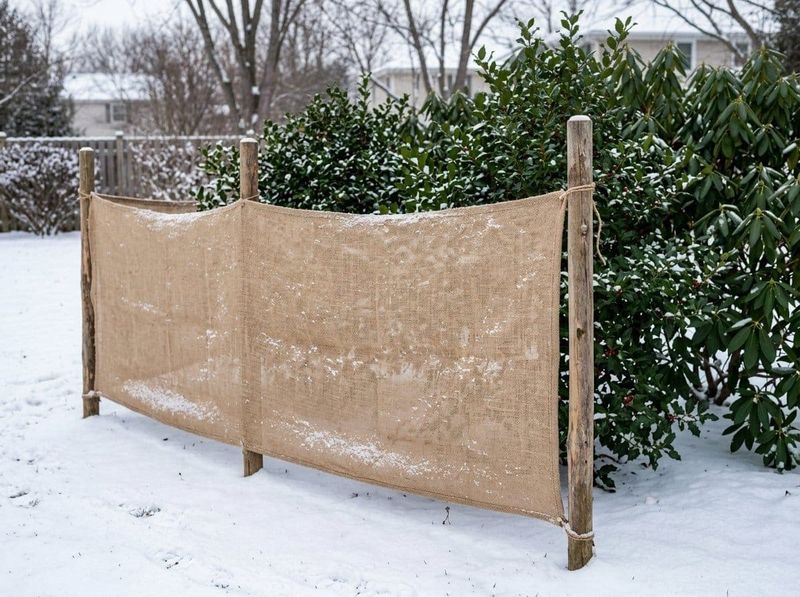
A simple burlap screen, snow fence, or plastic sheeting catches that spray before it lands. Set it up before the ground freezes, usually around early November in colder states.
Place it 1 to 2 feet back from the curb and make it tall enough to block the typical snowbank.
Evergreens like yews, junipers, and hollies are especially at risk, since they hold leaves all winter and soak up salt. Hydrangea buds can also dry out from spray, which may mean fewer flowers next summer.
A few stakes and a roll of burlap is a cheap insurance policy.
5. Shovel Snow With a Plan

Where does your snow go when you clear the walk? For a lot of folks, it lands right on top of the nearest flower bed, salt and all.
Treated snow should be piled somewhere that won’t drain into your garden, like a lawn corner or along the driveway’s far edge. Clean, untreated snow is a different story.
Shoveling it onto beds actually helps, because it insulates roots and adds moisture as it melts in spring.
Take a minute to map out your yard. Pick one dumping zone for salty snow and one for clean snow, and your roses and perennials will thank you.
6. Build Soil Defenses With Compost and Mulch
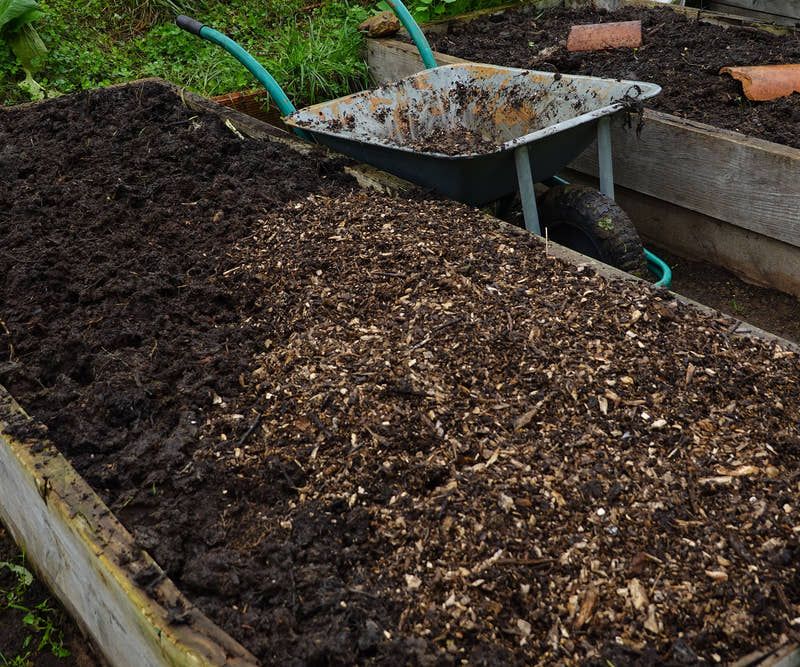
Healthy soil acts like a sponge with a backbone. Salt breaks down that structure, pushing out calcium, magnesium, and potassium and leaving soil compacted and hard for roots to breathe.
Spreading compost, aged manure, or leaf mold in fall feeds the tiny organisms that keep soil loose and rich. After the ground freezes, add 3 to 4 inches of straw, shredded leaves, or wood chips.
Keep mulch a few inches away from stems to prevent rot.
This layer evens out temperature swings and holds moisture. It won’t make soil salt-proof, but well-built soil can recover faster.
Your tomato bed will start spring in much better shape.
Fun fact: winter rye and clover cover crops can do similar work, protecting bare soil and adding organic matter when turned under.
7. Flush the Soil in Spring and Watch for Warning Signs
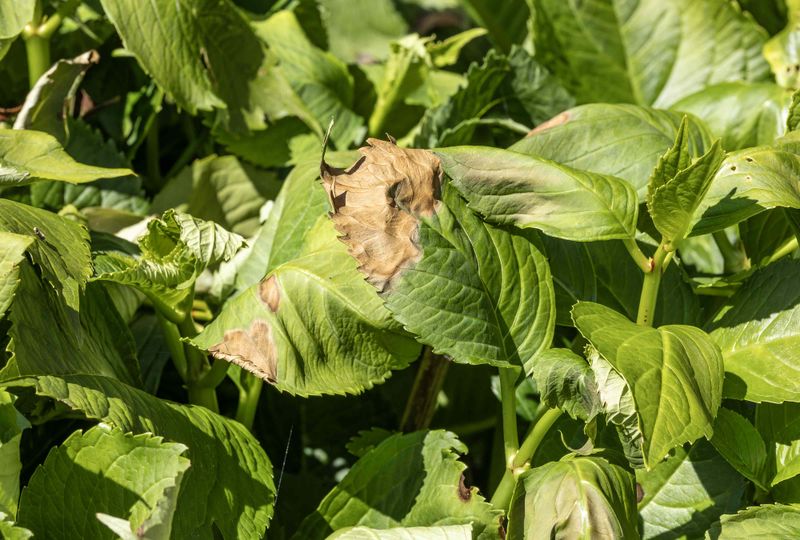
Spring arrives, and your hydrangea looks thirsty even though the soil is damp. Brown, crispy leaf edges show up mostly on the side facing the driveway.
That pattern is a classic clue of salt damage, sometimes called physiological drought.
Salt pulls water away from roots, so plants wilt even in moist soil. Other signs include yellow leaves, stunted growth, twig dieback, and fewer blooms.
The rescue is simple. Once the freezing weather passes, give beds near pavement a deep, slow soaking with the hose.
Repeat a few times over several weeks to help push salt down below the root zone.
For new beds near the road, consider tougher plants like rugosa roses, lilacs, viburnums, or potentilla.