
Why Creeping Charlie Comes Back After Pulling and How to Manage It With Follow-Up
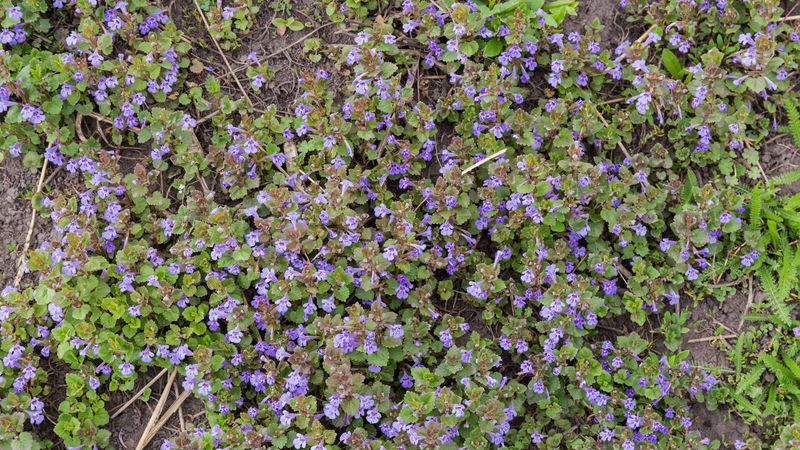
You pulled a big green mat of Creeping Charlie, the bare spot looked great, and a few weeks later it was creeping back. That does not mean you did something wrong.
This weed has several ways to restart from small bits left behind. Knowing where it hides, and when to act, makes control much more realistic.
Why does Creeping Charlie return after a pull?
Anyone who has tugged out a handful of Creeping Charlie and watched it return has good reason to be frustrated. Yanking off the leafy tops is only part of the story, though.
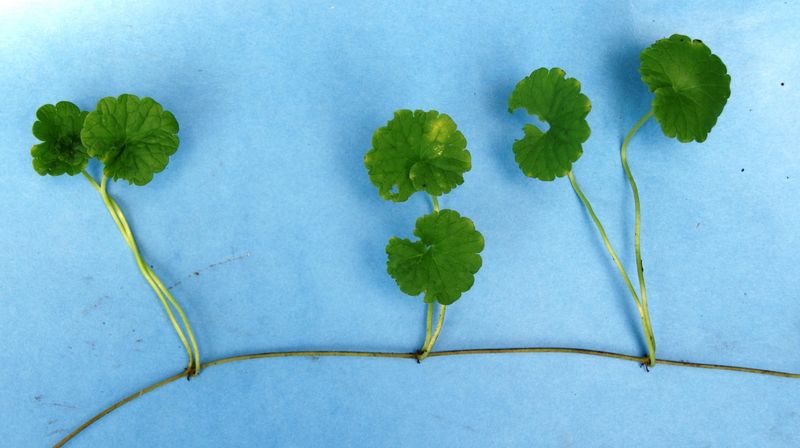
The plant spreads by creeping stems that root where they touch soil, and Minnesota Extension also describes horizontal underground roots and seed as ways it spreads.
That means a rooted piece of stem, a bit of root, or a small shoot left in the soil can grow into a new plant. A tidy-looking pull can leave plenty of this viable material behind.
Blaming the leaves or the roots alone misses the bigger picture, which is that any living section can restart.
Here is the good news. Pulling is not a lost cause.
Iowa State Extension describes careful hand removal as a workable option, and a small patch can be brought under control when you remove the stems and rooted sections and then repeat the job as new growth appears.
The goal is not a single perfect pull. It is a thorough first pass followed by a few quick return visits.
Follow the runners, not just the leaves
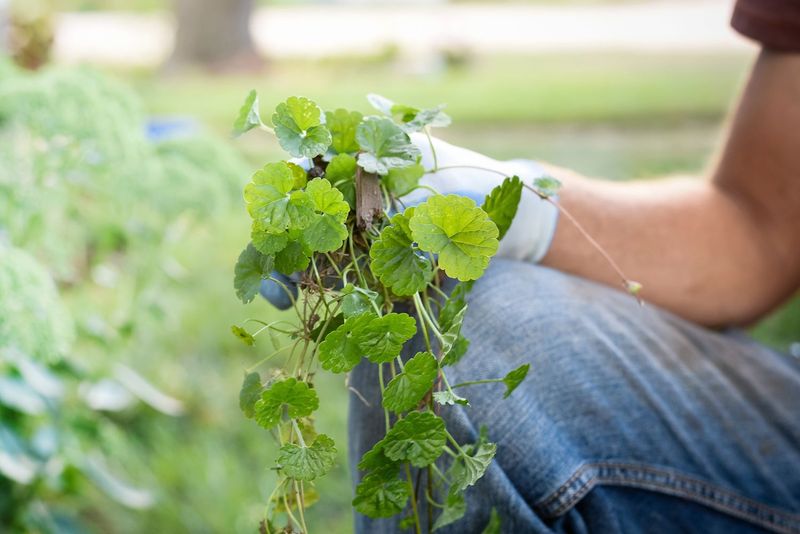
Timing your work helps more than muscle. Pull or dig after a good rain or a deep watering, when the soil is soft and the stems slide out without snapping into tiny pieces.
Dry, hard soil tends to leave more fragments behind.
Start at the edge of the patch and find a runner. Follow each creeping stem back along the ground, lifting it as you go, and check every point where it has rooted into the soil.
A hand trowel or garden fork can loosen those rooted sections so they come up whole.
Take out as much root as is practical, but do not stress over every last thread. Focus on getting the stems and rooted sections, since those are what restart the patch.
Iowa State Extension also advises removing the pulled material from the site so it cannot re-root.
Bag it or carry it to a spot where it will not touch soil. Leaving it in a pile on the bed, or tossing it into a loose compost heap, can give it a chance to root again.
Now plan to return. Look over the area every week or two, and pull any new stems while they are small and easy to follow.
Thorough removal can take several rounds, so a few green sprouts in the second week are normal and not a sign of failure.
In a lawn, the scale of the infestation changes the plan
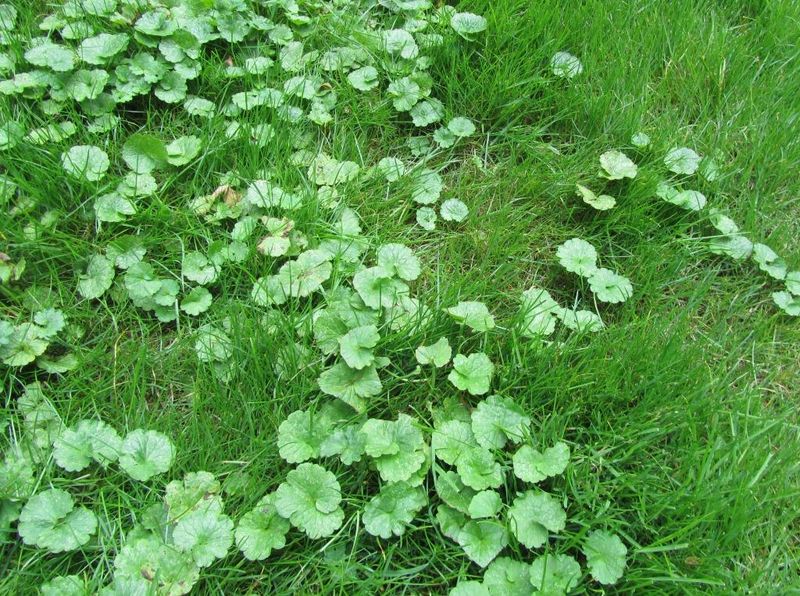
A handful of plants in a lawn is a very different job from a lawn that is half covered. For a few scattered plants, you can lift them out with a trowel, taking the runners with them.
Once the weed has knit itself through the turf, pulling it cleanly gets much harder.
Thick stems weave among grass blades, and it is easy to leave rooted pieces behind. That is why a dense or long-established infestation often calls for another approach, which the next sections cover.
Healthy turf still matters. Illinois Extension lists dense, vigorous grass as a way to discourage the weed from moving back in.
Good mowing, watering, and feeding keep gaps from opening up. Better turf alone will not remove a patch that is already established, but it makes reinvasion less likely.
Shade deserves a close look too. Creeping Charlie thrives in shady, damp spots where ordinary lawn grass struggles.
Wisconsin Extension notes that in these places you may need a shade-tolerant grass, or you may decide another groundcover suits the spot better than turf.
If a corner stays dim all day, treat that as a site limit and not a failure of your lawn care.
Fall is a useful window, not a nationwide deadline
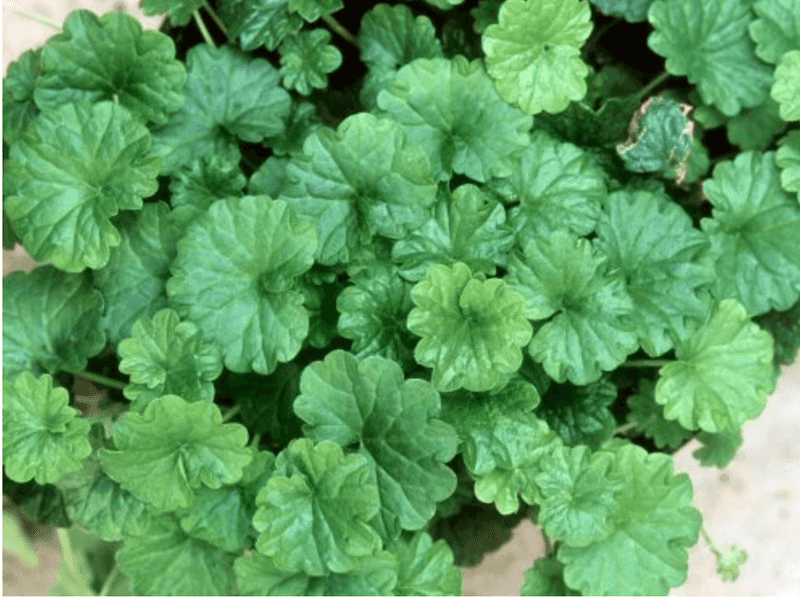
Autumn can be a good moment to go after Creeping Charlie in a lawn. It is a perennial that keeps growing as the weather cools, and a postemergence herbicide works best while the plant is actively growing.
Fall is not a magic deadline for hand-pulling, and it is not one date for the whole country.
Regional advice shows why. Iowa State Extension points to late September through early November, and says two applications may be needed.
Wisconsin Extension describes mid to late autumn as a good time and notes that a spring follow-up may be useful.
Your own window depends on where you live and what the plants are doing. If the weed is green and growing, that is the cue.
If it has gone dormant, a treatment will likely do little.
Do not assume every weed killer works the same way. University guidance varies on the most effective active ingredients, and local weed populations may respond differently.
Your local extension office can tell you what suits your area.
Whatever you choose, the product label rules. It states which sites are allowed, the timing, and the directions, so read it before you buy and again before you spray.
Expect that a second application or a later check may be needed.
Keep lawn treatments away from the plants you want
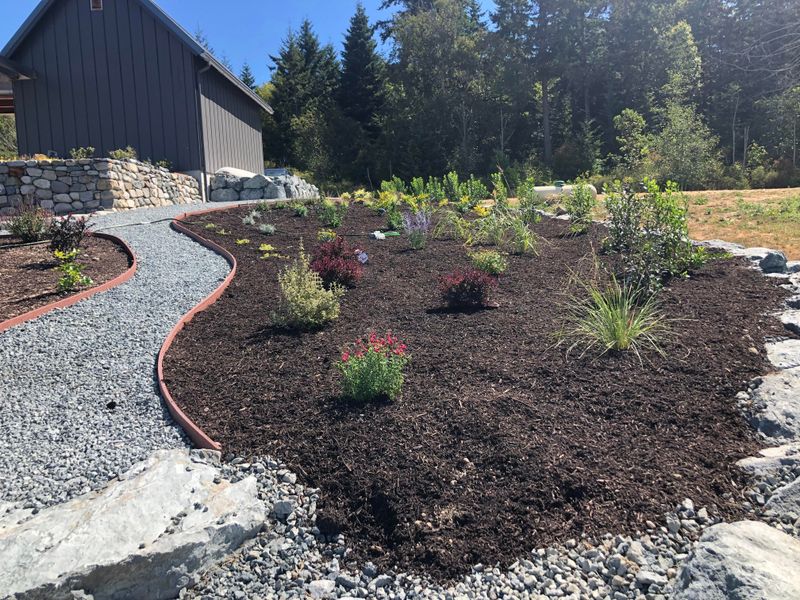
Lawn herbicides are built to hit broadleaf weeds, and your tomatoes, beans, zinnias, and petunias are broadleaf plants too. Iowa State’s guidance on controlling Creeping Charlie cautions about injury to desirable broadleaf plants.
Keep these products out of flower and vegetable beds unless the label specifically allows that use.
Drift and runoff matter as well. The EPA explains in its introduction to pesticide drift that spray can move off target and reach nearby plants.
Skip windy days, apply carefully near bed edges, and follow the label on weather and watering.
You may be tempted by a home remedy like borax. It does not hold up.
Iowa State says its effectiveness is inconsistent and does not recommend it, and Wisconsin Extension notes it can injure turf and other plants.
So borax is not a dependable or safe natural fix. If the weed is tucked beside plants you love, hand removal is the safer choice for those spots.
The lasting fix is a repeatable check
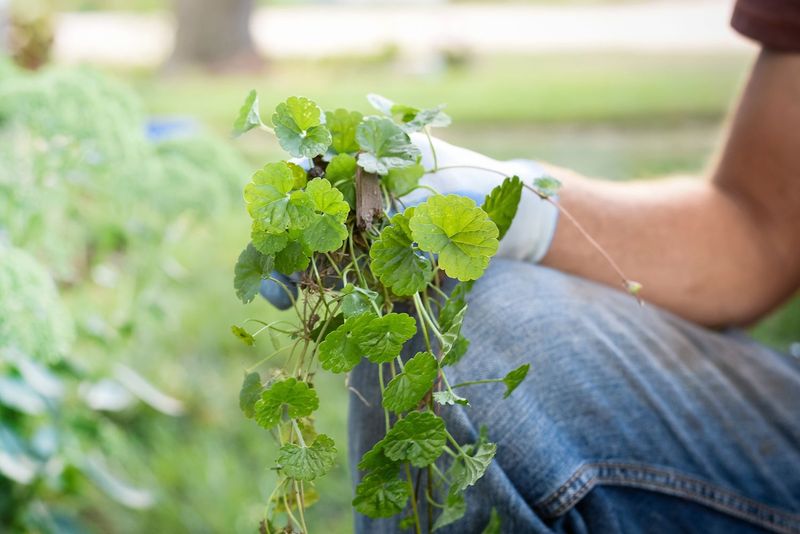
Match the method to the spot. Small patches in beds respond to careful removal of runners and rooted sections.
A larger lawn infestation may call for a label-compliant treatment in fall, as Wisconsin Extension and Iowa State describe, while the weed is growing.
Then walk the area every couple of weeks and again next spring. Pull the new sprouts while they are small, and repeat treatment only as the label allows.
Creeping Charlie rarely leaves after one effort, but steady follow-up wins, because a weed that gets caught early never gets a chance to spread.