
Why North Carolina Clay Still Holds Standing Water After Years Of Adding Compost
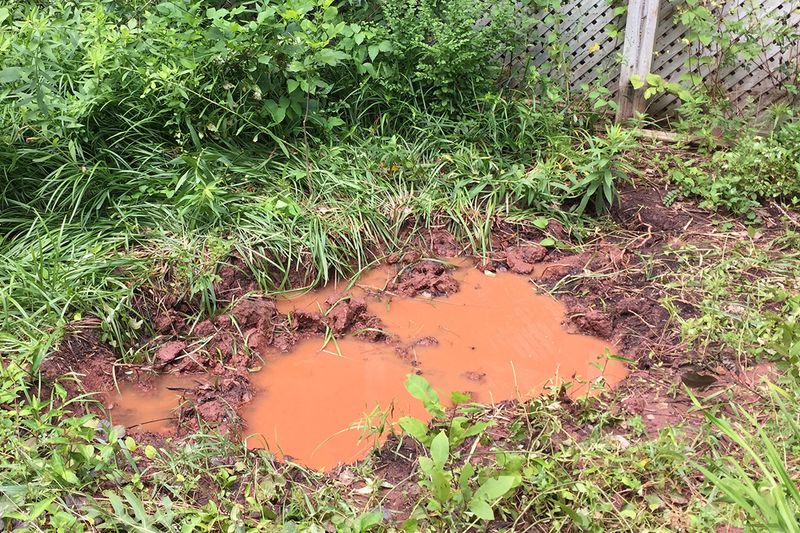
You have spread compost on your yard for years, and the puddles still show up after every storm. That can feel like a failure, but it usually is not.
Compost does real work in soil, yet it cannot do every job. Here is what it can change, what it cannot, and how to figure out what your yard really needs.
Compost improves soil, but it cannot fix every drainage problem
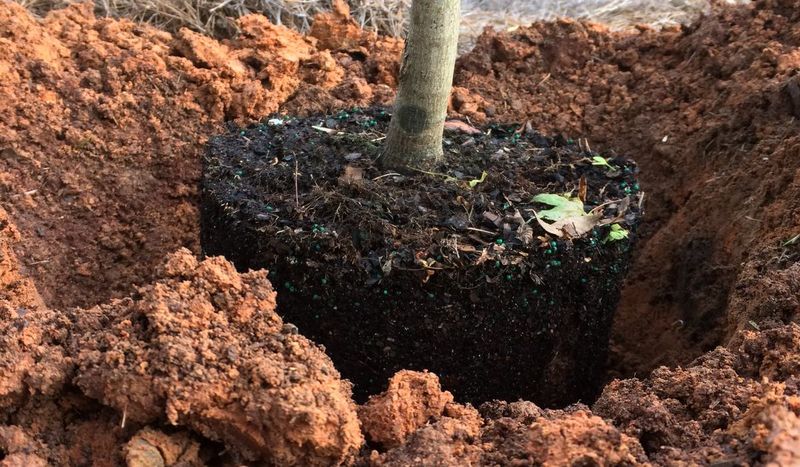
Compost really does help. According to NC State Extension guidance on modifying soil, organic matter can improve soil pore space, which is the network of tiny gaps that lets air and water move through.
In the soil your compost actually reaches, that usually means better structure and easier water infiltration.
So why does water still stand in your yard? Because compost only changes the soil it is mixed into.
It does not change the slope of your lot, and it cannot remove a packed or restrictive layer sitting below the amended surface. A puddle that lingers does not prove the compost failed, and it does not prove you simply need more.
Think of it like adding a sponge on top of a bathtub with the drain plugged. The sponge is useful, but the real limit is somewhere else.
NC State materials on managing soil to maximize water availability treat clay, compaction, and drainage as separate issues, and each one calls for a different response.
That is why the smartest next step is detective work. Before buying another truckload, figure out which constraint is most likely at play in your yard.
A bed, a lawn, and the ground beside your foundation may each need a different answer.
What lies beneath the amended surface matters
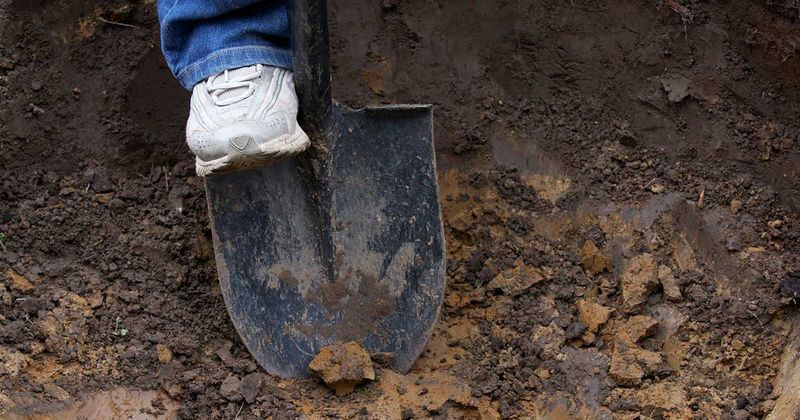
Soil has more going on than the word clay suggests. Texture describes the size of the mineral particles, and clay particles are very small.
Structure describes how those particles clump together and form pores, and compaction squeezes those pores shut.
Where you live in the state matters too. NC State Extension notes that Piedmont and mountain subsoils commonly have high clay content, while Coastal Plain soils tend to be sandier.
Not every North Carolina yard is a clay yard, and even sandy soil can be compacted by construction and heavy traffic.
New neighborhoods are a good example. Heavy machinery can press the ground hard during building, and NC State’s turf guidance points to compaction and poor drainage as common troubles on home lots.
A few inches of improved soil on top may sit over a layer that water struggles to pass through.
Here is the catch: you cannot tell what is down there just by looking at a puddle. A restrictive layer is one possibility, not a conclusion.
Digging a test hole, asking your county Extension office, or hiring a professional can reveal far more than guessing, and that explains why years of compost may not have ended the wetness.
Where and when does the water collect?
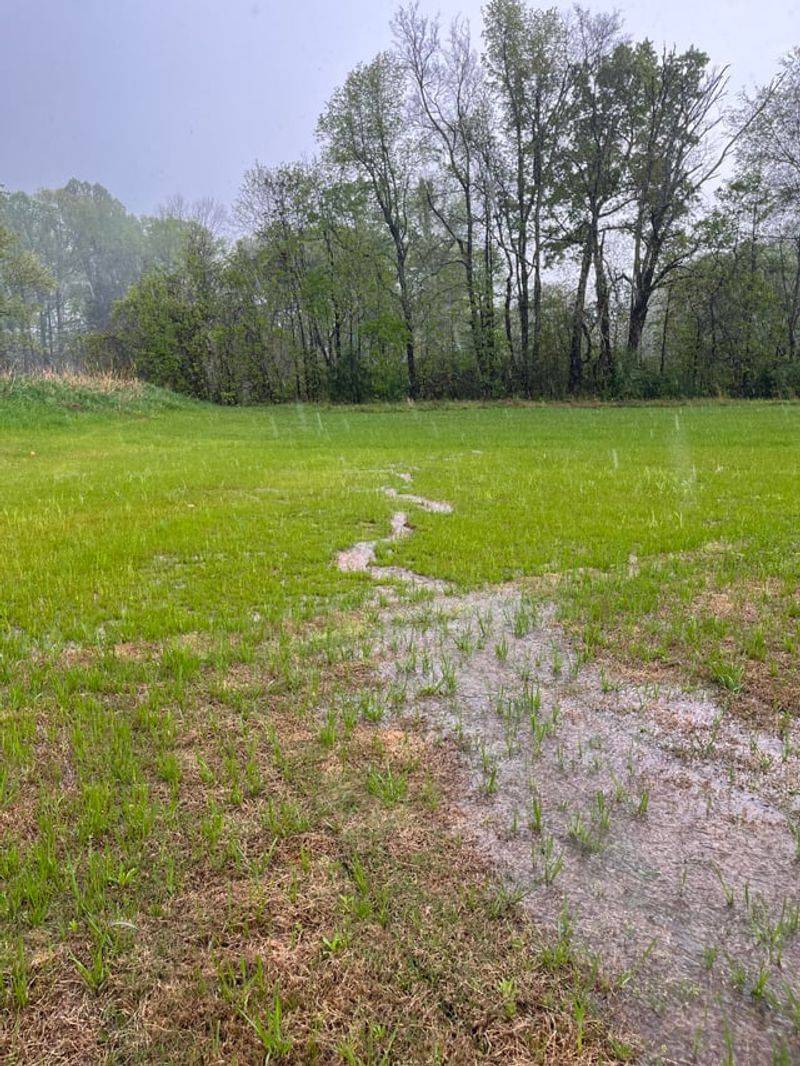
A notebook and a few rainy days can teach you a lot. Walk your yard during and after a storm, and write down exactly where water collects.
Note whether it pools in one low spot or spreads across a broad area.
Timing matters just as much. Does the water drain within a few hours, or is it still there two days later?
Take photos with a landmark such as a tree or a fence post so you can compare storms.
These patterns are clues, not answers. A puddle confined to a dip may point toward a grading question, while wide, long-lasting wetness may be worth checking for compaction or a restrictive layer.
NC State Extension lists clay, compaction, and improper drainage as separate constraints, and the same puddle could come from more than one of them.
Also notice what the spot is used for. A wet corner of lawn, a soggy vegetable bed, and damp ground beside the house are different problems, as NC State’s lawn guidance suggests in treating drainage on its own terms.
Hold off on picking a fix until you have watched a few storms, because good notes make every later decision easier.
Amend the soil you can reach—and keep off it when wet
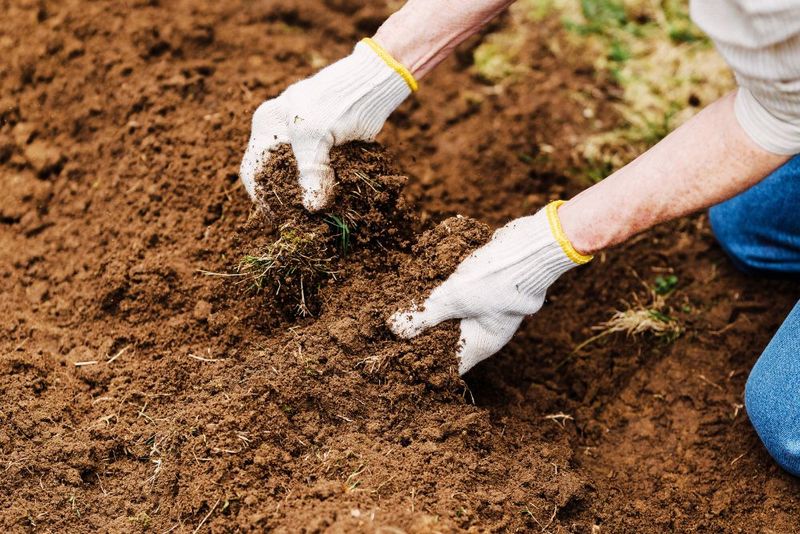
For planting beds, the best compost is mature compost, dark and crumbly with an earthy smell. Mix it into the soil where practical instead of leaving a thick layer on top.
A surface blanket does not fix what is happening deeper down, and NC State Extension advice on modifying soil recommends incorporating organic matter into heavy clay.
You may come across the number 1 to 2 cubic yards of organic matter per 1,000 square feet, mixed into the top 6 to 8 inches. That figure comes from NC State’s guidance for establishing a new lawn.
It is a lawn-establishment benchmark, not a universal recipe for garden beds, so treat it as a reference point rather than a dose.
Sand is not a shortcut, either. NC State says a large quantity is needed to make a measurable difference, and the approach is generally cost-prohibitive.
Gypsum is not a general treatment for ordinary clay soil.
Finally, stay off the ground when it is wet. NC State’s gardener guide warns that working wet soil can damage it, and foot or equipment traffic on soggy clay can worsen compaction.
Wait until a handful crumbles instead of smearing, and your hard work will not be undone by one muddy afternoon.
Core aeration has a limited role in a lawn
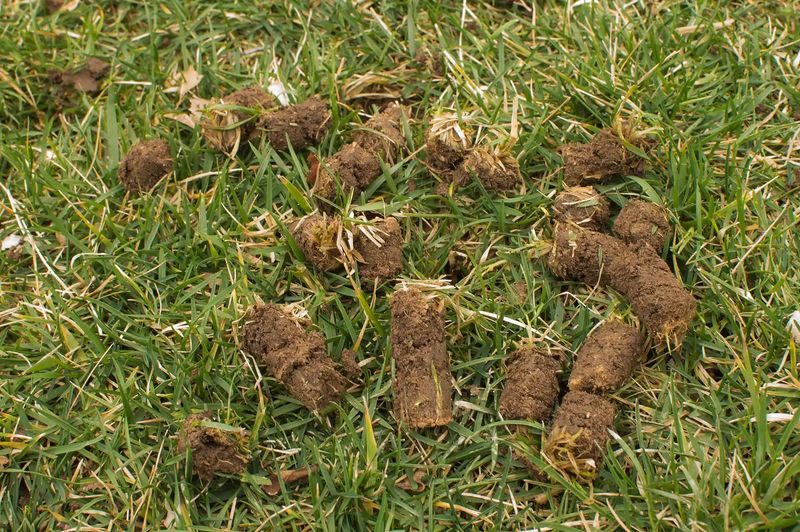
Lawns play by different rules than garden beds. You cannot mix compost into established turf the way you would a bed, so people often turn to core aeration.
The machine pulls small plugs of soil out of the ground, which can relieve compaction in the upper root zone.
That is a real benefit for grass roots, which may get more air and room to grow. But the limit matters.
NC State cautions that core aeration in compacted soil does not directly increase water movement through the soil profile, as covered in the Extension Gardener Handbook chapter on lawns.
In other words, aeration helps the top few inches, not the whole yard’s plumbing. If water stands because of the lay of the land or a deeper restrictive layer, punching holes in the turf will not cure it.
NC State’s soil guidance also notes that deeper tillage does not necessarily improve drainage.
Treat aeration as one tool for tired, compacted turf, and keep your expectations honest. Skip the work when the ground is soggy, since heavy machines on wet soil can add compaction instead of relieving it.
A wet planting spot can be designed around
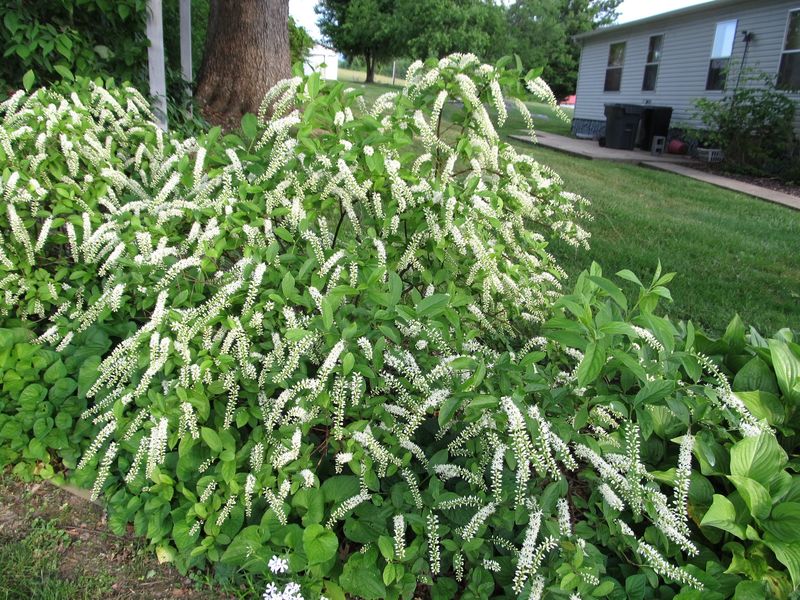
Some wet spots are simply part of the yard. If the area is appropriate for planting, you can adapt what grows there instead of fighting the water.
This does not drain the yard, but it can turn a mucky patch into something that looks planned.
One option is a raised or mounded bed, which lifts roots above the wettest soil. Another is choosing plants suited to wet conditions.
NC State’s design tips for native plants stress matching plants to the conditions your site actually has.
Two North Carolina natives worth a look are Virginia sweetspire and buttonbush. Both appear among native plants for the state’s landscapes in the Extension Gardener Handbook, and natives like these can also offer flowers for pollinators and cover for birds.
Still, how well either one does depends on sun, how long the soil stays wet, and your region.
Watch the spot through a few seasons before you plant. A place that is soggy in spring but dry in August calls for different choices than ground that stays wet all year.
Choosing natives over invasive look-alikes also keeps your yard friendlier to the wildlife you enjoy.
Keep roof water moving away from the house
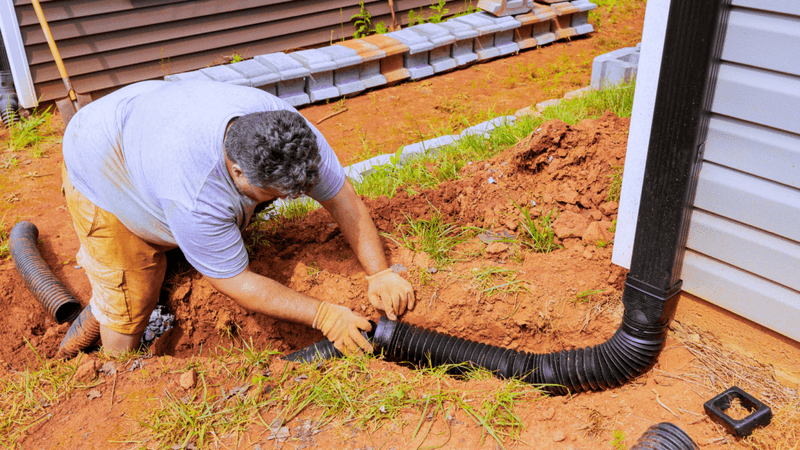
Water beside the foundation deserves its own plan. A roof sheds a surprising amount of water in a storm, and if gutters are clogged or downspouts dump right at the wall, the ground nearby stays soggy.
That has nothing to do with how much compost is in your beds.
Start with the simple jobs. NC State’s preventative home maintenance guidance supports keeping gutters and downspouts clear and making sure roof water drains away from the house.
Extensions on downspouts can carry runoff farther out, as long as they do not send it toward a neighbor or onto a walkway.
Bigger changes are different. Regrading, drain lines, or a French drain depend on your slope, soil, and where the water can safely go.
NC State’s drain spacing information shows that drainage design depends on site conditions, and the lawn care guide at NC State’s organic lawn care guide likewise treats drainage as a site question. Ask your county Extension office or a qualified professional before digging.
Compost was never the wrong idea, only a partial one. Soil improves a little at a time, but water follows gravity.