
Fall Rosemary Cuttings Can Root and Grow Indoors, But Success and Winter Growth Are Not Guaranteed
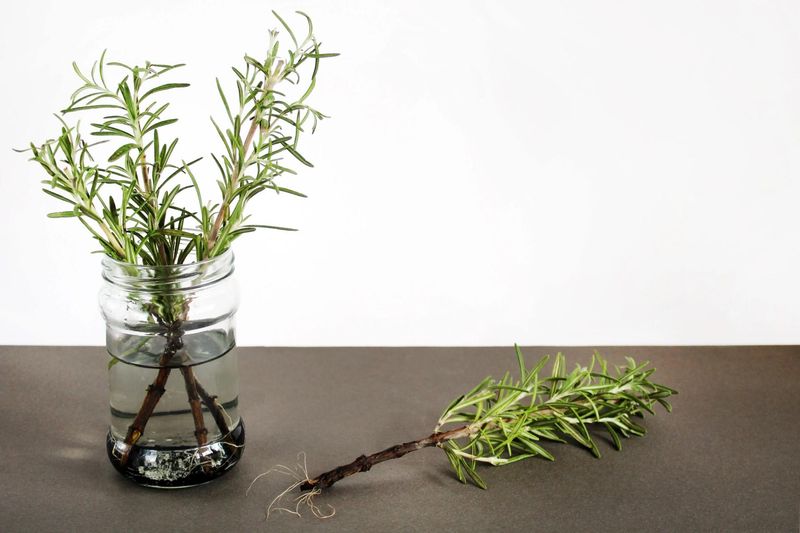
Watching your rosemary head toward cold weather can make you wonder if you can save a piece of it. Snipping a few stems and rooting them indoors is a real option, and it costs almost nothing.
It does not always work, though, and a rooted cutting still needs the right care to make it through winter. Here is how to try it, what to expect, and how to keep your odds as good as they can be.
Fall cuttings are possible, but frost is not a propagation deadline
Yes, you can take rosemary cuttings in fall. No, frost is not a magic deadline that makes this the best moment to do it.
Think of fall cuttings as a worthwhile experiment rather than a sure thing.
Most homeowner guidance leans toward warmer months. Missouri Extension recommends late spring and summer for herb cuttings and notes that fall cuttings take longer to root.
Longer can also mean more chances for the cutting to rot or simply give up.
Other sources are a bit more open-ended. University of Georgia’s propagation guide lists fall and winter for semi-hardwood rosemary cuttings, but that assumes good propagation conditions, such as high humidity and a well-drained medium.
A kitchen counter is not a greenhouse, so adjust your expectations.
Rooting rates are not high even under good guidance. NC State Extension reports that only about 30 to 50 percent of cuttings may root with its described method.
That is one source’s estimate, not a promise for your garden, so take several cuttings instead of just one.
Frost timing matters most when you are protecting the parent plant. Bringing a potted rosemary indoors before a hard freeze is a different job from propagating, and we will cover it in its own section.
If you can also take cuttings in late spring or summer next year, those usually give you easier odds.
Choose healthy, flexible tip growth
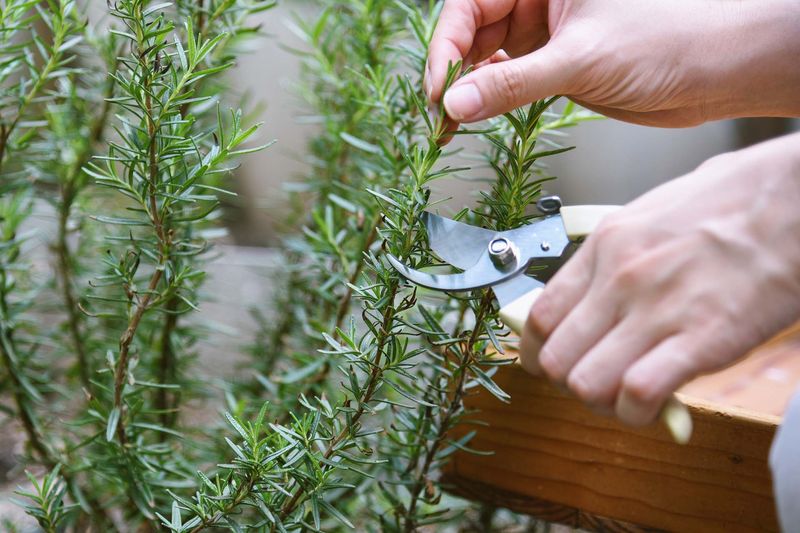
Walk around your rosemary and look at the ends of the branches. You want healthy tip growth that is green, leafy, and bends instead of snapping.
Skip the thick, brown, woody stems near the base, which are slower to root.
Choose stems without flower buds or blooms, since a stem putting energy into flowers has less to spare for roots. NC State Extension’s rosemary method starts with this kind of healthy new growth.
Also pass over any stem that looks yellowed, spotted, or stressed.
Cut from a plant that looks vigorous. A rosemary that is struggling with dry soil or disease is a poor source of cuttings, and you do not want to stress it further.
Taking a few small tips will not harm a healthy shrub.
Collect more than you think you need. Because some cuttings will not root, three or four extras give you a better chance of ending up with at least one new plant.
Keep in mind that these details are about rosemary. Missouri Extension lists rosemary, sage, lavender, and scented geranium among herbs that can grow from cuttings, but timing and methods differ from plant to plant.
University of Georgia’s species table shows the same thing. If you want to try sage or lavender, look up its own directions instead of copying these.
Prepare a cutting and a clean rooting pot
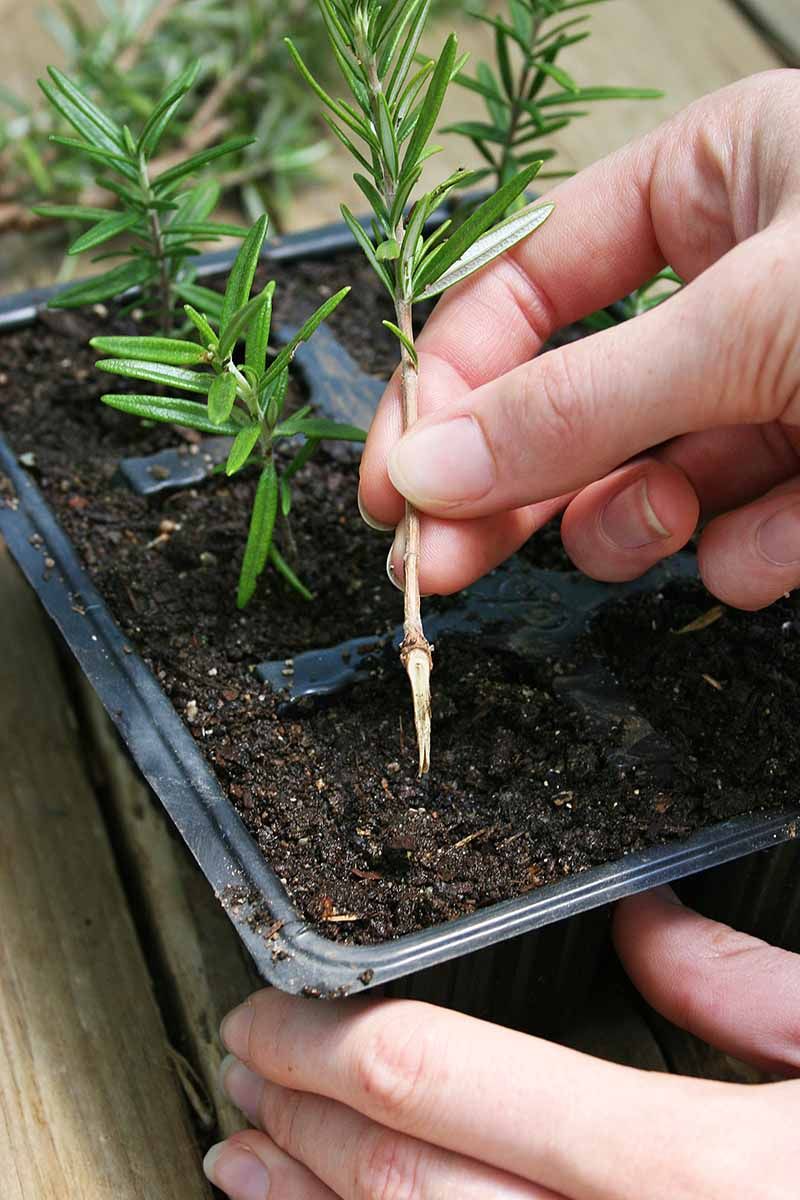
Set up your pot before you cut so the stems do not sit around and dry out. Use a clean pot with drainage holes and fill it with a moist, well-drained rooting medium.
A light, gritty mix works better than heavy garden soil, which stays soggy.
Use clean scissors or pruners and take a cutting roughly 3 to 5 inches long, as described in NC State Extension’s rosemary guidance. Cut just below a leaf node if you can.
Longer stems tend to lose more water through their leaves before roots form.
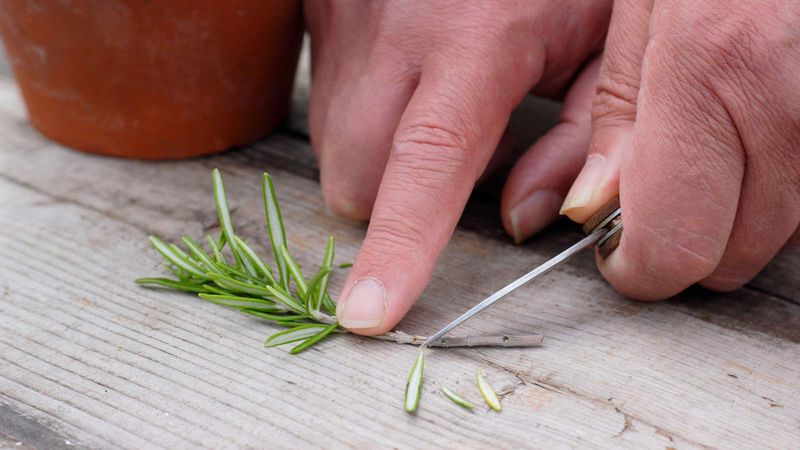
Strip the leaves from the lower part of the stem, leaving a few at the top. The bare section is what goes into the medium, because leaves buried in damp mix tend to rot.
Poke a hole with a pencil first so you do not scrape the stem as you push it in.
Rooting hormone is optional. Home guidance does not treat it as essential, and some references mention it only for certain cutting types, such as in University of Georgia’s cutting guide.
If you have it, you may use it, but plenty of gardeners skip it.
Firm the mix gently around the stem so it stands up on its own, then water lightly until the medium is evenly damp. Label the pot with the date.
If you set several cuttings in one pot, space them so the leaves are not crowded together.
Maintain humidity without waterlogging the cutting
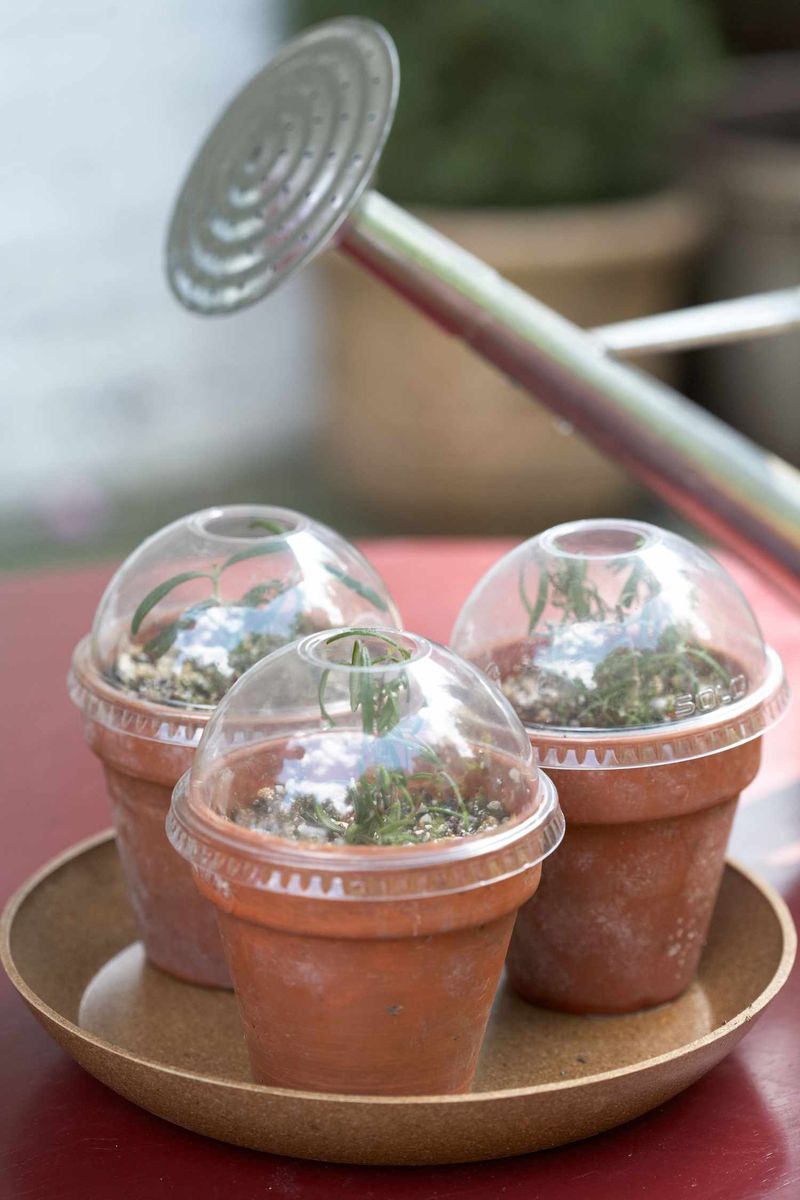
A cutting has no roots yet, so it loses water through its leaves and cannot easily replace it. A clear plastic cover helps hold in humidity while roots form.
Loosely drape a plastic bag over the pot, and use a stick or pencil to keep the plastic off the leaves.
Place the pot in bright, sheltered light, not direct sun. Strong sun can heat up the plastic and cook the cutting.
A bright spot near a window, shielded from drafts and from heating vents, is usually a safer choice.
Check the pot regularly. NC State Extension’s method calls for keeping the medium moist, and Missouri Extension’s herb guide likewise stresses a well-drained mix.
The goal is damp, not soaked. Press a finger into the mix, and water lightly only if the top feels dry.
Wet, stagnant conditions are a common way to lose cuttings. If you see water pooling, mold, or stems turning black and mushy at the base, remove the cover for a while, let the mix drain, and discard any cuttings that are clearly rotting.
Open the bag for a few minutes now and then to let fresh air in.
As for timing, NC State gives an expected rooting period of about 4 to 6 weeks for its method. Treat that as a rough guide, not a deadline, especially for fall cuttings, which may take longer or not root at all.
A tug that meets gentle resistance and new growth at the tip are good signs.
Protect the parent plant separately from the cutting
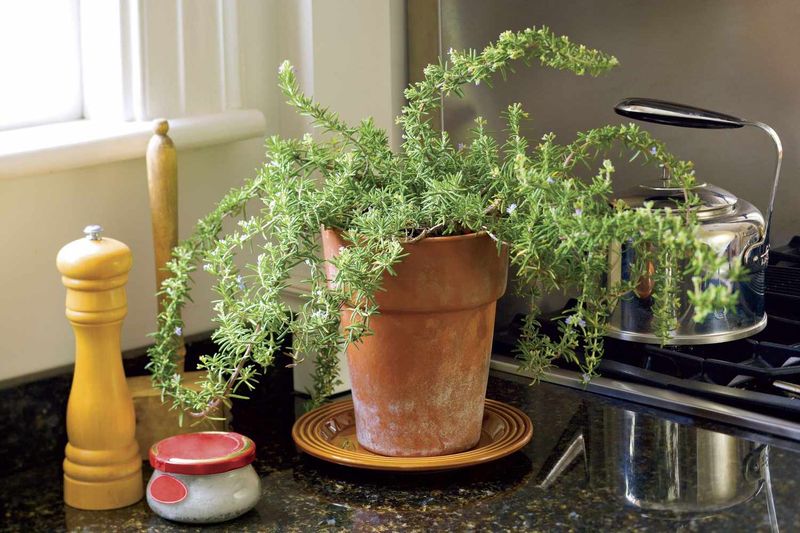
Starting a cutting and saving your outdoor rosemary are two separate jobs. A cutting is a backup plant.
The parent plant needs its own plan, and that plan depends on how it is growing.
If your rosemary lives in a container, you can bring it indoors before frost arrives, as University of Illinois Extension describes. Check the pot for insects first and move it to a bright spot.
Do the move before nights turn truly cold.
An in-ground rosemary is trickier. Digging it up can be riskier because it may not transplant well, so a cutting may be the safer way to carry the plant forward.
If the shrub is big and established, you may choose to leave it and protect it where it stands, or simply accept some risk.
Frost does not automatically kill rosemary. University of Wisconsin-Madison Extension describes rosemary as tender in colder areas, and hardiness varies by cultivar and location.
Some varieties handle cold better than others.
So check your own conditions. Look up which cultivar you have, think about how cold your winters get, and watch your local forecast.
If a hard freeze is coming and your plant is a tender type, moving it or covering it makes sense. If you are unsure, taking cuttings and protecting the parent covers both bases.
Give rooted rosemary abundant light and careful watering indoors
Once your cutting has roots, its needs change. It no longer needs a humid plastic tent.
Now the big issues are light and water.
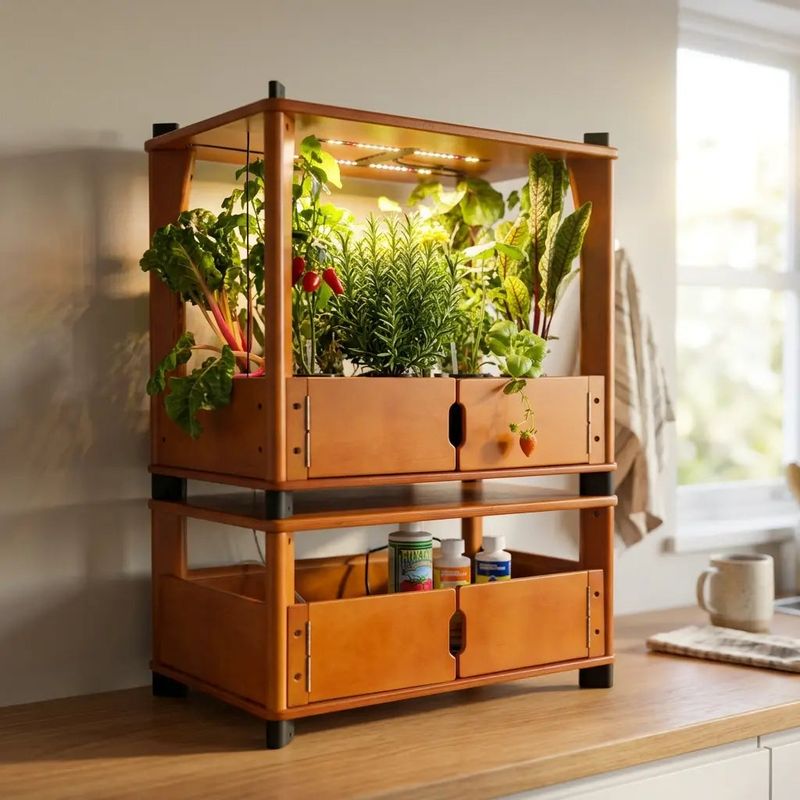
Rosemary wants abundant light, and a windowsill alone may not deliver enough in winter. Iowa State Extension notes that herbs indoors may need supplemental lighting.
A south-facing window helps, and a grow light placed close to the plant can fill the gap. If the stems get leggy, pale, or stretched, the plant is asking for more light.
Use a pot with drainage holes and a well-drained mix. Indoor air can be dry, and Illinois Extension cautions that indoor rosemary can dry out.
But watering heavily to make up for dry air can lead to root rot.
A simple habit works well: check the soil with your finger, water when the top feels dry, and empty the saucer afterward. Keep the plant away from heating vents and cold drafts.
Do not expect much growth. Winter rosemary may sit nearly still, and a harvest is not guaranteed.
Take only tiny snips, if any, until spring.
Fall propagation gives you a chance to start a plant, not a winter guarantee. Even a cutting that does not make it teaches you something for next summer’s try.