
Do Crows Remember Faces? What a Mask Experiment Says About Backyard Crows and “Grudges”
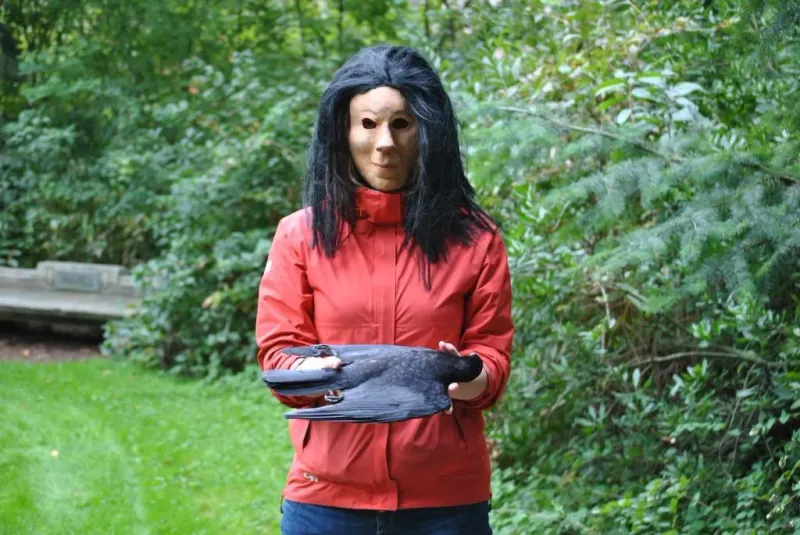
Anyone who has been scolded by a crow from a treetop has probably wondered what the bird was thinking. Researchers in Washington State put a rubber mask on a person and found that wild crows learned to react to it, and some of their young did too.
The results sound like a story about birds holding grudges, but the science is a bit more careful than that. Here is what the studies actually found, and what to do when crows get loud near your yard.
A mask gave researchers a way to test what crows remember
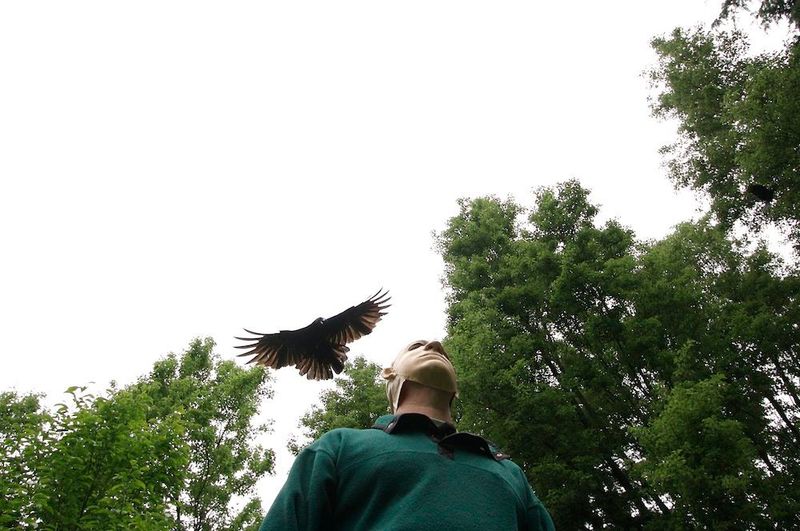
Picture a researcher walking across a University of Washington lawn wearing a odd rubber mask. The person is there to catch crows, put leg bands on them, and let them go.
For a wild bird, that is a scary few minutes.
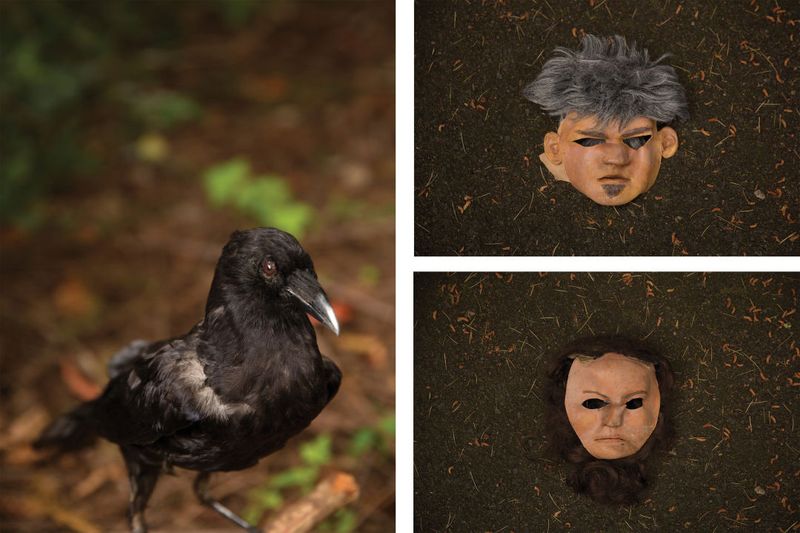
In the original study on lasting recognition of threatening people, the team wore a distinctive “dangerous” mask during those captures. Later, people walked the same areas wearing that mask, a neutral mask, or no mask at all.
The researchers then counted how the crows reacted.
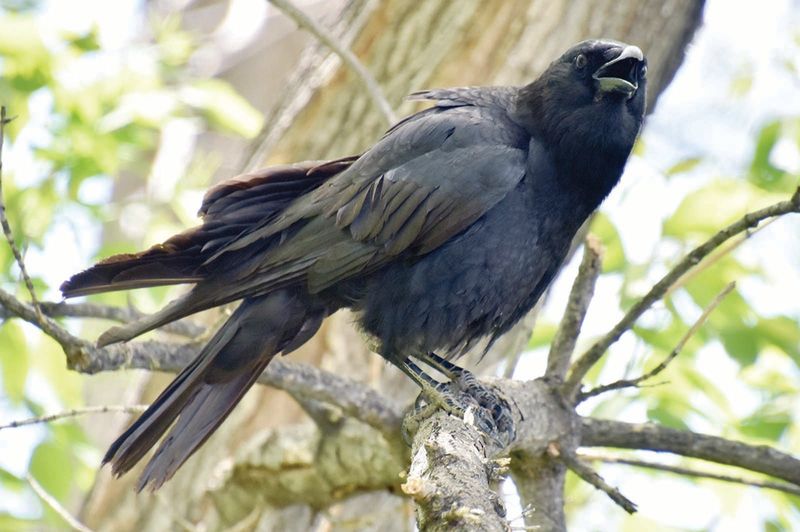
The crows scolded and mobbed the dangerous mask much more than the neutral masks or the unmasked person. Mobbing means flying close, calling loudly, and sometimes diving at the person.
It is a common way crows react to hawks and other threats.
Notice what was being tested. The question was not whether crows form an opinion about every person they pass.
It was whether a crow could connect one specific appearance with one frightening event.
That is the safe reading of the results. The experiment shows learned threat recognition tied to a capture, and it shows birds acting on it.
It does not show that crows track everyone in a neighborhood, and it cannot tell us what a crow feels while it scolds.
What does “recognizing a face” mean in this experiment?
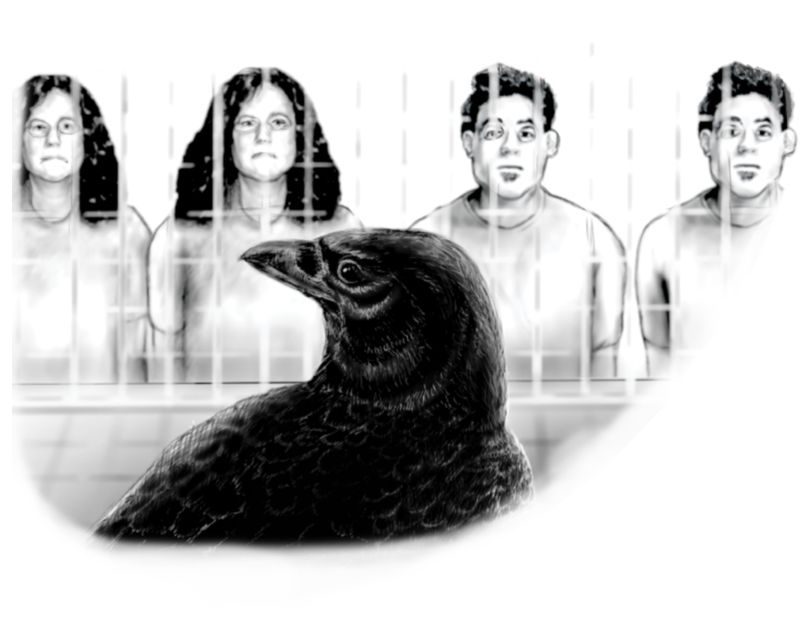
When people say crows “recognize faces,” they are using a handy shorthand. In these tests, the thing crows reacted to was a mask, chosen because researchers could control it.
Every wearer used the same mask, so nothing else about the person had to match.
What the crows showed was discrimination. They learned to tell a mask linked to a bad experience from other masks that meant nothing.
Weeks and years later, that difference still showed up in how loudly they scolded.
That is not the same as seeing a face the way a human does. The study tells us crows can learn and sort a threatening human appearance.
It does not tell us how a crow’s brain builds a picture of a person.
It also does not mean crows file away every person they see. Think of the mask as a warning label stuck to one bad event.
A crow that has never had trouble with a person is probably treating that person as just another part of the scenery.
So a crow scolding you from a wire is not proof it knows you. Many things can set a crow off, including a cat, a hawk, a loose dog, or a nest nearby.
The longest memory claim needs a closer look
Two different timelines get mixed together in headlines. The first is the peer-reviewed one.
The 2010 study documented recognition of the dangerous mask for at least 2.7 years.
The second comes from lead researcher John Marzluff, who kept testing around campus for years afterward. In a 2025 essay, he reported that about 40% of the crows he met still scolded the mask through year 12.
After 18 years, the mask seemed to draw no interest.
That is a report about the crow population around campus, not a test of single birds. Crows come and go, young ones grow up, and older ones die.
So this account does not show that any one crow remembered one person for 18 years. If anything, the response faded by then.
Now the word “grudge.” It is a fun way to describe a bird that keeps scolding someone. But neither result measured spite, hatred, or revenge.
They measured scolding and mobbing.
Maybe a better question is what a crow gains from staying wary. A bird that remembers where danger came from may live longer.
That is a learned threat response, and nothing in these studies requires anger to explain it.
Other crows can learn which cue brought danger
A second study asked a different question: can crows learn about danger from other crows? The 2012 social learning study found that some crows that had never been captured later scolded the dangerous mask anyway.
Young crows added another piece. Some that were exposed to the mask while their parents scolded it later scolded it too, even when their parents were not around.
The authors call this horizontal learning, between crows of similar age, and vertical learning, from parent to young.
It is not inheritance. Nothing here suggests crows are born knowing a mask is bad.
The birds appear to have picked up the cue by watching and listening.
There are limits. The authors note it is hard to say exactly how some birds learned.
A crow might have seen a capture, watched a mob form, or simply heard other crows scolding nearby.
It also does not mean every young crow learns this, or that crows set out to teach a warning on purpose. And nothing in the study shows the information passing down forever.
What it shows is that a threat can spread through a group of crows in a specific, observable way.
If crows scold near your yard, give them room
Say a crow keeps yelling at you when you step out to water the tomatoes. It is tempting to decide the bird has it in for you.
Scolding or swooping does not prove that. You cannot tell from the behavior alone why that crow is upset.
A simpler reason is often nearby: a nest, or young birds. In that case, the best move is to give the birds space.
Take a different path around the yard for a few weeks, and keep pets and kids away from the tree.
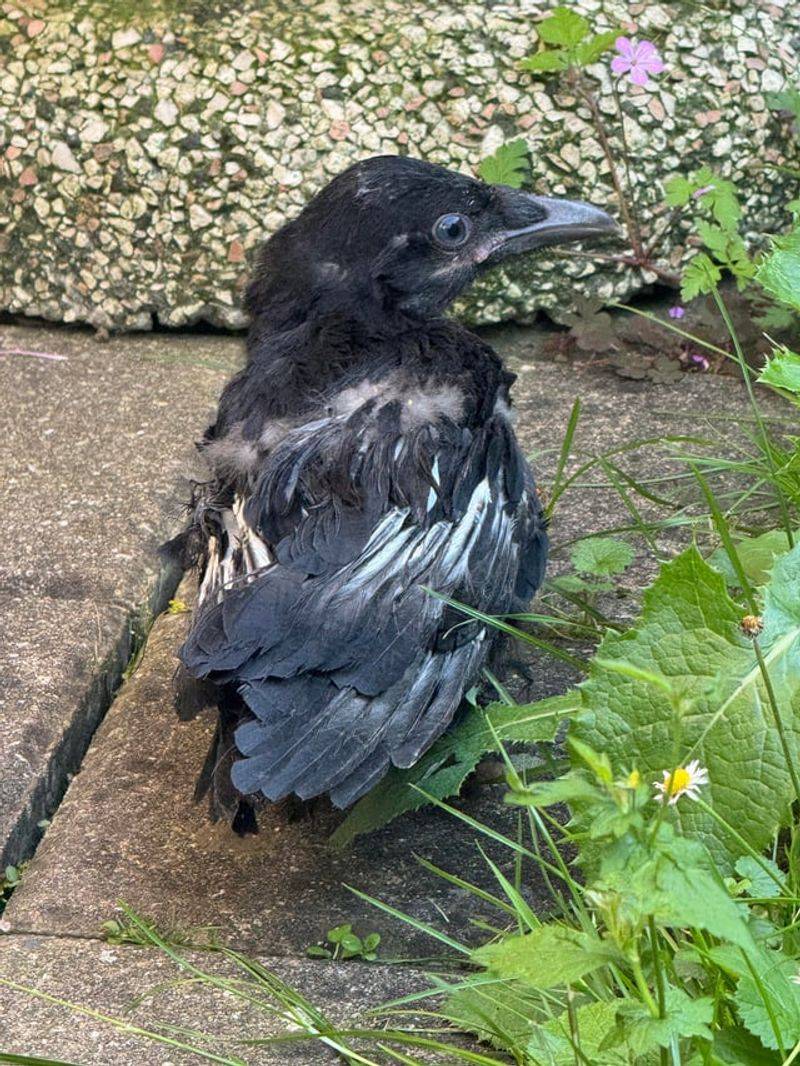
If you spot a young bird hopping on the ground, hold off before grabbing it. It may be a fledgling that has left the nest and is still cared for by parents close by.
Cornell’s advice on found baby birds is to assess the situation before stepping in.
Do not scare, trap, handle, or retaliate against crows. Nothing in the research suggests those moves would fix anything, and they can hurt the birds or cause bigger trouble.
Leave active nests alone, too. Rules can vary by situation, and the Migratory Bird Treaty Act generally restricts taking protected migratory birds, with details and exceptions.
Check the U.S. Fish and Wildlife Service nest guidance or contact a local wildlife agency before touching anything.
A learned warning is not proof of revenge
Crows can learn a threatening human cue, keep that link for years, and pass word along to other crows. That is the solid part, shown in the mask study and its social learning follow-up.
Hatred and a lifelong personal grudge are not part of what was measured.
Nothing here shows the crows in your yard know your face, either. If one is loud, watch from a respectful distance and leave nests and young birds alone.
A crow’s scold may say less about you than about whatever it is guarding.