
Why Some North Carolina Homeowners Train Their Crape Myrtles Into Single Trunk Trees
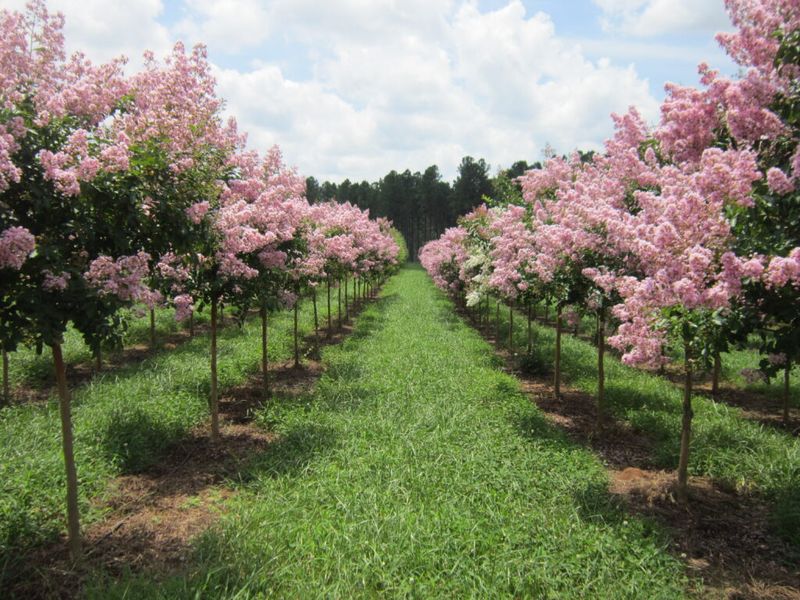
Maybe you have driven past a neighborhood and spotted crape myrtles with one clean, smooth trunk instead of a bundle of stems. It is a look that makes you wonder why someone would choose it.
The answer has to do with design, space, and upkeep, and the truth is a bit more balanced than the buzz. Here is what the form can do, what it cannot, and how to shape one the right way.
A noticeable style, not a documented statewide trend

If you have noticed single-trunk crape myrtles around your neighborhood, you are not imagining things. They stand out, with a bare, sculpted trunk topped by a rounded canopy.
Still, that is just a personal impression. Nothing in the sources reviewed shows that homeowners across North Carolina are switching to this look in growing numbers.
What the sources do explain is how the plant grows. According to the NC State Extension Plant Toolbox, common crape myrtle is naturally multi-trunked.
That means a single trunk is something you create through pruning, not the way the plant shows up on its own.
Guides such as this pruning guide from UC Marin Master Gardeners lay out the steps for training one trunk. They describe the method, not a change in what homeowners prefer.
So think of the single-trunk style as one option on the menu. The next sections look at why some people choose it, what it does and does not do for your yard, and how to get there without harming the tree.
A single trunk changes the yard’s visual composition

Picture a crape myrtle with one trunk rising from the ground. The eye goes straight to the bark, which on many crape myrtles is smooth and mottled, and can peel in patches.
With several stems crowding together, that detail is harder to see.
A single trunk can also suit certain layouts. Maybe you want a tree to frame a front walkway, sit near a patio, or fit a slim planting strip.
Raising the canopy on one trunk gives a more upright, tree-like outline, and that can read as neater next to a house.
Guidance from UC Marin Master Gardeners covers how to select and keep one trunk when that is the look you want.
None of this makes the multi-trunk form a lesser choice. As the NC State Plant Toolbox describes, the plant naturally grows with several trunks, and that vase shape works well in many yards.
Both forms can bloom, so the decision is mostly about looks and fit.
Ask yourself what you want to see from the window or the street. If bare bark and a clear view beneath the canopy appeal to you, one trunk is worth considering.
If you like a fuller, softer shape, leaving it multi-stemmed is perfectly reasonable.
Does a single trunk improve airflow?

Airflow comes up a lot in talk about pruning. Opening up crowded growth can, in general, let air move more freely through a plant.
That idea makes sense, and it is easy to see why people connect it to single-trunk training.
The leap is the next part. The sources reviewed do not show that choosing one trunk, by itself, improves airflow or protects crape myrtles from disease.
So it is best not to count on that as a reason to train your tree this way.
What the sources do stress is where the plant is happiest. NC State Extension recommends full sun and well-drained soil for common crape myrtle.
University of Georgia Extension also covers culture needs for the plant in the Southeast.
In practice, a spot with plenty of sun and soil that drains after a heavy rain does more for the tree than any trunk count. A planting squeezed into a damp, shady corner may struggle whichever form you choose.
If you see leaf problems, look at the site first. Check sun exposure and drainage before blaming the shape.
An open base can create planting room, with limits
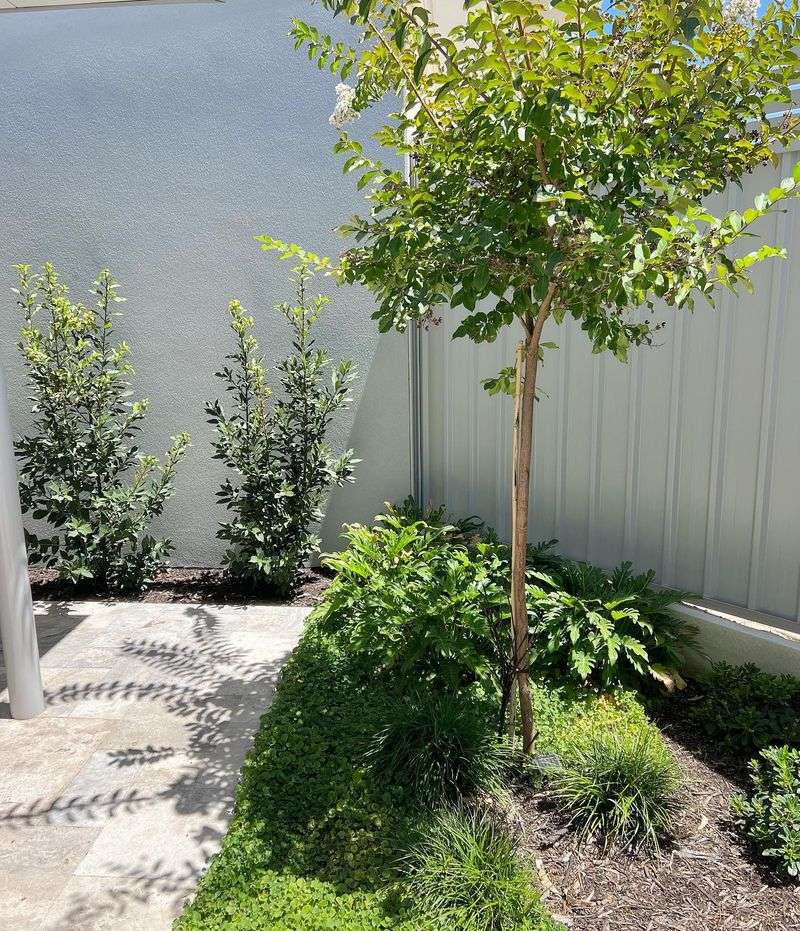
A single trunk leaves more visible ground around the base. That open space can make you want to tuck in ferns, hostas, or other plants underneath.
It is a fair thought, but it is not a promise.
The trunk form does not decide whether plants beneath will do well. Light is the first question.
A young tree casts little shade, but a mature canopy can change that, so picture the tree at full size before planting below.
Size matters too. Pruning guidance from UC Marin Master Gardeners is a reminder that crape myrtles vary, and a larger cultivar will eventually crowd what sits under it.
Then there are the roots. Ask Extension’s advice on planting under trees points out that tree roots compete with underplantings for water and nutrients.
New plants may need extra attention as they get established.
Try a small test first. Plant a few tough, shade-tolerant plants near the edge, watch them for a season, and see how the spot behaves before filling the whole bed.
Single-trunk trees can still send up suckers
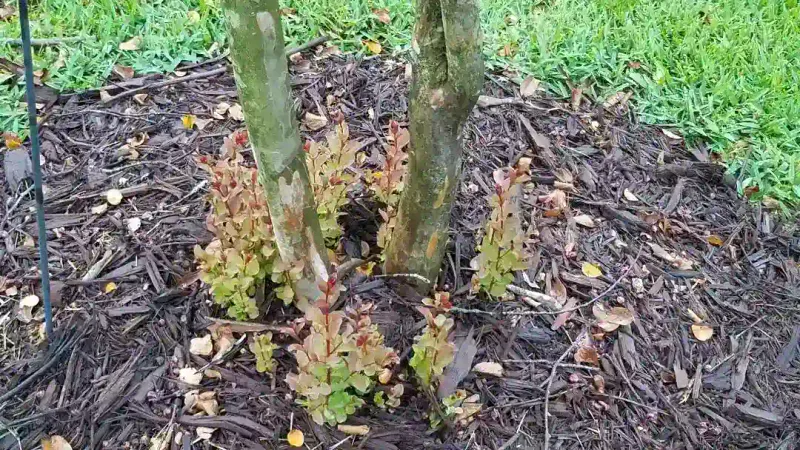
Here is a surprise for many new owners. Training one trunk does not stop the plant from sending up shoots at the base.
Crape myrtles naturally produce them, and the tree has no idea you wanted a tidy look.
According to Ask Extension on crepe myrtle tree suckers, unwanted shoots may need to be removed from time to time. Think of it as light housekeeping rather than a one-time job.
How much a tree suckers can vary. Another Ask Extension answer on crepe myrtle suckers notes that cultivar and growing conditions play a role, and that stress or excessive pruning may contribute.
A tree that is stressed or cut hard may respond with more shoots.
There are two separate tasks here. Choosing one trunk is the training decision you make early on.
Removing new shoots is the ongoing upkeep that follows.
A handy habit is to glance at the base when you mow or water. Snipping small shoots while they are young is easier than tackling thick ones later.
Train the form gradually, and skip the topping
Start by picking one strong, upright stem. Then remove the competing stems that rise from the base.
UC Marin Master Gardeners describe this approach and suggest raising the canopy gradually instead of stripping all the lower growth from a young tree. Lower branches can help the young trunk gain girth and strength.
Timing matters. In North Carolina, late winter or early spring, before new growth begins, is the recommended window for summer-flowering crape myrtle, as outlined in the NC State Extension Gardener Handbook.
Make each removal cut just outside the branch collar, not flush to the trunk.
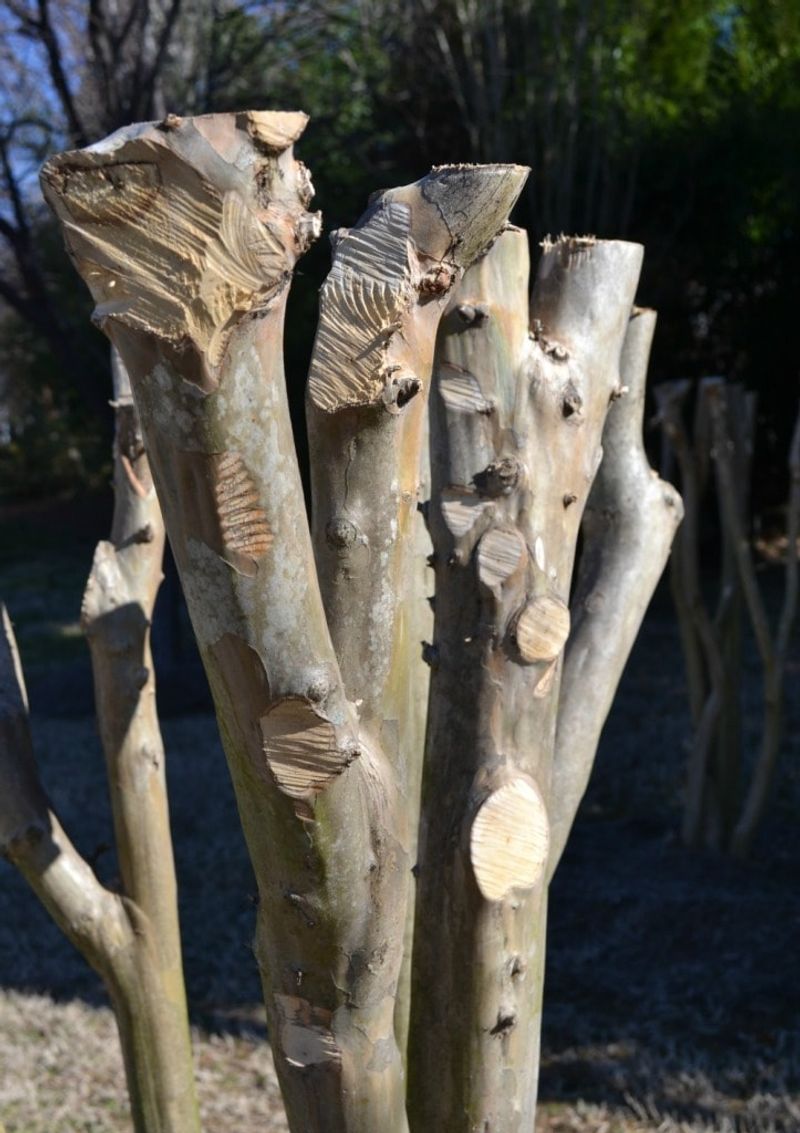
Do not top the tree to get a shape or hold down its height. NC State Extension warns that topping damages natural form, can promote decay, and produces vigorous, weakly attached sprouts.
Heavy cutting is also not a bloom booster, and severe pruning can reduce flower numbers.
The better fix is picking the right plant from the start. NC State’s Before the Cut encourages choosing plants that fit the space instead of repeatedly cutting back one that is too large.
Cultivars differ a lot in mature size, as the Plant Toolbox shows, so check the tag before you buy.
Which form fits your yard?

Start with the space. Find out how big your cultivar gets at maturity, then compare that with the room you have.
If it will outgrow the spot, pick a different cultivar rather than planning to cut it back each year, as NC State’s Before the Cut suggests.
Next, decide what you enjoy looking at. If you love bare bark and a clear view under the canopy, one trunk can deliver that, and UC Marin Master Gardeners explain how to train it.
If you prefer the plant’s natural multi-trunk shape, that is a fine choice too.
Either way, the tree will want some attention over the years. A crape myrtle is happy to grow its own way, and your pruners decide how much it listens.