
Witch Hazel Blooms As the Garden Winds Down, And the Same Shrub Fills Your Medicine Cabinet
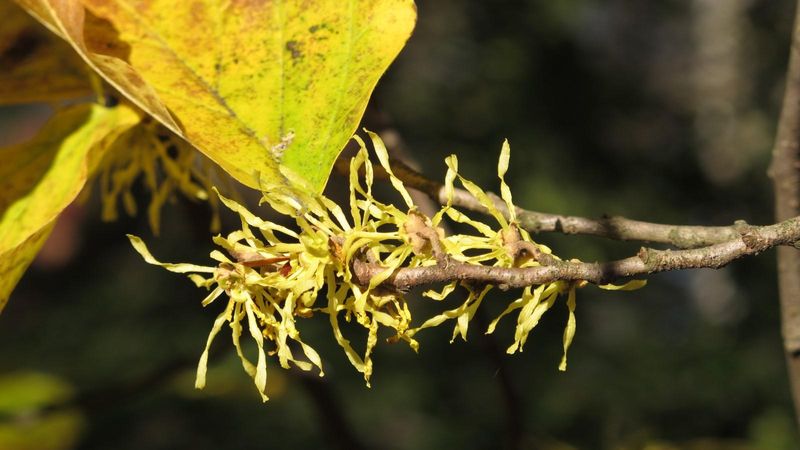
Walk past a woodland edge in late fall and you might spot a shrub covered in tiny yellow ribbons while its leaves are still turning color. That plant is common witch-hazel, and it has a second life in the bathroom cabinet as a familiar bottle of astringent.
The two connections are real, but they are not the same thing. Here is how to tell what the shrub does in your yard and what the label on the bottle actually means.
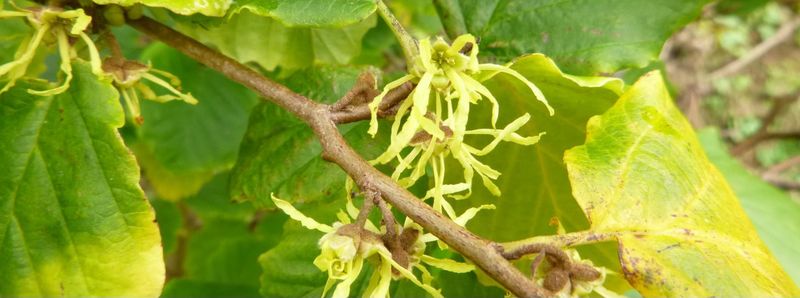
Common witch-hazel flowers as the garden winds down
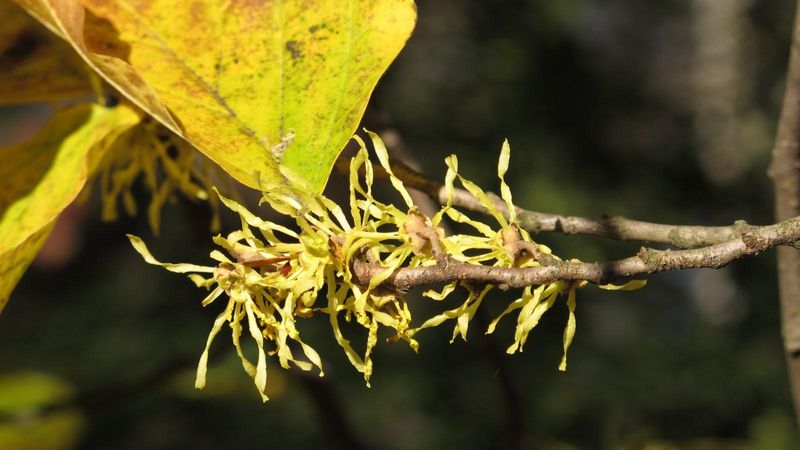
Picture a leafy shrub in late fall, its branches dotted with crinkly yellow ribbons. That is common witch-hazel, Hamamelis virginiana, an eastern North American shrub or small tree.
Its flowers are narrow and ribbon-like, and they can open while the fall foliage is still hanging on.
In Maryland, University of Maryland Extension gives October into November as the flowering period. That is a regional report, not a calendar that fits every yard.
A field study published in the American Journal of Botany described bloom from late September through late November, which gives a wider window for context.
Where you live and what the weather does each year will shift the dates. A warm autumn or an early cold snap can move the show by a week or more.
If you want to know when your shrub will bloom, the best method is simply to watch it for a few seasons and jot down the dates.
What makes the bloom stand out is the timing. Plenty of gardens are slowing down by then, and the shrub offers fresh color when many other plants have finished their main show.
That does not mean everything else has quit, since some asters, mums, and other late bloomers are still going in many yards. Witch-hazel just adds something unusual to the late-season mix: flowers on bare-looking twigs among turning leaves.
A good diagnostic clue is the combination. Yellow ribbon flowers plus autumn leaves still on the branch point toward this species rather than a winter bloomer.
Not every witch-hazel blooms in fall
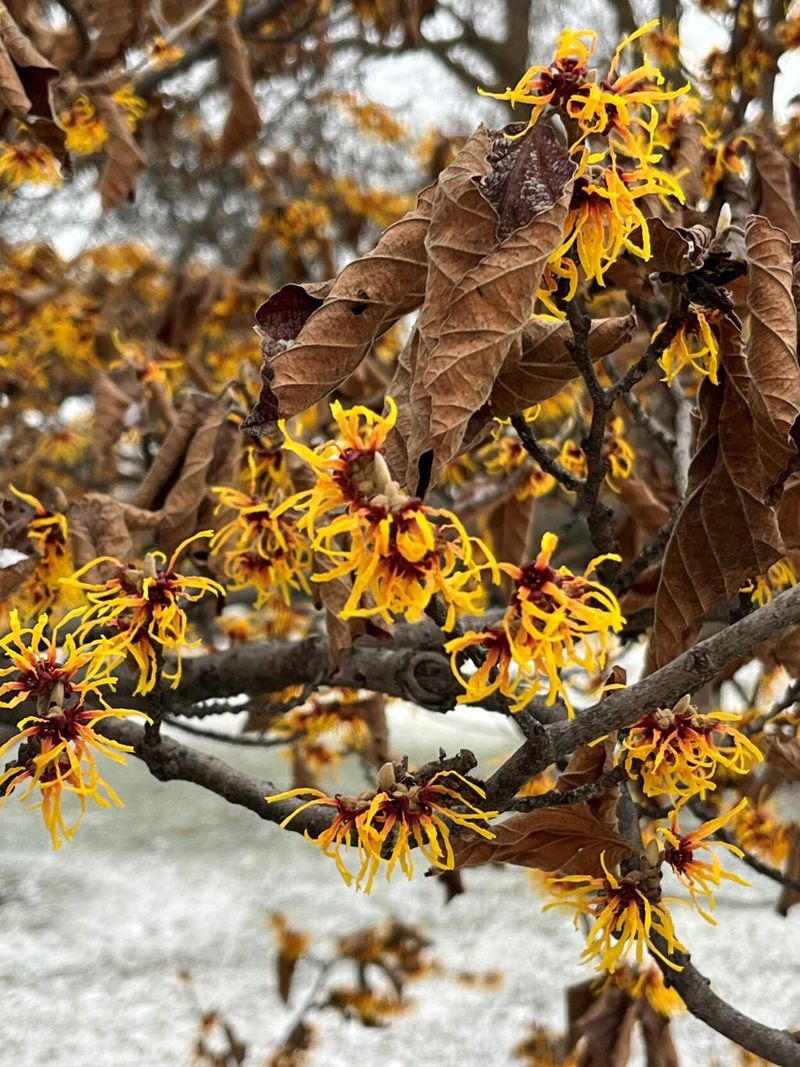
Here is a trap for shoppers: a nursery tag that says witch-hazel does not tell you the season. Common witch-hazel, H. virginiana, is the fall bloomer.
Several other species and hybrids flower in winter or early spring instead.
The Missouri Botanical Garden describes the group as including both fall and late-winter to early-spring bloomers. The Arnold Arboretum also walks through the different witch-hazels in its collection, and the bloom times are part of what sets them apart.
So if you plant one expecting November flowers and it blooms in February, nothing is wrong with your shrub. You may simply have a different kind than you pictured.
The reverse can happen too, when someone hopes for a snowy-day bloom and gets a fall one.
The practical step is easy. Read the full plant name on the tag, look for Hamamelis virginiana if you want fall bloom, and ask the nursery if the label only says witch-hazel.
If you already own one and are unsure, note when it flowers this year. That date is a handy clue to which kind you have.
Choosing by bloom season lets you plan which part of the year you want your yard to shine.
A late-season shrub can serve the yard
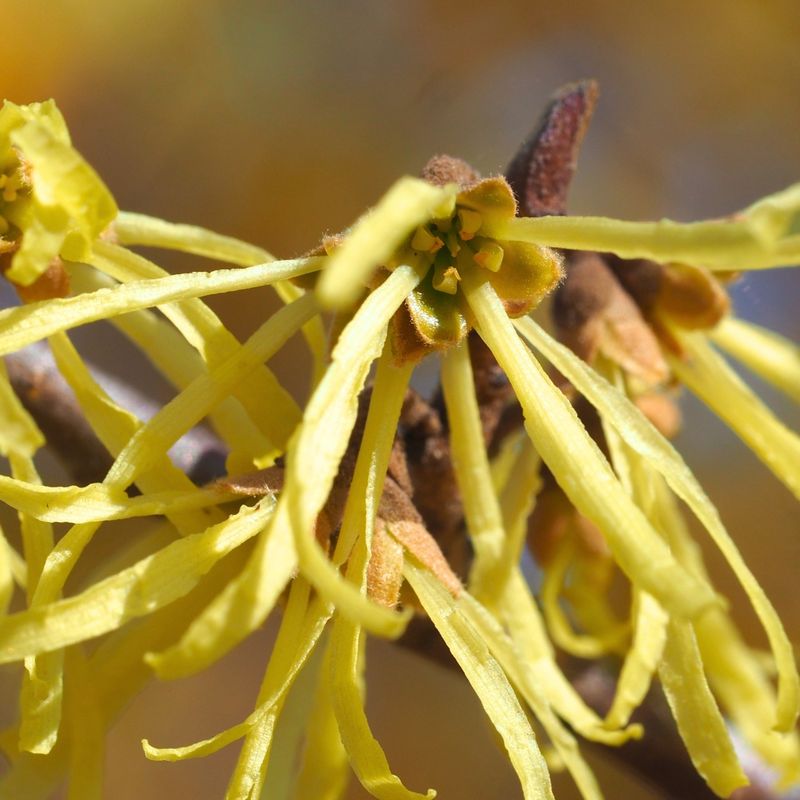
Late flowers can be a real help to insects still active in the cool months. Sources like the Arnold Arboretum and extension guidance describe witch-hazel as a resource for late-season pollinators.
That is not the same as saying it feeds all pollinators, or that nothing else is blooming.
One study of the species found flies were frequent visitors and identified small bees as likely pollinators. So if you look closely on a mild day, flies may be the visitors you see most.
As for where to put it, University of Maryland Extension recommends moist soil. The plant tolerates some temporary wetness and somewhat drier sites, so it is not fussy about a perfect spot.
It grows in part shade to shade, which makes it handy for a woodland-style corner where sun-lovers struggle.
Full sun is tolerated, though it can bring sunscorch, so watch the leaves in a bright, hot location. Established plants can handle occasional pruning.
This guidance comes from one regional source, so treat it as a starting point rather than a promise for every garden in the country. Check your local extension office about how well it suits your area.
If you have a damp, partly shaded spot where little else thrives, picture a shrub there glowing yellow in the fall.
Commercial preparations use other parts of the plant
Many people assume the bottle in the cabinet comes from those yellow flowers. It does not.
The U.S. Forest Service says medicinal extracts and products from American witchhazel are prepared from the leaves, twigs, and bark.
The United States Pharmacopeia describes witch hazel as a distillate from dormant twigs. A distillate is made by heating plant material and collecting the vapor that condenses, which is a different process from soaking plant parts to pull out compounds.
So the shrub in your yard and the bottle on the shelf share a botanical source, but the flowers are not what ends up in the bottle. Think of it as the same plant, different parts, and a manufacturing process in between.
That matters for backyard gardeners because the shrub outside is a garden plant first. Leaves, bark, or twigs from it are not a stand-in for a labeled product, and there is no guarantee that anything homemade would have a reliable strength.
This article does not give harvesting or extraction steps for that reason.
A handy rule: enjoy the flowers with your eyes, and leave the bottle to the people who make it under product standards.
What the FDA monograph does—and does not—say
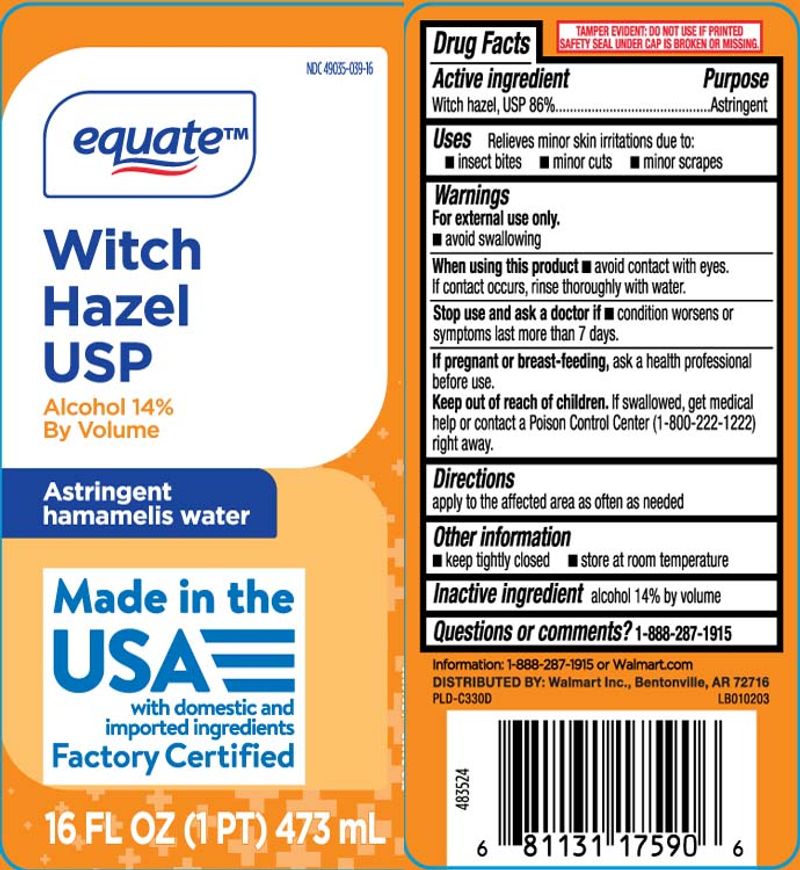
The FDA connection is real but narrow. In the OTC skin protectant monograph, witch hazel is listed as an astringent active ingredient under specified conditions.
The witch-hazel uses it lists are relief of minor skin irritation due to insect bites, minor cuts, or minor scrapes.
That is the whole list. Acne, eczema, anti-aging, and broad wound healing are not part of it, so no one should call witch hazel FDA-approved for those.
The listing also does not prove broad clinical benefit.
A monograph is a set of rules for a type of nonprescription product. As the FDA explains, OTC monograph drugs may be marketed without an approved drug application if they meet the monograph and other legal requirements.
So the more accurate phrase is that the FDA recognizes witch hazel as an astringent in this setting, not that the FDA approved the shrub or every bottle.
Then there is the cosmetic side. Some witch-hazel products are sold as cosmetics rather than OTC drugs, and the FDA notes that cosmetics are not FDA-approved products.
Next time you hold a bottle, check whether the label has a Drug Facts panel. That panel tells you what the product is sold for and how to use it.
Extracts, distillates, and product formulas differ
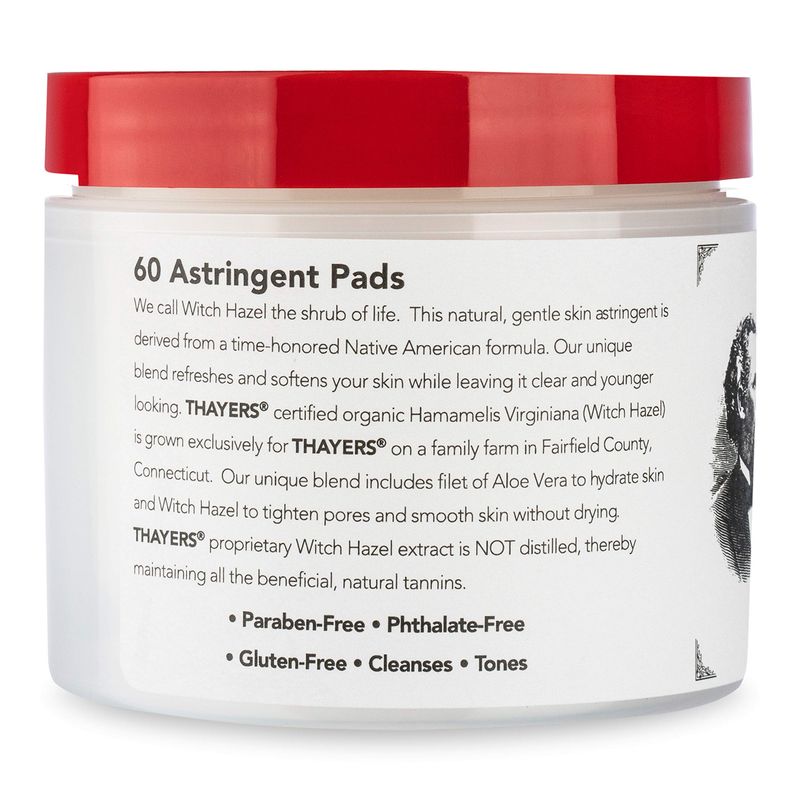
The words witch hazel on a label do not point to one identical liquid. Researchers separate tannin-containing polar extracts from distillates, where tannins are theoretically absent or nearly absent.
A finding about one is not automatically true of the other.
For example, a peer-reviewed study on bark extract and eczema-related pathways and another on acne-related inflammation looked at bark extract. Those results should not be carried over to a distillate, and they do not show that any product treats those conditions.
Formulas differ at the shelf too. One DailyMed-listed product contains 14% alcohol.
Another listed spray has a different formulation. Two examples cannot describe every product on the market, but they show why comparing labels is worthwhile.
A practical habit is to flip the bottle over. Look at the ingredient list, the alcohol content if stated, and the uses printed on that product.
Two bottles with similar names can differ in all three.
That is also why a friend’s good experience with one product tells you little about another.
Follow the directions for the specific product
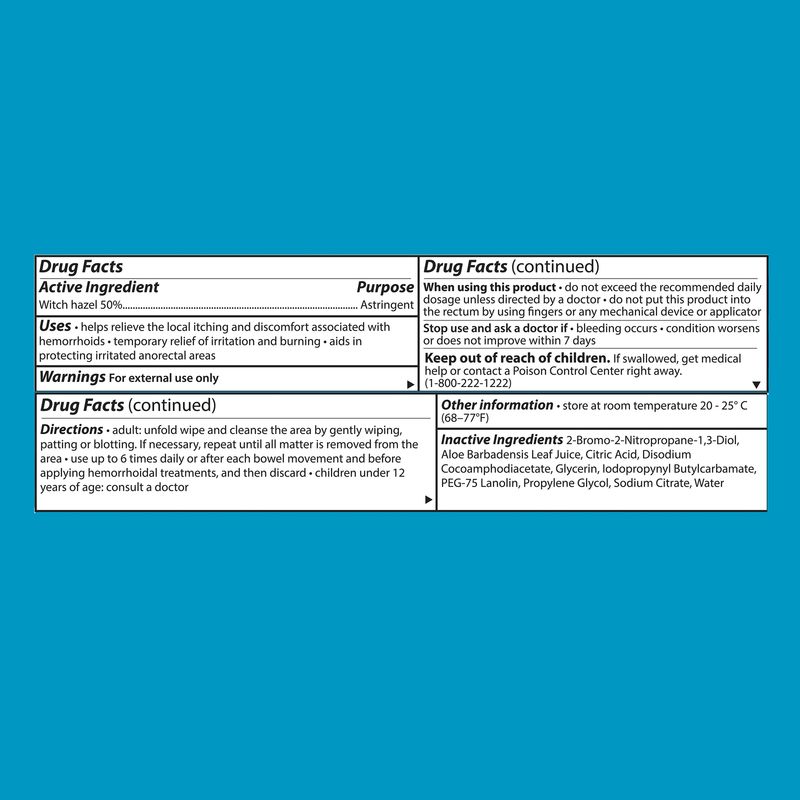
When it is time to use a product, the bottle in your hand is the guide. The Dickinson’s Drug Facts label on DailyMed says it is for external use only and to avoid contact with the eyes.
It says to stop use and ask a doctor if symptoms worsen or last beyond seven days, and to get help if it is swallowed.
Those directions belong to that product. Another product may say something different, so read each label you own rather than assuming one set of rules covers them all.
Witch hazel is also not harmless for everyone. A published report documents contact allergy to a witch-hazel preparation.
It does not tell us how common that is, but it is a good reason to take skin reactions seriously and stop using anything that bothers you.
Back outside, the picture is simpler. Common witch-hazel gives your yard late-season flowers, and Maryland Extension reports bloom from October into November.
Labeled products draw on leaves, twigs, or bark instead, and the FDA monograph covers only minor irritation from insect bites, cuts, or scrapes.
One plant, two jobs, and the flowers only do one of them.