
Hate Hauling Your Petunias To The Compost Every Fall? These 15 Flowers Come Back On Their Own Next Spring
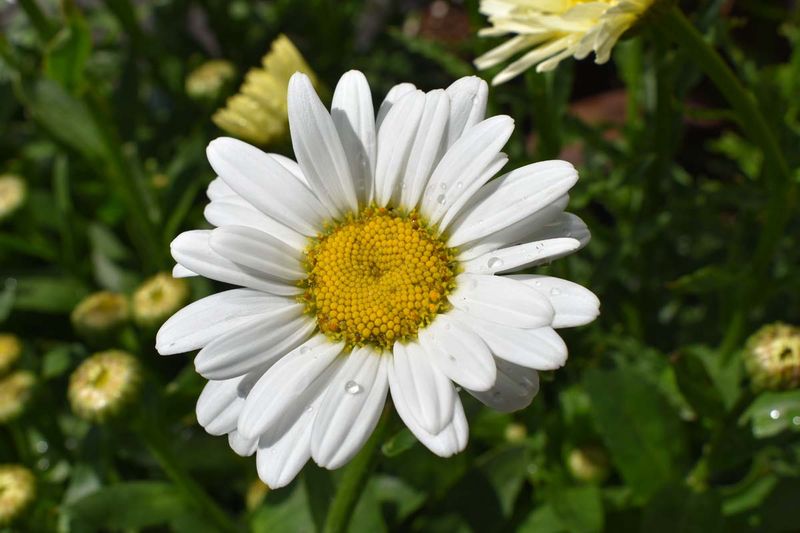
Every fall, a lot of us pull up tired petunias, toss them on the compost pile, and buy new ones in spring. That cycle costs money, time, and a sore back.
Perennial flowers break the habit because their roots survive winter and push up fresh growth when the weather warms. Here are 15 tough, easy bloomers that can fill your beds year after year without a single trip to the garden center.
1. Black-Eyed Susan
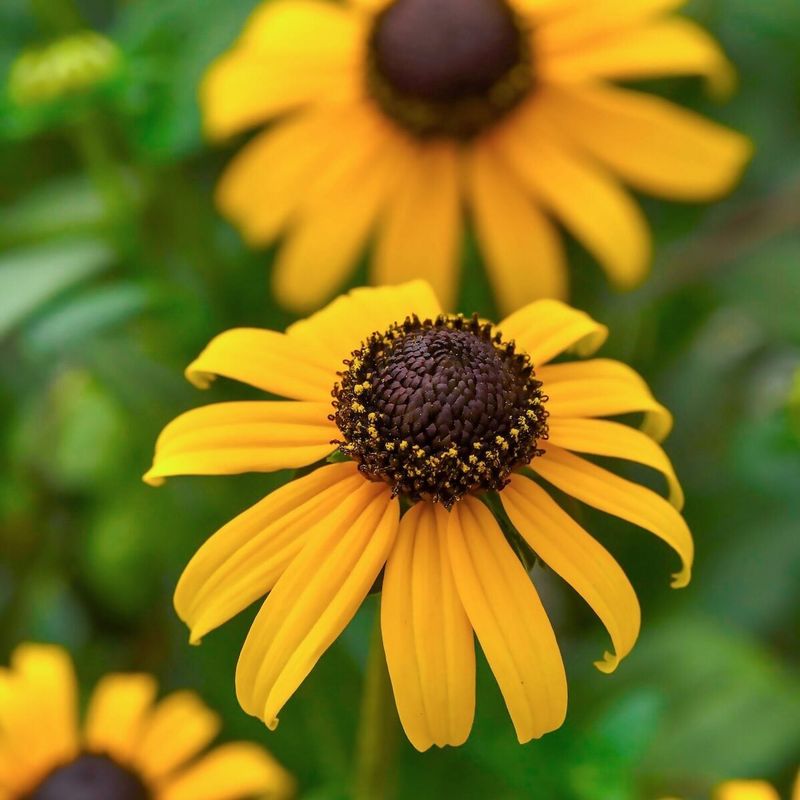
Picture a July afternoon so hot your petunias are flopping over. Right next to them, black-eyed Susans stand tall and grinning, golden petals wide open.
Heat and humidity barely slow them down.
Rudbeckia handles poor soil, so you don’t need perfect dirt to get a great show. Blooms usually start in midsummer and keep going until frost, which covers the stretch when many annuals start to fade.
Plant them in full sun and water well the first season while roots settle in. After that, they mostly take care of themselves.
Leave a few seed heads standing in fall, and goldfinches may stop by for a snack while new seedlings can pop up nearby.
2. Purple Coneflower
Forgot to water for a week? Purple coneflower probably didn’t notice.
Echinacea is a prairie native, built to shrug off dry spells and lean soil that would leave a petunia limp and crispy.
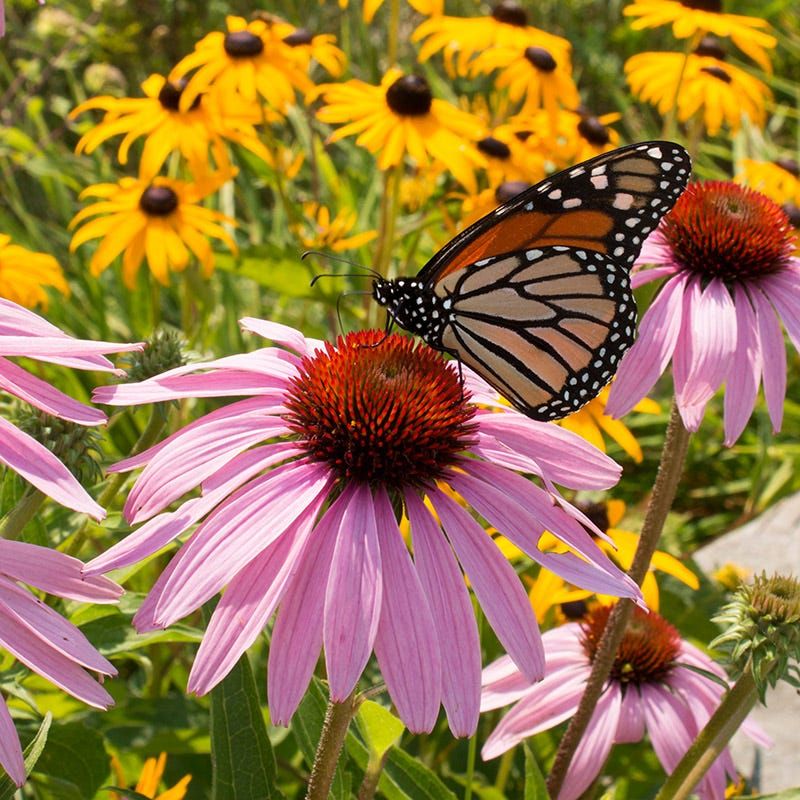
Butterflies treat the spiky orange centers like a landing pad, and hummingbirds may visit too. You get a steady parade of wildlife from early summer into fall.
Starting coneflowers from seed is cheap and simple, though nursery plants bloom faster. Give them sun and decent drainage, and avoid heavy fertilizer, which can make stems weak.
Clumps get fuller every year.
3. Daylily
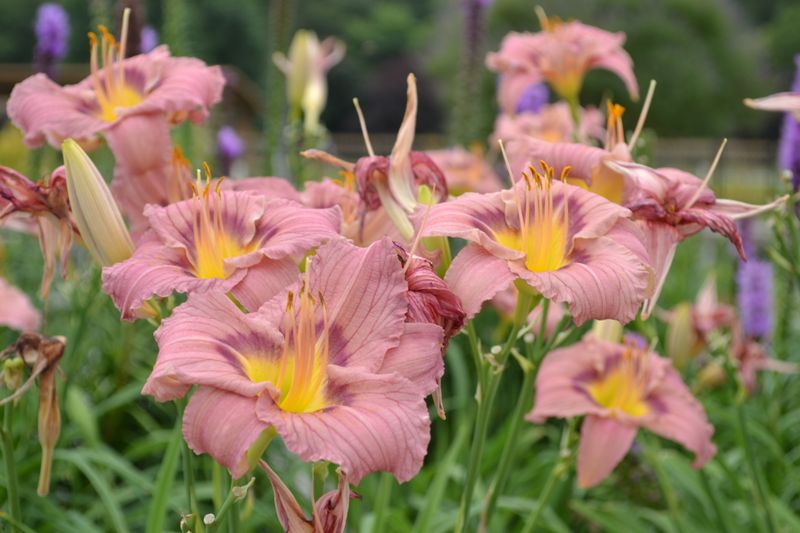
Grandma’s ditch lilies along the fence line were never watered, never fussed over, and still bloomed every June. That stubborn spirit is why daylilies earn a spot here.
Each flower lasts just one day, which is how Hemerocallis got its name, from Greek words meaning beauty and day. Because every stem carries lots of buds, the show keeps rolling for weeks.
Some varieties, like ‘Stella de Oro’, rebloom later in the season.
Colors range from lemon yellow to deep burgundy, with ruffled and striped forms too. They handle summer heat well and grow in nearly any soil.
Divide crowded clumps every few years for free plants.
4. Hosta
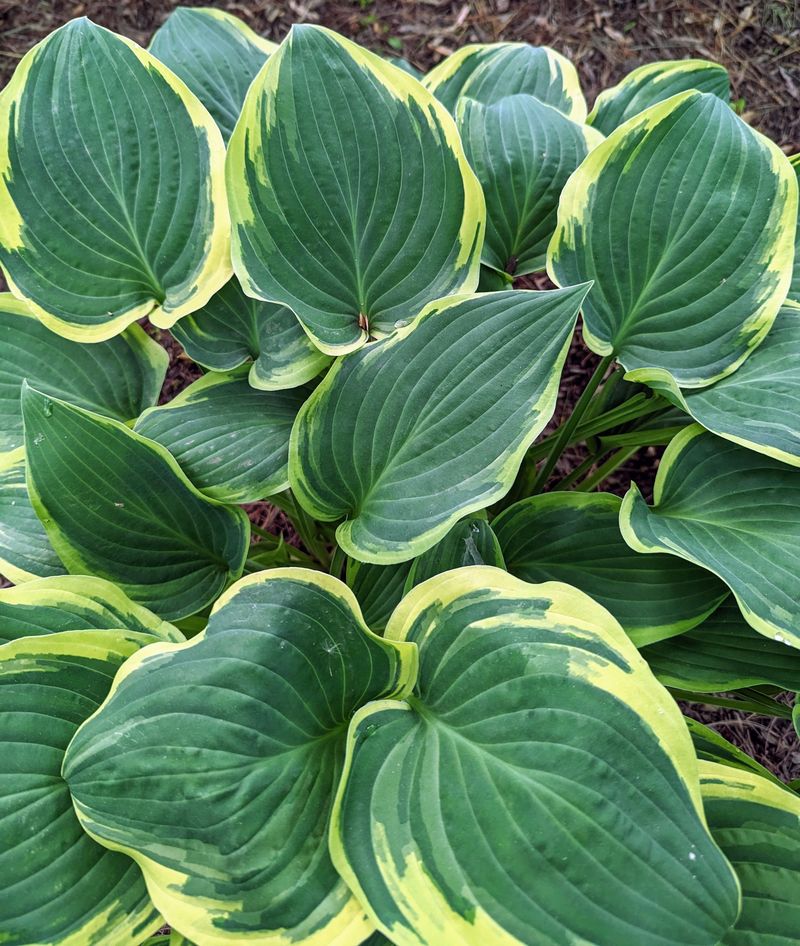
Shady corners are where petunias go to sulk. They stretch, stop flowering, and look sad by August.
Hostas, on the other hand, actually prefer that spot.
Most people grow them for leaves, which come in blue, chartreuse, deep green, and creamy variegated patterns. Midsummer brings tall spikes of lavender or white bell flowers that hummingbirds enjoy.
Hostas die back to the ground after frost and reappear in spring as tight curled shoots. Keep an eye out for slugs and deer, which love them.
A layer of mulch and steady moisture keep the leaves looking fresh.
5. Lavender
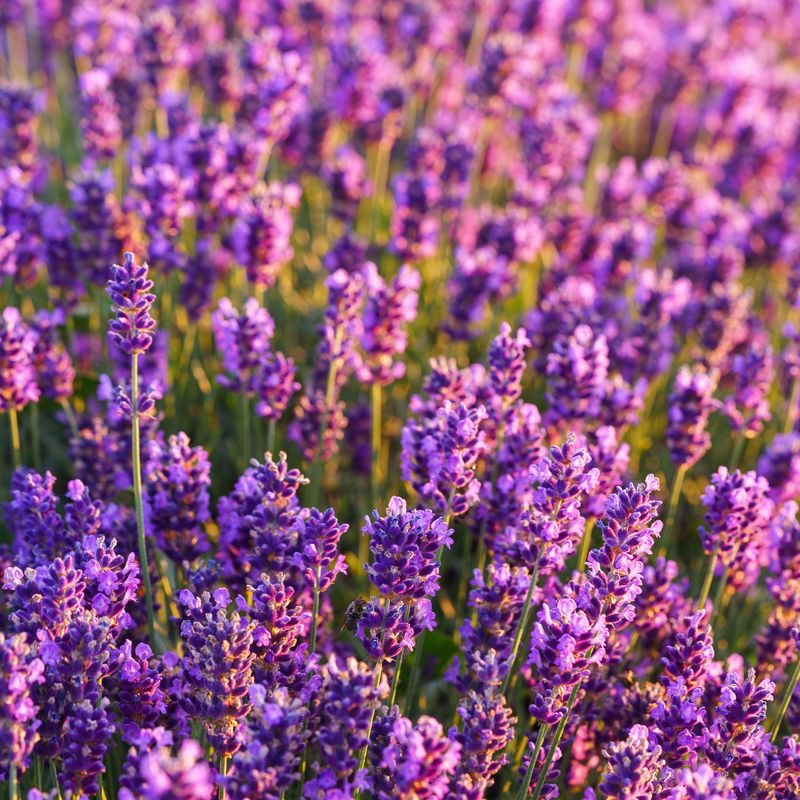
Brush past a lavender plant and the scent follows you inside. Few flowers make a backyard feel so relaxing with so little work.
Lavender wants sun, sun, and more sun, plus soil that drains fast. Soggy roots are its biggest enemy, especially in winter, so raised beds or gravelly spots work best.
Once established, it handles drought like a champ.
Hardy types like ‘Munstead’ and ‘Hidcote’ tend to come back reliably in colder areas. Trim lightly after blooming to keep plants tidy, but avoid cutting into old bare wood.
Bundle the cuttings to dry for sachets.
6. Shasta Daisy
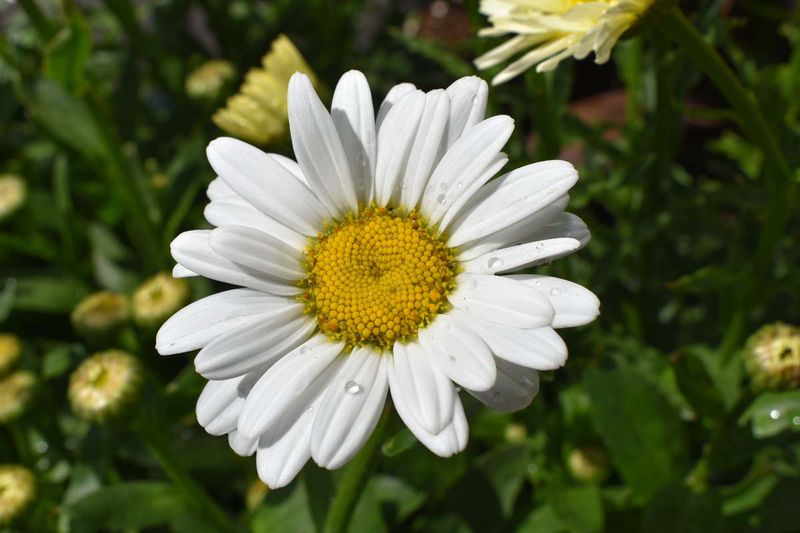
Kids drawing a flower usually sketch something that looks exactly like a Shasta daisy. Crisp white petals and a sunny yellow button center feel classic and cheerful.
Luther Burbank, a famous plant breeder, developed this daisy in the 1890s and named it after snowy Mount Shasta in California. More than a century later, gardeners still love its long bloom time.
Plant in full sun and snip off faded flowers to keep new ones coming for weeks. Divide clumps every few years so they stay vigorous.
They also make wonderful cut flowers for a kitchen table vase.
7. Hardy Geranium
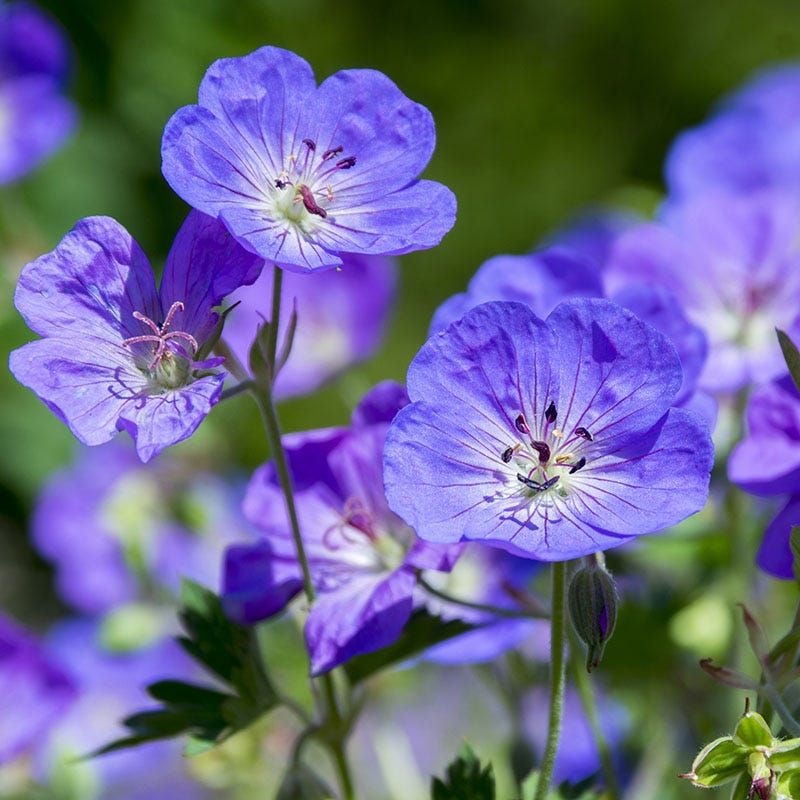
Don’t confuse it with the potted geraniums on your porch. Hardy geranium, also called cranesbill, is a true perennial that survives winter outdoors and spreads into soft, flower-covered mounds.
The name cranesbill comes from seed pods shaped like a bird’s beak. Flowers come in blue, violet, pink, and white, and varieties like ‘Rozanne’ bloom from late spring until frost.
Slugs and rabbits usually leave it alone, and it adapts to many soil types. Use it as a ground cover around taller plants or let it spill over a wall.
If it looks messy midsummer, shear it back and fresh growth returns.
8. Sedum
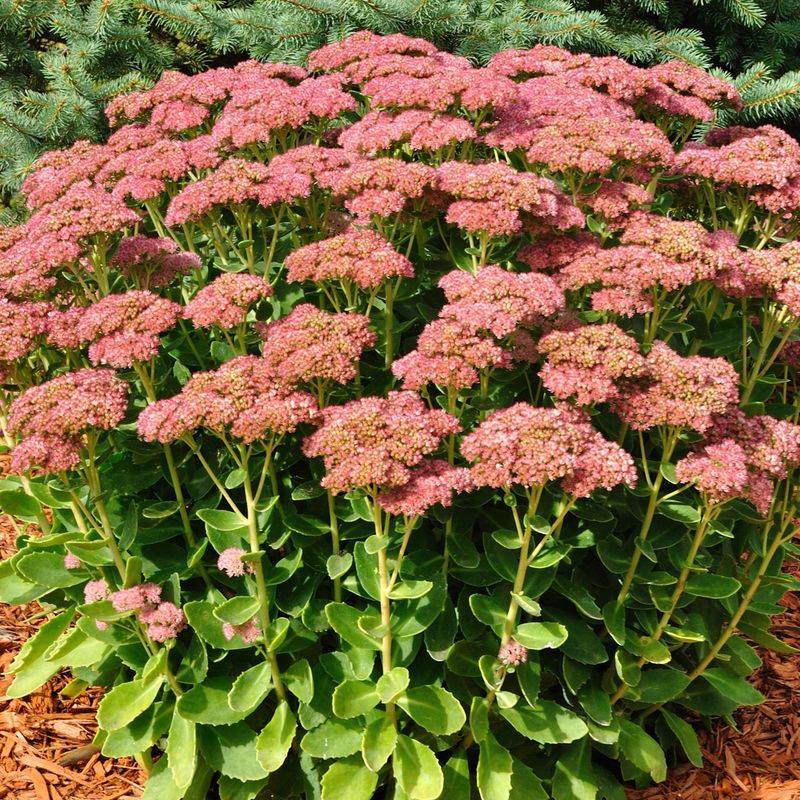
Some plants practically dare you to neglect them. Sedum, or stonecrop, stores water in thick fleshy leaves, so heat, drought, and rocky soil are no big deal.
Tall types like ‘Autumn Joy’ shine late in the year. Their flower heads open pale pink and slowly deepen to rusty red as fall arrives, just when petunias are heading for the compost bin.
Bees crowd the blooms on sunny fall days. Leave the dried flower heads up over winter for texture, then cut them down in early spring when new rosettes appear at the base.
Too much fertilizer can make stems flop, so skip it.
9. Salvia
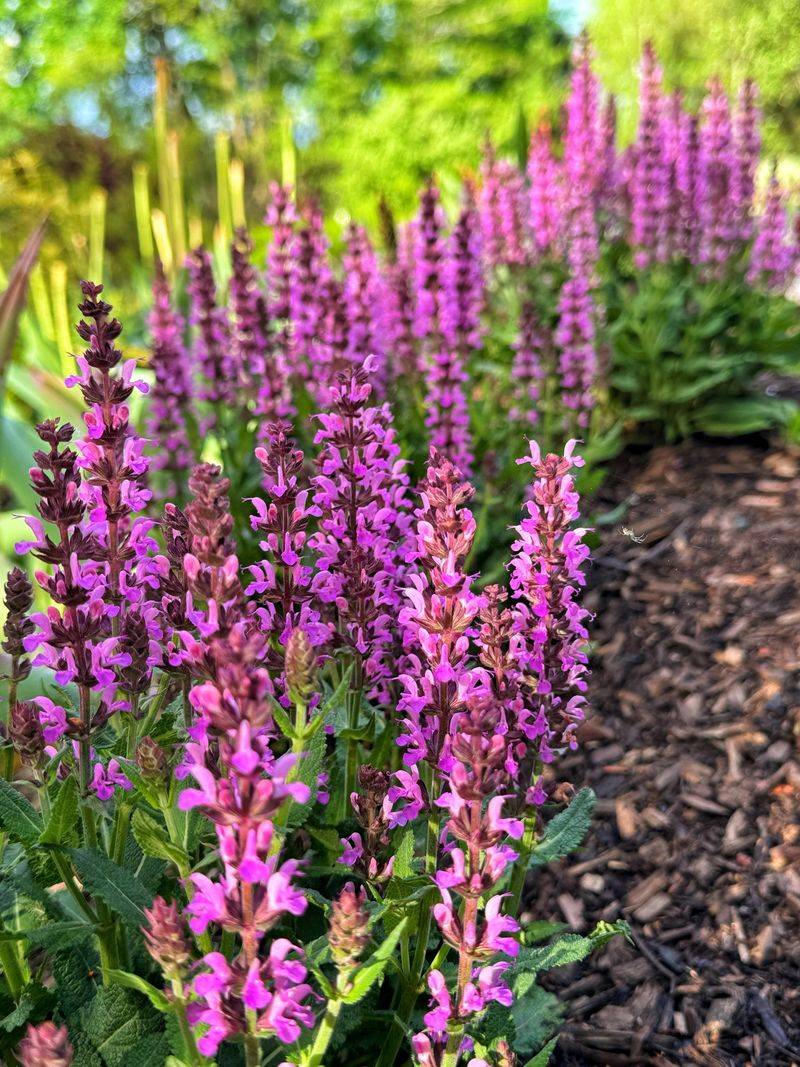
Proof that salvia is having a moment: ‘Pink Profusion’ perennial salvia was named the 2024 Perennial of the Year. Gardeners and growers alike keep praising this family of plants.
Perennial salvias send up spikes of purple, blue, or pink flowers that bees and hummingbirds find hard to resist. They like sun and well-drained soil, and many handle dry spells once settled.
Here’s the trick for more flowers. When the first flush fades, cut stems back by about a third, and plants often rebloom within weeks.
Deer and rabbits tend to skip the fragrant foliage too.
10. Coreopsis
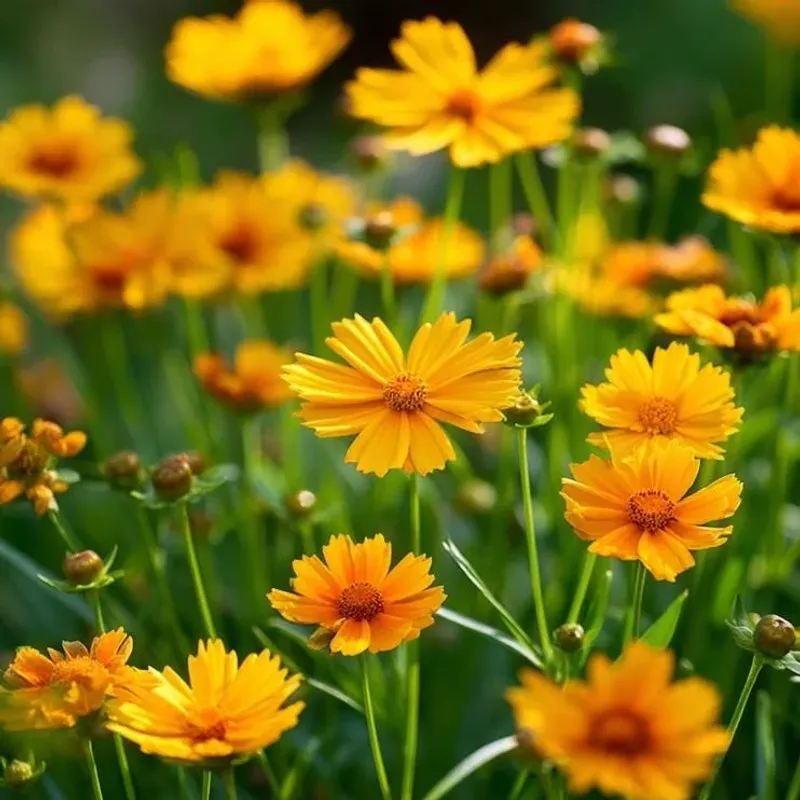
Sunshine in flower form, that’s coreopsis. Its golden, daisy-like blooms keep popping from late spring through frost in many gardens.
The common name tickseed comes from its small seeds, which look a bit like ticks. Don’t worry, the plant itself is nothing but friendly, and pollinators adore it.
Perennial varieties handle heat and drought well, making them a smart swap for hot spots where petunias fry. Shear plants lightly after the first big bloom to tidy them and encourage more flowers.
Choose truly perennial types, since some coreopsis are short-lived.
11. Catmint
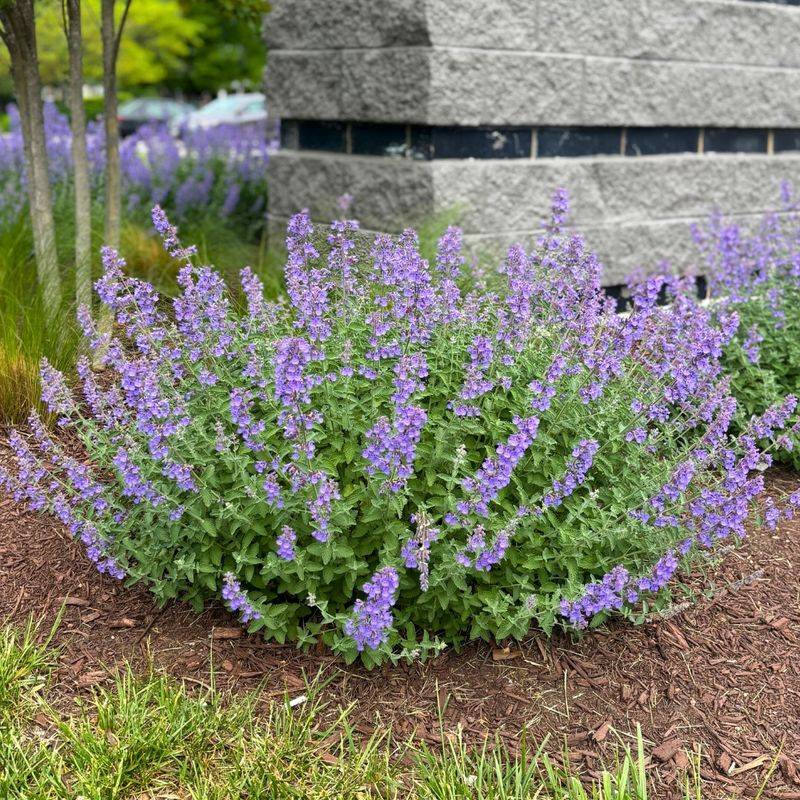
Lazy gardeners, meet your new favorite. Catmint forms soft clouds of lavender-blue flowers and asks for almost nothing.
Deer usually walk right past thanks to its minty scent, and drought rarely fazes it. Your cat might roll in it, though, since nepeta is related to catnip.
After the first wave of flowers fades in early summer, cut plants back by half. A fresh round of blooms often follows.
Varieties like ‘Walker’s Low’ work beautifully along paths and borders where petunias once lived.
12. Peony
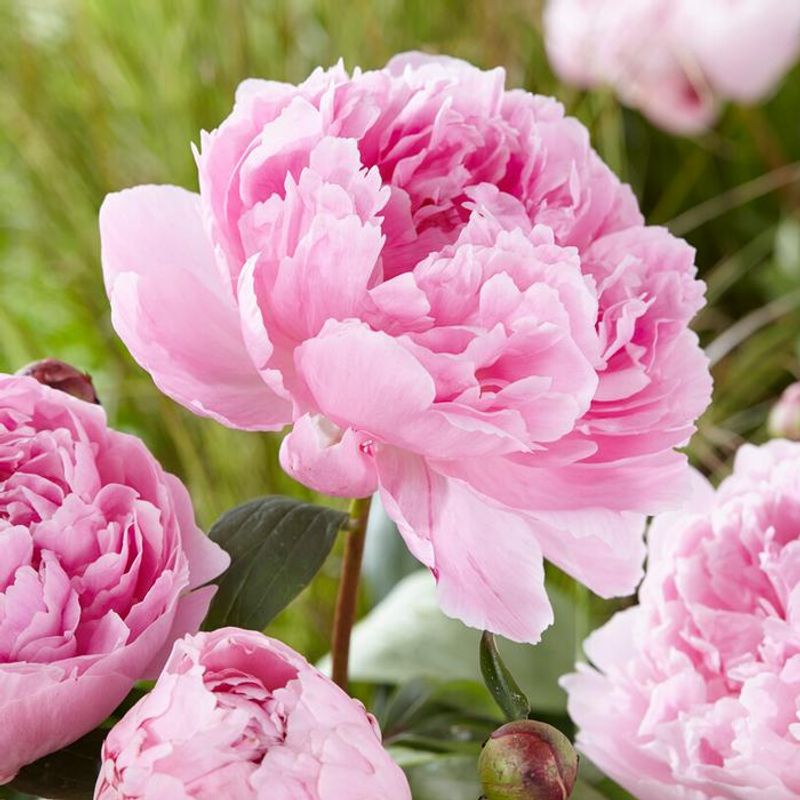
Plant a peony today and your grandkids could still be cutting its flowers someday. These shrubby perennials can live for decades, even a century, in the same spot.
Late spring brings huge, fluffy, often fragrant blooms in pink, white, red, and coral. Ants crawling on the buds are normal and harmless, so no need to spray.
The biggest mistake is planting too deep. Keep the eyes, or buds on the root, no more than about two inches below the soil, or plants may refuse to bloom.
Give them sun, then mostly leave them be.
13. Bearded Iris
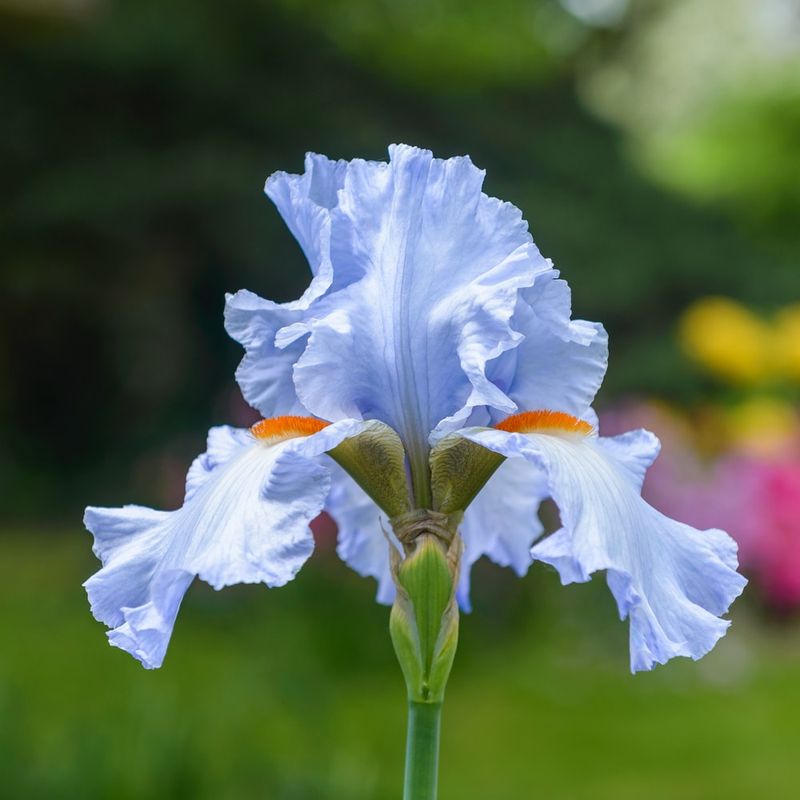
Velvety petals, fuzzy beards, and colors that range from inky black to sherbet orange give bearded iris a bit of a showoff streak.
Iris is named after the Greek goddess of the rainbow, fitting for a flower available in nearly every shade. Blooms arrive in late spring, sometimes with a sweet grape scent.
Beginners do well with them as long as rhizomes sit right at the soil surface, partly exposed to sun. Burying them too deep can cause rot.
Divide crowded clumps every three to four years in late summer.
14. Hollyhock
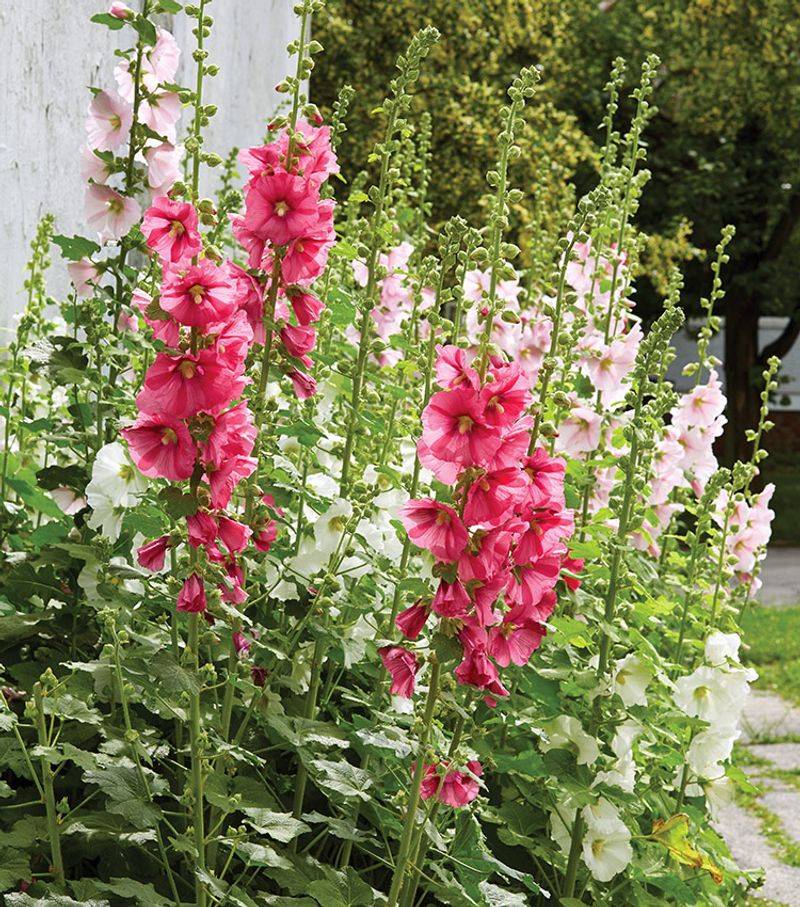
Nothing says old-fashioned cottage garden like hollyhocks towering six feet or more beside a fence. Their stacked, cup-shaped flowers feel straight out of a storybook.
Many hollyhocks are short-lived perennials or biennials, but they keep coming back by dropping seeds. Let some flowers go to seed and new plants will fill in year after year.
Basics matter here. Plant in full sun with good airflow and water at the base to help reduce rust, a common leaf spot disease.
Staking or a sheltered fence line can keep tall stems from toppling in storms.
15. Oakleaf Hydrangea
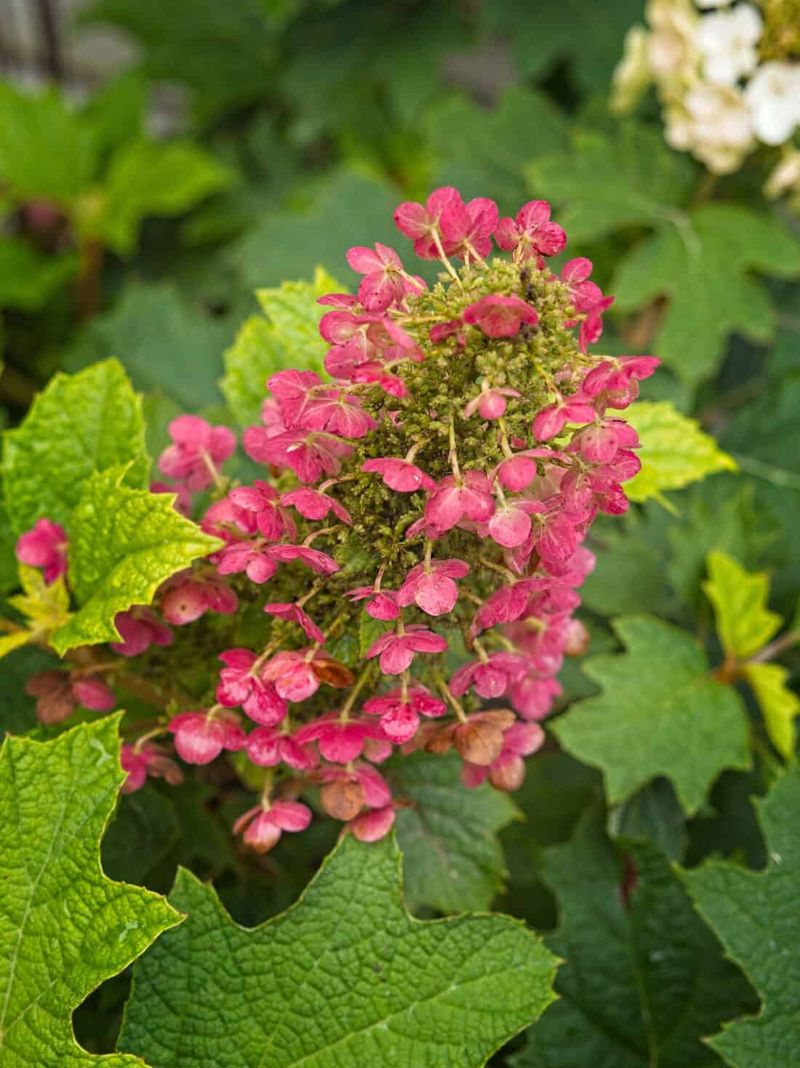
If your bigleaf hydrangea keeps skipping blooms, the oakleaf hydrangea may restore your faith. It’s a native shrub that’s tough, reliable, and gorgeous in more than one season.
Cone-shaped white flowers open in early summer and fade to pink. Then in fall, the oak-shaped leaves turn rich burgundy and red, and peeling bark adds winter interest.
Give it partial shade and well-drained soil. Since it blooms on old wood, skip fall pruning, which can remove next year’s buds.
Beyond that, it needs very little from you.