
Your Hydrangeas Aren’t Necessarily Dead After A Hard Frost: Here’s What To Leave Alone Before Next Summer
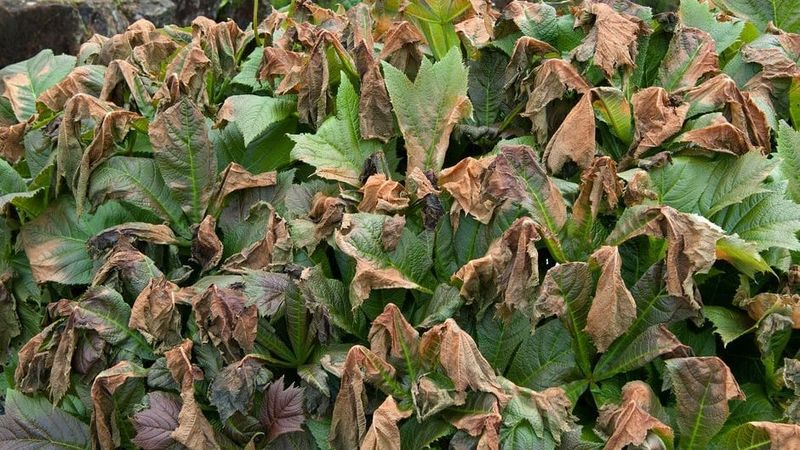
A hard frost can leave your hydrangeas looking brown, limp, or completely bare, and that sight makes many gardeners grab the pruners. Hold off for a moment.
Browned leaves and bare stems do not necessarily mean the plant is dead, and a hasty cut can remove growth that is still alive. Here is how to tell what you have, what to leave alone for now, and what to expect when warm weather returns.
Brown leaves do not prove the whole plant is dead
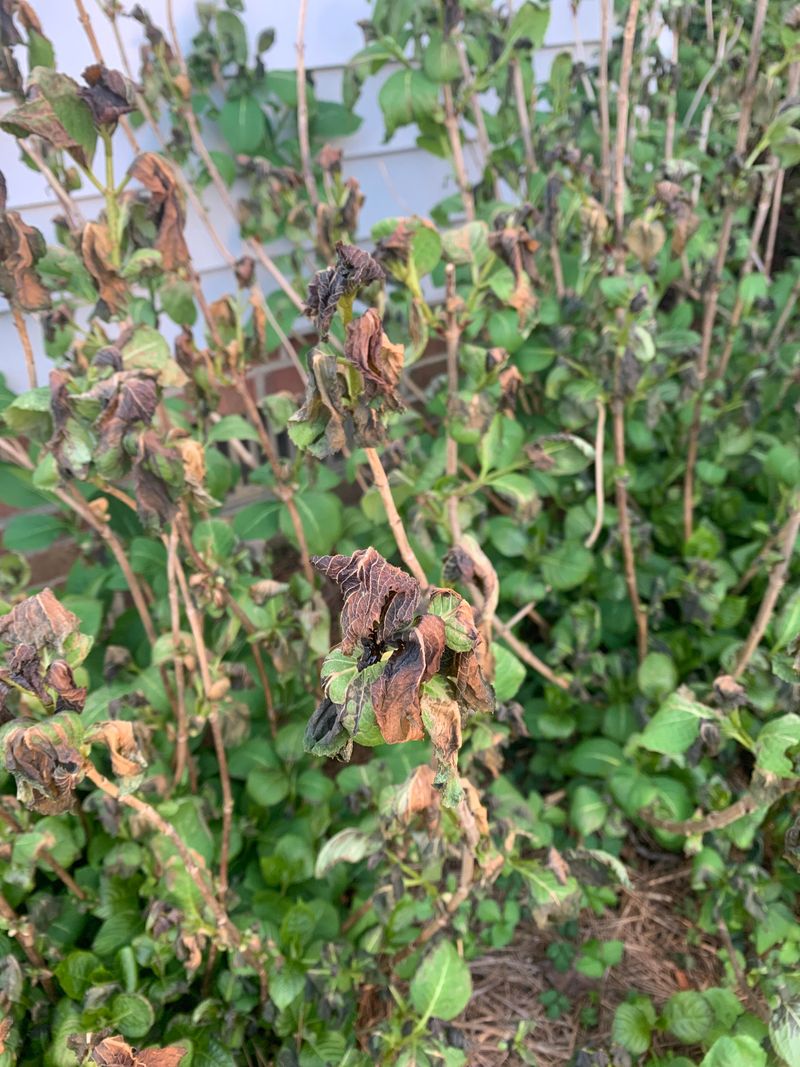
Frost-browned leaves look dramatic, but they only show what happened on the surface. The stems, the roots, and the flower buds can each fare differently, so a limp, crispy shrub does not give you a final answer.
A plant can look rough and still have living tissue underneath.
How much harm a freeze does depends on several things. Cold injury varies with how severe and how long the cold lasted, and whether the plant was still dormant or already pushing new growth, as Oregon State University Extension explains about freezing weather in landscapes.
A shrub that was fully asleep usually handles a cold snap better than one with tender new leaves.
Variety matters too. An Ohio State University Extension response notes that stem and bud hardiness differ among bigleaf hydrangea cultivars, a point also reflected in Virginia Cooperative Extension’s bigleaf hydrangea guide.
That is why there is no single frost temperature that tells you what happened to your plant.
So what can you say right now? Brown leaves or bare stems do not necessarily mean the shrub is dead, but a hard frost can kill stems, flower buds, or in severe cases the whole plant.
Looks alone cannot settle it, and that is exactly why patience is your best tool at this stage.
Identify the hydrangea before choosing a pruning rule
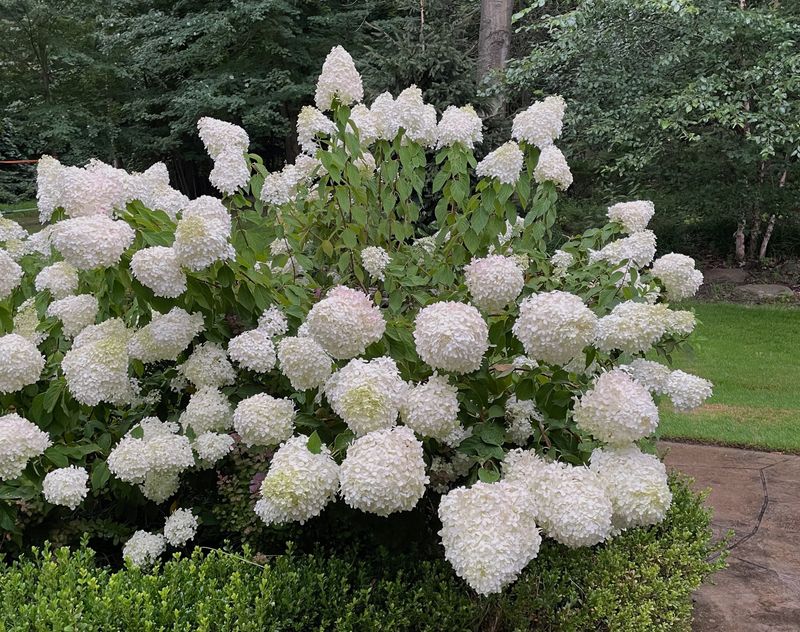
Before you cut anything, figure out which kind of hydrangea you own. The type decides when flower buds form, and that changes what a pruning cut will do.
Check your plant tag, your purchase receipt, or the leaf and flower shape from last summer.
Bigleaf hydrangeas, including mophead and lacecap forms, bloom on old wood. So do mountain and oakleaf hydrangeas.
According to University of Maryland Extension, these types set buds on stems grown the previous season.
Smooth hydrangeas, such as Annabelle types, and panicle hydrangeas bloom on new growth. Their flowers come from stems that grow this season, which is why their pruning schedule is different.
University of New Hampshire Extension lays out the same split in its pruning fact sheet.
This means the advice to leave a hydrangea alone is not a universal rule. It is most useful for uncertain, frost-hit old-wood shrubs.
If you truly cannot tell what you have, hold off on cutting and watch how the plant leafs out and flowers, then label it for next year.
Old-wood hydrangeas carry flower buds through winter
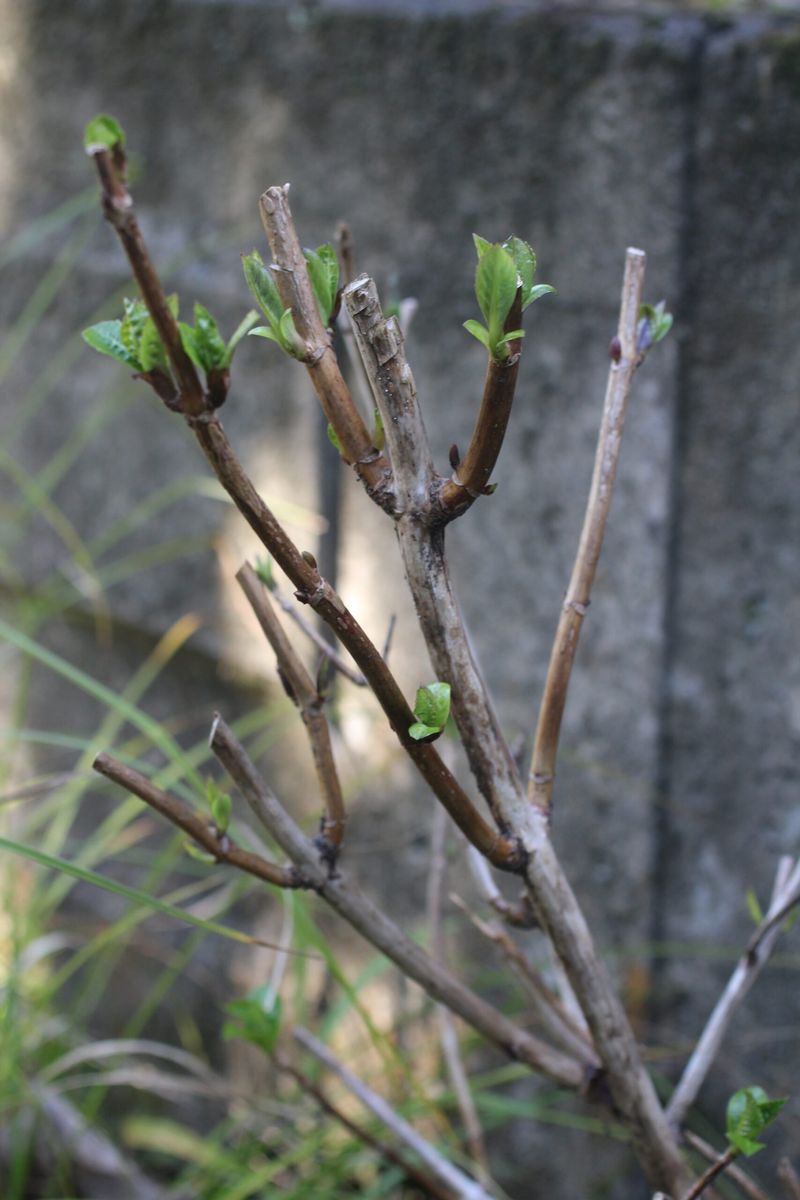
Think of an old-wood hydrangea as a plant that plans ahead. Over summer and fall, it builds flower buds on its stems, then carries them through winter.
Those stems that look like sticks are holding the start of next year’s show.
That timing is why pruning is risky right now. University of Maryland Extension says routine fall or winter pruning of these types can remove buds meant for the following season.
Cutting a stem back before you know its condition can toss out buds that are still viable.
The same idea appears in University of New Hampshire Extension’s fact sheet, which ties flowering to the wood the plant grew the year before.
There is a catch. Having buds on the stems does not mean every bud made it through the cold, and frost may already have killed some or all of them.
Waiting simply avoids removing buds that are still alive. It also does not apply to smooth or panicle types, which flower on growth they have not produced yet.
Wait for new growth to assess questionable stems
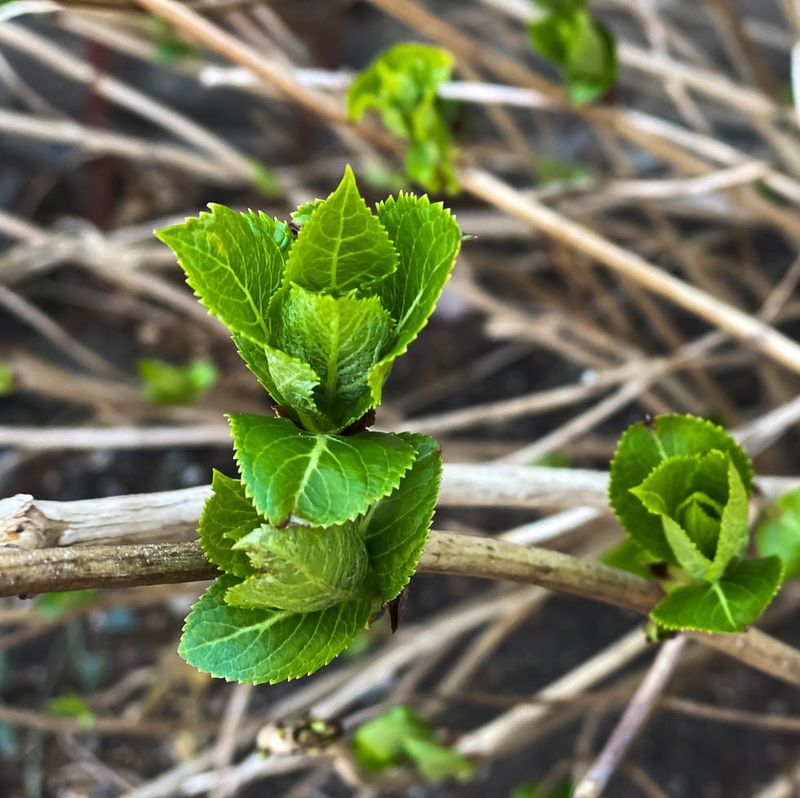
Patience is a plan here, with a few simple steps. First, wait until the cold has passed, and keep an eye on the forecast for more frost.
Then let new growth show you where the plant is alive.
You do not need to rush out and remove frost-browned leaves. A University of Maryland Extension horticulturist says in a Q&A on hydrangea cold injury that damaged foliage can stay while the shrub grows through it.
Trimming bare tips too soon can take off growth that is still living.
Once growth starts, try a light scratch test on a questionable stem. Use a thumbnail to scrape a tiny patch of bark.
Green tissue underneath is a clue the stem is still viable, and an Ask Extension answer from the same university suggests monitoring for further cold and then reassessing.
Remember what the test can and cannot tell you. Green under the bark suggests a living stem, but it does not promise flowers, and it is not a reason to cut right away.
Brown, dry tissue on a stem that stays leafless as neighbors leaf out is a better sign that the stem may be dead.
Prune when damage is clear and timing suits the plant
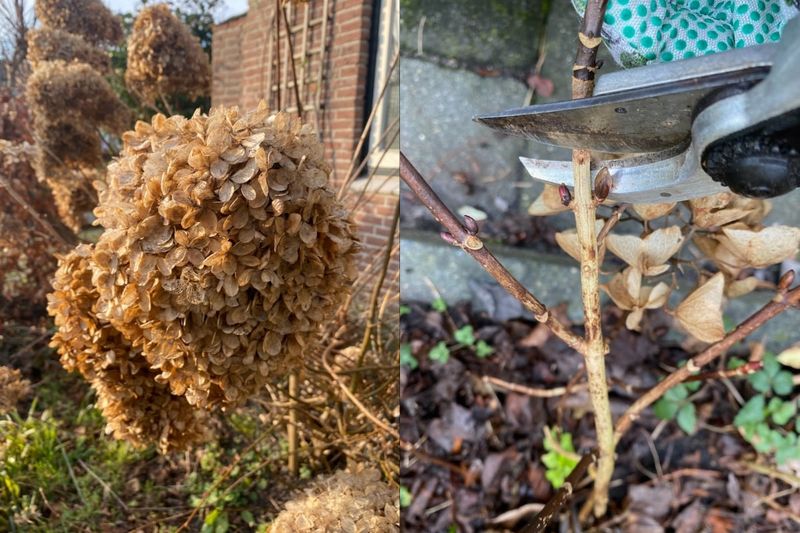
Restraint does not mean keeping dead wood forever. It means postponing cuts you do not need until the damage is clear.
Once you are sure a stem is dead, taking it off is fine and often helpful.
For old-wood hydrangeas, the usual pruning window is right after flowering. University of Maryland Extension warns that routine pruning in fall, winter, or early spring can remove the flower buds.
Doing your trimming after the blooms fade gives the plant time to set buds again.
Smooth and panicle hydrangeas follow a different calendar. Since they flower on new growth, they can generally be pruned in late winter or early spring, as described in the University of New Hampshire Extension fact sheet.
A quick example: if your Annabelle looks frozen to the ground in March, you have room to cut it back as part of normal spring pruning. If your mophead has a few clearly dead, leafless stems in June, remove those while leaving living wood alone.
Match the cut to the plant type and to what you can actually see.
A surviving shrub may not flower this season
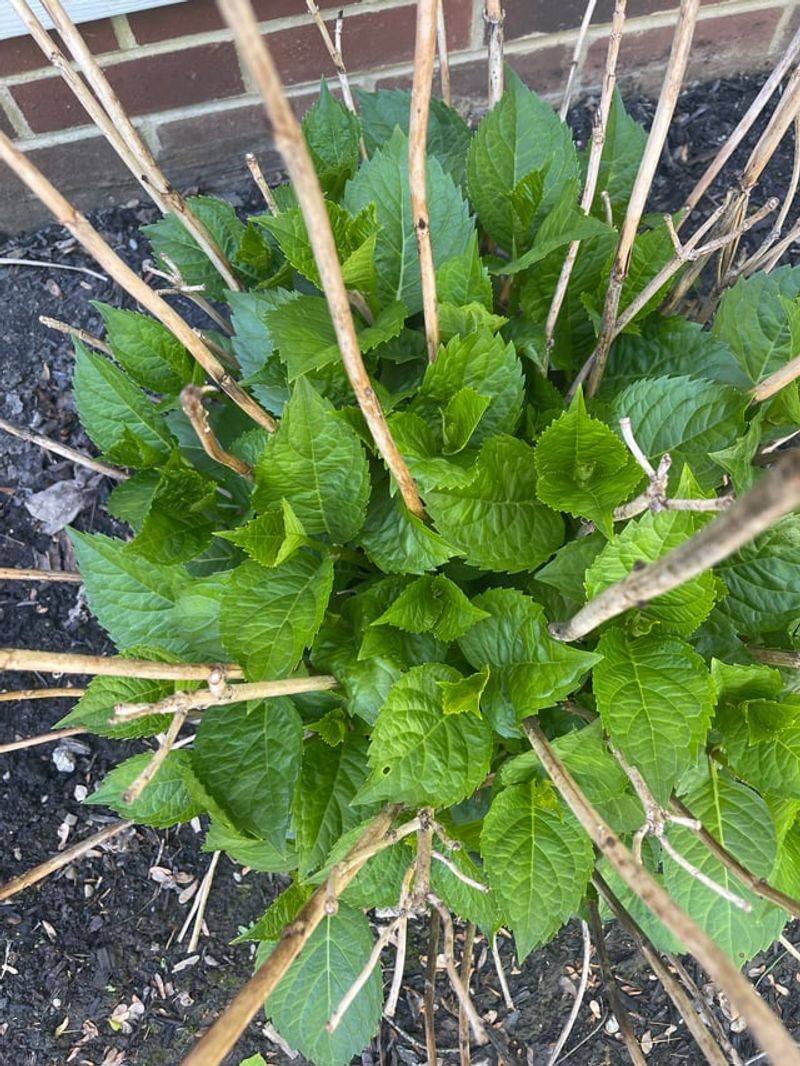
Surviving and blooming are two different things. A hydrangea can live through a hard frost and still lose its flower buds.
Cold can kill buds while the stems or roots stay alive.
Sometimes stems die back in winter and the plant regrows from the base. Those fresh shoots can leaf out nicely without flowering that season, a pattern University of Maryland Extension describes for old-wood types.
A leafy green shrub with no blooms is disappointing, but it is not a sign you did something wrong.
University of New Hampshire Extension notes that frost can wipe out old-wood flower buds even when the plant lives. That is why waiting only helps you avoid cutting viable buds.
It cannot guarantee a summer of flowers.
Some reblooming bigleaf cultivars can flower on both old and new wood, per Virginia Cooperative Extension. These may produce some later blooms after old-wood buds are lost, but a frost-hit plant is not certain to rebloom.
Smooth and panicle types flower on new growth, so their outlook depends on regrowth instead.
Use fabric to cover tender growth before another late frost
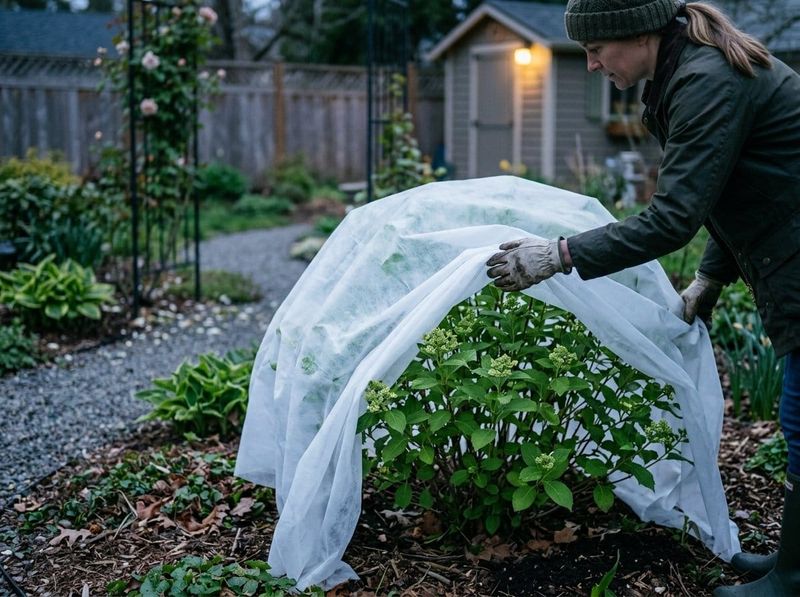
Spring has a habit of sending one more cold night after your hydrangea has started to leaf out. If a late frost is forecast, cover the tender growth with fabric.
A University of Maryland Extension horticulturist advises using cloth and avoiding plastic in guidance on hydrangeas hurt by cold.
Drape an old sheet or frost cloth over the shrub in the evening, and remove it once temperatures rise the next day. Fabric works better than plastic for this job, so skip the plastic bags and tarps.
A cover protects new growth from what is coming. It cannot reverse damage that has already happened, so keep your expectations in check for stems that were hit earlier.
That brings the whole plan together. Know which type of hydrangea you have, hold off on unnecessary cuts while damage is still unclear, and protect what is growing.
A bare-looking shrub in spring is often just taking its time.