
What Those Glass Bottles Hanging From Trees In North Carolina Yards Really Mean
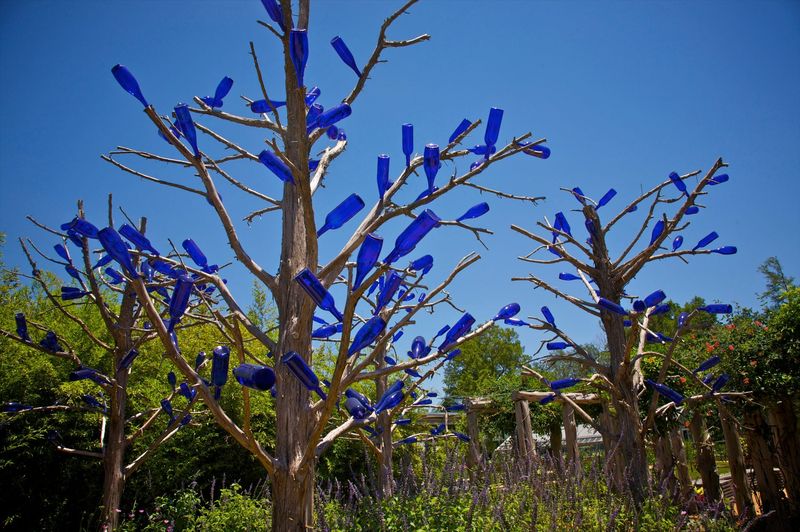
Drive down a country road in North Carolina and you might spot colorful glass bottles slipped over the branches of a tree or a metal frame. They glitter in the sun and clink in the breeze.
Behind that sparkle sits a long Southern story with African roots, spirit folklore, and plenty of modern creativity. Knowing a little of that history helps you appreciate what you see without guessing what a neighbor means by it.
A bottle tree does not have one fixed meaning
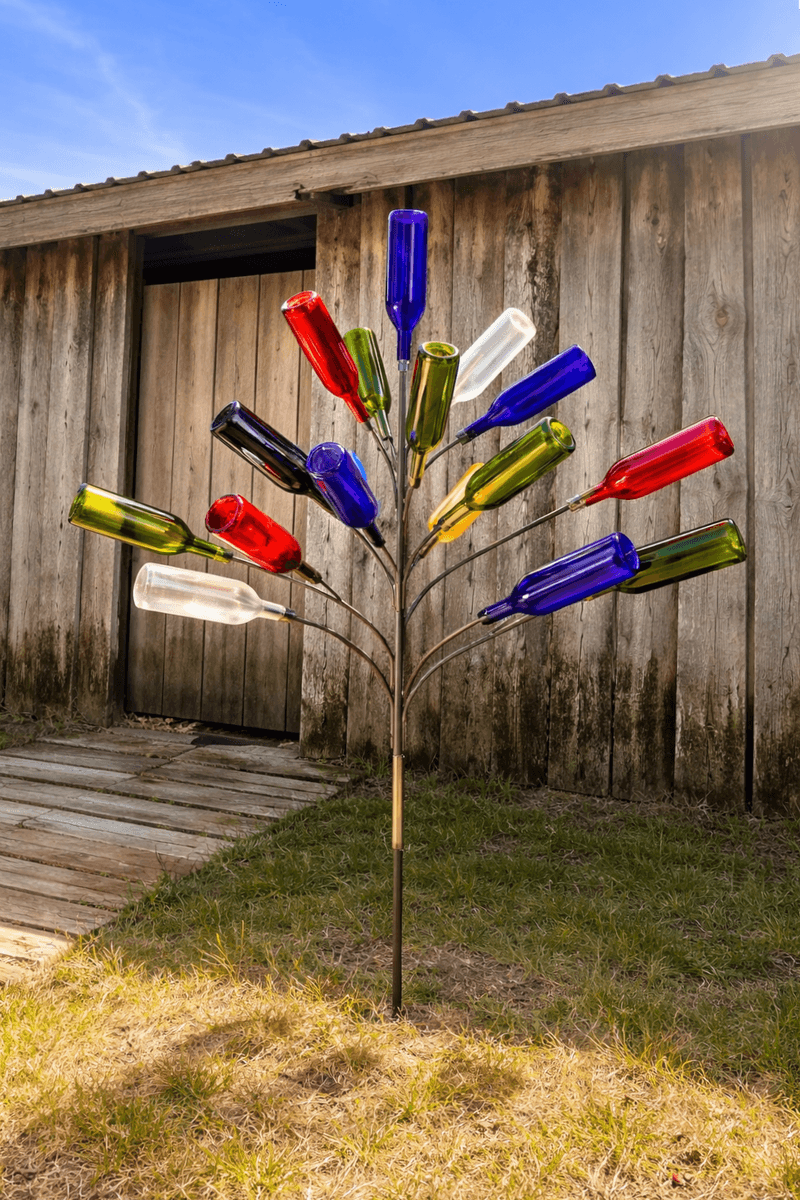
Picture a tree, or a metal frame shaped like one, with glass bottles pushed over the ends of its branches. That is a bottle tree.
The bottles can sit on a living tree, a dead trunk, or a freestanding frame made of rebar, pipe, or welded steel.
The practice carries spiritual, cultural, and aesthetic meanings, and those meanings have shifted over time, according to Smithsonian Gardens. For some people, a bottle tree has been tied to protection.
For others it has meant luck, a way to honor family tradition, or simply a pretty focal point in the yard.
That range is the key idea for any North Carolina homeowner who notices one. The documented history of bottle trees tells you where the tradition has been.
It does not tell you what the person who built or bought a particular display has in mind.
A bottle tree on your street might be a family heirloom, a weekend craft project, or a gift from a friend. Often the only way to know is to ask kindly, if the chance comes up.
Cultural histories connect bottle trees to Kongo traditions
Scholars and folklore writers often link bottle trees to Kongo traditions. The New Encyclopedia of Southern Culture, in its entry by Jim Martin, describes the bottle tree as Kongo-derived.
Kongo refers to a region of west-central and central Africa, not the West African coast.
The story gets more layered from there. Smithsonian Gardens says the familiar American form likely developed as a Creole practice, meaning a blend of traditions that took shape in the Americas, and later became prominent in the South.
It also notes that folklore and written sources reach back to 1776, as described in its history of the American bottle tree.
Other research helps explain why Kongo ideas matter in the Southeast. Amber Withers explores Kongo spiritual influence in the South Carolina Lowcountry between 1700 and 1830, a nearby region with deep ties to the Carolina coast.
Still, a written record is not the same as proof of a straight line. No source consulted shows one exact starting date or a single route that every bottle tree followed.
A careful way to say it is that bottle trees are often traced to, or associated with, Kongo traditions.
North Carolina shares a Gullah Geechee cultural landscape
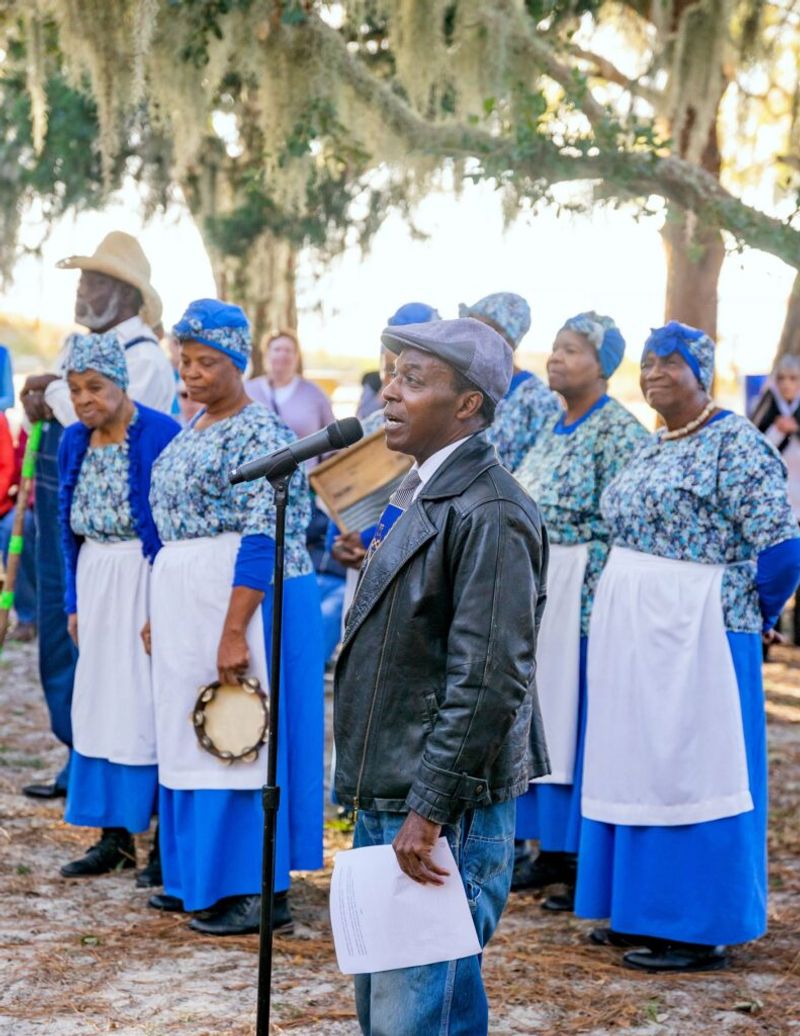
Along the southern Atlantic coast runs the Gullah Geechee Cultural Heritage Corridor. According to the National Park Service, it stretches from Pender County, North Carolina, to St. Johns County, Florida.
That means the coast near Wilmington is part of this story.
The Park Service describes Gullah Geechee heritage as shaped by West and Central Africans who were enslaved along the lower Atlantic coast. Their descendants kept up living traditions, including arts, crafts, and spiritual practices that continue today.
Bottle trees fit comfortably in that wider cultural landscape. They are described as part of a Southern Black folk tradition, and the Kongo connection links to Central African roots that the corridor’s history also names.
Jim Martin’s encyclopedia entry, mentioned earlier, treats the bottle tree as a broader Southern tradition rather than one limited to a single community.
So the coast gives useful context, but it is not a label to stick on every display. A bottle tree in Brunswick County, Raleigh, or Asheville might reflect Gullah Geechee heritage, another Southern tradition, or a person who just loves colorful glass.
Folklore says bottles catch spirits, but belief is not proof
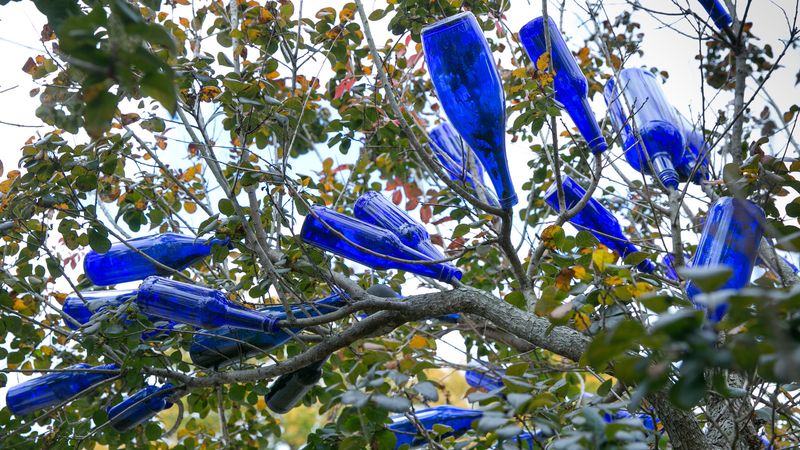
The best-known bottle tree story comes from folklore. In it, harmful spirits are drawn into the bottles at night, and morning sunlight then destroys them.
Smithsonian Gardens records this belief, along with other associations with luck, rain, and flourishing plants, in its account of the American bottle tree.
Those are cultural beliefs, not demonstrated effects. Nobody has shown that bottles trap spirits, bring rain, or make a tree bloom.
They are stories people have told, and stories are part of how traditions travel.
The same goes for yard benefits. The sources reviewed do not show that bottle trees repel ticks or help wildlife, so treat any such claim with caution.
If tick safety or wildlife is your goal, native plantings and tidy borders are better bets than glass.
The Smithsonian’s 1997 Festival of American Folklife program on the Mississippi Delta adds another angle. It notes that some makers kept building bottle trees for their artistic appeal, which shows that belief was never the only reason.
The tradition also lives on as garden art
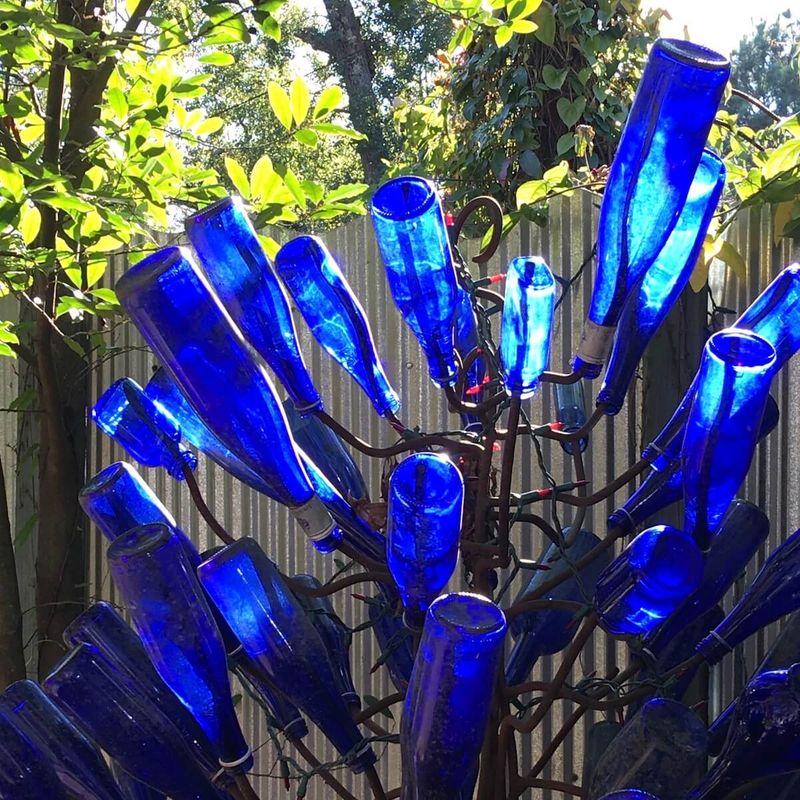
Bottle trees have a documented place in Southern Black folk art. Eudora Welty wrote about bottle trees she saw and photographed in rural Mississippi in the 1930s and 1940s, giving us a firsthand glimpse of how common they once were in some communities.
The tradition did not stop there. Smithsonian Gardens notes that bottle trees continue in gardens and cultural landscapes today, including as art.
Spiritual associations have not vanished, but they now sit beside other reasons for building one.
The Smithsonian’s Mississippi Delta folklife program points out that some people made bottle trees because they looked appealing. That helps explain why you now see them at garden centers, craft fairs, and backyard patios.
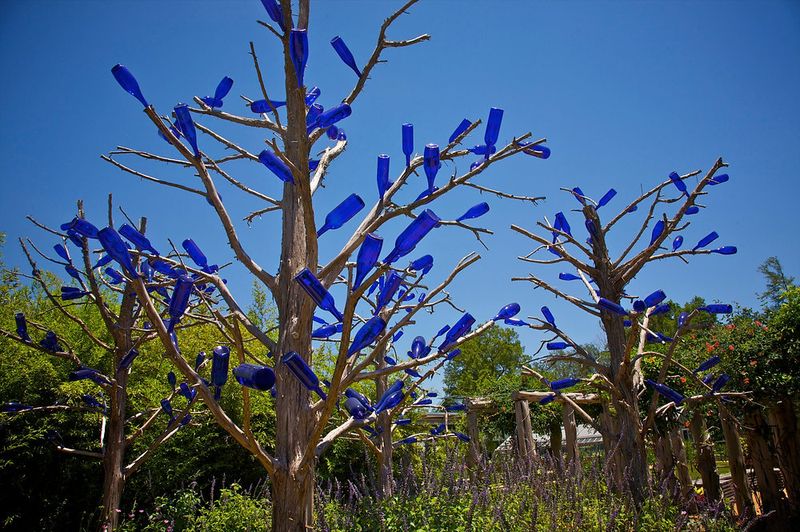
Color is a matter of taste, too. Blue bottles are a common choice, and many people love the way cobalt glows in the sun.
Sources also describe bright bottles more generally, so green, amber, purple, and clear glass all show up, and no color is required.
A display alone cannot tell you what its owner believes
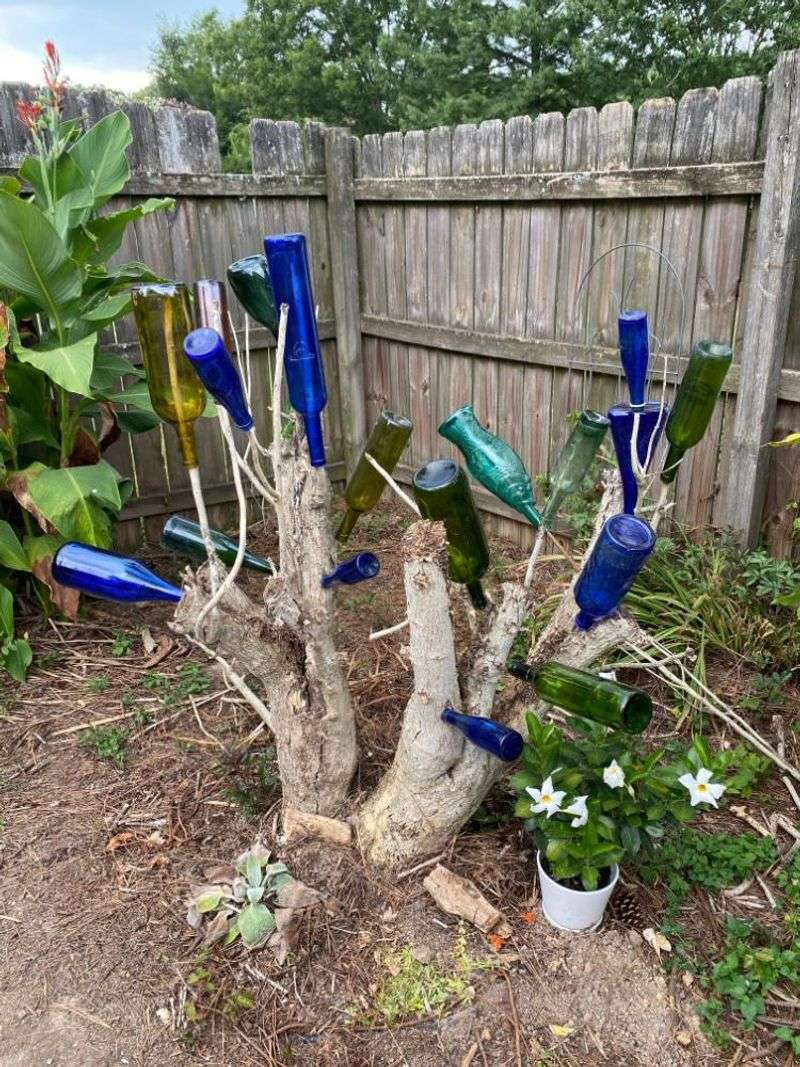
When you spot a bottle tree, a respectful reading starts with the broad picture. It belongs to a Southern tradition with African and Kongo associations, folk beliefs, and modern artistic uses, as Smithsonian Gardens describes.
What you cannot do is read the owner from the object. A bottle tree does not prove Gullah Geechee identity, even though the Gullah Geechee corridor reaches into coastal North Carolina.
It does not prove a spiritual purpose either, since folklife records show artistic motives too.
One more mix-up is worth avoiding. English witch bottles were a separate practice, and a peer-reviewed study of early modern English texts describes vessels used as protective or curative objects.
Nothing there shows the two traditions are the same.
If you are curious, a friendly compliment opens the door. Asking where the bottle tree came from lets the owner share the story in their own words.
Keep glass secure and approach the tradition with curiosity

If you keep a bottle display, a few habits keep everyone safe. Choose bottles without cracks, make sure each one sits firmly on its branch, and look the whole tree over now and then, especially after storms.
If one breaks, wear gloves and clean up with care. CDC/NIOSH guidance advises gloves and careful cleanup for broken glass, though that is general glass safety, not advice written for bottle trees.
Beyond the safety basics, remember that bottle trees carry layered meanings. A glowing bottle in a neighbor’s yard is an invitation to wonder, not a message you can decode.