
White Clover Spreading Through Your Lawn May Be Sharing Some Nitrogen With Your Grass, Here’s What to Know
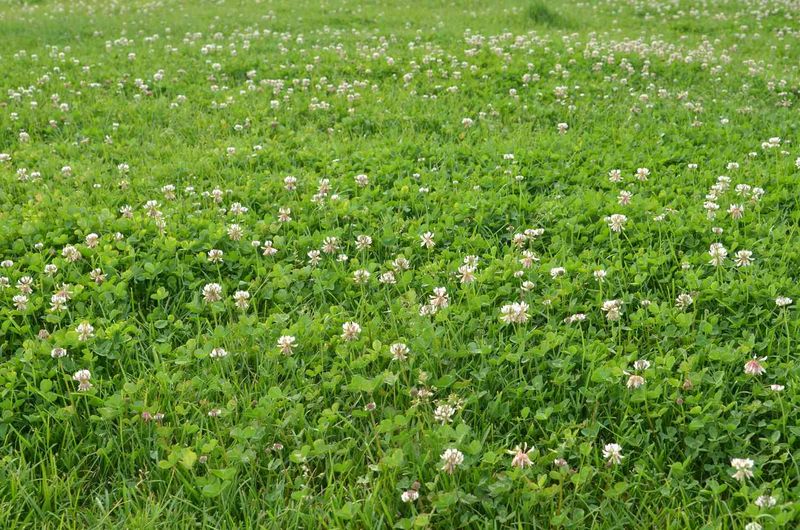
Those little three-leaf plants popping up in your lawn might be doing more than you think. White clover has a special partnership with soil bacteria that lets it pull nitrogen out of the air.
Some of that nitrogen may end up helping nearby grass over time, though how much varies a lot. Here is what that really means for your lawn, and whether keeping clover makes sense for you.
Clover fixes nitrogen for itself first

Walk across almost any American lawn and you may spot white clover, with its three rounded leaflets and puffy white flowers. Below the surface, this plant has a trick most grasses lack.
It teams up with Rhizobium bacteria that live in small nodules on its roots.
Those bacteria grab nitrogen gas from the air and convert it into forms a plant can use. Air is about 78 percent nitrogen, but plants cannot use it in that gas form.
University of Maryland Extension explains that clover, and microclover in particular, can supply nitrogen to turf in a lawn setting.
Here is the catch. The clover gets the first share.
The bacteria and the plant trade: the clover supplies sugars and a home, and the bacteria supply nitrogen the clover uses to grow its own leaves, stems, and roots.
So a clover patch is not a tiny fertilizer spreader that instantly feeds the grass next to it. Think of it more like a savings account.
The clover builds up nitrogen in its own tissue, and some of it may reach neighboring grass later, in amounts and on a schedule that change from lawn to lawn.
If you have been pulling clover out of habit, that is a good reason to pause and think. It is not a reason to panic, and it is not a reason to skip anything else your lawn needs.
It is simply a closer look at a plant that has long been labeled a weed.
How does that nitrogen reach the grass?
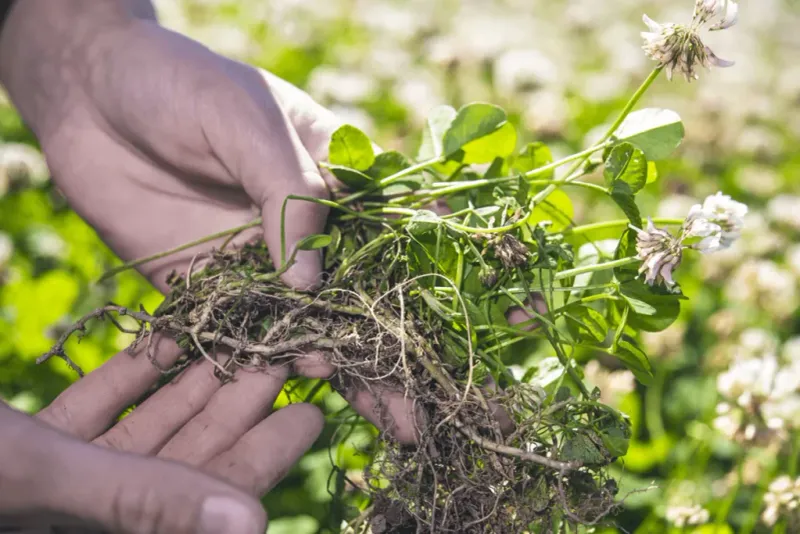
Nitrogen does not jump from clover to grass on its own. It travels through a few slower routes.
Clover roots can release some nitrogen-containing compounds into the soil, and when clover leaves, stems, and roots die and break down, that stored nitrogen goes back into the soil where grass roots can reach it.
Researchers have studied these routes with a tracer method. In a 15N-tracer study of a model clover-ryegrass pasture, scientists followed labeled nitrogen to see how it moved between the two plants.
That setup is a pasture system, not a measurement of a typical backyard lawn, so it shows how transfer can happen rather than how much your grass will get.
Timing and amount depend on conditions and management. Mowing habits, soil moisture, temperature, and how fast clover tissue decomposes can all change the picture.
A lawn that is mowed often may see clover clippings break down differently than one left taller.
That is why a catchy line like feeding your grass for free goes too far. Some nitrogen may move over, but it is not instant, it is not even, and it is not free of tradeoffs.
Maryland Extension describes the nitrogen benefit as something clover can offer to turf, not a guarantee.
The takeaway is encouraging without being flashy. Clover may add something useful to the soil over time, and that is a fair reason to give it a second look instead of reaching straight for the herbicide.
A possible fertilizer reduction is not a fertilizer-free lawn
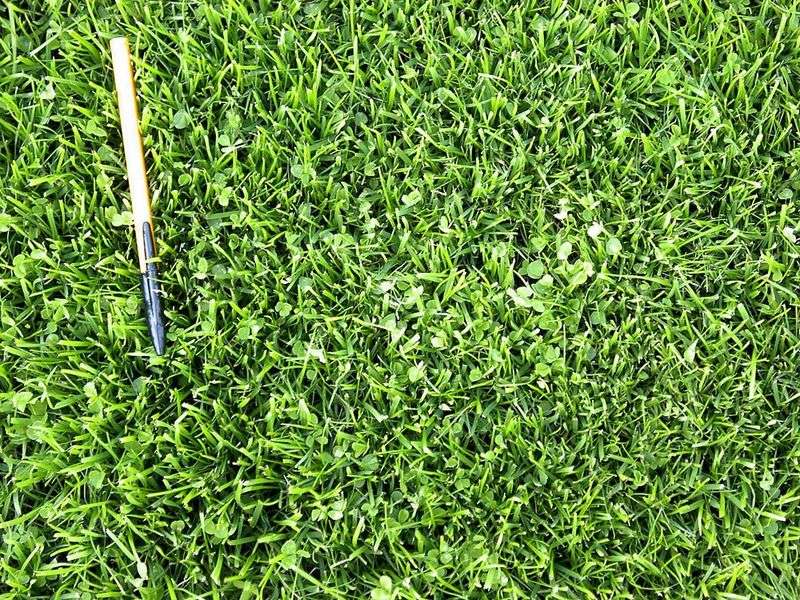
Here is where the numbers come in, and where they need careful reading. Maryland Extension says microclover can provide nitrogen to turf and may reduce one nitrogen application per year.
That is the specific claim, and it has a specific setting.
The turf grasses in that guidance are turf-type tall fescue and Kentucky bluegrass. The plant in question is microclover, a smaller type bred for lawn mixes, as described in the Maryland Extension microclover guide.
That detail matters. The estimate was not written about every patch of ordinary white clover that shows up on its own.
It also was not written about every grass type, such as warm-season lawns, or every region.
Say you have a fescue lawn in the mid-Atlantic with microclover mixed in. Cutting back by one nitrogen application in a year may be possible, according to that guidance.
Say you have a bluegrass lawn with scattered volunteer clover in a different climate. Your results could look quite different.
Also notice the word may. It points to a possible reduction, not a promise.
Nobody can say your lawn will go without fertilizer, stay greener, or save you a set amount of money. Treat the figure as a reason to be curious, then check what applies to your own turf before changing anything.
Use a soil test before changing your fertilizer routine

Clover in your lawn is a clue, not an answer. A lawn can look pale, thin, or patchy for many reasons, and clover can show up for several of them too.
Guessing your fertilizer needs from looks alone is a bit like picking glasses without an eye exam.
A soil test gives you real numbers. According to University of Minnesota Extension, testing can guide decisions about nutrients and lime, which is useful because soil pH changes how well grass can use what is in the ground.
Clover does have a reputation as a sign of low nitrogen. UMN Extension on Dutch white clover notes that it can point that way.
But it is only a hint. Compacted soil, thin turf, and mowing habits can also open the door to clover.
Your next step is simple. Pull a sample following your local extension office’s instructions, send it to a lab, and ask for recommendations that fit your region and your grass type, whether that is cool-season or warm-season turf.
Until those results are in, do not stop fertilizing just because clover has moved in. Let the test and local advice guide any change to your routine.
Keeping clover changes how you control weeds
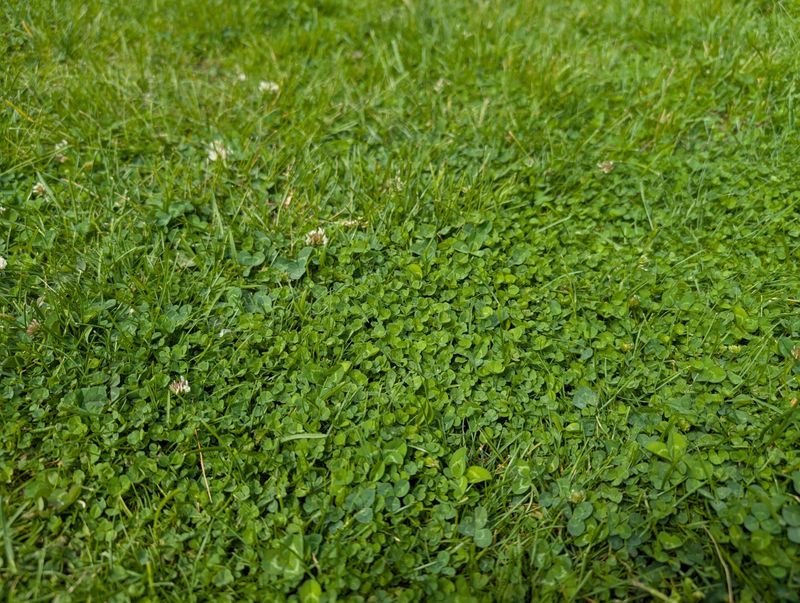
Deciding to keep clover is also deciding how you handle weeds. Many lawn weed killers are built to hit broadleaf plants, and clover is a broadleaf.
Maryland Extension points out that many broadleaf herbicides used on tall fescue lawns also kill microclover.
Not every product behaves the same way, so read labels carefully and ask your local extension office before spraying a lawn where you want clover to stay. A quick check now can save you from wiping out the very plants you chose to keep.
It also helps to know that white clover and microclover are not twins. Ordinary white clover tends to have larger leaves and a more sprawling habit.
Microclover varieties are described as smaller and less aggressively clumping, which makes them blend into grass more easily.
Because they differ in looks and growth, they may also differ in how long they last and how they handle different conditions. A volunteer patch of white clover may behave differently than microclover seeded into a lawn on purpose.
That makes keeping clover a style choice as much as a science choice. If you like a tidy, one-grass look, pulling or spot-treating clover is a perfectly reasonable call.
If you are comfortable with a mixed lawn, you can work around it.
Flowering clover brings tradeoffs in texture and use
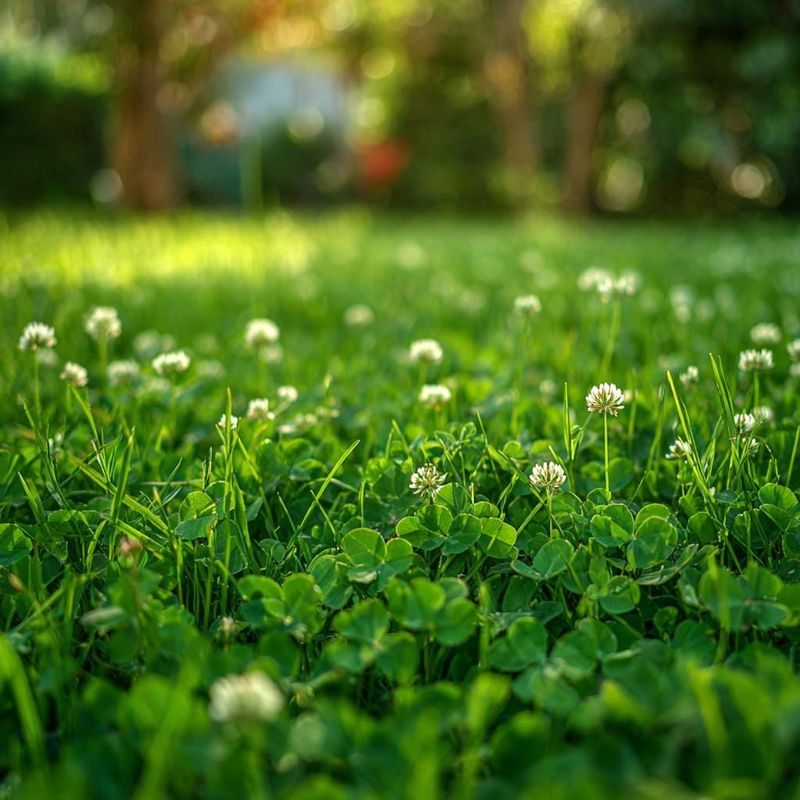
Picture a summer afternoon with bare feet on the lawn. Clover blooms are a magnet for bees, which is lovely for pollinators and less lovely if someone in your family is nervous about stings.
UC IPM lists bee stings as a possible concern while clover is in flower.
If that worries you, mowing before flowers open can reduce the number of blooms. You can also keep clover to the back yard and leave the play area as plain grass.
Then there is looks. Clover leaves are broader and softer than grass blades, so a mixed lawn will not have the uniform, carpet-like finish some people love.
Patches may stand out in color, especially when the plants flower. Neither look is wrong, but it should be a look you can live with.
Persistence is another factor. Maryland Extension describes limits for microclover in its own regional setting, including trouble with heat, drought, shade, and winter survival.
Those notes come from that region’s conditions, so your results may be better or worse where you live.
Weigh all of this against the possible nitrogen benefit. If you value bees and a relaxed look, the tradeoffs may be easy.
If you want crisp, even turf for barefoot games, the benefit may not be worth it.
Keep clover if it fits your lawn
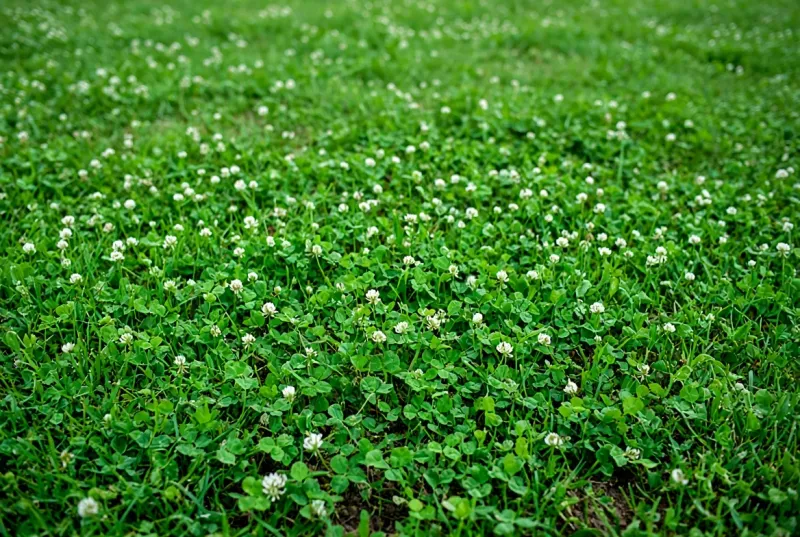
Keeping clover can be a sensible choice if you like its softer look and can live with the flowers. It may add some nitrogen over time, according to Maryland Extension, but that is not a guaranteed saving.
Before changing how you feed your lawn, run a soil test and follow local advice for your grass. Sometimes the best lawn is simply the one that suits the people who use it.