
Is It Already Too Late To Overseed Your North Carolina Fescue Lawn This Fall
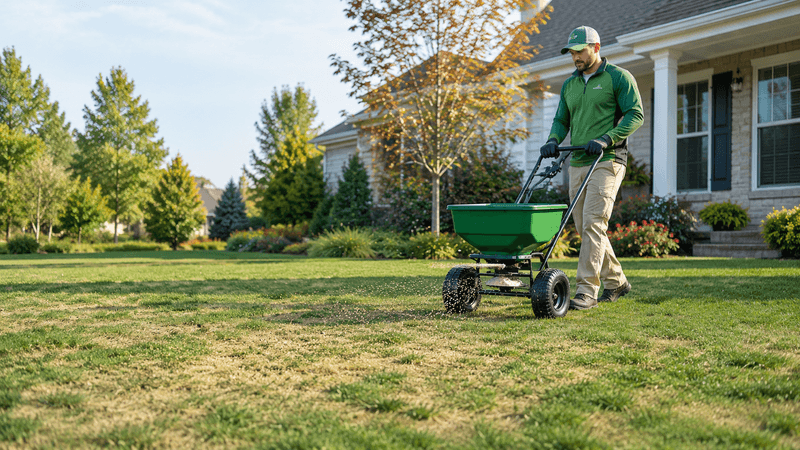
It is October 15, 2026, and your thin fescue lawn is staring back at you. Fall is the best time to plant tall fescue in North Carolina, but the calendar does not treat every yard the same.
Where you live decides whether you are still inside the window or already past it. Here is how to figure out your next move before winter settles in.
The seeding window depends on where your yard is
Check your region first, because North Carolina has no single statewide deadline. NC State’s 2026 guide lists optimum tall-fescue seeding dates of August 15 to September 1 in the Mountains, September 1 to October 1 in the Piedmont, and September 15 to October 15 in the Coastal Plain.
On October 15, 2026, that puts the Mountains and Piedmont past their recommended windows. The Coastal Plain window ends today, so a Coastal Plain homeowner with a suitable site has a very short stretch left.
There is a wrinkle for Piedmont readers. NC State’s Extension Gardener Handbook gives an earlier Piedmont window, September 1 to 15, so the 2026 guide’s October 1 end date and the handbook’s September 15 date do not match.
Either way, you are past both dates.
Keep in mind that these are optimum windows, not hard biological cutoffs. They mark the stretch when seedlings usually get the best start, and they do not mean seed planted a few days later is doomed.
If you are in the Piedmont and the date difference matters to your decision, call your county Extension office. Staff there can speak to local weather, your soil, and your lawn’s history.
Mountain homeowners should be especially cautious, since cold arrives earliest there and the window closed weeks ago.
Late seeding raises risk, but it does not guarantee failure
Planting after the recommended window means cold has more chance to interfere. Cool soil can slow germination, and young seedlings that have not built roots or enough leaf growth may not survive a hard chill.
NC State’s guidance describes a greater likelihood of failure once seeding runs past the recommended dates.
Greater likelihood is not the same as certainty. The claim that a missed deadline means bare patches all spring goes further than the sources do.
Some late seedings thrive, some struggle, and some fail.
Several things tip the odds. A mild stretch of weather helps, a sunny and well-drained spot helps, and so does a lawn with decent soil and a history of holding grass.
A shady, compacted, or poorly drained area may fare worse.
NC State’s tall fescue lawn calendar also advises adjusting calendar practices to the specific lawn, which is a reminder that dates are a guide and not a verdict.
A useful test is to look at your forecast and your soil. If nights are still mild and the ground is not cold, the risk is lower than in a yard already seeing frost.
If you decide to try, treat it as a gamble with decent odds, and keep a backup plan in mind.
If conditions still support seeding, prioritize seed-to-soil contact
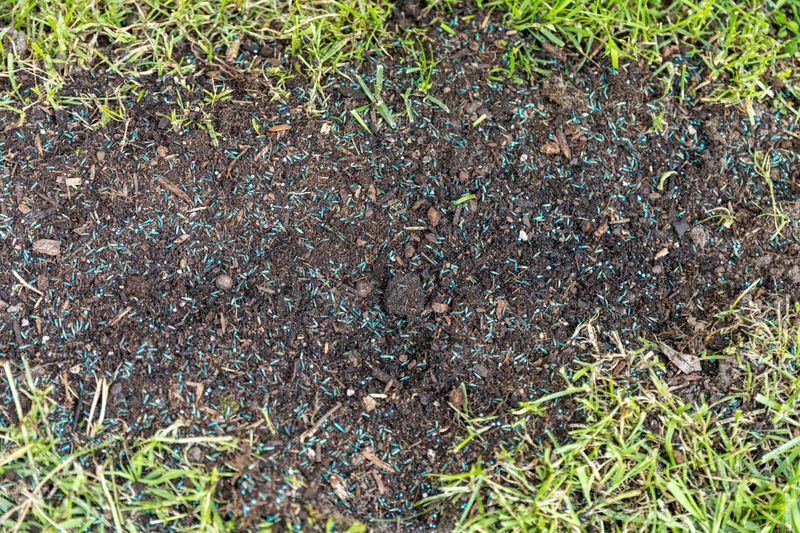
Seed that sits on top of thatch or leaves rarely does well. For a small renovation, NC State advises placing seed in roughly the top 1/8 inch of soil.
Loosen the surface lightly, remove debris, and rake seed in so it touches the ground.
Moisture comes next. Keep the renovated area damp with light, frequent watering so the surface never fully dries out while seeds sprout.
As seedlings grow, cut back on how often you water, which pushes roots to go deeper.
Fit the preparation to the job. Overseeding a thin lawn is not automatically the same as establishing a new one.
A lawn with a decent stand of grass needs less disturbance than bare ground, and the new-lawn guidance describes a fuller process meant for starting from scratch.
Good preparation helps, but it cannot erase the added risk of seeding late. A well-worked seedbed still faces cold nights if your window has closed.
Avoid overwatering until puddles form or water runs toward the street. Soggy, runoff-prone seedbeds waste water and can wash seed away.
After the fall window, spring is a less reliable fallback
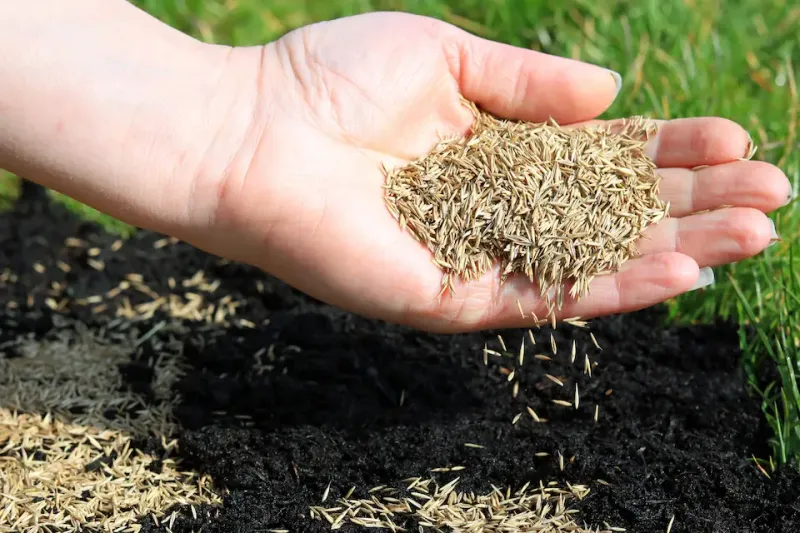
If fall no longer fits your yard, spring is the usual fallback, but it is a weaker one. Spring seedlings have less time to establish before hot weather arrives, which is why it is generally less satisfactory than fall seeding for tall fescue.
It is not a method that never works. NC State’s handbook says early spring may produce fair results in the Piedmont, generally from mid-February to late March.
Fair means acceptable, not outstanding.
Timing still matters. NC State’s 2026 guide warns that seeding after March often means reseeding the following fall.
Young grass that meets summer heat and dry spells before its roots are ready can thin out quickly.
Another option is cool-season sod, which can be laid when the ground is not frozen. Sod gives you instant cover and avoids the germination gamble, though it costs more and needs steady watering while roots knit into the soil.
For a small bare spot, a sod patch may be the simplest fix. For a large thin lawn, waiting for early spring seeding, then planning a stronger fall renovation next year, may be the more realistic path.
Repair bare spots without expecting fescue to spread
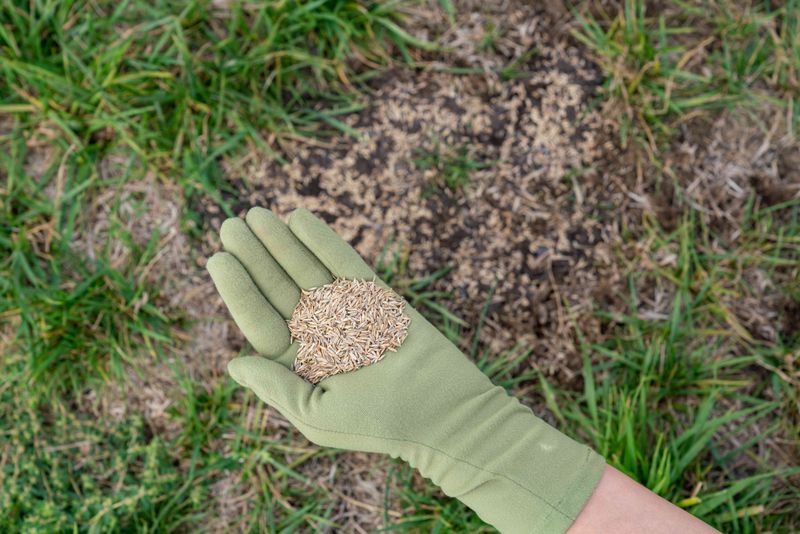
Tall fescue grows in bunches. Unlike grasses that send out runners, it does not reliably creep into empty ground, so a bare or damaged area generally needs reseeding.
NC State’s handbook describes this bunch-type habit.
A practical clue: look at the edges of a bare patch. If the surrounding clumps have stayed the same size for a year, do not count on them to close the gap.
Match the job to the method. Patching a few spots or overseeding a thin lawn is different from building a new lawn, and each calls for its own preparation and seed rate.
Check the label on your seed bag and the NC State establishment guidance before you pick an amount.
More seed is not automatically better. Excessive rates can produce weak, thin turf, because crowded seedlings compete for light, water, and nutrients.
If you are seeding later than ideal, resist the urge to pile on extra seed to make up for it. A measured rate on a well-prepared spot gives each seedling room to grow.
Let soil and site conditions guide the final decision
Your decision comes down to region, lawn condition, and current weather. Mountain and Piedmont lawns are past NC State’s optimum dates, while Coastal Plain readers are at the end of theirs.
When timing or site suitability is unclear, your county Extension office can give local advice.
Site matters too. NC State’s handbook notes tall fescue is less suited to hot, sandy, full-sun Coastal Plain locations.
Let a soil test guide lime and fertilizer choices instead of guessing, and keep water and fertilizer off pavement to protect nearby waterways, as NC State’s water quality advice recommends. Before using any herbicide around new seedlings, read the current product label and turf-specific directions.
A lawn that fits its spot is one you will not have to keep rescuing.